

Nature and Spirit Beings
Their Influence on Our Visible World
GA 98
4 December 1907, Munich
Translate the original German text into any language:
Versions Available:
Nature and Spirit Beings, tr. SOL
8. Die Elementarreiche, ihre Wesensarten und ihre Wirkungen
8. The elemental Realms, their Characteristics, and their Effects
[ 1 ] Was man seit alten Zeiten die Elementarreiche zu nennen gewohnt worden ist, ist nicht so leicht verständlich, wie man nach einer oberflächlichen Betrachtung gewöhnlich denkt. Denn es gehören diese Elementarreiche zu dem, was hinter der Wahrnehmungswelt liegt, hinter dem, was den Sinnen sich unmittelbar aufdrängt.
[ 1 ] What has been called the elemental realms since ancient times is not as easy to understand as one might think after a superficial examination. For these elemental realms belong to what lies behind the world of perception, behind what immediately presents itself to the senses.
[ 2 ] Am besten verschaffen wir uns den Eingang zu der Betrachtung, wenn wir ausgehen von dem, was sinnlich anschaulich ist, von denjenigen Reichen, die in der Sinnenwelt der menschlichen Beobachtung vorliegen. Da haben wir vier Reiche vor den Sinnen um uns herum auf dem physischen Plan ausgebreitet: das Mineralreich, das Pflanzenreich, das Tierreich und das Menschenreich. Das ist das, was jeder kennt. Nun wollen wir uns klarwerden darüber, was man genau als diese vier Reiche bezeichnet, weil die genauere Begriffsbestimmung keineswegs ein jeder klar übersieht. Darum ist es auch nicht so leicht, zu dem Verständnis des ersten, zweiten und dritten Elementarreichs vorzudringen. Gerade wenn man über solche schwierigen Dinge redet, muß man von vornherein darauf achten, daß man zu keinem wirklichen Ziele kommt, wenn man glaubt, einen Begriff, den man einmal hingepfahlt, den man einmal eingeschachtelt hat, den könne man nun in dieser Einschachtelung auch beibehalten. In der physisch-sinnlichen Welt geht das noch; da stehen die Dinge nebeneinander, sind hübsch gegeneinander abgegrenzt, wie ein Buch, eine Kreide, eine Rose, da können wir dabei bleiben, dieses einzelne Ding mit dem Begriff zu belegen. Wenn wir einen Gegenstand benannt haben, dann dürfen wir darauf rechnen, daß wir etwas Bestimmtes, Abgegrenztes haben. Gehen wir aber zum Astralplan, der an unsere Welt direkt angrenzt, sie als nächster durchdringt, da ist das nicht mehr so: da ist eine Welt ewiger Beweglichkeit. Betrachten Sie den Astralleib des Menschen, das, was als die Aura den Menschen umflutet und der Ausdruck ist für Triebe, Begierden und so weiter, so sehen Sie, daß dieser Astralleib des Menschen in einem fortwährenden Auf- und Abfluten von Farben und Formen ist, die sich in jedem Augenblick verändern: neue Farben glänzen auf, andere verschwinden. Das ist so beim Menschen. Nun gibt es Wesen, die schwirren auf der Astralebene herum. Ihre Astralleiber gehören nicht zu einem physischen Körper, doch sind sie nicht weniger veränderlich und wechselnd, sie sind in jeder Sekunde von anderer Form, Farbe und Leuchtkraft. Alles ist auf diesem Astralplan der fortwährende Ausdruck dessen, was das Innere dieser Wesen ist. Wir würden schon sehr in die Enge kommen, wenn wir dort unsere Begriffe so starr und unveränderlich machen wollten wie für den physischen Plan; wir müssen uns der Beweglichkeit der Gestalten anpassen, wir müssen bewegliche Begriffe haben, einen Begriff bald in dieser, bald in jener Weise anwenden können.
[ 2 ] The best way to approach this consideration is to start from what is sensually perceptible, from those realms that are present in the sensory world of human observation. We have four realms spread out around us on the physical plane: the mineral realm, the plant realm, the animal realm, and the human realm. This is what everyone knows. Now let us clarify what exactly is meant by these four realms, because not everyone has a clear understanding of their precise definition. That is why it is not so easy to gain an understanding of the first, second, and third elemental realms. Especially when talking about such difficult things, one must be careful from the outset not to believe that one can achieve any real goal by simply nailing down a term, putting it in a box, and then keeping it there. In the physical-sensory world, this is still possible; there, things stand next to each other, nicely separated from one another, like a book, a piece of chalk, a rose, and we can stick with assigning this single thing to the concept. Once we have named an object, we can expect to have something specific and distinct. But if we move to the astral plane, which directly borders our world and penetrates it next, this is no longer the case: there is a world of eternal movement. Consider the astral body of the human being, that which surrounds the human being as the aura and is the expression of instincts, desires, and so on. You see that this astral body of the human being is in a constant ebb and flow of colors and forms that change every moment: new colors shine forth, others disappear. This is how it is with human beings. Now there are beings that flit about on the astral plane. Their astral bodies do not belong to a physical body, but they are no less changeable and variable; every second they have a different form, color, and luminosity. Everything on this astral plane is the continuous expression of what is inside these beings. We would find ourselves in a very difficult position if we wanted to make our concepts as rigid and unchangeable there as they are on the physical plane; we must adapt to the mobility of forms, we must have flexible concepts, we must be able to apply a concept in one way and then in another.
[ 3 ] Das ist noch in viel höherem Maße in den noch höheren Welten der Fall. Für eine höhere Weltbetrachtung ist alles das, was auf der physischen Welt ist, ein Ausdruck für die Kräfte und Wesenheiten jener höheren Welten. In allem, was wir ringsherum sehen, sind solche Kräfte und Wesenheiten verborgen. Das macht gerade die Verschiedenheit der Wesen in der physischen Welt aus. Sie sehen um sich herum zum Beispiel das Mineralreich; alle anscheinend leblosen Wesen auf unserer Erde, alle Mineralien, gehören dazu. Man sagt Ihnen zunächst, diese Mineralien auf der Erde hätten für sich keinen Ätherleib, keinen Astralleib, kein Ich. Das gilt aber nur für die physische Welt. Man muß das wissen, damit man zur Klarheit kommt über das, was auf dem physischen Plane ist. Kommt nun aber jemand und sagt: Das Mineral ist etwas, was nur einen physischen Leib hat -, so ist das ebenso falsch, wie es richtig ist, wenn jemand sagt: Das Mineralreich ist etwas, was auf dem physischen Plane nur einen physischen Leib hat. - Denn für die wirkliche, geistige Betrachtungsweise ist das Mineral so, daß es hier auf dem physischen Plan seinen physischen Leib hat und nichts sonst. Wollen wir den Ätherleib suchen, so müssen wir bis zum Astralplan hinaufsteigen; da ist der Ätherleib zu finden. In dem Augenblick, wo der Mensch astralischer Hellseher wird, sieht er auf dem Astralplan den Ätherleib des Minerals und hier auf dem physischen Plan nur dessen physischen Leib. Und weiter umfassend betrachtet, hat das Mineral auch einen Astralleib; aber dieser ist nicht auf dem Astralplan zu finden, sondern man muß ihn in den niederen Partien des Devachans suchen. Im höheren Mentalplan, im Arupa-Mentalplan ist das Ich des Minerals; von da aus wird das Mineral von seinem Ich dirigiert. Wollen Sie sich das in grober Weise vorstellen, so müssen Sie sich sagen: Ich denke mir einen Menschen, der hellsehend ist bis zum Devachanplan. Für diesen Hellseher, der auf dem Arupaplan noch sieht, erscheinen die Mineralien ähnlich den Nägeln der Menschen, denn die Mineralien sind gleichsam die Nägel von Wesen, die auf dem oberen Devachan ihr Ich haben. Sie können sich die Nägel gar nicht ohne den Menschen vorstellen; so ist es auch mit dem Mineral und seinem Ich.
[ 3 ] This is even more so in the higher worlds. From a higher perspective, everything in the physical world is an expression of the forces and beings of those higher worlds. Such forces and beings are hidden in everything we see around us. This is precisely what constitutes the diversity of beings in the physical world. For example, you see the mineral kingdom around you; all the apparently lifeless beings on our earth, all minerals, belong to it. You are told at first that these minerals on earth have no etheric body, no astral body, no ego. But this is only true for the physical world. You need to know this in order to gain clarity about what is on the physical plane. But if someone comes along and says, “The mineral is something that only has a physical body,” this is just as wrong as it would be to say, “The mineral kingdom is something that only has a physical body on the physical plane.” For from a true spiritual point of view, the mineral is such that it has its physical body here on the physical plane and nothing else. If we want to find the etheric body, we must ascend to the astral plane; there the etheric body is to be found. The moment a person becomes an astral clairvoyant, they see the etheric body of the mineral on the astral plane and only its physical body here on the physical plane. Viewed more comprehensively, the mineral also has an astral body, but this cannot be found on the astral plane; it must be sought in the lower regions of the devachan. On the higher mental plane, the Arupa mental plane, is the mineral's I; from there the mineral is directed by its I. If you want to imagine this in a rough way, you must say to yourself: I imagine a person who is clairvoyant up to the Devachan plane. To this clairvoyant, who still sees on the Arupa plane, minerals appear similar to human nails, for minerals are, as it were, the nails of beings who have their I on the upper Devachan. You cannot imagine nails without humans; so it is with minerals and their I.
[ 4 ] Betrachten wir hier auf der Erde einen Bergkristall: sieht man von ihm weg, so ist dort in der Astralwelt der Ätherleib, der den physischen Leib belebt. Aber Sie würden dort nicht wahrnehmen können, daß dem Mineral irgend etwas wehe tut, wenn Sie ihm etwas zufügen. Im Devachan erst finden Sie Lust und Freude, Leid und Schmerz des Minerals, aber ganz anders, als man es sich gewöhnlich vorstellt. Das Schmerzempfinden des Minerals ist nicht so wie bei den Tieren; man muß sich nicht vorstellen, daß das Mineral Schmerz fühlt, wenn man es zerhämmert und zerschlägt. Wenn in einem Steinbruche die Arbeiter die Mineralien zersplittern, sie scheinbar schädigen, so ist das im Devachan geradezu ein Wohlgefühl, ein Wollustgefühl für die Mineralien. Es ist für sie also gerade umgekehrt wie im Menschen- und Tierreich. Wenn Sie auf den Devachanplan kommen, so können Sie dort den Geistern der Mineralien begegnen. Doch gehört da zu einer mineralischen Persönlichkeit nicht nur ein Mineral, sondern ein ganzes System, wie auch Ihre einzelnen Fingernägel keine besonderen Seelen haben. Wenn jemand sich vorstellen wollte, daß alles Astrale auf dem Astralplan sein müßte, so wäre er auf dem Irrweg. Es liegt so nahe, das Astrale immer auf dem Astralplan zu suchen; es ist aber wohl zu unterscheiden zwischen der inneren Natur einer Wesenheit und der Umgebung, in der sie lebt. Gerade wie Ihr Ich keine physische Natur hat und doch auf dem physischen Plane lebt, so lebt der Astralleib des Minerals nicht auf dem Astralplan, sondern in dem niederen Devachan. Wir dürfen die Begriffe nicht schematisch nehmen, sondern wir müssen uns durcharbeiten zu der genaueren Bestimmung der Dinge.
[ 4 ] Let us consider a rock crystal here on Earth: if you look away from it, there in the astral world is the etheric body that animates the physical body. But you would not be able to perceive that anything hurts the mineral if you did something to it. Only in Devachan do you find the pleasure and joy, suffering and pain of the mineral, but in a completely different way than one usually imagines. The mineral's perception of pain is not like that of animals; one must not imagine that the mineral feels pain when it is hammered and broken. When workers in a quarry split minerals, seemingly damaging them, this is actually a feeling of well-being, a feeling of pleasure for the minerals in Devachan. So for them it is exactly the opposite of what it is in the human and animal kingdoms. When you come to the Devachan plane, you can meet the spirits of minerals there. However, a mineral personality does not consist of just one mineral, but of an entire system, just as your individual fingernails do not have separate souls. If someone wanted to imagine that everything astral must be on the astral plane, they would be on the wrong track. It is so obvious to always look for the astral on the astral plane, but a distinction must be made between the inner nature of a being and the environment in which it lives. Just as your ego has no physical nature and yet lives on the physical plane, so the astral body of the mineral does not live on the astral plane, but in the lower devachan. We must not take the concepts schematically, but must work our way through to a more precise definition of things.
[ 5 ] Nehmen wir jetzt die Pflanze, wie sie uns vorliegt; sie hat hier auf dem physischen Plan den physischen Leib und den Ätherleib. Die beiden hat sie hier, wo aber müssen Sie den Astralleib der Pflanze suchen? - In der astralischen Welt, und das Ich in den unteren Partien des Devachan. Gehen wir weiter, zum Tier hinauf. Das Tier hat in der physisch-sinnlichen Welt den physischen Leib, den Ätherleib und den Astralleib, aber das Ich hat es auf dem Astralplan. Das heißt, wie Sie dem Menschen hier als Person begegnen, als Einzelperson abgeschlossen, so finden Sie die tierischen Iche auf dem astralischen Plan als abgeschlossene Persönlichkeiten. Wir haben sie so aufzufassen: Alle Gruppen, die gleiche Gestalten haben, haben ein gemeinsames Ich. Der Mensch unterscheidet sich dadurch von ihnen, daß ein jeder ein individuelles Ich hat. Auf dem Astralplan sind das Löwen-Ich, das Tiger-Ich und so weiter; da sind sie abgeschlossene Wesenheiten; die einzelnen Gattungs-Iche bevölkern den astralischen Plan geradeso wie die Menschen die physisch-sinnliche Welt. Für den Menschen aber gilt, daß für ihn herabgestiegen ist physischer Leib, Ätherleib, Astralleib und Ich bis auf den physischen Plan. Aber nur im Wachzustande; beim schlafenden Menschen ist das anders. Da ist in der physischen Welt der physische Leib und der Ätherleib, auf dem Astralplan der Astralleib und das Ich. So verteilt sich die viergliedrige menschliche Wesenheit im Schlafzustande auf den physischen Plan und den nächsthöheren, den Astralplan. Der Mensch ist dann auf dem physischen Plan vom Werte einer Pflanze (siehe Schema S. 134).
[ 5 ] Let us now take the plant as it appears to us; here on the physical plane it has a physical body and an etheric body. It has both of these here, but where must you look for the astral body of the plant? In the astral world, and the I in the lower parts of the Devachan. Let us go further, up to the animal. The animal has its physical body, its etheric body, and its astral body in the physical-sensory world, but it has its I on the astral plane. This means that just as you encounter human beings here as persons, as individual beings, you find the animal I's on the astral plane as individual personalities. We must understand them in this way: All groups that have the same form have a common ego. Human beings differ from them in that each has an individual ego. On the astral plane, there are the lion ego, the tiger ego, and so on; there they are separate beings; the individual species egos populate the astral plane just as human beings populate the physical-sensory world. For humans, however, the physical body, etheric body, astral body, and I have descended to the physical plane. But this is only in the waking state; it is different for sleeping humans. In the physical world, there is the physical body and the etheric body, and on the astral plane, there is the astral body and the I. Thus, in the state of sleep, the fourfold human being is distributed between the physical plane and the next higher plane, the astral plane. The human being is then on the physical plane at the level of a plant (see diagram on p. 134).
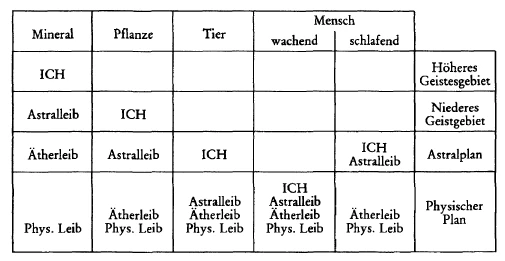
[ 6 ] Nun haben wir schon hier kennengelernt die verschiedene Art, wie wir die Ausdrücke «astralisch» und so weiter anwenden müssen. Wir kommen erst zu einem durchgreifenden Verständnis, wenn wir uns klar sind, daß die Dinge sich nicht umherschieben lassen wie Figuren auf dem Schachbrett. Wenn wir nun den Menschen selbst betrachten, so müssen wir diesen Menschen in der folgenden Weise ansehen. Wir haben den physischen Leib, den Äther- und Astralleib und das Ich. Öfter ist es hier schon betont worden, daß es darauf ankommt, daß wir uns über das Verhältnis der vier Glieder nicht im Unklaren sind. Man denkt leicht, der physische Leib sei der unvollkommenste und der niedrigste. In einer gewissen Beziehung aber ist er der vollkommenste, denn er hat vier aufeinanderfolgende Entwickelungsstufen durchgemacht: auf dem Saturn, der Sonne, dem Monde und der Erde. Der Ätherleib hat nur drei Grade der Vollkommenheit erreicht, er kam erst auf der Sonne zum physischen Leib hinzu; er soll einst höher steigen, obwohl er heute noch nicht so vollkommen ist wie der physische Leib. Der astralische Leib kam erst auf dem Mond hinzu, er hat nur einen zweifachen Vollkommenheitsgrad erreicht. Das Ich ist das «Baby» unter den vier Gliedern des Menschen, es ist erst auf der Erde hinzugekommen, es steht erst im Anfang seiner Entwikkelung; es wirkt fortwährend korrumpierend auf die anderen Leiber. Wer als Anatom den wunderbar organisierten physischen Körper betrachtet, der staunt über die Vollkommenheit des Herzens und des Gehirns. Wie unvollkommen sind dagegen die Begierden, die Triebe des Ich! Das Ich hat Begierde nach Wein, Bier und so weiter, die zerstörend wirken das ganze Leben hindurch, und doch hält der physische Leib jahrzehntelang stand gegen diese Angriffe. Nun müssen wir uns einmal klarmachen, wie das Ich hineingearbeitet worden ist in den physischen Leib und wie dieser zuerst entstanden ist.
[ 6 ] We have already learned here the different ways in which we must use the terms “astral” and so on. We can only come to a thorough understanding when we realize that things cannot be moved around like figures on a chessboard. When we now consider the human being himself, we must view him in the following way. We have the physical body, the etheric and astral bodies, and the I. It has already been emphasized here several times that it is important that we are not unclear about the relationship between the four members. It is easy to think that the physical body is the most imperfect and lowest. In a certain sense, however, it is the most perfect, for it has undergone four successive stages of development: on Saturn, the Sun, the Moon, and the Earth. The etheric body has attained only three degrees of perfection; it was added to the physical body only on the Sun. It will one day rise to a higher level, although today it is not yet as perfect as the physical body. The astral body was only added on the moon; it has only reached a twofold degree of perfection. The ego is the “baby” among the four members of the human being; it was only added on Earth and is only at the beginning of its development; it has a constantly corrupting effect on the other bodies. An anatomist who contemplates the wonderfully organized physical body marvels at the perfection of the heart and the brain. How imperfect, in contrast, are the desires, the impulses of the ego! The ego has a desire for wine, beer, and so on, which have a destructive effect throughout life, and yet the physical body withstands these attacks for decades. Now we must make clear to ourselves how the ego has been worked into the physical body and how the physical body first came into being.
[ 7 ] Da war zuerst die Saturnentwickelung. Das war die erste Entwickelungsphase für den Vorläufer unseres physischen Leibes. Damals war dieser physische Leib des Menschen von dem kosmischen Werte eines Minerals. Sehen Sie ein heutiges Mineral an, so haben Sie in ihm eine zurückgebliebene Stufe des Daseins; es hat die Stufe bewahrt, die der physische Leib auf dem Saturn hatte. Dabei dürfen Sie sich nicht vorstellen, daß der physische Leib so ausgeschaut hätte wie unsere heutigen Mineralien, das wäre ganz falsch; die heutigen Mineralien sind die jüngsten Gebilde der Entwickelung. Besonders war der Menschenleib damals nicht so dicht; die Dichte des physischen Menschenleibes war sehr gering.
[ 7 ] First there was the Saturn evolution. That was the first phase of evolution for the precursor of our physical body. At that time, the physical body of the human being had the cosmic value of a mineral. If you look at a mineral today, you see in it a backward stage of existence; it has preserved the stage that the physical body had on Saturn. You must not imagine that the physical body looked like our minerals today; that would be completely wrong. Today's minerals are the most recent formations of evolution. In particular, the human body was not as dense back then; the density of the physical human body was very low.
[ 8 ] Wir müssen uns die Beziehungen der materiellen Stufen vorstellen. Die erste ist das, was wir Erde nennen, das heißt alles, was heute etwa ein fester Körper genannt wird, Eisen, Kupfer, Zink und so weiter, alles was fest ist, ist Erde. Zweitens: alles was flüssig ist, ist Wasser, zum Beispiel Quecksilber; auch wenn Sie Eisen flüssig machen, so ist es Wasser. Jedes flüssige Metall ist Wasser im Sinne der Geisteswissenschaft. Drittens: bringen Sie das Wasser zur Verdampfung oder irgend etwas in Dampfform, auch Metalldampf, so ist es Luft. Die Geisteswissenschaft geht noch weiter: sie zeigt, daß Luft als solche noch verdünnt werden kann, in dünnere Zustände übergehen kann. Da muß man über das heutige Physische hinausgehen; da nimmt der Geistesforscher Wärmeäther oder Feuer an. Feuer ist für den Geistesforscher etwas, was in die Linie Erde, Wasser, Luft gehört, während die heutige Wissenschaft darin nur einen Zustand der Körper sieht.
[ 8 ] We must imagine the relationships between the material stages. The first is what we call earth, that is, everything that is today called a solid body, iron, copper, zinc, and so on; everything that is solid is earth. Secondly, everything that is liquid is water, for example mercury; even if you make iron liquid, it is water. Every liquid metal is water in the sense of spiritual science. Thirdly, if you cause water to evaporate or anything to take on a vaporous form, including metal vapor, it is air. Spiritual science goes even further: it shows that air as such can be further diluted, can transition into thinner states. Here we must go beyond today's physical understanding; here the spiritual researcher posits heat ether or fire. For the spiritual researcher, fire is something that belongs to the line of earth, water, and air, whereas modern science sees it only as a state of the body.
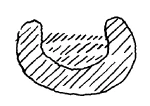
[ 9 ] Auf dem Saturn war die Wärme die Substanz des physischen Leibes des Menschen. Auf der Sonne wurde der physische Menschenleib verdichtet zu der Dichte der Luft, da lagerte sich in ihm ein der Äther- oder Lebensleib und gestaltete den physischen Leib um; da haben wir einen physischen Menschenleib und in ihn hineingearbeitet einen Ätherleib; dieser Ätherleib ist eingliedrig, der physische Leib ist zweigliedrig auf der Sonne. Wir müssen im physischen Leib auf der Sonne einen vollkommeneren und einen unvollkommeneren Teil unterscheiden, einen solchen, der vom Ätherleib noch nicht durchdrungen ist. Bei diesem Bilde des physischen Leibes auf der Sonne müssen wir uns denken: das Innere hat nichts abbekommen vom Ätherleib; das ist von demselben Wert, wie der physische Leib schon auf dem Saturn war. So daß wir einen Teil schon auf der Pflanzenstufe haben, der durchsetzt ist von einem anderen Teil, der noch auf der Mineralstufe steht; aber die beiden durchdringen sich vollständig (siehe Zeichnung 1).
[ 9 ] On Saturn, warmth was the substance of the physical body of the human being. On the sun, the physical human body was condensed to the density of air, and within it the etheric or life body was deposited and transformed the physical body; here we have a physical human body with an etheric body working within it; this etheric body is single-layered, while the physical body is double-layered on the sun. We must distinguish between a more perfect and an imperfect part of the physical body on the sun, one that has not yet been permeated by the etheric body. With this image of the physical body on the sun, we must think: the interior has not received anything from the etheric body; it is of the same value as the physical body already was on Saturn. Thus, we already have a part at the plant stage that is interspersed with another part that is still at the mineral stage; but the two penetrate each other completely (see drawing 1).
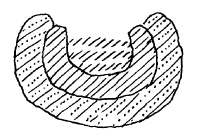
[ 10 ] Wir gehen nun über zum physischen Körper auf dem Monde. Hier war er schon bis zum Wasser verdichtet. Hineingegliedert ist der Äther- und der astralische Leib. Dreierlei verschiedene Teile sind hier zu unterscheiden. Einer ist vom Äther- und Astralleib durchdrungen, einer nur vom Ätherleib, und einer ist mineralisch geblieben (siehe Zeichnung 2).
[ 10 ] We now turn to the physical body on the moon. Here it was already condensed to the state of water. The etheric and astral bodies are integrated into it. Three different parts can be distinguished here. One is permeated by the etheric and astral bodies, one is permeated only by the etheric body, and one has remained mineral (see drawing 2).
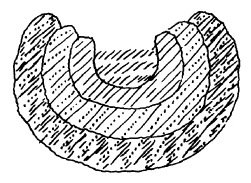
[ 11 ] Jetzt betrachten wir den physischen Leib auf der Erde. Da kommt das Ich dazu. Auf der Erde sind vier ineinandergearbeitete Glieder. Der erste Teil ist durchzogen vom Ätherleib, Astralleib und Ich, der zweite Teil vom Äther- und Astralleib, der dritte Teil nur vom Ätherleib, und ein viertes Glied ist noch auf der mineralischen Stufe. Es hat den Wert eines Minerals, steht heute noch auf der Saturnstufe. Diese vier Glieder sind genau zu unterscheiden am physischen Leibe. Das erste Glied, in das alle vier Glieder hineingearbeitet sind, das sind die roten Blutkörperchen. Überall da, wo wir rotes Blut haben, da sind die vier Glieder hineingearbeitet (siehe Zeichnung 3).
[ 11 ] Now let us consider the physical body on Earth. Here the I comes into play. On earth there are four interwoven members. The first part is permeated by the etheric body, the astral body, and the I; the second part by the etheric and astral bodies; the third part only by the etheric body; and a fourth member is still on the mineral level. It has the value of a mineral and is still on the Saturn stage today. These four members can be clearly distinguished in the physical body. The first member, into which all four members are woven, is the red blood cells. Wherever we have red blood, the four members are woven into it (see drawing 3).
[ 12 ] Die Nerven sind das zweite Glied. Überall, wo Nerven sind, da sind physischer Leib, Äther- und Astralleib hineingearbeitet. Überall, wo Drüsen sind, da sind physischer Leib und Ätherleib hineingearbeitet. Alle Sinneswerkzeuge, alle physikalischen Apparate am Menschen haben nur die Stufe eines Minerals erreicht. Sie folgen ganz denselben Gesetzen wie die Mineralien. Auge und Ohr gehören zu den mineralischen Einschlüssen; auch im Gehirn sind noch solche Teile. Sie sehen, wie verführerisch es so manchmal ist, Materialist zu werden, weil etwas, was mineralisch ist, den ganzen Körper durchzieht. Wenn der Materialist sagt, das Gehirn sei mineralisch, so hat er zum Teil recht, wenn er nur den einen Teil betrachtet. Besonders sind es ganz bestimmte Partien im Vorderhirn, die zwar durchzogen sind von anderen Einstrahlungen, in denen aber nur mineralische Kräfte tätig sind. Würden wir Knochen und Muskeln betrachten, so würde es noch komplizierter werden.
[ 12 ] The nerves are the second member. Wherever there are nerves, the physical body, etheric body, and astral body are woven into them. Wherever there are glands, the physical body and etheric body are woven into them. All sensory organs, all physical apparatus in humans have only reached the level of a mineral. They follow exactly the same laws as minerals. The eye and ear belong to the mineral inclusions; there are also such parts in the brain. You see how tempting it is sometimes to become a materialist, because something that is mineral pervades the entire body. When the materialist says that the brain is mineral, he is partly right if he considers only one aspect. In particular, there are certain parts of the forebrain that are permeated by other influences, but in which only mineral forces are active. If we were to consider bones and muscles, it would become even more complicated.
[ 13 ] Als das Ich in den Menschen eingezogen war, da hat es angefangen, Empfindungsseele, Verstandesseele und Bewußtseinsseele auszuarbeiten, und da arbeitete es die Knochen und Muskeln aus. Man braucht Jahre allein dazu, um diese Dinge nur recht auseinanderzuhalten, will man diese Dinge genau betrachten. Man muß geduldig Stück für Stück verfolgen.
[ 13 ] When the I entered into human beings, it began to develop the sentient soul, the intellectual soul, and the conscious soul, and it developed the bones and muscles. It takes years just to distinguish these things properly if one wants to examine them closely. One must patiently follow them piece by piece.
[ 14 ] Wenn wir nun einen schlafenden Menschen vor uns haben, so liegen im Bette physischer Leib und Ätherleib. Aber dieser physische Leib ist sehr kompliziert. An ihm arbeiten im wachen Zustande astralischer Leib und Ich im Blute. Wenn nun der physische Leib im Bette liegt und der Mensch schläft, was ist dann geschehen? — Es wird wohl noch das versorgt, was der Ätherleib versorgen kann; aber an der Erhaltung des Blutes müßten Astralleib und Ich mitwirken, so daß für das Blut jede Nacht der Tod eintreten würde, denn es ist auf Ich und Astralleib angewiesen; aber diese verlassen den Körper treulos. Auch das ganze Nervensystem wird schnöde verlassen, für das der astralische Leib auch mitwirken müßte. Wir haben also die merkwürdige Tatsache vor uns, daß eigentlich in jeder Nacht Blut und Nervensystem absterben müßten; sie wären dem Tode ausgeliefert, wenn es auf den Menschen ankäme. Da müssen andere Wesen eintreten, da müssen andere Wesenheiten die Arbeit des Menschen übernehmen. Hereinwirken aus anderen Welten müssen andere Wesenheiten, damit sie ihm das ordentlich erhalten, was er schnöde verläßt. Was das für Wesenheiten sind, die hereinwirken, die dem Menschen die Möglichkeit geben, daß sein Blut erhalten bleibt, wollen wir versuchen, uns zu erklären.
[ 14 ] When we now have a sleeping human being before us, the physical body and etheric body lie in the bed. But this physical body is very complicated. In the waking state, the astral body and the I work on it in the blood. When the physical body lies in bed and the person is asleep, what happens? — The etheric body continues to provide what it can, but the astral body and the I would have to work together to maintain the blood, otherwise the blood would die every night, because it depends on the I and the astral body, but these leave the body faithlessly. The entire nervous system is also despicably abandoned, for which the astral body would also have to cooperate. We are therefore faced with the remarkable fact that blood and the nervous system should actually die every night; they would be doomed to death if it were up to human beings. Other beings must step in, other entities must take over the work of human beings. Other entities must intervene from other worlds in order to properly preserve what he despicably abandons. Let us try to explain what these entities are that intervene and enable humans to preserve their blood.
[ 15 ] Wir können uns auf folgende Weise eine Vorstellung machen von diesen Wesenheiten. Wir fragen uns einmal: Wo lebt denn eigentlich des Menschen Ich, wenn es hier auf dem physischen Plane lebt? In welchem der drei Reiche? - Da müssen Sie sich fragen: Was können wir eigentlich erkennen, ohne hellseherisch wahrzunehmen? -— Wir können nur das Mineralreich erkennen. Das ist das Eigenartige im Menschen, daß der Mensch nicht einmal die Pflanze ganz begreift, solange er nicht astralisch hellsehend ist. Dadurch, daß der Mensch jetzt nur das Mineralische an der Pflanze erkennt, behaupten die Materialisten, daß die Pflanze nur ein Konglomerat von mineralischen Vorgängen ist. Wenn der Mensch einmal so weit an sich gearbeitet haben wird, daß er auf der ersten Stufe des Hellsehens ist, dann wird ihm das Leben der Pflanzen, werden ihm die Gesetze des Lebens geradeso klar sein, wie es uns Jetzt die Gesetze der mineralischen Welt sind.
[ 15 ] We can form an idea of these beings in the following way. Let us ask ourselves: Where does the human ego actually live when it lives here on the physical plane? In which of the three kingdoms? — Here you must ask yourself: What can we actually perceive without clairvoyance? — We can only perceive the mineral kingdom. This is the peculiar thing about human beings: they do not even fully understand plants until they have developed astral clairvoyance. Because human beings currently only perceive the mineral aspect of plants, materialists claim that plants are merely a conglomeration of mineral processes. Once human beings have worked on themselves to the point where they have reached the first stage of clairvoyance, the life of plants and the laws of life will be as clear to them as the laws of the mineral world are to us now.
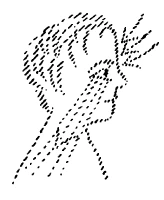
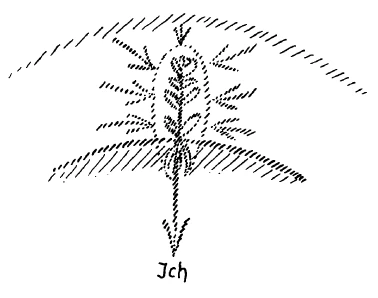
[ 16 ] Setzen Sie eine Maschine zusammen, bauen Sie ein Haus, so sind diese nach den Gesetzen der mineralischen Welt gebaut. Eine Maschine ist nach den Gesetzen der mineralischen Welt gebaut, eine Pflanze aber können wir nicht so bauen. Wenn Sie eine Pflanze haben wollen, müssen Sie diese Arbeit den Wesenheiten überlassen, die der Natur zugrunde liegen. Später wird man Pflanzen im Laboratorium herstellen können, aber erst dann, wenn das für den Menschen ein Sakrament, eine heilige Handlung sein wird. Alle Darstellung des Lebendigen wird dem Menschen erst dann erlaubt sein, wenn er so ernst und geläutert sein wird, daß ihm der Laboratoriumstisch zum Altar wird. Vorher wird nicht das Geringste davon verraten werden, wie die lebendigen Wesen zusammengefügt sind. Mit. anderen Worten: Das Ich als erkennendes lebt im Mineralreich und wird aufsteigen zum Pflanzenreich und wird dieses dann ebenso begreifen lernen wie heute das Mineralreich. Später wird es auch die Gesetzmäßigkeit des Tierreiches und dann die des Menschenreiches begreifen lernen. Alle Menschen werden lernen, das Innere der Pflanze, des Tieres und des Menschen zu begreifen; das sind Zukunftsperspektiven. Was man wirklich begreift, das kann man auch darstellen, zum Beispiel eine Uhr. Der heutige Mensch wird niemals etwas aus der lebendigen Natur darstellen können ohne Hilte der Wesenheiten, die hinter der Natur stehen, solange es nicht eine sakramentale Handlung für ihn sein wird. Dann erst wird er aufsteigen vom Mineralreich zum Reiche des Pflanzlichen. Der Mensch ist heute Mensch, aber er erkennt nur im Mineralreich. Des Menschen Ich lebt in menschlicher Gestalt, aber wenn des Menschen Ich in die Umwelt schaut, so erkennt es nur im Mineralreich. Dieses Ich bringt also nur die Fähigkeit zunächst auf, das Blut mineralisch zu durchleben, denn mehr kann es nicht. Wenn auch bei Tage das Ich im Blute lebt, es bewohnt und durchlebt, so tut es das nur mineralisch. Wie tut es das? - Wenn Sie hinausschauen in die Welt, da eröffnet Ihnen Ihre Erkenntnis die Gesetze des mineralischen Reiches. Beachten Sie diese eigentümliche Art der menschlichen Tätigkeit. Sie schauen hinaus mit Ihren Sinnen und Sie nehmen die Gesetze des Mineralischen auf und prägen diese Gesetze dem Blute ein während des Wachens, Sie drängen sie in das ganze Blut hinein, Sie beleben das Blut mineralisch. Das ist der eigentümliche Gang dessen, was geschieht bei der Erkenntnis. Stellen Sie sich den Menschen schematisch vor (siehe Zeichnung), so strömen von allen Seiten die Gesetzmäßigkeiten der mineralischen Welt auf ihn ein. Sie bleiben aber nicht stehen bei den Sinnesorganen, sondern rinnen mit dem Blute durch den ganzen Körper des Menschen im wachen Zustande.
[ 16 ] If you assemble a machine or build a house, these are constructed according to the laws of the mineral world. A machine is built according to the laws of the mineral world, but we cannot build a plant in this way. If you want to have a plant, you must leave this work to the beings that underlie nature. Later, it will be possible to produce plants in the laboratory, but only when this becomes a sacrament, a sacred act for humans. All representations of living beings will only be permitted to humans when they have become so serious and purified that the laboratory table becomes an altar to them. Before that, not the slightest detail of how living beings are put together will be revealed. In other words, the ego as a perceiving entity lives in the mineral kingdom and will ascend to the plant kingdom, where it will learn to understand it just as it understands the mineral kingdom today. Later, it will also learn to understand the laws of the animal kingdom and then those of the human kingdom. All people will learn to understand the inner nature of plants, animals, and humans; these are the prospects for the future. What one truly understands can also be represented, for example, a clock. Today's human being will never be able to represent anything from living nature without the help of the beings behind nature, as long as it is not a sacramental act for him. Only then will he ascend from the mineral kingdom to the plant kingdom. Human beings today are human beings, but they only perceive the mineral kingdom. The human ego lives in human form, but when the human ego looks at the environment, it only perceives the mineral kingdom. This ego therefore initially only has the ability to live through the blood in a mineral way, because it cannot do more than that. Even though the ego lives in the blood during the day, inhabits it and lives through it, it does so only in a mineral way. How does it do this? When you look out into the world, your knowledge reveals the laws of the mineral kingdom to you. Observe this peculiar nature of human activity. You look out with your senses and take in the laws of the mineral kingdom, imprinting these laws on the blood while you are awake, forcing them into the entire blood, enlivening the blood in a mineral way. This is the peculiar course of what happens in cognition. Imagine the human being schematically (see drawing): the laws of the mineral world stream into him from all sides. But they do not remain at the sense organs; they flow with the blood through the whole human body in the waking state.
[ 17 ] Was tut die pflanzliche Welt? - Wie es mit der Pflanze ist, darauf kommen Sie, wenn Sie sich folgendes genau überlegen. Es ist Ihnen immer gesagt worden, daß das Ich an den anderen Leibern arbeitet und den Astralleib umgestaltet zum Geistselbst. In demselben Maße, wie das geschieht, fließen die Gesetze des Pflanzenreichs in das Nervensystem des Menschen ein. Wenn der Mensch die nächste Stufe des Hellsehens erreicht, so fließen die Gesetze des Tierreichs in sein Drüsensystem ein, und wenn der Mensch umgestaltend am physischen Leibe arbeitet, so fließen die Gesetze des Menschenreichs selbst in den menschlichen Leib ein. Das ist alles für den Wachzustand gedacht und für die Zustände des höheren hellseherischen Bewußtseins. Der Mensch ist also jetzt auf der Stufe angelangt, wo das Ich die Gesetze des Mineralreichs einströmen läßt in das Blut. Das kann das Ich nur im Wachzustande, dann nur kommen die mineralischen Gesetze in das Blut. Wenn der Mensch schläft, muß auch das Blut versorgt werden. Und weil an diesem Blute gearbeitet worden ist durch vier Stufen hindurch, so müssen drei andere Gewalten eintreten. Zunächst eine Gewalt, die am nächsten verwandt ist der Art und Weise, wie das Ich hineinarbeitet in das Blut; diese Gewalt ist eine, die nicht bis zum physischen Plan herabgestiegen ist. Das Blut würde absterben, wenn nicht ein anderes Ich daran arbeitete, während der Mensch schläft. Ein anderes Ich, das oben auf dem Astralplan geblieben ist, das greift ein und übernimmt einstweilen die Arbeit an dem Blute. Wenn wir das menschliche Blut, diesen «besonderen Saft» betrachten, so wirkt während des Wachens ein das Ich des Menschen auf dem physischen Plan, in der Nacht wirkt auf das Blut ein Ich, das auf dem Astralplan ist. Es gibt solche Iche.
[ 17 ] What does the plant world do? You will understand how it is with plants if you consider the following carefully. You have always been told that the ego works on other bodies and transforms the astral body into the spirit self. To the same extent that this happens, the laws of the plant kingdom flow into the human nervous system. When a person reaches the next stage of clairvoyance, the laws of the animal kingdom flow into their glandular system, and when a person works to transform the physical body, the laws of the human kingdom itself flow into the human body. All this is meant for the waking state and for the states of higher clairvoyant consciousness. Man has now reached the stage where the I allows the laws of the mineral kingdom to flow into the blood. The I can only do this in the waking state; only then do the mineral laws enter the blood. When man sleeps, the blood must also be supplied. And because this blood has been worked on through four stages, three other forces must come into play. First, a force that is most closely related to the way the ego works into the blood; this force is one that has not descended to the physical plane. The blood would die if another ego did not work on it while the human being sleeps. Another I, which has remained above on the astral plane, intervenes and temporarily takes over the work on the blood. When we consider human blood, this “special juice,” during waking hours the human I works on the physical plane, and at night an I that is on the astral plane works on the blood. There are such I's.
[ 18 ] Nun habe ich Ihnen vorher angeführt Iche auf dem astralischen Plan, die Gruppen-Iche der Tiere; jetzt haben wir eine andere Gattung von Ichen, die auf dem astralischen Plane leben und hereinwirken auf den Menschen und das Blut beleben, während das menschliche Ich es verlassen hat. Womit? Was bringen sie in das Blut hinein? - Das, was seit dem Saturn im Menschenleibe sein muß: Feuer, Wärme. Das sind Geister, die nie bis zum physischen Plan heruntergestiegen sind, geistige Wesenheiten, die auf dem Astralplan leben und einen Leib von Feuer haben. Im mineralischen Reich erscheint uns jedes Ding in einem gewissen Wärmezustand. So treffen Sie die Wärme in Ihrer Umgebung als Eigenschaft von festen, flüssigen und luftförmigen Körpern. Denken Sie sich die Wärme einmal abgesondert — das gibt es auf dem physischen Plane nicht. Aber auf dem Astralplan würden Sie solche hin- und herflutende Wärme, solches Feuer finden, das als selbständiges Wesen hin- und herzieht, und darin Wesenheiten verkörpert, so wie wir selbst waren auf dem Saturn. Diese ziehen in der Nacht in das Blut ein und beleben es mit ihrer Wärme. Aber auch noch etwas anderes muß stattfinden, denn das Blut ist auch verlassen vom astralischen Leib, und auch dieser ist zu seiner Bildung notwendig. Es genügt also nicht, daß diese Ich-Wesen sich heranmachen in der Nacht und mit ihrem Wärmeleib am Menschen arbeiten, sondern es müssen noch solche Wesenheiten hinzukommen, die das Blut so bearbeiten können, wie es der Astralleib tut. Diese Wesenheiten haben ihr Ich auf dem Devachanplane; dieses Ich hat einen viel höheren Leib, der sich nicht einmal bis zur Wärme verdichtet hat. Das Ich, das ich zuerst beschrieben habe, ist niemals bis zur physischen Welt heruntergestiegen; es ist auf dem Astralplan geblieben. Das zweite Ich ist noch weniger tief heruntergestiegen; es hat nie den Astralplan betreten und ist auf dem Devachanplane geblieben. Es durchdringt das Blut und bewirkt in ihm dasselbe, was der menschliche Astralleib bei Tage tut.
[ 18 ] Now I have previously mentioned selves on the astral plane, the group selves of animals; now we have another kind of self that lives on the astral plane and works on the human being and animates the blood while the human self has left it. With what? What do they bring into the blood? That which must be in the human body since Saturn: fire, warmth. These are spirits that have never descended to the physical plane, spiritual beings that live on the astral plane and have a body of fire. In the mineral kingdom, every thing appears to us in a certain state of warmth. You encounter warmth in your environment as a property of solid, liquid, and gaseous bodies. Imagine heat in isolation — it does not exist on the physical plane. But on the astral plane you would find such heat flowing back and forth, such fire moving back and forth as an independent being, embodying entities just as we ourselves were on Saturn. These enter the blood at night and enliven it with their warmth. But something else must also take place, for the blood is also abandoned by the astral body, and this too is necessary for its formation. It is therefore not enough for these I-beings to come forward at night and work on the human being with their heat body; beings must also come in who can work on the blood in the same way as the astral body does. These beings have their ego on the Devachan plane; this ego has a much higher body that has not even condensed to the level of warmth. The ego I described first never descended to the physical world; it remained on the astral plane. The second ego descended even less; it never entered the astral plane and remained on the Devachan plane. It permeates the blood and does in it the same thing that the human astral body does during the day.
[ 19 ] So sehen Sie also, wie wir in der Tat in der Nacht behütet und beschützt werden von höheren Wesenheiten, die nicht im Mineralreich leben. Das Ich des Menschen stieg bis zum Mineralreich herunter und wird dann aufsteigen bis zum Pflanzenreich und so weiter. Diese anderen Iche sind stufenweise zurückgeblieben hinter dem Menschenreich: sie bilden die verborgenen Reiche, die Elementarreiche, die hinter unserer physischen Welt liegen und die hereinwirken in unsere physische Welt. Das erste Wesen, welches nachts im Blute wirkt, hat einen Wärmeleib, gerade wie Sie einen physischen Leib haben; es durchdringt das Blut mit Wärme und lebt indes auf dem Astralplan im Wärmeleib, und durch diesen Wärmeleib gehört es dem dritten Elementarreich an. Diese Wesen des dritten Elementarreichs sind die Genossen der Gruppenseelen der Tiere; zu derselben Region gehören sie. Und diese Iche, was können sie denn eigentlich? — Sie brauchen das nicht zu können, was des Menschen Ich kann, das heruntergestiegen ist bis in die physisch-sinnliche Welt; aber sie können das Menschen-Ich ersetzen vom Astralplan aus. Diese Iche wirken vom Astralplan herein wie die tierischen Gruppen-Iche auf die Tiere, daher gewahren wir sie als ähnliche Wesen wie die tierischen Gruppen-Iche, das heißt, sie beleben den Astralleib des Menschen mit Trieben, Begierden und Leidenschaften. Wenn wir nun einen Astralleib vor uns haben, was lebt in diesem Astralleib? — Es leben darin außer dem Ich noch Wesenheiten, die ihr Ich haben auf dem Astralplan. Sie durchsetzen den astralischen Leib wie die Maden den Käse. Das ist das dritte Elementarreich; dieses Reich gestaltet die Triebe und Leidenschaften, die tierisch sind.
[ 19 ] So you see how we are indeed guarded and protected at night by higher beings who do not live in the mineral kingdom. The human ego descended to the mineral kingdom and will then ascend to the plant kingdom and so on. These other egos have gradually remained behind the human kingdom: they form the hidden kingdoms, the elemental kingdoms, which lie behind our physical world and influence our physical world. The first being that works in the blood at night has a warmth body, just as you have a physical body; it permeates the blood with warmth and lives on the astral plane in the warmth body, and through this warmth body it belongs to the third elemental realm. These beings of the third elemental realm are the companions of the group souls of animals; they belong to the same region. And what can these I's actually do? — They do not need to be able to do what the human I can do, which has descended into the physical-sensory world; but they can replace the human I from the astral plane. These I's work from the astral plane in the same way as the animal group I's work on animals, which is why we perceive them as beings similar to the animal group I's, that is, they animate the human astral body with drives, desires, and passions. If we now have an astral body before us, what lives in this astral body? — In addition to the ego, there are other beings living in it who have their ego on the astral plane. They permeate the astral body like maggots in cheese. This is the third elemental kingdom; this kingdom shapes the animalistic instincts and passions.
[ 20 ] Dahinter liegt ein anderes Reich: das zweite Elementarreich. Es wirkt und formt in einem reineren Element, es formt und gliedert die Gestalten der Pflanzen; es wirkt auch auf den Menschen auf seine vielen pflanzlichen Elemente: Nägel, Haare und so weiter. Diese sind nicht vom Astralleib durchdrungen, sondern nur vom Ätherleib, daher sind sie nicht schmerzempfindlich. Die Haare und Nägel sind solche Produkte, von denen sich der Astralleib schon wieder zurückgezogen hat, man kann sie schneiden, ohne Schmerz zu verursachen; früher war der Astralleib darin. Vieles im Menschen ist pflanzlicher Natur, und in all dieses Pflanzliche wirken die Wesen des zweiten Elementarreichs hinein. So daß das, was an der Pflanze den Leib aufbaut, Kräfte des zweiten Elementarreichs sind. In den Pflanzen wirken zusammen das Pflanzen-Ich, das den Äther- und Astralleib durchzieht, und diese Wesen des zweiten Elementarreichs. Das Pflanzen-Ich auf dem Devachanplan ist ein Genosse der Wesenheiten des zweiten Elementarreichs. Und während das Pflanzen-Ich von innen auf die Pflanze wirkt, wirken diese Wesenheiten von außen, formen sie, bringen sie zum Erschließen, zum Aufblühen. Die ganze Pflanze ist durchzogen vom Ätherleib. Einen eigenen Astralleib hat die Pflanze aber nicht, sondern der ganze Astralleib des Erdplaneten ist der gemeinsame Astralleib der Pflanzen. Das Ich der Pflanzen ist im Mittelpunkt der Erde für alle Pflanzen. Alle Gruppen-Iche der Pflanzen sind zentralisiert im Mittelpunkt der Erde. Daher ist es auch so, daß, wenn Sie die Pflanze ausreißen, Sie der Erde wehe tun; aber wenn Sie eine Blume abpflücken, so ist das ein solches Wohlgefühl für die Erde, wie es für die Kuh ist, wenn das Kalb die Milch saugt. Ein wunderbarer Eindruck ist es auch, wenn man die Saaten und das Getreide im Herbst mäht, wie dann große Ströme von Wohlgefühl über die Erde hinziehen! Die Wesenheiten, welche aus dem zweiten Elementarreich wirken und die Pflanzen in die Gestalt schießen lassen, fliegen von allen Seiten auf die Pflanze ein wie Schmetterlinge. Sie arbeiten an der Wiederholung der Blätter, Blüten und so weiter. Das ist das, was aus dem zweiten Elementarreich einwirkt.
[ 20 ] Behind this lies another kingdom: the second elemental kingdom. It works and shapes in a purer element, it forms and structures the shapes of plants; it also works on humans through their many plant elements: nails, hair, and so on. These are not permeated by the astral body, but only by the etheric body, which is why they are not sensitive to pain. Hair and nails are products from which the astral body has already withdrawn; they can be cut without causing pain; the astral body used to be in them. Much in human beings is of a vegetative nature, and the beings of the second elemental kingdom work into all this vegetative nature. Thus, what builds up the body in plants are forces of the second elemental kingdom. In plants, the plant ego, which permeates the etheric and astral bodies, works together with these beings of the second elemental kingdom. The plant ego on the Devachan plane is a companion of the beings of the second elemental kingdom. And while the plant ego works on the plant from within, these beings work from without, shaping it, bringing it to fruition, causing it to blossom. The entire plant is permeated by the etheric body. However, the plant does not have its own astral body; rather, the entire astral body of the Earth is the collective astral body of all plants. The plant's ego is located at the center of the Earth for all plants. All group egos of plants are centralized at the center of the Earth. That is why, when you pull up a plant, you hurt the earth; but when you pick a flower, it is as pleasant for the earth as it is for a cow when her calf suckles her milk. It is also a wonderful impression when you mow the seeds and grain in autumn, how great streams of well-being flow over the earth! The beings that work from the second elemental kingdom and cause the plants to grow fly to the plant from all sides like butterflies. They work on the repetition of the leaves, flowers, and so on. This is what influences from the second elemental kingdom.
[ 21 ] Es gibt ebenso ein erstes Elementarreich, und das gibt den Mineralien die Gestalt. Die Tiere haben ihre Triebgestalt von den Wesenheiten des dritten Elementarreiches. Die Blätter und so weiter der Pflanzen werden von dem zweiten Elementarreich gestaltet; es arbeitet hauptsächlich in Wiederholungen. Die Gestaltungskräfte der Mineralien, die aus dem Gestaltlosen herauswirken, die sind im höheren Devachan zu finden. Diese drei Elementarreiche durchdringen sich, strömen ineinander. Wer sich alles getrennt vorstellt, kann nie zu realen Vorstellungen kommen. Im Pflanzenreich haben Sie Pflanzenreich und Mineralreich, im Tierreich haben Sie Tierreich, Pflanzenreich und Mineralreich ineinandergeschoben. Beim Menschen kommt noch das Ich hinzu. Mit dem Einziehen des Ich ist erst auf der Erde das Menschenreich entstanden. Das Ich macht erst den Menschen zum Menschen; es findet seinen Ausdruck im Blute. Das Ich kann aber erst das Mineralreich erkennend durchdringen; es muß die anderen Reiche den Wesen der Elementarreiche überlassen. Im Mineralreich steckt außer dem Mineralreich auch noch das erste Elementarreich, daher haben wir ein gestaltetes Mineralreich. Die Pflanze ist nur eine gestaltete Pflanze durch das zweite Elementarreich, sonst wäre sie kugelförmig. Das Tier ist mit Trieben und so weiter ausgestattet, weil außerdem noch das dritte Elementarreich hinzukommt. Unsere Welt ist etwas, was ineinandergeschoben ist; nur wenn wir unsere Begriffe flüssig machen, kommen wir allmählich dahin, die Sache zu begreifen.
[ 21 ] There is also a first elemental kingdom, which gives minerals their form. Animals derive their instinctive form from the beings of the third elemental kingdom. The leaves and so forth of plants are formed by the second elemental kingdom, which works mainly in repetition. The formative forces of minerals, which work out of formlessness, are to be found in the higher Devachan. These three elemental realms interpenetrate and flow into one another. Anyone who imagines them as separate can never arrive at real ideas. In the plant kingdom, you have the plant kingdom and the mineral kingdom; in the animal kingdom, you have the animal kingdom, the plant kingdom, and the mineral kingdom intertwined. In humans, the I is added. With the introduction of the I, the human kingdom first came into being on Earth. The I is what makes humans human; it finds its expression in the blood. However, the I can only penetrate the mineral kingdom through recognition; it must leave the other kingdoms to the beings of the elemental kingdoms. In addition to the mineral kingdom, the first elemental kingdom is also contained within the mineral kingdom, which is why we have a formed mineral kingdom. The plant is only a formed plant through the second elemental kingdom; otherwise it would be spherical. The animal is equipped with instincts and so on because the third elemental kingdom is added. Our world is something that is intertwined; only when we make our concepts fluid do we gradually come to understand the matter.
[ 22 ] Wenn wir uns vorstellen wollen, wie sich das verhält mit dem dritten Elementarreich im Tierreich, so können wir es uns an einem Beispiel klarmachen. Sie alle kennen den Vogelflug. Die Vögel haben ganz bestimmte Bahnen für ihre Züge, von Nordosten nach Südwesten, von Südwesten nach Nordosten. Diese Züge, von wem werden sie dirigiert? - Von den Gruppenseelen der Vögel. In diesen Zügen kommt der Trieb zum Ausdruck für die regelmäßigen Wanderungen über die Erde hin; da dirigieren die Gattungs- oder Gruppenseelen der Tiere. Dagegen geben dem Tiere die Gestalt, so daß es diesen Trieb haben kann, so daß es einen Träger für den Trieb hat, die Wesenheiten des dritten Elementarreichs, die Genossen der tierischen Gruppenseelen. Trivial würde man sagen: Diejenigen Iche, die die Gruppenseelen der Tiere sind, sind eine Gesellschaft auf dem Astralplan; eine andere Gesellschaft sind die Wesenheiten des dritten Elementarreichs. Aber sie müssen in holder Eintracht zusammenwirken, die einen geben die Triebe, die anderen dafür die Körper, formen und gestalten sie, damit der Trieb sich ausleben kann.
[ 22 ] If we want to imagine how this works with the third elemental realm in the animal kingdom, we can clarify it with an example. You are all familiar with the flight of birds. Birds have very specific paths for their migrations, from northeast to southwest, from southwest to northeast. Who directs these migrations? The group souls of the birds. These migrations express the urge for regular wanderings across the earth; here the generic or group souls of the animals direct. On the other hand, the beings of the third elemental kingdom, the companions of the animal group souls, give the animals their form so that they can have this urge, so that they have a vehicle for the urge. Trivially, one would say: Those I's that are the group souls of the animals are a society on the astral plane; another society is the beings of the third elemental kingdom. But they must work together in harmonious unity, some providing the instincts, the others the bodies, shaping and forming them so that the instincts can be lived out.
[ 23 ] Die physischen Gestalten der Pflanzen rühren her von den Wesen des zweiten Elementarreichs. Alles, was in den Mineralien gestaltet, das sind die Wesen des ersten Elementarreichs. Die Kräfte der Mineralien, was als Abstoßung und Anziehung wirkt, die atomistischen Kräfte, rühren her von den Gruppen-Ichen der Mineralien. Was die Mineralien gestaltet, das sind die Wesen des ersten Elementarreichs.
[ 23 ] The physical forms of plants originate from the beings of the second elemental kingdom. Everything that is formed in minerals is the work of the beings of the first elemental kingdom. The forces of minerals, which act as repulsion and attraction, the atomistic forces, originate from the group egos of minerals. What forms minerals are the beings of the first elemental kingdom.
[ 24 ] Hier wird eine Perspektive eröffnet, wo man zu suchen hat die Wirkungen der Reiche in unserer Welt. Man muß sich aber sehr genau einlassen auf diese Dinge. So kann man zur Pflanze sagen: Du bist ein lebendes Wesen; das verdankst du dem Pflanzen-Ich. Aber die Gestalt geben dir die Wesen des zweiten Elementarreichs.
[ 24 ] This opens up a perspective from which to search for the effects of the realms in our world. However, one must engage with these things very carefully. Thus, one can say to a plant: You are a living being; you owe this to the plant ego. But the beings of the second elemental kingdom give you your form.
[ 25 ] Damit schließen sich nun die verschiedenen Reiche zusammen. Es sind deren sieben. Das erste Elementarreich ist dasjenige, das den Mineralien die Form gibt, zum Beispiel den Kristallen. Das zweite Elementarreich wirkt in der Gestaltung der Pflanzengestalten. Das dritte Elementarreich belebt das Blut im Schlafe und gestaltet zugleich das Triebleben der Tiere. Das Mineralreich ist dasjenige, wo ein Ich im Mineralreich hineinarbeiten kann, das Pflanzenreich ein solches, wo ein Ich eine Pflanzenwelt hineinformen kann, das Tierreich dasjenige, wo ein Ich eine Tierwelt hineinformen kann, das Menschenreich dasjenige, wo ein Ich eine Menschenwelt hineinformen kann. Daraus sieht man, daß Geduld gehört zur Durchdringung der Geisteswissenschaft. Die Welt ist kompliziert gebaut, die höchsten Wahrheiten sind nicht die einfachsten. Es ist eine maßlos törichte Rederei, zu behaupten, daß man die höchsten Dinge mit den einfachsten Begriffen fassen könne. Es kommt das nur aus der Bequemlichkeit. Man sieht ein, daß man eine Uhr nicht gleich verstehen kann, aber die Welt will man sofort verstehen. Will man das Göttliche erkennen, so braucht man eine endlose Geduld, da das Göttliche alles enthält. Um die Welt zu verstehen, will man die einfachsten Begriffe anwenden. Das ist Bequemlichkeit, so fromm es auch die Seele sagt. Das Göttliche ist tief, und ewige Zeit braucht man, um es zu erkennen. Der Mensch trägt wohl den Funken der Gottheit in sich, aber erst im Sammeln der Weltentatsachen kann man das Wesen der Gottheit erkennen.
[ 25 ] This brings together the various realms. There are seven of them. The first elemental realm is the one that gives minerals their form, for example crystals. The second elemental realm works in the formation of plant forms. The third elemental realm animates the blood in sleep and at the same time shapes the instinctual life of animals. The mineral realm is where an ego can work its way into the mineral realm, the plant realm is where an ego can shape a plant world, the animal realm is where an ego can shape an animal world, and the human realm is where an ego can shape a human world. From this we can see that patience is necessary for penetrating spiritual science. The world is complicated, and the highest truths are not the simplest. It is utterly foolish to claim that the highest things can be grasped with the simplest concepts. This comes only from laziness. We understand that we cannot understand a clock immediately, but we want to understand the world immediately. If we want to know the divine, we need endless patience, because the divine contains everything. In order to understand the world, one wants to use the simplest concepts. That is convenience, however pious it may sound. The divine is profound, and it takes eternal time to recognize it. Man may carry the spark of divinity within himself, but only by gathering the facts of the world can one recognize the essence of divinity.
[ 26 ] Die große Geduld und Entsagung der Erkenntnis, die müssen wir erst lernen. Zu einem Urteil muß man heranreifen. Es ist die Welt in jedem Punkte selbst unendlich. Und man muß die Bescheidenheit haben, zu sagen, daß alles gewissermaßen nur halb wahr ist. Man muß alles in moralische Impulse verwandeln, auch die Einteilung des Menschen in zehn und zwölf Glieder. Die Geisteswissenschaft gibt Bilder, an die sich die Gefühle anschließen sollen. Die Geisteswissenschaft ist nur dann etwas wert, wenn wir aus ihr nicht nur Erkenntnis schöpfen, sondern mit den edelsten Gefühlen für die Tiefe der Umwelt erfüllt werden. Desto größer wird die Sehnsucht nach dem Göttlichen. Dadurch, daß dem Menschen das Göttliche in ferne Höhen entrückt erscheint, soll er um so mehr dahin wirken, stark zu werden, um es wiederum zu erreichen.
[ 26 ] We must first learn great patience and renunciation of knowledge. One must mature to reach a judgment. The world is infinite in every point. And one must have the humility to say that everything is, in a sense, only half true. Everything must be transformed into moral impulses, even the division of the human being into ten and twelve members. Spiritual science provides images to which the feelings should attach themselves. Spiritual science is only of value if we not only draw knowledge from it, but are filled with the noblest feelings for the depth of the environment. The greater the longing for the divine becomes. Because the divine appears to human beings as something distant and exalted, they should strive all the more to become strong in order to attain it again.