Awareness - Life - Form
GA 89
18 March 1904
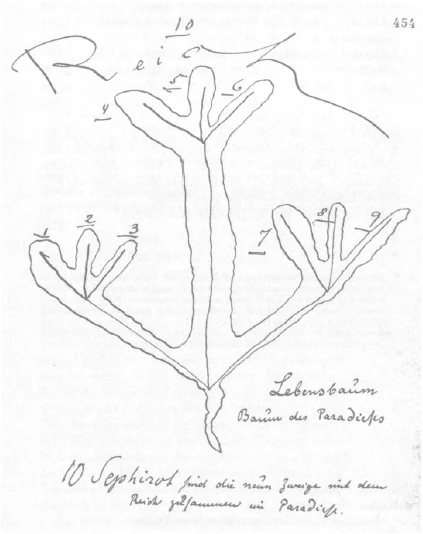
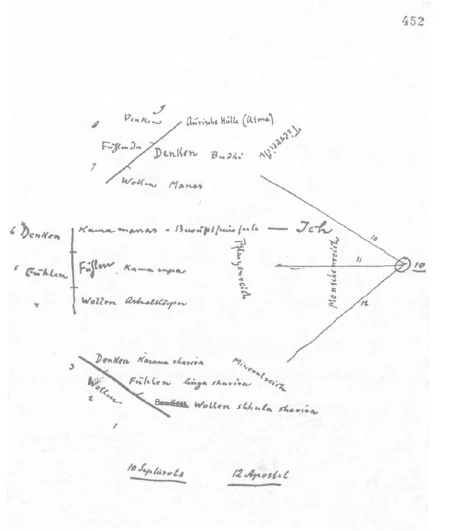
Translated by Steiner Online Library
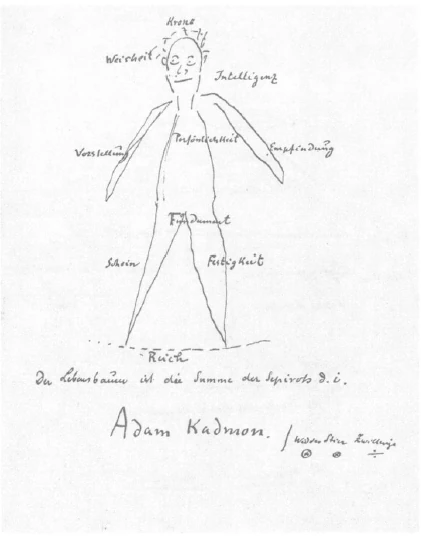
About Kabbalah
[ 1 ] We have seen that the Bible can be understood more and more deeply the more we delve into theosophical teachings. But today you will see how theosophy, theosophical wisdom, has passed through millennia and has only changed in form in different times through names, words, and so on. Today's outline will deal with something that was taught by the ancient Jews. Even among Jews today, Kabbalah is something whose profound wisdom is very little known. It sometimes still comes to light in those places where one would least expect it. If you were to meet a learned Jew who comes from distant Galicia, who outwardly makes very little impression and may seem repulsive to civilized humanity, you might find that he still knows remnants of Kabbalistic wisdom. In Austria, these people are called “miracle rabbis” because they know certain external magical arts; for example, they are much better at using suggestion than our modern doctors. To a certain extent, they are even initiated.
[ 2 ] I will say something about what is written in the Kabbalah. In my book “Theosophy” you will find that those secret teachings agree with what we learn in Theosophy.
[ 3 ] The Kabbalah distinguishes twelve members within the world, of which the first and the last remain secret because they cannot be put into words at all. Only the remaining ten are put into words. These remaining ten are divided into three groups: first, the so-called spirit world, the world of pure spiritual beings; second, the world of the soul; and third, the world of physicality.
[ 4 ] Now, the Kabbalist immediately tells each of his students: You can never see any of these three worlds with your eyes, but you can only see the “realm” at any given time. — The ‘realm’ is what our world is, the world that surrounds us. I see a human being, says the Kabbalist student, but what I see is in the “realm.” In truth, this person is in the threefold world. They have a body, a soul, and a spirit. Through the body, they breathe and nourish themselves; through the soul, they feel, and through the spirit, they think. All of this appears to us as a whole, as the “realm.” This is the tenth of the limbs. This tenth limb is the confluence of the other nine in the most diverse ways.
[ 5 ] First: the world of the physical: The physical has three members again. Every body is within itself. If it were not within itself, it would not exist at all. If you bump into it, you perceive its solidity. If it bumps into you, you perceive its appearance. That is why we distinguish between: foundation, solidity, appearance. These are the three Sephiroth of physicality. This gives us four Sephiroth:
[ 6 ] Realm 10
[ 7 ] Solidity 9
[ 8 ] Foundation 8
[ 9 ] Appearance 7
[ 10 ] Second: the world of the soul. Again, three Sephiroth. The first is what we now call sympathy in theosophy and what Kabbalah calls love. Love is what the soul body gives out when it approaches another. Just as solidity confronts me from a body, love is what I give out. 6
[ 11 ] The second Sephiroth is grace, which is no longer merely giving, like love, which is already more enclosed within itself; it does not give itself out like love, but distributes from within. 5
[ 12 ] The third Sephiroth is justice, which is merely balancing. 4
[ 13 ] These are the three soul Sephiroth.
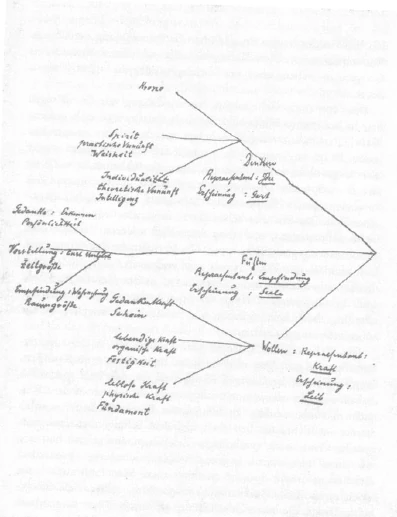
[ 14 ] Now to the Sephiroth of the spirit world. They are the ones who are actually active.
[ 15 ] The first is called the world mind by Kabbalah. 3
[ 16 ] The second is the world thought: the mind that has the thought. 2
[ 17 ] The third is the fundamental Sephiroth, which Kabbalah calls the height or the crown, the union of intellect and thought (Kether — the height). 1
[ 18 ] These are the ten Sephiroth. Now the Kabbalist says to the student: You have a limb from each of these worlds within you. From the physical world, you have your vegetative soul (nephesh), plant soul, ethereal double body. From the soul world, you have the passionate soul, the feeling soul (ruach), and from the spirit world, you have the thinking soul (neshamah).
[ 19 ] That was the framework of Jewish esoteric teaching.1The subsequent notes on early Gnostic teachings have been omitted here, as they are not only incomplete but also obviously incorrect, and the literary sources used by Rudolf Steiner could not be identified. However, the notes from the lecture can be found in their entirety in “Beiträge zur Rudolf Steiner Gesamtausgabe” (Contributions to the Rudolf Steiner Complete Edition), issue 29.
[ 20 ] Next four pages: 4 Notepads on the Sephiroth category problem