

The Christian Mystery
GA 97
16 February 1907, Leipzig
Translate the original German text into any language:
Versions Available:
The Christian Mystery, tr. SOL
21. Wer sind die Rosenkreuzer?
21. Who are the Rosicrucians?
[ 1 ] Um den Namen Rosenkreuzer schwebt für diejenigen, die sich mit theosophischer Literatur beschäftigen, etwas Unbestimmtes, Unklares, als läge ein Geheimnis dahinter. Viele sehen darin eine Bezeichnung für Menschen, die sich im 18. Jahrhundert mit möglichen und unmöglichen Zaubereien beschäftigt haben. In Werken von Persönlichkeiten, welche die Rosenkreuzer wissenschaftlich und geschichtlich erforschen wollen, fühlt man das wohlwollende Achselzucken durch, wenn es etwa heißt: Da war einmal eine Art von Bruderschaft, die hohe Ideale und moralische Fortschrittsideen gehabt hat. — Vielleicht wird darin noch von deren symbolischen Formeln gesprochen. Jedenfalls wird in gelehrten Werken immer wieder betont werden, daß die Rosenkreuzer verkommen seien. Wenn die Rosenkreuzer jemals das gewesen wären, was da gesagt ist, so würde die Rosenkreuzerei das Verkehrteste sein. In Wahrheit sind sie etwas, was zum Wertvollsten der Menschheit gehört. Äußerlich könnte man es nicht ergründen. In Bücher sind die Geheimnisse nie übergegangen. Ist etwas davon kundgeworden, so geschah es nur durch Verrat oder dergleichen und das konnte dann leicht als Torheit oder Aberglauben gelten. Eine solche Anschauung hat nichts mit dem zu tun, was die Rosenkreuzerei war. Etwas von dem, was die Rosenkreuzerei umschließt, ist jedoch in einem Buch zu finden, das im Jahre 1616 erschienen ist. Der Verfasser hieß Johann Valentin Andreae. Es hatte den Titel «Die chymische Hochzeit des Christiani Rosenkreutz» und stellt den Entwickelungsgang eines Menschen dar, der ein Rosenkreuzer wurde. Später hat Andreae ein Buch erscheinen lassen, von dem man nicht wußte, war es Ernst oder Scherz oder ein Widerruf.
[ 1 ] For those who study theosophical literature, the name Rosicrucian has a vague, unclear ring to it, as if there were some mystery behind it. Many see it as a term for people who were involved in possible and impossible magic in the 18th century. In works by personalities who want to research the Rosicrucians scientifically and historically, one senses a benevolent shrug of the shoulders when it says, for example: Once upon a time, there was a kind of brotherhood that had high ideals and ideas of moral progress. — Perhaps their symbolic formulas are still mentioned in these works. In any case, scholarly works repeatedly emphasize that the Rosicrucians had degenerated. If the Rosicrucians had ever been what is said there, Rosicrucianism would be the most perverse thing imaginable. In truth, they are something that belongs to the most valuable aspects of humanity. Outwardly, one could not fathom it. The secrets were never passed on in books. If anything became known, it was only through betrayal or the like, and this could then easily be regarded as folly or superstition. Such a view has nothing to do with what Rosicrucianism was. However, something of what Rosicrucianism encompasses can be found in a book that appeared in 1616. The author was Johann Valentin Andreae. It was titled “The Chymical Wedding of Christian Rosenkreutz” and describes the development of a person who became a Rosicrucian. Later, Andreae published a book about which it was not known whether it was serious or a joke or a retraction.
[ 2 ] Es wird sich uns in unserer heutigen Betrachtung dasjenige enthüllen, was heute schon öffentlich werden darf von dem, was die Rosenkreuzerei wirklich ist. Eine Einweihung hat es zu allen Zeiten gegeben. Die Menschen stehen auf verschiedenen Entwickelungsstufen. Es gibt hochstehende Menschen, die in die tiefsten Weltengeheimnisse eingeweiht sind, die davon etwas wissen, wie die Welten sich bilden, wie die Erde entstanden ist und wie die Menschen immer höhere Entwickelungsstufen erreichen. Wenn ausgesprochen wird, der Eingeweihte sei wissend, so wird das oft zu leicht genommen. Zu wissen, welches das eigentliche Menschengeheimnis ist, zu wissen, was des Menschen Zukunft ist, das bedeutet das Größte, was der Mensch lernen kann. Ja, es gibt ein Wissen, welches auf den unvorbereiteten Menschen geradezu tötend wirkt. Würde es heute ohne weiteres mitgeteilt, wäre es um die Menschheit geschehen. Die Menschheit würde gespalten werden, der größte Teil würde zerstört, auf den kleineren Teil würde es günstig wirken. Das Geheimnis kann dem Eingeweihten nie in unberufener Weise abgelockt werden; auch durch keine Marter, kein Martyrium. Wollten Sie es von einem Eingeweihten fordern, er würde niemals einem Unberufenen das letzte Weltengeheimnis offenbaren. Von dem Gedanken allein, das Geheimnis offenbaren zu sollen, würde er wahnsinnig werden oder getötet werden. In einem Bilde stelle ich Ihnen die Perspektive der ganzen Entwickelung dar, die mit diesem Geheimnis zusammenhängt: eine Allee, die immer schmäler und schmäler wird, scheinbar, obgleich für alle Menschen sich einst das große Geheimnis enthüllen wird.
[ 2 ] In our present consideration, we will reveal what may already be made public today about what Rosicrucianism really is. Initiation has existed at all times. People are at different stages of development. There are highly evolved people who are initiated into the deepest secrets of the world, who know something about how the worlds are formed, how the earth came into being, and how human beings reach ever higher stages of development. When it is said that the initiate is knowledgeable, this is often taken too lightly. To know what the real secret of humanity is, to know what the future of humanity is, is the greatest thing a human being can learn. Yes, there is knowledge that has a downright deadly effect on the unprepared human being. If it were communicated today without further ado, it would be the end of humanity. Humanity would be divided, the greater part would be destroyed, and it would have a favorable effect on the smaller part. The secret can never be elicited from the initiate in an unwarranted manner, not even through torture or martyrdom. If you were to demand it from an initiate, he would never reveal the ultimate secret of the world to an uninitiated person. The mere thought of having to reveal the secret would drive him mad or kill him. In a picture, I present to you the perspective of the entire development connected with this secret: an avenue that becomes narrower and narrower, seemingly, although the great secret will one day be revealed to all people.
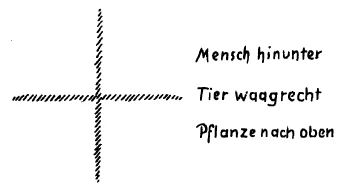
[ 3 ] Die Rosenkreuzerei ist eine Art, eingeweiht zu werden. Durch Christian Rosenkreutz ist sie gestiftet worden. Es gibt verschiedene Wege der Einweihung. Der eine ist von den alten Rishis, den Indern gelehrt worden; das ist der orientalische Jogaweg. Dann gab es den christlich-gnostischen Weg, und der dritte ist der Rosenkreuzerweg. Alle drei Wege führen zu dem Gipfel der Einweihung. Es wird aber gewöhnlich nicht berücksichtigt, wie grundverschieden die geistige und physische Veranlagung der Inder und Europäer ist. Schon dem europäischen Körper wäre es unmöglich, den indischen Weg zu gehen. Man bedenkt außerdem nicht die Einwirkung der äußeren Verhältnisse in ihrer großen Verschiedenheit. Sie können verfolgen, daß in Indien zum Beispiel bestimmte Krankheiten Cholera, Blattern — einen ganz andern Verlauf nehmen, in heißen Ländern anders als in kalten. Die Umwelt ist ganz verschieden und wirkt sich dementsprechend auf alle Hüllen des Menschen aus. Es ist daher eine sonderbare Meinung gewesen, daß für den Europäer die Jogaschulung ausführbar sei. Das war ein Irrtum. Man hat allerdings nicht gewußt, daß seit dem 14. Jahrhundert die Rosenkreuzer einen Entwickelungsweg beschritten haben.
[ 3 ] Rosicrucianism is a way of being initiated. It was founded by Christian Rosenkreutz. There are different paths of initiation. One was taught by the ancient Rishis, the Indians; this is the Eastern path of yoga. Then there was the Christian Gnostic path, and the third is the Rosicrucian path. All three paths lead to the summit of initiation. However, it is not usually taken into account how fundamentally different the spiritual and physical dispositions of Indians and Europeans are. It would be impossible for the European body to follow the Indian path. Furthermore, the influence of external conditions in their great diversity is not taken into account. You can see that in India, for example, certain diseases such as cholera and smallpox take a completely different course in hot countries than in cold ones. The environment is completely different and has a corresponding effect on all the sheaths of the human being. It was therefore a strange opinion that yoga training was feasible for Europeans. That was a mistake. However, it was not known that since the 14th century, the Rosicrucians had been following a path of development.
[ 4 ] Der Rosenkreuzerweg ist keineswegs ein unchristlicher. Für viele Menschen, die inbrünstig und fest im Christentum stehen, ist der christlich-gnostische Weg der richtige, und sie erreichen auf diesem die höchsten Gipfel. Aber die Zahl solcher Naturen nimmt ab. Die Rosenkreuzerei birgt die tiefsten Geheimnisse des Christentums, aber sie verschafft darüber hinaus die Möglichkeit, alle Zweifel hinwegzunehmen, in die jetzt die Menschen durch populäre oder auch weniger populäre Anschauungen gebracht werden. Niemand ist heute vor den bittersten Zweifeln geschützt, die sich an ihn überall herandrängen. Durch die christliche Schulung würde er diesen Zweifeln nicht in der richtigen Weise begegnen können, sich nicht zu schützen und zu verteidigen wissen. Sie dürfen das nicht in einer äußerlichen Weise nehmen. Wenn einer zum Beispiel sagen wollte: Ich lese keinen Haeckel, ich schließe mich ab in meiner christlichen Weltanschauung -, so wäre damit nichts erreicht. Wir leben in einer Welt, in welcher der Mensch ganz mit der Zivilisation angefüllt ist. Benützen wir Eisenbahnen, die neu erschlossenen Lichtquellen, so bedienen wir uns der Naturgesetze. Mag der Mensch sich noch so sehr verschließen: in jeder Lokomotive, in jeder künstlichen Flamme teilen sich ihm diese Gedanken, die im geistigen Umkreis leben, mit. Würde sich jemand nur an das Bibellesen halten, in der Nacht würde sein astralischer Leib, sein Seelenleib, doch umgeben sein mit allen möglichen zerstörenden Seelenempfindungen. Sie wissen nicht, warum Sie nervös werden. Derjenige weiß es, der die unbewußt einströmenden Gedanken kennt. Es geht dabei nicht um die materialistische Wissenschaft als solche, sondern um die ganze geistige Atmosphäre, in der wir leben. Im 12. Jahrhundert herrschte noch religiöse Inbrunst, die Kirche war geistig und äußerlich der Mittelpunkt. Der Mensch, der schwer gearbeitet hatte, flüchtete sich in das Haus der geistigen Mächte und fand dort Ruhe. Das ist heute anders geworden. Die rosenkreuzerische Schulung berücksichtigt diese Fakten, sie rechnet mit alledem, was an den modernen Menschen herankommt.
[ 4 ] The Rosicrucian path is by no means unchristian. For many people who are fervent and firmly rooted in Christianity, the Christian-Gnostic path is the right one, and they reach the highest peaks on it. But the number of such natures is decreasing. Rosicrucianism holds the deepest secrets of Christianity, but it also provides the opportunity to dispel all the doubts that people are now faced with as a result of popular or less popular views. Today, no one is protected from the bitterest doubts that assail them everywhere. Christian education would not enable them to deal with these doubts in the right way, nor would it teach them how to protect and defend themselves. You must not take this in an external way. If, for example, someone were to say, “I don't read Haeckel, I shut myself off in my Christian worldview,” nothing would be achieved by this. We live in a world in which human beings are completely filled with civilization. When we use railroads and newly developed sources of light, we are making use of the laws of nature. No matter how much human beings may shut themselves off, in every locomotive and every artificial flame, these thoughts that live in the spiritual realm communicate themselves to them. If someone were to stick only to reading the Bible, at night their astral body, their soul body, would be surrounded by all kinds of destructive soul feelings. You don't know why you are becoming nervous. The one who knows the unconsciously inflowing thoughts knows. It is not a question of materialistic science as such, but of the whole spiritual atmosphere in which we live. In the 12th century, religious fervor still prevailed, and the church was the spiritual and outward center of life. People who had worked hard took refuge in the house of spiritual powers and found peace there. Today, things are different. Rosicrucian training takes these facts into account; it reckons with everything that comes up for modern people.
[ 5 ] Was ist nun die rosenkreuzerische Schulung? Sie werden hier hohe Ideale kennenlernen. Wer diese Schulung durchmachen will, muß sich an den wenden, der das entsprechende Wissen besitzt. Schon bei den ersten Schritten, die er tut, sieht der Schüler, worauf es ankommt. Was durch die Rosenkreuzerschulung bewirkt wird, ist eine völlige Umwandlung des Menschen. Nur dadurch, daß der Mensch Fähigkeiten der höheren Welt erlangt, kann er deren Bürger werden.
[ 5 ] What, then, is Rosicrucian training? Here you will learn about high ideals. Anyone who wants to undergo this training must turn to someone who possesses the relevant knowledge. Even in the first steps he takes, the student sees what is important. What Rosicrucian training brings about is a complete transformation of the human being. Only by acquiring the abilities of the higher world can a person become a citizen of that world.
[ 6 ] Sieben Bestandteile, Verrichtungen, gehören zur rosenkreuzerischen Geheimschulung. Erstens: Richtiges Studium; zweitens: Aneignung der Imagination; drittens: Erlernung okkulter Schrift; viertens: Auffindung des Steines der Weisen; fünftens: Erkenntnis des Menschen selbst, der Welt im Kleinen, des Mikrokosmos; sechstens: Erkenntnis des Makrokosmos; siebentens: Erkennen, was Gottseligkeit ist. Oft kommen Abweichungen in der Reihenfolge vor, so daß ein Lehrer je nach der Individualität des Schülers, zum Beispiel das, was an fünfter Stelle steht, als vierte wählt.
[ 6 ] Seven components, or tasks, belong to Rosicrucian secret training. First: correct study; second: acquisition of imagination; third: learning occult writing; fourth: finding the philosopher's stone; fifth: knowledge of the human being itself, the world in miniature, the microcosm; sixth: knowledge of the macrocosm; seventh: knowledge of what godliness is. There are often deviations in the order, so that a teacher, depending on the individuality of the student, may choose, for example, what is in fifth place as fourth.
[ 7 ] Sie werden fragen: Gibt es denn heute noch eine echte Rosenkreuzerei? Ja, es gibt eine solche, und sie wird erst in der Zukunft ihre wichtigste Bedeutung erlangen. Diese Rosenkreuzerbrüder haben auch gewisse Erkennungszeichen. Nicht viele können in die Öffentlichkeit hinaustreten, ein Teil wirkt vollständig in der Stille. Wer sie sucht, findet sie, und wer sie nicht findet, kann annehmen, daß es für ihn noch nicht an der Zeit ist. Die Begegnung tritt aber unweigerlich ein. Oft schaut es aus wie ein rechter Zufall. Sie können zum Beispiel in einem Wartesaal wegen einer eingeschneiten Bahnstrecke drei Stunden lang warten müssen. Ein Fremder tritt scheinbar ganz zufällig an Sie heran. Sie haben in ihm Ihren Lehrer gefunden. Das ist nur ein Fall, den ich Ihnen hier nenne.
[ 7 ] You may ask: Is there still a genuine Rosicrucianism today? Yes, there is, and it will only attain its most important significance in the future. These Rosicrucian brothers also have certain distinguishing marks. Not many of them can appear in public; some of them work completely in silence. Those who seek them will find them, and those who do not find them can assume that the time is not yet right for them. But the encounter will inevitably happen. It often looks like a real coincidence. For example, you may have to wait three hours in a waiting room because of a snowed-in railway line. A stranger approaches you, seemingly by chance. You have found your teacher in him. This is just one example I am giving you here.
[ 8 ] Erstens: Richtiges Studium. Was ist darunter gemeint? Sie werden in Welten geführt, von denen sich der gewöhnliche Mensch keinen Begriff macht. Es ist notwendig, daß man sich darin zurechtfindet. Ein Phantast, der nicht einen festen Halt in seinem Denken hat, ist nicht dafür geeignet. Sicherstes Denken ist Bedingung. Der Mensch muß sich umschauen, er muß sich bemühen, gesunden Auges umherzusehen, aber auch imstande sein, seine Sinne abzuschließen. Damit ist etwas gesagt, was nicht jeder würdigt, selbst nicht die größten Philosophen. Eduard von Hartmann zum Beispiel hat es immer wieder ausgesprochen: Bei jedem Denken ist immer noch etwas von den Sinnen zurückgeblieben, sei es ein Ton- oder ein Farbeneindruck. — Es bedeutet dies eine unglaubliche Unbescheidenheit, zu behaupten, ein Denken, in dem nichts Sinnenfälliges enthalten ist, sei nicht möglich. Was zu einem solchen sinnlichkeitsfreien Denken führt, wird jetzt in geisteswissenschaftlicher Literatur und in Vorträgen geboten.
[ 8 ] First: proper study. What does that mean? You will be led into worlds that the ordinary person cannot conceive of. It is necessary to find your way around them. A fantasist who does not have a firm grasp of his thinking is not suited for this. The most reliable thinking is a prerequisite. Man must look around, he must strive to see with healthy eyes, but he must also be able to shut off his senses. This is something that not everyone appreciates, not even the greatest philosophers. Eduard von Hartmann, for example, has repeatedly stated that in every thought there is always something left over from the senses, be it an impression of sound or color. It is incredibly immodest to claim that thinking that contains nothing perceptible to the senses is not possible. What leads to such thinking free of sensuality is now offered in spiritual scientific literature and lectures.
[ 9 ] Solche, die sich als geeignet ausweisen, werden tiefer in das Wissen hineingeführt. Aber der elementare Teil dieses Wissens ist einem großen Teil der Menschen zugänglich. Das Studium, das heute an die Menschen herangebracht wird, welches von dem Sinnenfalligen der Welt wegführt, besteht in einer Schulung der Gedanken. Diese haben dann nichts zu tun mit dem, was uns in der Sinnlichkeit umgibt. Wer noch tiefer eindringen will, muß seinen Geist zu einer verstärkten Gedankentrainierung hinleiten. Zu solchem sinnlichkeitsfreien Denken versuchte ich Anleitung zu geben in den beiden Schriften: «Die Philosophie der Freiheit» und «Wahrheit und Wissenschaft». Es ist so: Wer beginnt, sich in diese Bücher zu vertiefen, wird merken, wie ein Gedanke sich an den andern reiht in einer bestimmten Notwendigkeit der Gedankenfolge. Alle, die höher hinaufstreben, erhalten damit das Mittel zu einem richtigen geistigen Wachstum.
[ 9 ] Those who prove themselves suitable are led deeper into this knowledge. But the elementary part of this knowledge is accessible to a large part of humanity. The study that is brought to people today, which leads away from the sensory world, consists of training the thoughts. These then have nothing to do with what surrounds us in sensuality. Those who want to delve even deeper must guide their minds toward intensified thought training. I attempted to provide guidance for such non-sensual thinking in the two writings: “The Philosophy of Freedom” and “Truth and Science.” It is like this: anyone who begins to delve into these books will notice how one thought follows another in a certain necessary sequence of thoughts. All those who strive to rise higher will thus obtain the means for proper spiritual growth.
[ 10 ] Zweitens: Aneignung der Imagination. Hier unterscheidet sich das Vorstellen vom gewöhnlichen Denken. Denken Sie an Goethes Wort: «Alles Vergängliche ist nur ein Gleichnis» Wenn Sie einen Menschen mit lächelndem oder mit kummervollem Antlitz sehen, so werden Sie nicht sagen, da im Gesicht entsteht eine Falte, oder eine Träne rollt über die Backe, sondern Sie sagen sich, dieses ist der Ausdruck einer heiteren, jenes der einer traurigen Seele. Das Äußere erschließt Ihnen das Innere, es ist ein Sinnbild, ein Gleichnis für das Erleben der Seele. Beim Menschen wird es jeder zugeben. Jeder kennt den Unterschied eines Menschenkopfes und seiner Abbildung. Der Geologe beschreibt Ihnen die Erde, ohne daß ihn irgend etwas anderes dabei beschäftigt als die rein physische Struktur. Das wissen die Menschen nicht, daß der Erdkörper der Körper eines Wesens ist, und daß gewisse Pflanzen der Ausdruck sind für den heiteren und für den traurigen Erdengeist. Goethe wußte davon zu sagen, er wußte die Erde als einen Leib anzusehen und wußte, was ihn durchdringt. Er laßt den Erdgeist im «Faust» sagen:
[ 10 ] Second: acquisition of imagination. Here, imagination differs from ordinary thinking. Think of Goethe's words: “Everything transitory is only a parable.” When you see a person with a smiling or sorrowful face, you will not say that a wrinkle is forming on the face or that a tear is rolling down the cheek, but you will say to yourself that this is the expression of a cheerful soul and that of a sad soul. The exterior reveals the interior to you; it is a symbol, a parable for the experience of the soul. Everyone will admit this when it comes to humans. Everyone knows the difference between a human head and its image. The geologist describes the earth to you without being concerned with anything other than its purely physical structure. People do not know that the Earth is the body of a being, and that certain plants are the expression of the cheerful and sad Earth spirit. Goethe knew this, he knew how to see the Earth as a body and knew what permeates it. He has the Earth spirit say in “Faust”:
In Lebensfluten, im Tatensturm
Wall’ ich auf und ab,
Webe hin und her!
Geburt und Grab,
Ein ewiges Meer,
Ein wechselnd Weben,
Ein glühend Leben,
So schaff’ ich am sausenden Webstuhl der Zeit
Und wirke der Gottheit lebendiges Kleid.
In floods of life, in storms of action
I surge up and down,
Weaving back and forth!
Birth and grave,
An eternal sea,
A changing weave,
A glowing life,
Thus I create on the whirring loom of time
And work the living garment of the deity.
[ 11 ] Alles auf der Erde ist ein Gleichnis für das, was im Inneren der Erde vor sich geht. Auf dem Erdenleib wandern die Menschen umher. Aus meinem Leib - so kann die Erde sagen — wächst das heraus, was dem Menschen sein Brot gibt. - In jener Stelle des JohannesEvangeliums: «Der mein Brot isset, tritt mich mit Füßen», ist eines der tiefsten Mysterien der Weltanschauung ausgedrückt.
[ 11 ] Everything on earth is a parable for what goes on inside the earth. People wander around on the earth's body. From my body — so the earth can say — grows that which gives man his bread. — In that passage from the Gospel of John: " He who eats my bread tramples me underfoot," one of the deepest mysteries of the worldview is expressed.
[ 12 ] Imagination eignet man sich dadurch an, daß man in jedem Ding ein Gleichnis sieht. Dazu aber muß man vorher logisches Denken gelernt haben. Aber in der Rosenkreuzerschulung wird niemand ein anderes Gleichnis wählen. Ein jeder empfindet in allem ein Gleichnis des Ewigen. Ich muß hier in einen Dialog kleiden, was sich hinter einem Gleichnis versteckt, welches erst in den mittelalterlichen Tempeln und dann in den Rosenkreuzerschulen gelehrt wurde. Der Lehrer sagte zum Schüler: Sieh die Pflanze an, wie sie mit ihrer Wurzel in den Boden treibt und wie sie den Blütenkelch, den Sitz der Befruchtungsorgane dem Sonnenlicht zuwendet. Der Blütenkelch wird vom Sonnenstrahl in Keuschheit geküßt, und hierdurch entsteht ein neues Wesen. Der Sonnenstrahl wird auch die heilige . Liebeslanze genannt. Selbst Darwin sagt: Die Wurzel der Pflanze ist . mit dem Kopf zu vergleichen. -— Der Mensch ist eine umgekehrte Pflanze. Seine Fortpflanzungsorgane sind schamvoll dem Mittelpunkt der Erde zugekehrt. Das Tier steht zwischen Mensch und Pflanze. Es werden die drei Reiche der Natur bildlich mit einem Kreuz bezeichnet.
[ 12 ] Imagination is acquired by seeing a parable in everything. To do this, however, one must first have learned logical thinking. But in Rosicrucian training, no one will choose a different parable. Everyone senses a parable of the Eternal in everything. I must here put into words what is hidden behind a parable that was first taught in medieval temples and then in Rosicrucian schools. The teacher said to the student: Look at the plant, how it drives its roots into the ground and how it turns the calyx, the seat of the fertilizing organs, toward the sunlight. The calyx is kissed by the sunbeam in chastity, and through this a new being is created. The sunbeam is also called the holy lance of love. Even Darwin says: The root of the plant can be compared to the head. — Man is an inverted plant. His reproductive organs are bashfully turned toward the center of the earth. The animal stands between man and plant. The three kingdoms of nature are symbolically represented by a cross.
[ 13 ] Plato sagt: Die Weltenseele ist am Kreuz des Weltenleibes gekreuzigt.
[ 13 ] Plato says: The world soul is crucified on the cross of the world body.
[ 14 ] Nun fordert der Rosenkreuzerlehrer den Schüler auf: Also vergleiche die fleischliche Materie mit der pflanzlich-keuschen Materie —, es wird aber eine Zeit kommen, wo der Mensch geläutert sein wird in seinen Begierden und Leidenschaften, und er wird zu einer Stufe heranreifen und der geistigen Sonne entgegenleuchten, so keusch, so begierdenlos wie die keusche Pflanze. Durch dieses Ideal wird er sein Fleisch so läutern, daß sich die Befruchtung keusch und rein vollzieht. Dieses Ideal stellt die mittelalterliche Schulung in dem Heiligen Gral dar. Ein heiliges Symbolum ist der Kelch für das, was menschliche Sinnlichkeit werden muß, wenn sie dem gleich wird, was der Pflanzenkelch ist. Dann wird sie geküßt werden von der weißen Taube — der Kelch wird dargestellt mit der Taube darüber. So die Welt zu vergeistigen, in solchen Bildern die Umgebung des Menschen zu sehen, hebt hinauf zum Anschauen astraler Bilder. Gemüt und Gefühl bilden die Imagination aus.
[ 14 ] Now the Rosicrucian teacher challenges the student: Compare the carnal matter with the chaste plant matter — but a time will come when man will be purified of his desires and passions, and he will mature to a level where he will shine toward the spiritual sun, as chaste and desireless as the chaste plant. Through this ideal, he will purify his flesh so that fertilization takes place chastely and purely. This ideal represents the medieval training in the Holy Grail. A sacred symbol is the chalice for what human sensuality must become when it becomes like the plant chalice. Then it will be kissed by the white dove — the chalice is depicted with the dove above it. To spiritualize the world in this way, to see the human environment in such images, lifts one up to the contemplation of astral images. Mind and feeling form the imagination.
[ 15 ] Drittens: Erlernung der okkulten Schrift. Die okkulte Schrift besteht darin, daß die inneren Strömungen der Natur nachgebildet werden. Ein solches Zeichen ist das Wirbelzeichen. Könnten Sie den Orionnebel ganz sehen, so würden Sie ihn wie zwei ineinander verschlungene Sechsen wahrnehmen. Hier sehen Sie eine zugrundegehende und eine entstehende Welt in dem Nebel. So ist es überall. Wenn die Pflanze eine neue Frucht abstößt, so geht gar nichts von der alten Pflanze in die neue über. Nichts anderes als die Kräfte bewirken, daß sich eine neue Pflanze bildet. Auch da würden Sie nur den Wirbel sich hineinringeln und hinausringeln sehen. Ebenso könnten Sie sehen, wie eine alte Kultur sich in sich selbst hineinringelt und eine neue sich herausschlängelt. Dieser geistige Vorgang kann uns helfen, ein solches Schriftzeichen zu verstehen.
[ 15 ] Third: learning occult writing. Occult writing consists of reproducing the inner currents of nature. One such sign is the vortex sign. If you could see the Orion Nebula in its entirety, you would perceive it as two intertwined sixes. Here you see a world passing away and a world emerging in the nebula. It is like this everywhere. When a plant produces a new fruit, nothing from the old plant is transferred to the new one. Nothing but the forces cause a new plant to form. There, too, you would only see the vortex curling in and out. Similarly, you could see how an old culture curls in on itself and a new one winds its way out. This spiritual process can help us to understand such a character.
[ 16 ] Achthundert Jahre vor Christi Geburt trat die Sonne in das Zeichen des Widders oder Lammes. Jedes Frühjahr rückt sie etwas weiter. Jetzt ist der Frühlingspunkt im Sternbild der Fische. Zu ersterer Zeit glaubten die Menschen, der Widder bringe ihnen alles Heil, die neue Kraft im Frühjahr. Selbst den Erlöser brachten sie damit in Zusammenhang. In den ersten Zeiten des Christentums hatten sie als Symbol das Kreuz mit dem Lamm. Bevor die Sonne im Frühjahr im Sternbild des Widders stand, stand sie im Sternbild des Stieres. Damals verehrten die Ägypter den Apis, die Perser den Mythrasstier. Nach der Sintflut stand die Sonne im Sternbild des Krebses. Der Krebs hat dieses okkulte Zeichen bekommen:
[ 16 ] Eight hundred years before the birth of Christ, the sun entered the sign of Aries or the Lamb. Every spring it moves a little further. Now the vernal equinox is in the constellation of Pisces. In earlier times, people believed that Aries brought them all salvation, the new power in spring. They even associated the savior with it. In the early days of Christianity, their symbol was the cross with the lamb. Before the sun was in the constellation of Aries in the spring, it was in the constellation of Taurus. At that time, the Egyptians worshipped Apis, and the Persians worshipped Mithras. After the Flood, the sun was in the constellation of Cancer. Cancer has been given this occult sign:

[ 17 ] Und so gibt es viele solcher Linien, aber auch Farben. Und solche Zeichen lernt man, die uns hineinführen in die Naturkräfte und Naturmächte. Die Ausbildung des Willens lernt man in der okkulten Schrift.
[ 17 ] And so there are many such lines, but also colors. And we learn such signs that lead us into the forces and powers of nature. The training of the will is learned in occult writing.
[ 18 ] Viertens: Die Auffindung des Steines der Weisen. Im 18. Jahrhundert verstand man ein Geheimnis darunter. Jemand hatte damals auch etwas davon veröffentlicht. Es ist etwas, das jeder kennt. Der Stein der Weisen ist zugleich das Edelste, was der Mensch sich erringen kann, was der Mensch aus seinem Organismus machen kann, um zu höherer Entwickelung zu kommen.
[ 18 ] Fourth: The discovery of the philosopher's stone. In the 18th century, this was understood to be a secret. Someone had also published something about it at that time. It is something that everyone knows. The philosopher's stone is also the most precious thing that humans can achieve, what humans can make of their organism in order to attain higher development.
[ 19 ] Hier möchte ich Ihnen ein Gleichnis der Vedantaphilosophie nennen: Einmal wollten die Menschen die Fähigkeit prüfen, ob der Mensch auch ohne Augen leben könne. Nach einem Jahr sagte der Betreffende: Ja, ich habe gelebt, aber als ein Blinder. - Dann versuchte er, ohne Ohren zu leben, und nach einem Jahr gab er den Bescheid: Ja, ich habe ohne Ohren gelebt, aber als ein Tauber. - Die Stimme wurde genommen, und er lebte als ein Stummer. Nun sollte ihm auch der Atem genommen werden, und das ging nicht: ohne Atem konnte er nicht leben. Der Atem bringt uns die Lebensluft. «Und Gott hauchte dem Menschen den Odem ein, und er ward eine lebendige Seele.» Mit jedem Atemzug ziehen wir Sauerstoff ein und stoßen Kohlensäure aus. Bei der Pflanze ist ein umgekehrter Kreislauf vorhanden. Die Pflanze baut ihren Leib aus Kohlenstoff auf. Daher kommt es, daß wir noch nach Jahrtausenden in der Kohle versteinerte Pflanzen finden. Der Mensch hat in sich den Kohlenstoff, er atmet Sauerstoff ein und Kohlensäure wird erzeugt, die sich entfernt. Das tut auch das Tier. Nun lehrt die Rosenkreuzerschule eine besondere Gestaltung des Atmungsprozesses, und hierdurch lernt der Mensch den Vorgang, den die Pflanze in sich vornimmt. Dann wird der Mensch imstande sein, den Kohlenstoff in sich selber zu verwandeln: er wird selber das blaue zurückfließende Blut in rotes umwandeln. Er nimmt die Pflanzennatur in sich auf und wird einst tun, was die Pflanze heute tut. Der Rosenkreuzer sagt: Heute ist dein Leib durch Fleisch aufgebaut, einst wirst du ihn selber durch deinen Atem aufbauen. Die Pflanzennatur wird in dir erscheinen, du wirst aber nicht schlafen wie sie, du wirst hellseherisch dabei sein.
[ 19 ] Here I would like to mention a parable from Vedanta philosophy: Once, people wanted to test whether humans could live without eyes. After a year, the person in question said: Yes, I have lived, but as a blind man. Then he tried to live without ears, and after a year he reported: Yes, I have lived without ears, but as a deaf man. His voice was taken away, and he lived as a mute. Now his breath was to be taken away, and that was not possible: without breath he could not live. Breathing brings us the air of life. “And God breathed into the man the breath of life, and he became a living soul.” With every breath we take, we inhale oxygen and exhale carbon dioxide. In plants, the cycle is reversed. Plants build their bodies from carbon. That is why, even after thousands of years, we still find plants fossilized in coal. Humans have carbon within them; they breathe in oxygen and produce carbon dioxide, which is expelled. Animals do the same. The Rosicrucian school teaches a special form of the breathing process, through which humans learn the process that plants carry out within themselves. Then humans will be able to transform the carbon within themselves: they will themselves transform the blue blood flowing back into red blood. They will absorb the nature of plants into themselves and will one day do what plants do today. The Rosicrucians say: Today your body is built up of flesh, but one day you will build it up yourself through your breath. The nature of plants will appear in you, but you will not sleep like them; you will be clairvoyant.
[ 20 ] Diesem Ideal geht der Mensch entgegen, seinen Leib aufzubauen aus Kohlenstoff - die gewöhnliche Kohle, das ist der Stein der Weisen. Nicht schwarze Kohle wird es sein, sondern durchsichtig wasserheller Kohlenstoff, wenn des Menschen Leib sternhaft geworden ist. Es sind das nicht nur chemische Vorgänge, sondern es sind hohe Ideale. Das macht der Rosenkreuzer gradweise durch, und später wird die ganze Menschheit dazu aufsteigen.
[ 20 ] Human beings are moving toward this ideal of building their bodies from carbon—ordinary coal, which is the philosopher's stone. It will not be black coal, but transparent, water-clear carbon, when the human body has become star-like. These are not just chemical processes, but high ideals. The Rosicrucians are gradually achieving this, and later all of humanity will ascend to it.
[ 21 ] Fünftens: Erkenntnis des Menschen als Mikrokosmos. In der ganzen übrigen Natur ist die Welt ausgebreitet, und der Mensch ist der Extrakt davon. Alles in der Welt ist als Buchstabe ausgebreitet, und der Mensch ist das Wort daraus. Im Anfang des 19. Jahrhunderts brachten Oken und Schelling ganz richtige Grundideen davon. Sie suchten sich die Wesenheit klarzumachen, die einem Organ entspricht. Oken verfuhr etwas grotesk, wenn er erklärte: Die Zunge ist ein Tintenfisch. - Goethe sagt: Das Auge ist vom Licht für das Licht gebildet. - Die wahre Natur des Lichtes erkennen wir erst, wenn wir im Menschen das finden, was dem Licht entspricht.
[ 21 ] Fifth: Recognition of the human being as a microcosm. The world is spread out throughout the rest of nature, and the human being is the extract of it. Everything in the world is spread out as a letter, and man is the word from it. At the beginning of the 19th century, Oken and Schelling brought forth very correct basic ideas about this. They sought to clarify the essence that corresponds to an organ. Oken proceeded somewhat grotesquely when he explained: The tongue is an octopus. Goethe says: The eye is formed by light for light. We only recognize the true nature of light when we find in humans what corresponds to light.
[ 22 ] Ein Leitmotiv gibt der Lehrer dem Schüler, sich zu konzentrieren auf einen Punkt, jenes Organ hinter der Nasenwurzel, und er lernt die Natur des Traumbewußtseins des Menschen kennen zum heutigen hellen Bewußtsein hinzu. Und der Mensch lernt die ganze Welt kennen, wenn er sich vertieft in Milz, Leber und anderes mehr. Hat er durch diese innere Versenkung - gefährlich ist ein Hineinbrüten - sein Bewußtsein erweitert, wird er zusammenwachsen mit der ganzen Welt.
[ 22 ] The teacher gives the student a guiding principle to concentrate on one point, the organ behind the bridge of the nose, and he learns about the nature of human dream consciousness in addition to today's clear consciousness. And the human being gets to know the whole world when he immerses himself in the spleen, liver, and more. Once he has expanded his consciousness through this inner contemplation—dangerous is brooding—he will grow together with the whole world.
[ 23 ] Sechstens: Erkenntnis des Makrokosmos. Wer das Vorhergehende erkannt hat, wird auch hinter allen Geschöpfen den Schöpfer erkennen.
[ 23 ] Sixth: Knowledge of the macrocosm. Those who have recognized the preceding will also recognize the Creator behind all creatures.
[ 24 ] Siebentens: Erkenntnis der Gottseligkeit. Auf der siebenten Stufe erreicht der Mensch einen Punkt, welcher aus der Tiefe der menschlichen Seele das Allgefühl hervorruft und, wozu er erst auf dieser Stufe berechtigt ist, das Gefühl der Beseligung. Erst durch Erkenntnis des Makrokosmos lernt er sich hineinversetzen in dieses Allgefühl. Ein klares Sich-Hineinleben in alle Einzeldinge ist: Gottseligkeit. Da lernt er, was hinter der Natur als Seele ruht. Einmal sagte mir jemand: Ich habe niemals gemeint, daß der Stein beim Klopfen auch etwas fühle. - Der Geist des Mineralreiches fühlt das Zerklopfen des Steins als höchste Wollust, als beseligendes Gefühl. Wenn uns scheint, als müsse der Marmorbruch Marter empfinden, für den Geist des Steins ist das höchste Seligkeit. Nun könnten Sie sagen: Warum werden diese Einzelheiten nicht mitgeteilt? Einst sagte jemand, das könnte doch höchst nützlich für die Menschheit sein. Ich erwiderte ihm: Die Menschen würden selbstsüchtigen Vorteil daraus ziehen wollen, und dieses Geheimnis kann nur in den selbstlosesten Dienst der Menschheit gestellt werden.
[ 24 ] Seventh: Knowledge of divinity. On the seventh level, humans reach a point which evokes a feeling of oneness from the depths of the human soul and, which they are only entitled to at this level, a feeling of bliss. Only through knowledge of the macrocosm does he learn to empathize with this feeling of oneness. A clear empathy with all individual things is: godliness. There he learns what lies behind nature as soul. Someone once said to me: I never thought that the stone also felt something when it was tapped. The spirit of the mineral kingdom feels the tapping of the stone as the highest pleasure, as a blissful feeling. When it seems to us that the marble quarry must feel torment, for the spirit of the stone it is the highest bliss. Now you might say: Why are these details not communicated? Someone once said that this could be extremely useful for humanity. I replied: People would want to take selfish advantage of it, and this secret can only be placed in the most selfless service of humanity.
[ 25 ] Dieses Geheimnis wußten die Rosenkreuzer und diejenigen, die jetzt durch die Welt wandeln und dem menschlichen Fortschritt dienen, sie teilen mit, was zum Fortschritt dient, sie, die wissen, wie die «Chymische Hochzeit» vor sich gehen kann.
[ 25 ] The Rosicrucians knew this secret, and those who now walk the world and serve human progress share what serves progress, they who know how the “Chymical Wedding” can take place.