

Wonders of the World,
Trials of the Soul,
and Revelations of the Spirit
GA 129
20 August 1911, Munich
Translate the original German text into any language:
Versions Available:
Dritter Vortrag
Third Lecture
[ 1 ] In diesem Vortragszyklus hoffe ich Ihnen von einer gewissen Seite her einen Überblick über wichtige Tatsachen unserer Geisteswissenschaft geben zu können. Den Faden oder die Disposition, die dabei eingehalten werden soll, werden Sie allerdings erst in den letzten Vorträgen überschauen können, weil eine ganze Reihe von Fragen berührt werden soll, welche sich dann in den letzten Tagen zu einem Gesamtbilde zusammenschließen werden. Ich habe an den letzten zwei Abenden in manchen Dingen angeknüpft an das Mysterium von Eleusis, an die griechische Mythologie; ich werde noch öfter Gelegenheit haben, an unsere Aufführungen anzuknüpfen. Daß aber in diesem Zyklus noch ein anderes Ziel angestrebt wird, werden Sie eben am Ende erkennen. An dem heutigen Abend möchte ich in Ihnen von einer anderen Seite her ein wenig die Empfindung hervorrufen, wie Geisteswissenschaft in unserer Gegenwart hinarbeitet zu jener großen, gewaltigen Urweisheit, von der wir ein klein wenig gesehen haben, wie sie jene mächtigen Gestalten und Bilder und Mysteriennachrichten durchleuchtet, die aus dem alten Griechenland heraufkommen. Man muß sich schon einmal damit bekannt machen, meine lieben Freunde, wenn man die ganze Aufgabe und Mission der Geisteswissenschaft heute empfinden will, daß manche Vorstellung, mancher Begriff, der in unserer Gegenwart herrscht, sich verändern muß. Und in dieser Beziehung ist ja der Mensch der Gegenwart oftmals recht kurzsichtig, denkt kaum über die allernächsten Zeiten hinaus. Gerade aus diesem Grunde, um ein Gefühl hervorzurufen, wie wir unser Vorstellen, unser Denken selber ändern müssen, wenn wir so recht tief die Mission der Geisteswissenschaft überschauen wollen, wurde hingewiesen auf das ganz Andersartige der griechischen Anschauung von Welt und Leben, von dem Verhältnis des Menschen zur geistigen Welt. Denn ganz anders hat das griechische Herz, die griechische Seele gefühlt, als der moderne Mensch in dieser Beziehung fühlt. Und da möchte ich heute eines gleich im Beginn erwähnen.
[ 1 ] In this series of lectures, I hope to provide you with an overview of key aspects of our spiritual science from a certain perspective. However, you will only be able to grasp the thread or outline to be followed in the final lectures, because a whole series of questions will be addressed, which will then come together into a complete picture in the last few days. Over the past two evenings, I have in some respects drawn upon the Eleusinian Mysteries and Greek mythology; I will have further opportunities to refer to our performances. But you will realize at the end that this series is also aiming for another goal. This evening I would like to awaken in you, from a different angle, a sense of how spiritual science in our time is working toward that great, mighty primordial wisdom, of which we have glimpsed a little, as it illuminates those powerful figures and images and mystery teachings that come down to us from ancient Greece. One must first become acquainted with this, my dear friends, if one wishes to grasp the full task and mission of spiritual science today: that many ideas and concepts prevailing in our present time must change. And in this regard, people today are often quite short-sighted, thinking scarcely beyond the immediate future. Precisely for this reason—to evoke a sense of how we must change our own imagination and thinking if we are to truly grasp the mission of spiritual science—reference was made to the entirely different nature of the Greek view of the world and life, of the relationship between human beings and the spiritual world. For the Greek heart and soul felt quite differently in this regard than modern human beings do. And I would like to mention one thing right at the outset today.
[ 2 ] Ihnen allen ist ein Begriff sehr geläufig, eine Idee, die heute ja nicht nur in unserem Wortschatz in allen Sprachen geläufig ist, sondern die auch in die Bezeichnungen einer gewissen Wissenschaftsrichtung eingeflossen ist. Es ist das Wort Natur. Und indem das Wort Natur ausgesprochen wird, entsteht gleich eine ganze Menge von Vorstellungen, welche die heutige Seele empfindet über irgend etwas, was eben als Natur bezeichnet wird. Und wir stellen Natur dann der Seele oder dem Geiste gegenüber. Nun sehen Sie, meine lieben Freunde, alles das, was der gegenwärtige Mensch meint, wenn er den Ausdruck Natur gebraucht, alles das, was wir heute als Natur bezeichnen, gab es einfach für ein altes griechisches Denken nicht. Sie müssen das ganz ausstreichen, was Sie heute mit dem Ausdruck Natur bezeichnen, wenn Sie eindringen wollen in das alte griechische Denken. Jenen Gegensatz, jene Zweiheit zwischen Natur und Geist, wie wir sie heute empfinden, das kannte der alte Grieche nicht. Wenn er sein Auge hinlenkte auf die äußeren Vorgänge, wie sie sich abspielen in Wald und Feld, in Sonne und Mond, in der Sternenwelt, dann empfand der alte Grieche noch nicht ein geistentblößtes Naturdasein, sondern ihm war alles das, was da geschah in der Welt, ebenso die Tat von geistigen Wesenheiten, wie uns die Tat, die etwa in einer Handbewegung besteht, Ausdruck ist unserer Seelentätigkeit. Wenn wir unsere Hand von links nach rechts bewegen, so wissen wir, dieser Handbewegung liegt zugrunde eine Seelentätigkeit, und wir sprechen nicht von einem Gegensatz der bloßen Bewegung der Hand und unseres Willens, sondern wir wissen, daß das eine Einheit ist, was da sich als Hand bewegt und was unser Wille als Bewegungsimpuls darstellt. Da fühlen wir noch die Einheit, wenn wir einen Gestus machen, den unsere Seele ausführt. Wenn wir unseren Blick hinauswenden zum Gang von Sonne und Mond, wenn wir die sich bewegenden Wolken sehen, wenn wir die sich bewegende Luft im Winde wahrnehmen, dann sehen wir nicht mehr so etwas, wie der alte Grieche gesehen hat, was gleichsam Handbewegungen, äußere Gesten von göttlichgeistigen Wesenheiten sind, sondern wir sehen etwas, was wir nach äußeren, abstrakten, rein mathematisch-mechanischen Gesetzen betrachten. Solch eine Natur, die nach rein äußeren, mathematisch-mechanischen Gesetzen betrachtet wird, die nicht bloß die äußere Physiognomie des göttlich-geistigen Handelns darstellt, kannte der alte Grieche nicht. Wir werden hören, wie der Begriff Natur, so wie ihn der heutige moderne Mensch hat, erst entstanden ist.
[ 2 ] There is a term that is very familiar to all of you, an idea that today is not only common in our vocabulary across all languages, but has also found its way into the terminology of a certain branch of science. It is the word “nature.” And the very utterance of the word “nature” immediately evokes a whole host of concepts that the modern mind associates with whatever is designated as “nature.” And we then contrast nature with the soul or the spirit. Now you see, my dear friends, everything that modern people mean when they use the term “nature”—everything we call nature today—simply did not exist in ancient Greek thought. You must completely set aside everything you today designate with the term “nature” if you wish to penetrate ancient Greek thought. That opposition, that duality between nature and spirit, as we perceive it today, was unknown to the ancient Greek. When he turned his gaze to the external processes as they unfold in forest and field, in sun and moon, in the world of the stars, then the ancient Greeks did not yet perceive a nature devoid of spirit, but to them everything that happened in the world was just as much the act of spiritual beings as, for us, the act consisting of, say, a hand movement is an expression of our soul activity. When we move our hand from left to right, we know that this hand movement is based on a soul activity, and we do not speak of a contrast between the mere movement of the hand and our will, but we know that what moves as the hand and what our will represents as an impulse to move are one and the same. There we still feel the unity when we make a gesture that our soul performs. When we turn our gaze outward to the course of the sun and moon, when we see the moving clouds, when we perceive the moving air in the wind, then we no longer see something like what the ancient Greeks saw—namely, hand movements, external gestures of divine-spiritual beings—but rather we see something that we observe according to external, abstract, purely mathematical-mechanical laws. Such a nature, viewed according to purely external, mathematical-mechanical laws, which does not merely represent the external physiognomy of divine-spiritual activity, was unknown to the ancient Greeks. We shall hear how the concept of nature, as understood by modern people today, first came into being.
[ 3 ] Geist und Natur waren in jenen alten Zeiten also in völligem Einklang miteinander. Daher gab es für den alten Griechen auch das noch nicht mit denselben Empfindungswerten wie heute ausgestattet, was in der heutigen Zeit ein Wunder genannt wird. Wenn wir jetzt absehen von allen feineren Unterscheidungen, so können wir heute sagen, ein Wunder würde gesehen, wenn ein Vorgang in der Außenwelt wahrgenommen würde, der nicht nach den bereits bekannten oder mit ihnen verwandten Naturgesetzen erklärbar ist, sondern der voraussetzt, daß der Geist unmittelbar eingreift. Da wo der Mensch wahrnehmen würde ein unmittelbar Geistiges, was er nicht bloß nach rein äußerlichen, mathematisch-mechanischen Gesetzen begreifen und erklären kann, würde er von etwas Wunderbarem sprechen. In diesem Sinne konnte der alte Grieche nicht von etwas Wunderbarem sprechen. Denn ihm war klar, daß der Geist alles macht, was in der Natur geschieht, ob es nun die alltäglichen, in unsere Naturordnung sich einfügenden Ereignisse waren oder seltenere Naturzusammenhänge, das machte keinen Unterschied. Das eine war nur seltener, das andere war das Gewöhnliche, aber der Geist, das göttlich-geistige Schaffen und göttlich-geistige Wirken, griff ihm in alles Naturgeschehen ein. So sehen Sie, wie sich diese Begriffe geändert haben. Daher ist es auch etwas wesentlich unserer Gegenwart Angehöriges, daß das geistige Eingreifen in die äußeren Ereignisse des physischen Planes wie etwas Wunderbares empfunden wird, wie etwas, was herausfällt aus dem gewöhnlichen Gang der Ereignisse. Es ist nur unserer modernen Empfindung eigen, eine scharfe Grenze zu ziehen zwischen dem, was man von Naturgesetzen beherrscht glaubt, und dem, wo man ein unmittelbares Eingreifen der geistigen Welten anerkennen muß.
[ 3 ] In those ancient times, spirit and nature were thus in complete harmony with one another. Consequently, what we today call a miracle did not yet carry the same emotional weight for the ancient Greeks as it does for us today. If we now set aside all finer distinctions, we can say today that a miracle is perceived when an event in the external world is observed that cannot be explained by already known laws of nature or laws related to them, but rather presupposes that the spirit intervenes directly. Wherever a person perceives something directly spiritual that cannot be understood or explained merely by purely external, mathematical-mechanical laws, they would speak of something miraculous. In this sense, the ancient Greeks could not speak of anything miraculous. For it was clear to them that the spirit causes everything that happens in nature; whether these were the everyday events that fit into our natural order or rarer natural phenomena, it made no difference. One was merely rarer, the other was the ordinary, but the spirit—divine-spiritual creation and divine-spiritual activity—intervened in all natural events for them. So you see how these concepts have changed. That is why it is also something essentially characteristic of our present age that spiritual intervention in the external events of the physical plane is perceived as something miraculous, as something that falls outside the ordinary course of events. It is characteristic only of our modern sensibility to draw a sharp line between what we believe to be governed by natural laws and that which requires us to acknowledge the direct intervention of the spiritual worlds.
[ 4 ] Ich habe Ihnen von dem Zusammenklingen zweier Strömungen gesprochen, der Demeter-Persephone-Strömung und der, wenn ich so sagen darf, Agamemnon-Iphigenie-Strömung. Sie sollen verbunden werden durch die Mission der Geisteswissenschaft. Wir könnten auch noch, anknüpfend an diese Vereinigung der beiden Strömungen, von der Notwendigkeit sprechen, daß die Menschheit wiederum empfinden lernt, daß überall bei den alltäglichen und bei den selteneren Vorkommnissen das Geistige wirksam ist. Dazu aber ist notwendig, daß das, was der moderne Mensch als zwei Strömungen empfindet, auch vor seine Seele tritt, daß er sich klarmacht: Hier habe ich auf der einen Seite diejenigen Dinge, die sich einfügen als ein Natursystem in die Gesetze, die heute der Physiker, der Chemiker, der Physiologe, der Biologe anerkennt, und hier habe ich auf der anderen Seite Vorkommnisse, die einfach als Tatsachen ebenso verfolgt werden können wie andere Tatsachen, die sich eben in die physischen, mathematisch-chemischen Gesetze einfügen, die aber nicht erklärt werden können, wenn man nicht ein geistiges Weben und Leben hinter dem physischen Plan als eine Realität anerkennt.
[ 4 ] I have spoken to you of the convergence of two currents: the Demeter-Persephone current and, if I may put it that way, the Agamemnon-Iphigenia current. They are to be united through the mission of spiritual science. We could also, building on this union of the two currents, speak of the necessity for humanity to learn once again to sense that the spiritual is at work everywhere, in both everyday occurrences and in rarer events. For this, however, it is necessary that what modern man perceives as two currents also come before his soul, that he realize: Here, on the one hand, I have those things that fit into the laws of nature as a natural system, which today the physicist, the chemist, the physiologist, biologists recognize today; and on the other hand, I have phenomena that can simply be observed as facts just like other facts that fit into the physical, mathematical-chemical laws, but which cannot be explained unless one recognizes a spiritual weaving and life behind the physical plane as a reality.
[ 5 ] Den ganzen Konflikt, der durch diesen Zwiespalt und zu gleicher Zeit durch die Sehnsucht nach Vereinigung der beiden Gegensätze Natur und Geist in der menschlichen Seele hervorgerufen wird, sehen Sie im Rosenkreuzerdrama abgeladen in der Seele des Strader. Und wie ein aus dem gewöhnlichen Naturgange herausfallendes Ereignis, wie die Offenbarung der Theodora, auf denjenigen wirkt, der gewohnt ist, nur gelten zu lassen, was unter die physikalischen und chemischen Gesetze fallen kann, wie das auf das Gemüt wie eine Prüfung der Seele wirkt, sehen Sie auch am Charakter und an den Geschehnissen der Seele des Strader dargestellt in dem Rosenkreuzermysterium «Die Pforte der Einweihung». Damit haben Sie aber nur gleichsam herauskristallisiert etwas, was als die Empfindung dieses Gegensatzes in zahlreichen modernen Seelen sich ausdrückt. Diese Straderseelen sind sehr häufig in der heutigen Zeit. Für solche Straderseelen ist es notwendig, daß sie auf der einen Seite das Eigentümliche des regulären, des normalen Ganges der Naturtatsachen, die durch die physikalischen, chemischen, biologischen Gesetze erklärt werden können, einsehen. Auf der anderen Seite ist es aber auch notwendig, daß solche Seelen hingeführt werden zur Anerkennung jener Tatsachen, die auch auf dem physischen Plane auftreten, aber von dem rein materialistischen Sinn als Wunder und daher als etwas Unmögliches einfach liegengelassen und nicht anerkannt werden.
[ 5 ] The entire conflict arising from this dichotomy and, at the same time, from the longing for the union of the two opposites—nature and spirit—within the human soul is laid bare in the Rosicrucian drama through the character of Strader. And how an event that falls outside the ordinary course of nature—such as Theodora’s revelation—affects one who is accustomed to accepting only what falls under the laws of physics and chemistry, and how this acts upon the mind like a trial of the soul, you can also see depicted in the character and the events of Strader’s soul in the Rosicrucian Mystery “The Gate of Initiation.” But in doing so, you have merely crystallized, as it were, something that expresses itself as the sensation of this contrast in numerous modern souls. These Strader souls are very common in the present day. For such Strader souls, it is necessary that they, on the one hand, recognize the peculiar nature of the regular, normal course of natural phenomena, which can be explained by physical, chemical, and biological laws. On the other hand, however, it is also necessary that such souls be led to recognize those facts that also occur on the physical plane but are simply ignored and not acknowledged by the purely materialistic mind as miracles and therefore as something impossible.
[ 6 ] Ich habe ja schon in anderen Zusammenhängen erwähnt, daß sich das Verdienst, auf solche Tatsachen in schönem Zusammenhang hingewiesen zu haben in einer Weise, wie es eben gerade für die gegenwärtige theosophische Bewegung notwendig ist, unser Freund Ludwig Deinhard erworben hat. Sie werden in dem ersten Teile seines Buches «Das Mysterium des Menschen» gerade diese Seite des modernen Lebens und den richtigen Hinweis auf die Tatsachen innerhalb des physischen Planes und ihren Hintergrund in der geistigen Welt sehen, Sie werden sehen, wie der moderne Geist diese durchaus absolut für unsere Bewegung notwendige Seite in Erwägung und Berücksichtigung ziehen kann. Insofern ist es von ganz besonderer Wichtigkeit, daß wir dieses Buch jetzt haben, das namentlich auch in den Händen aller Freunde nützlich und zielvoll wirken kann, weil diese Gelegenheit finden können, den außenstehenden Seelen, die noch einen anderen Zugang brauchen als diejenigen, die schon die esoterische Sehnsucht fühlen, einen Weg zu eröffnen herein in das spirituelle Leben. Und da in diesem Buche ein richtiger Einklang versucht wird zwischen diesem einen Weg des modernen wissenschaftlichen Denkens und unserer Esoterik, so ist dieses Buch in den Händen der Freunde ein vorzügliches Mittel, der Geisteswissenschaft gerade in unserer Gegenwart zu dienen.
[ 6 ] I have already mentioned in other contexts that our friend Ludwig Deinhard deserves credit for having drawn attention to such facts in a clear and coherent manner, in a way that is precisely what the current Theosophical Movement needs. In the first part of his book *The Mystery of Man*, you will see precisely this aspect of modern life and the correct indication of the facts within the physical plane and their background in the spiritual world; you will see how the modern mind can take this aspect—which is absolutely essential for our movement—into consideration and account. In this respect, it is of particular importance that we now have this book, which can be especially useful and purposeful in the hands of all friends, because they can find an opportunity to open a path into spiritual life for those outside souls who still need a different approach than those who already feel the esoteric longing. And since this book attempts to strike a true harmony between this one path of modern scientific thinking and our esotericism, it is, in the hands of our friends, an excellent means of serving spiritual science, especially in our present time.
[ 7 ] So können wir also sagen, Sehnsucht ist heute vorhanden, jenen Gegensatz, den es im alten griechischen Lande noch nicht gab zwischen Natur und Geist, auszugleichen. Und daß Versuche gemacht werden - Sie finden ja diese Versuche auch in dem genannten Buche dargestellt —, daß Gesellschaften gegründet werden, die das Weben und Wesen anderer Gesetze in der physischen Welt verfolgen als der rein chemischen, physiologischen, biologischen, das ist ein Beweis dafür, daß in weitesten Kreisen die Sehnsucht empfunden wird, diesen Gegensatz zu überbrücken. Es liegt also die Überbrückung, die Harmonisierung des Gegensatzes zwischen Geist und Natur innerhalb der Mission unserer geisteswissenschaftlichen Wirksamkeit. Wir müssen sozusagen herausarbeiten aus neuen Quellen geisteswissenschaftlicher Anschauung, müssen wiederum in die Lage kommen, in demjenigen, was uns umgibt, mehr zu sehen als das, was das Auge des Physikers oder Chemikers oder des Anatomen oder des Physiologen oder des Biologen sieht. Dazu müssen wir in der Tat ausgehen von dem Menschen selber, der ja so sehr herausfordert, nicht nur die im physischen Leibe wirksamen chemischen und physikalischen Gesetze zu studieren, sondern das Zusammenwirken aufzusuchen von Physischem, Seelischem und Geistigem, das überall für den aufmerksamen Beobachter vor das geistige Auge und vielfach in deutlichster Weise auch vor die äußeren Augen treten kann.
[ 7 ] We can therefore say that there is a longing today to reconcile the opposition between nature and spirit, an opposition that did not yet exist in ancient Greece. And the fact that attempts are being made—you will find these attempts described in the book I mentioned—that societies are being founded which pursue the interweaving and nature of laws in the physical world other than the purely chemical, physiological, and biological ones, is proof that a longing is felt in the widest circles to bridge this contrast. Thus, the bridging, the harmonization of the contrast between spirit and nature, lies within the mission of our spiritual scientific work. We must, so to speak, draw out from new sources of spiritual scientific insight; we must once again be able to see in what surrounds us more than what the eye of the physicist or chemist or the anatomist or the physiologist or the biologist sees. To this end, we must indeed start from the human being himself, who so strongly challenges us not only to study the chemical and physical laws at work in the physical body, but also to seek out the interplay of the physical, the psychological, and the spiritual—an interplay that, for the attentive observer, can appear before the mind’s eye and, in many cases, in the clearest manner, before the physical eyes as well.
[ 8 ] Der moderne Mensch empfindet nun nicht mehr das, was ich Ihnen bisher nur andeuten konnte als das Hereinwirken der Demeterkraft oder Persephonekraft in den menschlichen Organismus. Er empfindet nicht mehr die große Tatsache, daß wir in uns alles das tragen, was draußen im Weltenall ausgegossen ist. Der Grieche empfand das. Er empfand, wenn er es auch nicht in unserem modernen Sinn hätte aussprechen können, zum Beispiel eine Wahrheit, von welcher sich die moderne Geisteswissenschaft langsam erst wiederum überzeugen wird - eine Wahrheit, die ich Ihnen etwa in folgender Art nahebringen möchte. Sie wenden heute den Blick hinauf zum Regenbogen. Solange man ihn nicht erklären kann, ist er ebenso ein Naturwunder, ein Weltenwunder wie etwas anderes. Da tritt uns aus der Alltäglichkeit heraus der wunderbare Bogen mit seinen sieben Farben vor Augen. Wir sehen jetzt ab von aller physikalischen Erklärung, denn die Physik der Zukunft wird noch ganz andere Dinge auch über den Regenbogen zu sagen haben als die heutige. Wir sagen, da draußen fällt unser Blick auf den Regenbogen, der wie aus dem Schoß des uns umgebenden Universums auftritt. Da schauen wir in den Makrokosmos, in die große Welt hinein. Aus ihr heraus gebiert sich der Regenbogen. Jetzt wenden wir den Blick ein wenig nach innen. In unserm Innern können wir die Bemerkung machen - sie ist eine ganz alltägliche Bemerkung, wir müssen sie nur in das richtige Licht setzen -, daß sich zum Beispiel aus dem gedankenlosen Brüten bestimmte Gedanken, die zu irgend etwas Bezug haben, herausbilden, daß mit anderen Worten der Gedanke aufblitzt in unserer Seele. Nehmen wir diese beiden Sachen: die Tatsache des Makrokosmos, daß der Regenbogen aus dem Schoße des Universums sich heraus gebiert, und die andere, daß sich in uns selber der Gedanke heraus gebiert aus unserem anderen Seelenleben. Das sind zwei Tatsachen, von denen die Weisen des alten Griechenlandes schon etwas gewußt haben, was durch die Geisteswissenschaft die Menschen wiederum lernen werden. Dieselben Kräfte, die in unserem Mikrokosmischen den Gedanken aufblitzen lassen, sind die Kräfte, die da draußen im Schoße des Universums den Regenbogen hervorrufen. Wie die Demeterkräfte von draußen in den Menschen hineinziehen und darinnen wirksam werden, so sind es die Kräfte, die draußen den Regenbogen formen aus den Ingredienzien der Natur - da würden sie ausgebreitet im Raume wirken -, die in uns drinnen mikrokosmisch, in der kleinen Welt des Menschen wirken; da lassen sie aufblitzen aus dem Unbestimmten den Gedanken. An solche Wahrheiten streift allerdings heute noch nicht eine äußere Physik, dennoch ist das in der Tat eine Wahrheit.
[ 8 ] Modern human beings no longer perceive what I have so far only been able to hint at—namely, the influence of the forces of Demeter or Persephone on the human organism. They no longer perceive the great fact that we carry within us everything that is poured out in the outer universe. The Greeks sensed this. They sensed—even if they could not have expressed it in our modern sense—a truth, for example, of which modern spiritual science is only now slowly becoming convinced again—a truth that I would like to convey to you in the following way. Today you look up at the rainbow. As long as we cannot explain it, it is just as much a wonder of nature, a wonder of the universe, as anything else. There, emerging from the everyday, the wondrous arch with its seven colors appears before our eyes. We now set aside all physical explanations, for the physics of the future will have quite different things to say about the rainbow than today’s physics does. We say that out there our gaze falls upon the rainbow, which appears as if from the bosom of the universe surrounding us. There we look into the macrocosm, into the great world. From it the rainbow is born. Now let us turn our gaze inward a little. Within ourselves we can make the observation—it is a very ordinary observation; we need only place it in the right light—that, for example, certain thoughts relating to something emerge from thoughtless brooding; that, in other words, the thought flashes up in our soul. Let us take these two things: the fact of the macrocosm, that the rainbow is born from the bosom of the universe, and the other, that within ourselves the thought is born from our inner soul life. These are two facts of which the sages of ancient Greece already knew something, which people will learn again through spiritual science. The same forces that cause the thought to flash up in our microcosm are the forces that out there, in the bosom of the universe, bring forth the rainbow. Just as the Demeter forces draw in from outside into the human being and become active within, so too are the forces that form the rainbow out there from the ingredients of nature—where they would act spread out in space—active within us microcosmically, in the small world of the human being; there they let the thought flash forth from the indeterminate. External physics does not yet touch upon such truths today, yet this is indeed a truth.
[ 9 ] Alles, was da draußen im Raum ist, ist in uns selber. Der Mensch erkennt heute noch nicht den völligen Einklang der in ihm selber geheimnisvoll wirkenden Kräfte und der draußen im Makrokosmos wirksamen Kräfte, ja, er sieht das vielleicht als eine Träumerei, als eine Phantasterei an. Der alte Grieche konnte das nicht sagen, was ich jetzt gesagt habe über diese Dinge, weil er nicht mit intellektueller Kultur diese Dinge durchdrang, aber es lebte in seinem unterbewußten Seelenleben, er sah oder fühlte das hellseherisch. Und wenn wir dieses Gefühl jetzt in unseren gegenwärtigen modernen Worten ausdrücken wollen, so müssen wir sagen: Der alte Grieche fühlte, daß da in seinem Innern zum Beispiel die Kräfte wirkten, die den Gedanken aufblitzen ließen, und daß das dieselben Kräfte waren, die da draußen den Regenbogen organisieren. - Das empfand er. Er fragte sich nun: Wenn da drinnen die Seelenkräfte sind, die den Gedanken aufblitzen lassen, was ist es denn draußen, was ist in den Raumesweiten Geistiges verbreitet: oben und unten, rechts und links, vorne und hinten? Was ist da ausgebreitet im ganzen Raum? So wie die Seelenkräfte im Innern sind, wie sie drinnen den Gedanken aufblitzen lassen, wie sie draußen den Regenbogen aufblitzen lassen, die Morgen- und die Abendröte, den Glanz und Schein der Wolken, — was ist es da draußen im Raum? - Oh, da war es für den alten Griechen ein geistiges Wesen, das herausgebar aus dem gesamten universellen Äther alle diese Erscheinungen, die Morgen- und Abendröte, den Regenbogen, den Glanz und Schein der Wolken, den Blitz und Donner. Und aus diesem Gefühl, das, wie gesagt, nicht intellektuelle Erkenntnis geworden ist, sondern elementarisches Gefühl war, da entstand die Anschauung: Das ist Zeus. - Und man bekommt keine Vorstellung und noch weniger eine Empfindung von dem, was die griechische Seele als Zeus empfand, wenn man sich nicht auf dem Wege unserer geisteswissenschaftlichen Anschauungsweise dieser Empfindung und diesem Gefühle nähert. Zeus war ein unmittelbar fest gestaltetes Wesen, aber man konnte es sich nicht vorstellen, wenn man nicht ein Gefühl hatte, daß die Kräfte, die in uns den Gedanken aufblitzen lassen, auch im äußeren Blitze wie im Regenbogen und so weiter wirken. Wir aber sagen heute auf anthroposophischem Boden, wenn wir in den Menschen hineinschauen und uns von den Kräften unterrichten wollen, welche in uns so etwas hervorrufen wie den Gedanken, wie die Vorstellung, wie alles das, was da aufleuchtet und aufblitzt innerhalb unseres Bewußtseins: Alles das umfaßt, was wir den menschlichen Astralleib nennen. — Und da haben wir das Mikrokosmisch-Substantielle, den Astralleib, und können nun die Frage, die wir eben aufgeworfen haben in bildlicher Form, in einer mehr geisteswissenschaftlichen Form aufwerfen und können sagen: Mikrokosmisch ist der astralische Leib in uns. Was entspricht dem astralischen Leib in den Raumesweiten draußen, was erfüllt alle Räume, rechts und links, vorne und hinten, oben und unten? Gerade so wie der astralische Leib in unserem Mikrokosmos ausgebreitet ist, so sind die Raumesweiten, so ist der universelle Äther durchzogen vom makrokosmischen Gegenbilde unseres astralischen Leibes. Und wir können auch sagen: Das, was der alte Grieche unter Zeus sich vorstellte, ist das makrokosmische Gegenbild unseres astralischen Leibes. In uns ist der astralische Leib, er bewirkt das Aufleuchten der Erscheinungen des Bewußtseins. Außer uns ist die Astralität ausgebreitet, die aus sich heraus wie aus dem Weltenschoß gebiert den Regenbogen, die Morgen- und die Abendröte, den Blitz und Donner, Wolken, Schnee und so weiter. Der heutige Mensch hat nicht einmal eine Wortbezeichnung für das, was der alte Grieche sich unter Zeus dachte und was das makrokosmische Gegenbild unseres astralischen Leibes ist.
[ 9 ] Everything that exists out there in space is within ourselves. People today do not yet recognize the complete harmony between the forces mysteriously at work within them and the forces at work out there in the macrocosm; indeed, they may regard this as mere daydreaming or fantasy. The ancient Greek could not say what I have just said about these things, because he did not penetrate them with intellectual culture, but it lived in his subconscious soul life; he saw or felt it clairvoyantly. And if we now wish to express this feeling in our present-day modern terms, we must say: The ancient Greek felt that within him, for example, the forces were at work that caused thoughts to flash up, and that these were the same forces that organize the rainbow out there. —That is what he sensed. He now asked himself: If there are soul forces within that cause thoughts to flash up, what is it then outside, what is it that spreads out spiritually across the vastness of space: above and below, right and left, front and back? What is spread out there throughout space? Just as the soul forces are within, just as they cause thoughts to flash within, just as they cause the rainbow to flash outside, the morning and evening glow, the radiance and sheen of the clouds—what is it out there in space? - Oh, for the ancient Greeks it was a spiritual being that, emerging from the entire universal ether, brought forth all these phenomena—the morning and evening glow, the rainbow, the radiance and sheen of the clouds, the lightning and thunder. And from this feeling, which, as I said, had not become intellectual knowledge but was an elemental feeling, the conception arose: This is Zeus. - And one cannot form a conception, much less a sensation, of what the Greek soul perceived as Zeus unless one approaches this sensation and this feeling through the lens of our spiritual-scientific perspective. Zeus was a directly, firmly formed being, but one could not imagine him unless one had a feeling that the forces which cause thoughts to flash up within us also work in the outer world—in lightning, in the rainbow, and so on. But today, on an anthroposophical basis, when we look into the human being and wish to learn from the forces that evoke within us such things as thought, as imagination, as everything that lights up and flashes within our consciousness: all of this is encompassed by what we call the human astral body. — And there we have the microcosmic-substantial, the astral body, and can now pose the question we just raised in a figurative form, in a more spiritual-scientific form, and can say: The astral body within us is microcosmic. What corresponds to the astral body in the vastness of space outside, what fills all spaces, right and left, front and back, above and below? Just as the astral body is spread out within our microcosm, so too are the expanses of space; so too is the universal ether permeated by the macrocosmic counterpart of our astral body. And we can also say: What the ancient Greeks imagined as Zeus is the macrocosmic counterpart of our astral body. Within us is the astral body; it causes the phenomena of consciousness to shine forth. Outside of us, astrality is spread out, giving birth from within itself—as from the womb of the world—to the rainbow, the morning and evening glow, lightning and thunder, clouds, snow, and so on. Modern man does not even have a word for what the ancient Greeks conceived of as Zeus and what is the macrocosmic counterpart of our astral body.
[ 10 ] Nun fragen wir weiter. Wir haben außer dem, daß in uns aufleuchtet im Innern der Gedanke, die Vorstellung, das Gefühl, insofern es einen Augenblick oder kurze Zeit andauert, unser fortlaufendes Seelenleben mit seinen Leidenschaften, Affekten, mit dem auf- und abwogenden Gefühlsleben, die uns bleibend sind, die gewohnheits- und gedächtnismäßig werden. Wir haben dieses unser Seelenleben so, daß wir nach diesem Seelenleben die einzelnen Menschencharaktere unterscheiden. Da steht ein Mensch vor uns mit stürmischen Leidenschaften, die feurig ergreifen alles, was ihnen entgegentritt; ein anderer Mensch, der apathisch der Welt gegenübersteht. Das ist etwas anderes als der augenblicklich auftauchende Gedanke, das ist etwas, was die bleibende Konfiguration unseres Seelenlebens ausmacht, was ausmacht die Grundlagen unseres Glückes, unseres Schicksals. Der Mensch, der ein feuriges Temperament, der lebendige Leidenschaften, Sympathien und Antipathien hat, kann unter Umständen durch die auf- und abwogenden Bewegungen dieser Sympathien und Antipathien dieses oder jenes bewirken zu seinem Glück oder Unglück. Die Kräfte, die da in uns selber sind, die dieses mehr Bleibende, Durchgängige, zu Gedächtnis und Gewohnheit Werdende bedeuten, sind etwas anderes als die Kräfte des astralischen Leibes. Diese Kräfte sind in uns schon an den Äther- oder Lebensleib gebunden; Sie wissen das aus anderen Vorträgen. Wenn wir nun aber griechisch empfinden würden, so würden wir jetzt wiederum fragen: Gibt es da draußen im Universum irgend etwas, was dieselben Kräfte sind wie das in unseren Gewohnheiten, Leidenschaften, bleibenden Affekten Wirkende? - Und der Grieche fühlte das wiederum, ohne daß er es sich intellektualisiert, exemplifiziert zum Bewußtsein brachte. Der Grieche fühlte, daß in dem auf- und abwogenden Meere und im Sturme, Orkane, der über die Erde braust, dieselben Kräfte wirksam sind wie in uns, wenn der bleibende Affekt, die Leidenschaft, die Gewohnheit, das Gedächtnis pulsieren. Mikrokosmisch sind es die Seelenkräfte in uns, die wir unter den Begriff des Ätherleibes zusammenfassen, der unsere bleibenden Affekte und so weiter bewirkt. Makrokosmisch sind es die Kräfte, die enger an unsere Erde gebunden sind als die durch die Raumesweiten gehenden Zeuskräfte, sind es die Kräfte, welche Wind und Wetter, Sturm und Windstille, stilles und aufbrausendes Meer bewirken. In allen diesen Erscheinungen, die ich eben genannt habe, Sturm und Wetter, aufbrausendes Meer und Meeresstille, Orkan und Windstille und so weiter, sieht der heutige Mensch eben nur Natur, und die heutige Meteorologie ist eine rein äußere physikalische Wissenschaft. Solch eine rein physikalische Wissenschaft, wie wir sie heute in der Meteorologie haben, gab es noch nicht für den alten Griechen. Für den Griechen wäre es ebenso widersinnig gewesen, von einer solchen Meteorologie zu sprechen, wie es für uns widersinnig wäre, wenn wir bloß untersuchen würden, welche physischen Kräfte unsere Muskeln bewegen, wenn wir lachen, und wenn wir nicht wüßten, daß sich in diese Muskelbewegungen ergießen die seelensubstantiellen Kräfte. Das waren Gesten, geistige Wirksamkeit. Sturm und Orkan, Wind und Wetter waren Gesten, die nur draußen ausgebreitet sind, aber derselben geistigen Wirkung entsprechend, die sich in uns im Mikrokosmos als dauernde Affekte, Leidenschaften, Gedächtnis zeigte. Und der alte Grieche, der wesenhaft noch ein Bewußtsein hatte von der durch das Hellsehen erreichbaren Gestalt, von dem Regenten der Zentralgewalt dieser Kräfte im Makrokosmos, sprach das an unter dem Namen des Poseidon.
[ 10 ] Now let us ask further. Apart from the fact that thoughts, ideas, and feelings flare up within us—insofar as they last for a moment or a short time—we have our ongoing inner life with its passions, emotions, and the ebb and flow of feelings that remain with us, becoming habitual and part of our memory. We have this inner life of ours in such a way that we distinguish between individual human characters based on this inner life. There stands a person before us with stormy passions that fiercely seize upon everything that stands in their way; another person who faces the world with apathy. This is something other than the thought that arises momentarily; it is something that constitutes the enduring configuration of our inner life, which forms the foundations of our happiness, of our destiny. The person who has a fiery temperament, who possesses vivid passions, sympathies, and antipathies, can, under certain circumstances, through the ebbing and flowing movements of these sympathies and antipathies, bring about this or that to their good or ill. The forces that are within us, which signify this more enduring, consistent aspect that becomes memory and habit, are something other than the forces of the astral body. These forces are already bound within us to the etheric or life body; you know this from other lectures. But if we were to think in a Greek way, we would now ask again: Is there anything out there in the universe that consists of the same forces as those at work in our habits, passions, and enduring emotions? — And the Greek felt this, too, without bringing it to consciousness through intellectualization or exemplification. The Greek felt that in the surging sea and in the storms and hurricanes that rage across the earth, the same forces are at work as within us when the lasting emotion, the passion, the habit, and the memory pulsate. On a microcosmic level, these are the soul forces within us that we summarize under the concept of the etheric body, which brings about our enduring emotions and so on. On a macrocosmic level, these are the forces more closely bound to our Earth than the Zeus-like forces traversing the vastness of space; they are the forces that bring about wind and weather, storms and calm, and the sea’s stillness and turbulence. In all these phenomena I have just mentioned—storms and weather, the raging sea and the calm sea, hurricanes and calm—modern people see only nature, and modern meteorology is a purely external physical science. Such a purely physical science, as we have it today in meteorology, did not yet exist for the ancient Greeks. For the Greeks, it would have been just as absurd to speak of such a meteorology as it would be for us if we were merely to investigate which physical forces move our muscles when we laugh, and if we did not know that the forces of the soul’s substance pour into these muscular movements. Those were gestures, spiritual activity. Storms and gales, wind and weather were gestures that unfolded only outside, but corresponding to the same spiritual effect that manifested within us in the microcosm as enduring affects, passions, and memory. And the ancient Greek, who still had an essential awareness of the form accessible through clairvoyance, of the ruler of the central power of these forces in the macrocosm, referred to this under the name of Poseidon.
[ 11 ] Und wir sprechen ferner heute von dem physischen Menschenleib als dem dichtesten Glied der menschlichen Wesenheit. Wir haben wiederum mikrokosmisch in dem physischen Menschenleib alles das in uns zu sehen, was der Sphäre angehört, die eben unter den beiden anderen Dingen nicht angeführt worden ist. An den astralischen Leib ist gebunden alles das, was an vorübergehenden Gedanken und Vorstellungen in uns liegt, wie sie auftauchen und verschwinden; an den Ätherleib alles das, was an gewohnheitsmäBigen, bleibenden Affekten auftritt in der menschlichen Natur, das, was nicht nur Gedanke ist, das, was also nicht in der Seele ein abgeschlossenes gedankenhaftes Dasein führt. Für das, was auch nicht bloß Affekt ist, sondern was übergeht zum Willensimpuls, zu dem Impuls, etwas auszuführen, dazu ist notwendig für den Menschen dieses Erdendaseins innerhalb von Geburt und Tod der physische Leib. Der physische Leib ist alles das, was erhebt den bloßen Gedanken oder auch den bloßen Affekt zum Willensimpuls, der der Tat in der physischen Welt zunächst zugrunde liegt. Sprechen wir also von Willensimpulsen, von den Seelenkräften in uns, die den Willensimpulsen zugrunde liegen, und fragen wir: Was drückt äußerlich aus diese Seelenkräfte, die als Wille angesprochen werden? — so haben wir das in der ganzen Physiognomie des physischen Leibes vor uns. Der physische Leib ist der Ausdruck der Willensimpulse, wie der Astralleib der Ausdruck der bloßen Gedanken und der Ätherleib der Ausdruck der bleibenden Affekte und Gewohnheiten ist. Damit der Wille durch den Menschen wirken kann hier in der physischen Welt, muß der Mensch den physischen Leib haben. In den höheren Welten ist Willenswirkung etwas ganz anderes als hier in der physischen Welt. So haben wir mikrokosmisch wieder in uns die Seelenkräfte, welche vorzugsweise die Willensimpulse bewirken, die notwendig sind für den Menschen, damit er das Ich überhaupt als die Zentralgewalt seiner Seelenkräfte ansprechen kann. Denn ohne daß der Mensch einen Willen hätte, würde er niemals zu einem Ich-Bewußtsein kommen. Wir können nun wiederum fragen - jetzt von einem anderen Gesichtspunkte als gestern -, was fühlte der Grieche, wenn er sich fragte: Was liegt da draußen ausgebreitet im Makrokosmos als dieselben Kräfte, die in uns den Willensimpuls, die ganze Willenswelt hervorrufen? Was liegt da draußen? Da antwortete er mit dem Namen Pluto. Pluto als diejenige Zentralgewalt draußen im makrokosmischen Raum, eng gebunden an den festgeballten Planeten, das war für den Griechen das makrokosmische Gegenbild der Willensimpulse, die hinunterdrängten das Persephoneleben in die Untergründe auch des Seelenlebens.
[ 11 ] And today we also speak of the physical human body as the densest aspect of the human being. In the physical human body, we must again see, on a microcosmic level, everything within us that belongs to the sphere which has not been mentioned among the other two. Attached to the astral body is everything within us that consists of fleeting thoughts and images, as they arise and vanish; attached to the etheric body is everything that appears in human nature as habitual, enduring affections—that which is not merely thought, that which therefore does not lead a self-contained, thought-like existence within the soul. For that which is not merely an affect but which passes over into a volitional impulse—the impulse to carry something out—the physical body is necessary for human beings in this earthly existence between birth and death. The physical body is all that which elevates the mere thought or even the mere affect to a volitional impulse, which initially underlies action in the physical world. So when we speak of impulses of the will, of the soul forces within us that underlie these impulses, and ask: What outwardly expresses these soul forces that are addressed as will? — we have this before us in the entire physiognomy of the physical body. The physical body is the expression of the impulses of the will, just as the astral body is the expression of mere thoughts and the etheric body is the expression of enduring emotions and habits. In order for the will to be able to act through the human being here in the physical world, the human being must have a physical body. In the higher worlds, the effect of the will is something quite different than here in the physical world. Thus, microcosmically, we have within us the soul forces that primarily bring about the impulses of the will necessary for the human being to be able to address the “I” at all as the central power of his soul forces. For without the human being having a will, he would never attain an “I”-consciousness. We can now ask again—this time from a different perspective than yesterday—what did the Greek feel when he asked himself: What lies out there spread out in the macrocosm as the same forces that evoke within us the impulse of will, the entire world of will? What lies out there? To this he answered with the name Pluto. Pluto as the central power out there in macrocosmic space, closely bound to the compacted planets—this was for the Greeks the macrocosmic counterpart of the impulses of will that drove the Persephone-like life down into the underworlds of the soul life as well.
[ 12 ] Für ein hellseherisches Bewußtsein, für ein Hineinschauen in die wirkliche geistige Welt spezifiziert sich die Selbsterkenntnis des Menschen so, daß er wohl unterscheiden kann diese dreifache Natur seiner Wesenheit nach astralischem Leib, nach Ätherleib, nach physischem Leib. Der alte Grieche war überhaupt nicht in derselben Art darauf aus, genau den Mikrokosmos ins Auge zu fassen, wie wir das heute tun. Der Blick wurde auf den Mikrokosmos im Grunde genommen erst im Beginne unserer fünften nachatlantischen Kulturepoche gerichtet. Der alte Grieche hatte vielmehr im Auge die Pluto-, die Poseidon-, die Zeuskräfte draußen und fand es selbstverständlich, daß die in ihn hineinwirkten. Er lebte viel mehr im Makrokosmos als im Mikrokosmos. Dadurch unterscheidet sich die alte Zeit von der neueren, daß der Grieche mehr das Makrokosmische empfand und daher die Welt mit seinen Göttergestalten besetzte, die ihm die Zentralgewalten der entsprechenden makrokosmischen Kräfte waren, daß aber der moderne Mensch mehr auf den Mikrokosmos, auf das Mittelpunktswesen unserer Welt, auf den Menschen bedacht ist und daher mehr in seinem eigenen Wesen die Eigentümlichkeiten der dreifach gestalteten Welt sucht. So erleben wir denn die eigentümliche Tatsache, daß aus der abendländischen Esoterik heraus in der mannigfaltigsten Art gerade am Beginne unserer fünften nachatlantischen Kulturepoche das Bewußtsein auftritt von der inneren Wirksamkeit der Seelenkräfte, so daß sie die menschliche Wesenheit nach physischem Leib, Ätherleib und astralischem Leib spezifiziert.
[ 12 ] For a clairvoyant consciousness, for a glimpse into the true spiritual world, a person’s self-knowledge takes such a form that they can clearly distinguish the threefold nature of their being: the astral body, the etheric body, and the physical body. The ancient Greeks were not at all intent on focusing precisely on the microcosm in the same way we do today. In fact, attention was first directed toward the microcosm at the very beginning of our fifth post-Atlantean cultural epoch. Rather, the ancient Greeks had their eyes on the forces of Pluto, Poseidon, and Zeus outside themselves and took it for granted that these forces were working within them. They lived much more in the macrocosm than in the microcosm. This is how the ancient era differs from the modern one: the Greeks perceived the macrocosmic more strongly and thus populated the world with their divine figures, who were for them the central powers of the corresponding macrocosmic forces; whereas modern human beings are more concerned with the microcosm, the central being of our world, the human being, and therefore seeks the characteristics of the threefold world more within his own being. Thus we experience the peculiar fact that, emerging from Western esotericism in the most manifold ways precisely at the beginning of our fifth post-Atlantean cultural epoch, there arises an awareness of the inner activity of the soul forces, such that they specify the human being according to physical body, etheric body, and astral body.
[ 13 ] Und vieles von dem, was bei den einzelnen Geistern der neueren Zeit in dieser Hinsicht aufgetreten ist, kann heute, wo die okkulten Forschungen nach dieser mikrokosmischen Seite wiederum vertieft werden, neuerdings bestätigt werden. So kann namentlich voll bestätigt werden, was auftaucht im 16. und 17. Jahrhundert über das Hellschmecken der eigenen Wesenheit. Gerade so, wie man von einem Hellsehen, von einem Hellhören reden kann, so kann man auch von einem Hellschmecken reden. Und dieses Hellschmecken kann sich auf die dreifache menschliche Wesenheit beziehen, und ich kann Ihnen einen Vergleich bilden zwischen äußeren Geschmacksempfindungen und den verschiedenen Geschmacksempfindungen, die der Mensch haben kann gegenüber seiner dreifachen eigenen Wesenheit.
[ 13 ] And much of what has been observed in this regard among the individual spirits of modern times can now be confirmed anew, as occult research into this microcosmic aspect is once again being deepened. In particular, what emerged in the 16th and 17th centuries regarding the clairgustance of one’s own being can be fully confirmed. Just as one can speak of clairvoyance or clairaudience, so too can one speak of clairgustance. And this clairgustance can relate to the threefold human being, and I can draw a comparison for you between external taste sensations and the various taste sensations that a person can experience in relation to their own threefold being.
[ 14 ] Stellen Sie sich einmal lebendig, ganz lebendig vor jenen Geschmack, den Sie bei einer recht herb schmeckenden Frucht empfinden, etwa bei der Schlehe, die zusammenzieht im Mund. Denken Sie sich diese Empfindung gesteigert, und denken Sie sich jetzt einmal von dieser Empfindung des Herben, des Zusammenziehenden, des sich förmlich Zusammenquälenden ganz im Innern durchdrungen, denken Sie, Sie würden in sich selber von oben bis unten durch die Finger und alle Glieder Ihres ganzen Organismus hindurch so empfinden, durchsetzt von einem zusammenziehenden Geschmack, dann hätten Sie jene Selbsterkenntnis, die der Okkultist nennen muß die Selbsterkenntnis des physischen Menschenleibes durch den okkulten Geschmackssinn, den geistigen Geschmackssinn. Wo die Selbsterkenntnis so wirkt, daß man sich selber ganz durchzogen fühlt von diesem zusammenziehenden Geschmack, da weiß der Okkultist, daß er vor der Selbsterkenntnis des physischen Leibes steht, denn er weiß, daß der Ätherleib und der astralische Leib anders schmecken müssen, wenn man so sagen darf. Man schmeckt sich anders als astralischer und als Äthermensch denn als physischer Mensch. Diese Dinge sind nicht aus dem Blauen heraus gesprochen, sondern aus konkreten Erkenntnissen heraus, die ebenso unter denen verbreitet sind, die die okkulte Wissenschaft kennen, wie die äußeren Gesetze unter den Physikern und Chemikern verbreitet sind.
[ 14 ] Imagine vividly, very vividly, that taste you experience when eating a rather tart fruit, such as a sloe, which makes your mouth pucker. Imagine this sensation intensified, and now imagine yourself completely permeated from within by this sensation of tartness, of constriction, of something literally writhing in agony; imagine you were to feel this sensation within yourself from head to toe, through your fingers and every limb of your entire organism, permeated by a constricting taste—then you would have that self-knowledge which the occultist must call the self-knowledge of the physical human body through the occult sense of taste, the spiritual sense of taste. Where self-knowledge works in such a way that one feels oneself completely permeated by this contracting taste, there the occultist knows that he stands before the self-knowledge of the physical body, for he knows that the etheric body and the astral body must taste differently, if one may put it that way. One tastes oneself differently as an astral and etheric being than as a physical human being. These things are not spoken of out of thin air, but are based on concrete insights that are just as widespread among those who know occult science as the external laws are among physicists and chemists.
[ 15 ] Nehmen Sie jetzt jenen Geschmack, den Ihnen nicht gerade der Zucker gibt oder ein Bonbon, sondern nehmen Sie jene feine ätherische Geschmacksempfindung, die die meisten Menschen nicht empfinden, die aber doch im physischen Leben empfunden werden kann, wenn Sie etwa in eine solche Atmosphäre eintreten, in der Sie recht gerne sind, sagen wir, in eine Baumallee oder in einen Wald, wo Sie sich so fühlen, daß Sie sagen: Ach, hier bin ich eigentlich gerne, denn ich möchte, daß mein ganzes Wesen eins wäre mit all dem, was die Bäume ausduften. -— Denken Sie sich jene Art von Empfindung, die wirklich bis zu einer Art von Geschmacksempfindung sich steigern kann, die Sie haben können, wenn Sie sich selbst vergessen in Ihrer Innerlichkeit und sich so eins fühlen mit Ihrer Umgebung, daß Sie sich hineinschmecken wollten in Ihre Umgebung. Denken Sie sich diese Empfindung ins Geistige umgesetzt, dann haben Sie jene Hellempfindung, jenes Hellschmecken, das der Okkultist kennt, wenn er die Selbsterkenntnis sucht, die für den Ätherleib des Menschen möglich ist. Sie entsteht, wenn man sagt: Ich schalte jetzt meinen physischen Leib aus, alles das, was mit Willensimpulsen zusammenhängt, schalte aus auch das, was an Gedanken aufblitzt, und gebe mich nur dem hin, was die bleibenden Gewohnheiten, Affekte, Leidenschaften sind, was meine Sympathie- und Antipathienatur ist. Wenn der Okkultist das als Hellgeschmack aufnimmt, wenn er sich fühlt als praktischer Okkultist in diesem seinem Ätherleibe, dann tritt der Hellgeschmack in der Form auf, nur vergeistigt, wie ich es Ihnen eben jetzt für die physische Welt beschrieben habe. So daß genau zu unterscheiden ist die Selbsterkenntnis des physischen und die des Ätherleibes.
[ 15 ] Now take that taste that isn’t exactly provided by sugar or a piece of candy, but rather that subtle, ethereal sensation of taste that most people don’t perceive, yet which can be experienced in physical life when you enter, for example, an atmosphere where you feel quite at home—say, a tree-lined avenue or a forest—where you feel so that you say: Ah, I really like being here, because I want my whole being to be one with everything the trees are exuding. — Imagine that kind of sensation, which can truly intensify into a kind of taste sensation you can experience when you lose yourself in your inner self and feel so at one with your surroundings that you want to taste your way into them. Imagine this sensation translated into the spiritual realm, and you will have that clear perception, that clear tasting, which the occultist knows when he seeks the self-knowledge that is possible for the human etheric body. It arises when one says: I now switch off my physical body, everything connected with impulses of will, I switch off even the thoughts that flash up, and I surrender myself only to what the enduring habits, emotions, and passions are, to what my nature of sympathy and antipathy is. When the occultist perceives this as a clairvoyant sensation, when he feels himself as a practical occultist within this etheric body of his, then the clairvoyant sensation appears in the same form, only spiritualized, as I have just described to you for the physical world. Thus, a precise distinction must be made between the self-knowledge of the physical body and that of the etheric body.
[ 16 ] Der astralische Leib kann auch in dieser Weise von dem praktischen Okkultisten, das heißt von dem hellempfindenden, hellwahrnehmenden Okkultisten, erkannt werden. Aber man kann da nicht eigentlich mehr von einer Geschmacksempfindung sprechen. Sie versagt, wie ja die physische Geschmacksempfindung gegenüber gewissen Substanzen auch versagt. Wir müssen das schon anders charakterisieren, was Selbsterkenntnis des astralischen Leibes ist. Aber auch das ist möglich, daß der praktische Okkultist ausschaltet seinen physischen Leib, ausschaltet seinen Ätherleib, und daß er die Selbsterkenntnis lediglich auf seinen Astralleib bezieht, das heißt, daß er nur das berücksichtigt in sich, was sein astralischer Leib ist. Das tut der gewöhnliche Mensch nicht. Wenn dieser sich empfindet, so empfindet er ja das Zusammenwirken von physischem, Äther- und astralischem Leib. Er hat nie den physischen Leib und den Ätherleib ausgeschaltet und den astralischen Leib allein. Den kann der gewöhnliche Mensch nicht empfinden, weil er nicht ausschalten kann den physischen und den Ätherleib. Wenn das im praktischen Okkultismus geschieht, dann kommt allerdings zunächst eine wenig erfreuliche Empfindung zustande, eine Empfindung, die sich nur vergleichen läßt etwa mit der Empfindung, die die Seele in der physischen Welt überkommt, wenn wir zu wenig Luft haben, wenn wir Atemnot haben. Eine beängstigende, an Atemnot erinnernde Empfindung kommt zustande, wenn ausgeschaltet werden Ätherleib und physischer Leib und die Selbsterkenntnis bezogen wird auf den astralischen Leib. Daher ist die Selbsterkenntnis in bezug auf das Astralische zunächst in einer gewissen Weise die am meisten auch mit Furcht und Angst begleitete, weil sie im Grunde genommen in einer Art von Durchdrungensein mit Beängstigung besteht. Wir können gleichsam in Reinkultur den astralischen Leib gar nicht wahrnehmen, ohne uns zu durchängstigen. Daß wir dieses ständig in uns vorhandene Durchängstigtsein im gewöhnlichen praktischen Leben nicht berücksichtigen, rührt davon her, daß der gewöhnliche Mensch eben, wenn er sich selbst empfindet, ein Gemisch, ein harmonisches oder auch disharmonisches Zusammenwirken von physischem, Äther- und astralischem Leib wahrnimmt und nicht die einzelnen Glieder der menschlichen Wesenheit allein.
[ 16 ] The astral body can also be perceived in this way by the practical occultist—that is, by the occultist who is sensitive to and perceives the light. But one cannot really speak of a sense of taste in this context. It fails, just as the physical sense of taste fails in the presence of certain substances. We must characterize self-knowledge of the astral body differently. But it is also possible for the practical occultist to shut down his physical body, shut down his etheric body, and to relate his self-knowledge solely to his astral body—that is, to take into account within himself only what his astral body is. The ordinary person does not do this. When the ordinary person perceives themselves, they perceive the interaction of the physical, etheric, and astral bodies. They have never switched off the physical and etheric bodies to focus solely on the astral body. The ordinary person cannot perceive the astral body because they cannot set aside the physical and etheric bodies. When this occurs in practical occultism, however, a rather unpleasant sensation arises at first—a sensation that can only be compared to the feeling that overtakes the soul in the physical world when we have too little air, when we are short of breath. A frightening sensation reminiscent of shortness of breath arises when the etheric and physical bodies are switched off and self-awareness is directed toward the astral body. Therefore, self-awareness in relation to the astral realm is initially, in a certain sense, the one most accompanied by fear and anxiety, because it essentially consists of a kind of permeation by fear. We cannot, so to speak, perceive the astral body in its pure form without being overcome by fear. The fact that we do not take this constant sense of fear within us into account in ordinary practical life stems from the fact that the ordinary person, when perceiving themselves, perceives a mixture, a harmonious or even disharmonious interplay of the physical, etheric, and astral bodies, and not the individual members of the human being alone.
[ 17 ] Es könnten Ihnen jetzt, nachdem Sie sogar gehört haben, welches die Grundempfindungen sind, die in der Seele auftreten als Selbsterkenntnis sowohl dem physischen Leib gegenüber, der in uns die Plutokräfte repräsentiert, als auch dem Ätherleib gegenüber, der in uns die Poseidonkräfte repräsentiert, und dem astralischen Leib gegenüber, der in uns die Zeuskräfte repräsentiert, die Fragen entstehen: Wie wirken diese einzelnen Kräfte zusammen? Welches ist das Verhältnis zwischen den drei Kräften oder Kräftearten des physischen, Äther- und astralischen Leibes? - Wie kommen wir denn zu einem Verhältnis, das wir ausdrücken wollen von Dingen und Vorgängen in der Welt? Höchst einfach! Wenn Ihnen irgendwo jemand etwas gibt, was Erbsen und Bohnen enthalten würde und vielleicht auch Linsen darunter, das bunt durcheinandergemischt wäre, so würden Sie da eine Mischung haben. Wenn diese einzelnen Quantitäten nicht gleich wären, so müßten Sie sie voneinander sondern und bekämen dann ein Verhältnis von den Quantitäten der Bohnen, Erbsen und Linsen. Sie könnten sagen, daß die Menge der Bohnen zu der Menge der Erbsen und der der Linsen sich verhält, sagen wir, wie 1:3:5 oder auch anders, kurzum, wo Sie es mit einem Gemisch zu tun haben, da können Sie veranlaßt sein, das Verhältnis in den zusammenwirkenden Dingen oder durcheinandergemischten Dingen zu untersuchen. So können Ihnen auch die Fragen in die Seele hereindringen: Wie verhält sich die Stärke der Kräfte des physischen Leibes zu der der Kräfte des Ätherleibes und der der Kräfte des astralischen Leibes in uns? Wodurch können wir ausdrücken, was da stark, was schwach ist, welches das Maß des physischen Leibes, das Maß des Ätherleibes, das Maß des Astralleibes ist? Gibt es eine Formel in Zahlen oder sonstige Mittel, wodurch wir die Verhältnisse der Kräftestärken des physischen Leibes, des Ätherleibes und des Astralleibes ausdrücken können? Über dieses Verhältnis, das uns tief hineinblicken läßt sowohl in die Weltenwunder wie später in die Seelenprüfungen und Geistesoffenbarungen, wollen wir heute erst zu sprechen beginnen. Es wird uns immer tiefer und tiefer hineinführen; dieses Verhältnis kann man ausdrücken. Man kann etwas angeben, welches ganz genau die Quantitäten und die Stärken unserer inneren Kräfte im physischen Leibe, im Ätherleibe und Astralleibe angibt und ihr entsprechendes Zusammenwirken. Und dieses Verhältnis möchte ich Ihnen zunächst auf die Tafel zeichnen. Denn es läßt sich nur in einer geometrischen Figur und ihren Größenverhältnissen zum Ausdrucke bringen. Was ich hiermit auf die Tafel zeichne, das ist so, daß wir davon sagen müssen: Wenn man sich hineinvertieft in diese Figur, so gibt alles, was in ihr enthalten ist - wie ein Zeichen der okkulten Schrift für die Meditation -, die Größen- und Stärkeverhältnisse der Kräfte unseres physischen Leibes, unseres Ätherleibes und unseres Astralleibes. Und dieses Zeichen der okkulten Schrift ist das folgende:
[ 17 ] Now that you have heard what the fundamental sensations are that arise in the soul as self-knowledge—both in relation to the physical body, which represents the forces of Pluto within us, and in relation to the etheric body, which represents the forces of Poseidon within us, and in relation to the astral body, which represents the forces of Zeus within us—you may be asking yourself: How do these individual forces interact? What is the relationship between the three forces or types of forces of the physical, etheric, and astral bodies? — How do we arrive at a relationship that we wish to express regarding things and processes in the world? It’s very simple! If someone were to give you something containing peas and beans, and perhaps lentils as well, all mixed together in a colorful jumble, you would have a mixture. If these individual quantities were not equal, you would have to separate them from one another and would then obtain a ratio of the quantities of beans, peas, and lentils. You could say that the quantity of beans is to the quantity of peas and that of lentils, say, as 1:3:5 or some other ratio; in short, when you are dealing with a mixture, you may be led to examine the ratio among the interacting or intermingled elements. Thus, questions may also arise within your soul: How does the strength of the forces of the physical body relate to that of the forces of the etheric body and that of the forces of the astral body within us? How can we express what is strong, what is weak, what is the measure of the physical body, the measure of the etheric body, the measure of the astral body? Is there a numerical formula or other means by which we can express the ratios of the strengths of the physical body, the etheric body, and the astral body? Today we shall begin to speak of this ratio, which allows us to look deeply into both the wonders of the worlds and, later, into the trials of the soul and spiritual revelations. It will lead us deeper and deeper; this relationship can be expressed. One can specify something that precisely indicates the quantities and strengths of our inner forces in the physical body, the etheric body, and the astral body, and their corresponding interaction. And I would like to first draw this relationship on the board for you. For it can only be expressed through a geometric figure and its proportions. What I am drawing on the board here is such that we must say of it: When one delves deeply into this figure, everything contained within it—like a symbol of occult writing for meditation—reveals the proportions and strengths of the forces of our physical body, our etheric body, and our astral body. And this symbol of occult writing is as follows:
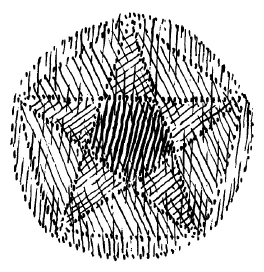
[ 18 ] Sie sehen, ich zeichne das Pentagramm. Wenn wir dieses Pentagramm zunächst ins Auge fassen, so ist es uns ein Zeichen für den Ätherleib, wenn wir die Sache äußerlich nehmen. Aber ich habe schon gesagt, daß dieser Ätherleib auch die Mittelpunktskräfte für den Astralleib und den physischen Leib enthält, daß von ihm alle die Kräfte, die uns alt und jung werden lassen, ausgehen. Weil nun im Ätherleib die Mitte sozusagen für alle diese Kräfte liegt, so ist es auch möglich, an der Figur des Ätherleibes, an dem Siegel des Ätherleibes zu zeigen, welche Stärkeverhältnisse die physischen Kräfte, die Kräfte des physischen Leibes zu den ätherischen Kräften, den Kräften des Ätherleibes und zu den astralischen, den Kräften des Astralleibes, im Menschen haben. Und man bekommt ganz genau die Größenverhältnisse heraus, wenn man sich zunächst sagt: Hier im Innern des Pentagramms entsteht ein nach unten geneigtes Fünfeck. Dieses Fünfeck fülle ich mit der Kreidesubstanz vollständig aus. Da haben Sie zunächst eine der Teilfiguren des Pentagrammes. Ein anderes Stück der Teilfigur des Pentagrammes bekommen Sie, wenn Sie ins Auge fassen die Dreiecke, die sich an das Fünfeck ansetzen und die ich mit horizontalen Linien schraffiere. So habe ich Ihnen das Pentagramm hier zerlegt in ein mittleres Fünfeck mit der Spitze nach unten, das ich ausgefüllt habe mit der Kreidesubstanz, und in fünf Dreiecke, welche ich mit horizontalen Strichen schraffiert habe. Wenn Sie die Größe dieses Fünfeckes in Verhältnis bringen zu der Größe der Dreiecke, das heißt zu der Summe aller Flächen, die von den Dreiecken eingenommen werden, wenn Sie sich also sagen, wie die Größe dieses Fünfeckes zur Größe der einzelnen Dreiecke wirkt, wenn Sie die Summe der Flächen der einzelnen Dreiecke nehmen, so wirken die Kräfte des physischen Leibes zu den Kräften des Ätherleibes im Menschen. Also wohlgemerkt, wie man sagen kann, wenn Linsen und Bohnen und Erbsen zusammengemischt sind, daß die Menge der Linsen zu der Menge der Bohnen sich verhält wie drei zu fünf, so kann man sagen: Die Stärke der Kräfte im physischen Leibe verhält sich zu den Kräften des Ätherleibes wie im Pentagramm die Fläche des Fünfeckes zu der Summe der Fläche der Dreiecke, die ich horizontal schraffiert habe. - Und jetzt werde ich ein nach oben stehendes Fünfeck zeichnen, welches dadurch entsteht, daß ich es umschreibe dem Pentagramm. Nun müssen Sie nicht die Dreiecke nehmen, die da gleichsam wie Zipfel entstehen, sondern das gesamte Fünfeck, eingeschlossen die Fläche des Pentagrammes, also alles, was ich vertikal schraffiere. Also dieses vertikal schraffierte, dem Pentagramm umschriebene Fünfeck bitte ich zu berücksichtigen. So wie sich verhält der Flächeninhalt, die Größe dieses kleinen Fünfeckes hier, das mit der Spitze nach unten gerichtet ist, zu der Fläche dieses vertikal schraffierten Fünfeckes, das mit der Spitze nach oben gerichtet ist, so verhalten sich die Kräfte des physischen Leibes in ihrer Stärke zu den Kräften des Astralleibes im Menschen. Und so wie sich die horizontal schraffierten Dreiecke, wenn ich sie summiere, zu der Größe des Fünfeckes mit der Spitze nach oben verhalten, so verhält sich die Stärke der Kräfte des Ätherleibes zu der Stärke der Kräfte des Astralleibes. Kurzum, Sie haben in dieser Figur alles das angegeben, was man nennen kann: das gegenseitige Verhältnis der Kräfte des physischen Leibes, der Kräfte des Ätherleibes, der Kräfte des Astralleibes. Nur kommt das dem Menschen nicht alles zum Bewußtsein. Das mit der Spitze nach oben stehende Fünfeck umfaßt alles Astralische im Menschen, auch das, wovon der Mensch heute noch nichts weiß, was ausgearbeitet wird, indem das Ich den Astralleib immer mehr und mehr zum Geistselbst oder Manas umarbeitet.
[ 18 ] You see, I am drawing the pentagram. When we first look at this pentagram, it serves as a symbol of the etheric body, if we consider the matter from an external perspective. But I have already said that this etheric body also contains the central forces for the astral body and the physical body, that all the forces which make us grow old and young emanate from it. Since the center for all these forces lies, so to speak, in the etheric body, it is also possible to demonstrate, through the figure of the etheric body—the seal of the etheric body—the relative strengths of the physical forces (the forces of the physical body) in relation to the etheric forces (the forces of the etheric body) and the astral forces (the forces of the astral body) within the human being. And you can determine the exact proportions quite precisely if you first say to yourself: Here, within the pentagram, a pentagon tilted downward is formed. I fill this pentagon completely with the chalk substance. There you have, to begin with, one of the sub-figures of the pentagram. You get another part of the pentagram’s figure when you consider the triangles that attach to the pentagon and which I have hatched with horizontal lines. So I have broken down the pentagram here into a central pentagon with its apex pointing downward, which I have filled with the chalk substance, and into five triangles, which I have hatched with horizontal lines. If you compare the size of this pentagon to the size of the triangles, that is, to the sum of all the areas occupied by the triangles—so if you consider how the size of this pentagon relates to the size of the individual triangles, and if you take the sum of the areas of the individual triangles, then the forces of the physical body relate to the forces of the etheric body in the human being. So, to put it another way, just as one might say that when lentils, beans, and peas are mixed together, the quantity of lentils is to the quantity of beans as three to five, so one can say: The strength of the forces in the physical body is to the forces of the etheric body as, in the pentagram, the area of the pentagon is to the sum of the areas of the triangles that I have hatched horizontally. — And now I will draw an upright pentagon, which is formed by circumscribing the pentagram. Now you must not take the triangles that arise there, as it were, like points, but the entire pentagon, including the area of the pentagram—that is, everything I have hatched vertically. So please take into account this vertically hatched pentagon circumscribed around the pentagram. Just as the area, the size of this small pentagon here, which points downward, relates to the area of this vertically hatched pentagon, which points upward, so do the forces of the physical body in their strength relate to the forces of the astral body in the human being. And just as the horizontally hatched triangles, when I add them up, relate to the size of the pentagon with the apex pointing upward, so does the strength of the forces of the etheric body relate to the strength of the forces of the astral body. In short, you have indicated in this figure everything that can be called: the mutual relationship of the forces of the physical body, the forces of the etheric body, and the forces of the astral body. Only, not all of this comes to the human being’s consciousness. The pentagon with the apex pointing upward encompasses everything astral in the human being, including that of which the human being is still unaware today—which is being developed as the ego increasingly transforms the astral body into the spiritual self or Manas.
[ 19 ] Nun kann in Ihnen die Frage entstehen: Wie verhalten sich diese drei Hüllen zum eigentlichen Ich? Sie sehen, von dem eigentlichen Ich, von dem ich ausgesprochen habe, daß es das Baby ist, das am wenigsten entwickelte unter den menschlichen Wesensgliedern, von diesem Ich weiß der Mensch heute in der normalen Entwickelung noch sehr wenig. Die gesamten Kräfte dieses Ich liegen aber schon in ihm. Wenn Sie die Gesamtkräfte des Ich ins Auge fassen und ihr Verhältnis untersuchen wollen zu den Kräften des physischen Leiibes, Ätherleibes, Astralleibes, so brauchen Sie nur um die ganze Figur herum einen Kreis zu beschreiben. Ich will nun die Figur nicht zu sehr verschmieren. Wenn ich diesen Kreis noch schraffieren würde als ganze Fläche, so würde die Größe dieser Fläche im Vergleich zur Größe der Fläche des nach oben gerichteten Fünfeckes, im Vergleich zur Summe der Flächen der Dreieckzipfel, die horizontal schraffiert sind, im Vergleiche zu dem kleinen Fünfeck mit der Spitze nach unten, das ich ausgefüllt habe mit der Kreidesubstanz, das Verhältnis angeben der Kräfte des gesamten Ich repräsentiert durch die Fläche des Kreises - zu den Kräften des Astralleibes — repräsentiert durch die Fläche des großen Fünfeckes — zu den Kräften des Ätherleibes - repräsentiert durch die horizontal schraffierten Dreiecke, die sich ansetzen an das kleine Fünfeck - zu den Kräften des physischen Leibes - als zu der Fünfeckfläche, die mit der Kreidesubstanz ausgefüllt ist. Wenn Sie sich in der Meditation hingeben diesem okkulten Zeichen und sich innerlich ein gewisses Gefühl von dem Verhältnis dieser vier Flächen verschaffen, so bekommen Sie einen Eindruck von dem gegenseitigen Verhältnis von physischem Leib, Ätherleib, Astralleib und Ich. Sie müssen sich also denken in der gleichen Beleuchtung den großen Kreis und ihn in der Meditation ins Auge fassen. Dann stellen Sie daneben hin das aufwärtsstehende Fünfeck. Weil dieses Fünfeck etwas kleiner ist als der große Kreis, kleiner ist um diese Kreissegmente hier, wird Ihnen dieses aufwärtsstehende Fünfeck einen schwächeren Eindruck machen als der Kreis. Um was dieses schwächer ist als der Eindruck des Kreises, um das sind auch die Kräfte des Astralleibes schwächer als die Kräfte des Ich. Und wenn Sie sich als drittes hinstellen ohne das mittlere Fünfeck diese fünf Dreiecke, die horizontal schraffiert sind, so haben Sie wiederum einen schwächeren Eindruck, wenn Sie sich alles gleich beleuchtet denken. Um wieviel dieser Eindruck schwächer ist als der Eindruck von den beiden vorigen, um so viel schwächer sind die Kräfte des Ätherleibes als die Kräfte des Astralleibes und des Ich. Und wenn Sie sich das kleine Fünfeck hinstellen, so bekommen Sie bei gleicher Beleuchtung davon den schwächsten Eindruck. Wenn Sie nun sich ein Gefühl verschaffen von der gegenseitigen Stärke dieser Eindrükke und zusammenhalten können diese vier Eindrücke, wie Sie die Töne, sagen wir einer Melodie, in eines zusammendenken — wenn Sie diese vier Eindrücke in bezug auf ihre Größe zusammendenken, so haben Sie jene Stärkeharmonie, die besteht zwischen den Kräften des Ich, des Astralleibes, des Ätherleibes und des physischen Leibes. Das ist das, was ich Ihnen als ein okkultes Zeichen, gleichsam als ein Zeichen der okkulten Schrift hinstelle. Über solche Zeichen kann man meditieren.
[ 19 ] Now the question may arise in you: How do these three sheaths relate to the actual I? You see, regarding the actual I—which I have described as the baby, the least developed of the human constituents—human beings today, in their normal development, still know very little about this I. Yet all the powers of this ego are already present within it. If you wish to consider the total powers of the ego and examine their relationship to the powers of the physical body, the etheric body, and the astral body, you need only draw a circle around the entire figure. I do not wish to smudge the figure too much. If I were to shade this circle as a whole surface, the size of this surface, compared to the size of the surface of the pentagon pointing upward, compared to the sum of the surfaces of the triangular points that are shaded horizontally, compared to the small pentagon with its tip pointing downward, which I have filled with the chalk substance, indicate the ratio of the forces of the entire ego—represented by the area of the circle—to the forces of the astral body—represented by the area of the large pentagon—to the forces of the etheric body—represented by the horizontally hatched triangles attached to the small pentagon — to the forces of the physical body — as to the pentagonal area filled with the chalk substance. If, in meditation, you devote yourself to this occult symbol and inwardly gain a certain sense of the relationship between these four areas, you will gain an impression of the mutual relationship between the physical body, the etheric body, the astral body, and the I. You must therefore visualize the large circle in the same light and contemplate it in meditation. Then place the upright pentagon next to it. Because this pentagon is slightly smaller than the large circle—smaller by these circular segments here—this upright pentagon will make a weaker impression on you than the circle. To the extent that this is weaker than the impression of the circle, to that extent are the forces of the astral body weaker than the forces of the ego. And if you then place these five triangles—which are horizontally hatched—as a third element without the central pentagon, you will again have a weaker impression when you visualize everything in the same light. To the extent that this impression is weaker than the impressions of the previous two, to that extent are the forces of the etheric body weaker than the forces of the astral body and the I. And if you place the small pentagon there, you will receive the weakest impression of it under the same lighting. If you can now form a sense of the relative strength of these impressions and bring these four impressions together—just as you might think of the notes of, say, a melody as a single whole—if you consider these four impressions in terms of their magnitude, then you have that harmony of strength that exists between the forces of the ego, the astral body, the etheric body, and the physical body. This is what I present to you as an occult sign, as it were, a sign of occult writing. One can meditate on such signs.
[ 20 ] Ich habe Ihnen ungefähr die Methode beschrieben, wie man das macht. Man verschafft sich den Eindruck der unterschiedlichen Stärken, die diese Flächen durch ihre Größenverhältnisse machen als gleichmäßig beleuchtete Flächen. Dann bekommt man eben einen Verhältniseindruck, der einem wiedergibt die gegenseitigen Maßverhältnisse der Kräfte der vier Glieder der menschlichen Wesenheit. Diese Dinge sind da als Zeichen der wirklichen, aus der Wesenheit der Dinge hervorgehenden okkulten Schrift. Meditieren diese Schrift heißt: lesen die großen Wunderzeichen der Welt, die uns hineinführen in die großen Geheimnisse der Welt. Dadurch verschaffen wir uns allmählich ein Gesamtverständnis von dem, was da draußen wirkt als Weltenwunder, die darin bestehen, daß der Geist in die Materie sich hineinergießt nach bestimmten Verhältnissen. Ich habe zugleich dadurch hervorgerufen in Ihnen etwas, was wirklich wie das Elementarste geübt wurde in der alten pythagoräischen Schule. Denn dadurch fängt der Mensch an, durch sein Geistgehör die Harmonien und Melodien der Kräfte in der Welt zu vernehmen, daß er von den Zeichen der okkulten Schrift ausgeht, sie realisiert und dann schon merkt, daß er die Welt mit ihren Wundern in ihrer Wahrheit geschaut hat. Davon werden wir dann morgen weitersprechen. Ich wollte heute als den Zielpunkt der Betrachtung dieses Zeichen der okkulten Schrift vor Ihre Seele hinstellen, das uns wiederum ein Stück hineingeführt hat in die Menschennatur.
[ 20 ] I have described to you, in general terms, the method for doing this. One gains an impression of the different intensities that these surfaces create—as uniformly lit surfaces—through their proportions. This gives one a sense of proportion that reflects the relative proportions of the forces within the four members of the human being. These things are there as signs of the true occult script emerging from the essence of things. To meditate on this script means: to read the great miraculous signs of the world, which lead us into the great mysteries of the world. Through this, we gradually gain an overall understanding of what is at work out there as wonders of the world, which consist in the spirit pouring itself into matter according to certain proportions. At the same time, I have thereby evoked in you something that was truly practiced as the most elementary thing in the ancient Pythagorean school. For through this, the human being begins to perceive, through his spiritual hearing, the harmonies and melodies of the forces in the world, so that he proceeds from the signs of the occult script, realizes them, and then already notices that he has beheld the world with its wonders in their truth. We will speak further about this tomorrow. Today, I wanted to present to your soul, as the culmination of our contemplation of this sign of occult writing, something that has once again led us a little deeper into human nature.