Esoteric Christianity and the
Spiritual Guidance of Humanity
GA 130
1 October 1911, Basel
Translate the original German text into any language:
Versions Available:
Esoteric Christianity and the Spiritual Guidance of Humanity, tr. SOL
6. Die Ätherisation des Blutes. Das Eingreifen des Ätherischen Christus in die Erdenentwicklung
6. The Etherization of the Blood. The Intervention of the Etheric Christ in Earth's Evolution
[ 1 ] Die Selbsterkenntnis des Menschen ist zwar als eine Aufforderung an unsere Seele durch alle Zeiten hindurch, in denen man mystisch oder realistisch oder sonst überhaupt nach Erkenntnis gestrebt hat, gefordert worden, doch ist, wie ja auch schon bei anderer Gelegenheit wiederholt betont werden musste, diese Selbsterkenntnis der menschlichen Seele keineswegs so leicht, als recht viele auch unter den Theosophen sich zuweilen noch vorstellen. Und die Schwierigkeiten der menschlichen Selbsterkenntnis sind etwas, was der Theosoph sich doch immer wieder und wiederum vor die Seele rücken sollte, weil ja auf der anderen Seite diese Selbsterkenntnis das Notwendigste ist, wenn wir überhaupt zu einem menschenwürdigen Ziel im Weltensein, zu einem wirklichen menschenwürdigen Dasein und Handeln kommen wollen.
[ 1 ] Although self-knowledge has been demanded of the human soul throughout the ages, in all periods when people have sought knowledge—whether mystically, realistically, or in any other way—this self-knowledge of the human soul is by no means as easy as quite a few, even among theosophists, still imagine it to be. And the difficulties of human self-knowledge are something that the theosophist should constantly bring to mind, because, on the other hand, this self-knowledge is absolutely essential if we are to attain a truly dignified goal in our existence in the world—a truly dignified way of being and acting.
[ 2 ] Wir wollen uns heute nun ein wenig zunächst mit der Frage beschäftigen, warum denn Selbsterkenntnis für den Menschen schwierig sein muss. Der Mensch ist ja nun einmal ein recht kompliziertes Wesen, und wenn wir etwa sprechen vom menschlichen Seelen-, menschlichen Innenleben, so wollen wir uns keineswegs dieses Seelenleben, dieses Innenleben von vornherein einfach, elementar vorstellen, sondern wir wollen die Geduld und die Ausdauer haben, immer tiefer dringen zu wollen, um diesen Wunderbau, diese wunderbare Organisation der göttlich-geistigen Weltenmächte, als welche der Mensch erscheinen kann, nach und nach wirklich zu durchdringen. Zweierlei kann uns an dem Leben der menschlichen Seele auffallen, bevor wir in das Wesen des Erkennens eindringen.
[ 2 ] Today, let us first consider the question of why self-knowledge must be so difficult for human beings. After all, human beings are quite complex creatures, and when we speak, for example, of the human soul or the inner life of a human being, we certainly do not want to imagine this soul life, this inner life, as simple and elementary from the outset; rather, we want to have the patience and perseverance to delve ever deeper, so that we may gradually and truly penetrate this marvelous structure, this wonderful organization of the divine-spiritual world forces, as which the human being can appear. Two things may strike us about the life of the human soul before we penetrate into the nature of cognition.
[ 3 ] Gleichsam wie der Magnet Nordpol und Südpol hat, wie in der Erscheinung der Welt draußen Hell und Dunkel als Hauptschattierungen des Lichtes vorkommen, so hat die Seele auch zwei, man möchte sagen Seelenpole ihres Daseins. Diese beiden Pole können uns erscheinen, wenn wir den Menschen in zwei Situationen, zwei Lagen des Lebens betrachten. Eine solche Lebenslage würde etwa für das seelische Leben gegeben sein, wenn wir einen Menschen, nun sagen wir einmal, auf der Straße stehen sehen, ganz verloren in die Betrachtung einer schönen, hehren, auffälligen Naturerscheinung. Wir sehen, wie er keine Hand bewegt, kein Bein bewegt, wie er fast das Auge nicht abwendet von der Naturerscheinung oder dem Gegenstand, der ihm auffällt und den er beobachtet, und wir gewahren, dass er beschäftigt ist, sich im Innern Bilder zu machen von dem, was er vor Augen sieht. Wir sagen: Er ist in Betrachtung versunken, er stellt sich seine Umgebung vor. Das wäre die eine Situation, die wir betrachten wollen. Eine andere Situation wäre die folgende: Irgendein Mensch geht über die Straße, und er fühlt sich von einem anderen Menschen beleidigt, verletzt. Ohne viel Nachdenken geht sein Zorn, sein Ärger mit ihm durch, und er macht als Ausfluss seines Zornes dieses: Er gibt dem, der ihn beleidigt hat, einen Schlag oder dergleichen. Wir gewahren da eine Erscheinung derjenigen Kräfte, die aus dem Zorn, dem Ärger entspringen. Wir werden da Willensimpulse gewahr, und wir können uns ganz. gut vorstellen, dass nicht viele Gedanken und Vorstellungen diesem Impuls vorangegangen sind, dass der Betreffende vielleicht nicht ausgeholt hätte zum Schlag, dass er den Ausbruch des Zornes verhindert hätte, wenn er viel nachgedacht hätte. Wir haben da zwei extreme Handlungen vor uns hingestellt: die eine, die sich ganz als eine Vorstellung zeigt, bei der der bewusste Wille ganz ausgeschaltet ist, und die andere, bei der das Vorstellungsleben ausgeschaltet wird und wo der Mensch sogleich zur Äußerung eines Willensimpulses übergeht. Das sind die zwei Dinge, die uns überhaupt die zwei extremen Pole der menschlichen Seele darstellen. Das Impulsive des Willens ist der eine Pol, das willenlose Hingegebensein an die Betrachtung, die Vorstellung, das Denken, während der Wille schweigt, das ist der andere Pol. So hätten wir die Tatsachen ganz exoterisch, rein durch Betrachtung des äußeren Lebens vor uns hingestellt.
[ 3 ] Just as a magnet has a north pole and a south pole, and just as light and darkness appear in the external world as the primary shades of light, so too does the soul have two—one might say, two poles—of its existence. These two poles can become apparent to us when we observe human beings in two situations, two states of life. One such situation in life would apply to the soul’s life, for example, when we see a person—let’s say—standing on the street, completely lost in the contemplation of a beautiful, sublime, striking natural phenomenon. We see how he does not move a hand, does not move a leg, how he hardly takes his eyes off the natural phenomenon or the object that catches his attention and which he is observing, and we perceive that he is busy forming images within himself of what he sees before his eyes. We say: He is absorbed in contemplation; he is imagining his surroundings. That would be the one situation we wish to consider. Another situation would be the following: A person is walking down the street and feels insulted or hurt by another person. Without much thought, his anger and irritation take hold of him, and as an outburst of his anger, he does this: He strikes the one who insulted him or something similar. Here we perceive a manifestation of those forces that arise from anger and irritation. We perceive impulses of the will here, and we can quite well imagine that not many thoughts or ideas preceded this impulse, that the person in question might not have swung the blow, that he would have prevented the outburst of anger if he had thought things through carefully. We have set before us two extreme actions: one that manifests entirely as an image, in which the conscious will is completely shut out, and the other in which the life of the imagination is shut out and where the person immediately proceeds to the expression of a volitional impulse. These are the two things that represent for us the two extreme poles of the human soul. The impulsive nature of the will is one pole; the will-less surrender to contemplation, imagination, and thinking, while the will remains silent, is the other pole. Thus, we have set out the facts in a completely exoteric manner, purely through observation of external life.
[ 4 ] Wir können nun etwas tiefer gehen, und wir kommen dann in diejenigen Sphären, in denen wir uns nur dann ganz zurechtfinden, wenn wir die okkulte Forschung zu Hilfe nehmen. Eine andere Polarität tritt uns da entgegen, das ist die Polarität von Wachen und Schlafen. Wir wissen ja, was in okkulter Beziehung der Schlaf und das Wachen bedeuten. Nach den Elementarbegriffen unserer theosophischen Erkenntnis wissen wir, dass im Wachen die vier Glieder, physischer, Äther-, Astralleib und Ich organisch ineinanderstecken, ineinanderwirken, dass im Schlaf aber physischer und Ätherleib im Bette liegen, Astralleib und Ich aber wie ausgegossen sind in der ganzen großen Welt, die unmittelbar an unser physisches Dasein angrenzend ist. Wir könnten auch diese Tatsachen noch anders behandeln. Wir könnten uns nämlich auch da einmal fragen, wie es denn eigentlich mit dem Betrachten der Welt des Lebens steht, dem Vorstellen und Denken und dem Willen und seinen Impulsen beim Wachen und beim Schlafen?
[ 4 ] We can now delve a little deeper, and we then enter those spheres where we can only fully find our way if we draw on occult research. Another polarity confronts us there: the polarity of waking and sleeping. We know, of course, what sleep and waking signify in an occult context. According to the fundamental concepts of our theosophical knowledge, we know that in waking life the four members—the physical, etheric, and astral bodies and the I—are organically interwoven and interact with one another; whereas in sleep, the physical and etheric bodies lie in bed, while the astral body and the I are, as it were, poured out into the entire vast world that immediately adjoins our physical existence. We could also approach these facts in a different way. We could, for instance, ask ourselves how it actually stands with the perception of the world of life, with imagination and thought, and with the will and its impulses during waking and sleeping?
[ 5 ] Sehen Sie nun, wenn man tiefer geht, so zeigt es sich, dass in einem besonderen Sinne der Mensch in seinem gegenwärtigen physischen Dasein eigentlich immer schläft. Er schläft nur in der Nacht anders als bei Tage. Rein äußerlich schon können Sie sich das vergegenwärtigen, da Sie wissen, dass man bei Tage okkult aufwachen kann, hellsichtig werden, in die geistige Welt hineinsehen kann. Der gewöhnliche physische Leib ist gegenüber dieser Betrachtung eingeschlafen, und man kann sagen, es ist ein Aufwachen, wenn der Mensch lernt, seine geistigen Sinne zu gebrauchen. Und in Bezug auf den Nachtschlaf ist es klar, dass da der Mensch schläft. Sodass man sagen kann: Der gewöhnliche Schlaf ist ein Schlaf in Bezug auf die äußere physische Welt, das Tagesbewusstsein ist gegenwärtig ein Schlaf in Bezug auf die geistige Welt.
[ 5 ] Now, if we look more deeply, it becomes clear that, in a certain sense, human beings are actually always asleep in their present physical existence. They simply sleep differently at night than they do during the day. You can already visualize this purely from an external perspective, since you know that during the day one can awaken occultly, become clairvoyant, and look into the spiritual world. The ordinary physical body is asleep in relation to this perspective, and one can say that it is an awakening when a person learns to use their spiritual senses. And with regard to nighttime sleep, it is clear that the human being is asleep. So that one can say: Ordinary sleep is a sleep in relation to the outer physical world; daytime consciousness is currently a sleep in relation to the spiritual world.
[ 6 ] Wir können uns diese Tatsachen in noch ganz anderer Weise vor Augen führen. Wenn man tiefer geht, so merkt man, dass der Mensch im gewöhnlichen wachenden Zustand seines physischen Lebens über seinen Willen in der Regel recht wenig Gewalt hat. Der Wille ist etwas, was sich dem Tagesleben gar sehr entzieht. Wollen Sie einmal aufmerksam betrachten, was wir menschlichen Willen nennen, so werden Sie sehen, wie wenig sich der Mensch während des Tageslebens in der Gewalt hat in Bezug auf die Willensimpulse. Betrachten Sie, wie wenig von dem, was Sie vom Morgen bis zum Abend tun, wirklich aus eigenem Denken und Vorstellen, aus persönlichem, individuellem Entschluss hervorgeht. Sie können, wenn irgendwer an die Tür klopft und Sie sagen: Herein!, dies nicht einen wirklichen Entschluss Ihres eigenen Denkens und Willens nennen. Sie können unmöglich, wenn Sie hungrig sind und sich zu Tisch setzen, sagen, das wäre ein Willensentschluss von Ihnen, denn er ist durch Ihren Organismus, durch Ihren Zustand veranlasst. Versuchen Sie jetzt, Ihr Tagesleben sich vor Augen zu halten, und Sie werden sehen, wie wenig der Wille direkt vom menschlichen Zentrum beeinflusst ist. Was ist die Ursache hiervon? Das lehrt der Okkultismus, der zeigt, dass der Mensch in Bezug auf den Willen in der Tat bei Tag schläft, das heißt, dass er in seinen Willensimpulsen gar nicht darinnen lebt. Wir können zu immer besseren und besseren Begriffen und Vorstellungen kommen, meinetwegen moralischere, geschmackvollere Menschen werden, aber in Bezug auf den Willen können wir gar nichts machen. Wenn wir bessere Gedanken hegen, können wir indirekt auf den Willen zurückwirken, aber in Bezug auf den Willen können wir, was das Leben anbetrifft, direkt gar nichts machen, denn unser Wille wird erst auf einem Umwege direkt beeinflusst von unserem Alltagsleben, auf dem Umwege durch den Schlaf. Sie denken nicht, wenn Sie schlafen, Sie haben keine Vorstellungen: Das Vorstellen und Denken ist es, was in Schlaf übergeht. Der Wille dagegen wacht und durchdringt unseren Organismus von außen und belebt ihn. Daher werden wir uns gestärkt fühlen am Morgen, weil das, was in unseren Organismus eindringt, willensartiger Natur ist. Dass wir dieses Arbeiten des Willens nicht wahrnehmen, dass wir nichts davon wissen, mag uns ganz glaublich erscheinen, wenn wir bedenken, dass unser Vorstellen schläft, wenn wir schlafen. Daher wollen wir zunächst eine Anregung für weiteres Nachsinnen, weiteres Meditieren geben. Sie werden sehen, je weiter Sie in der Selbsterkenntnis vorwärtskommen, desto mehr werden Sie diesen Satz bewahrheitet finden: Der Mensch schläft in Bezug auf seinen Willen, wenn er wacht, und er schläft in Bezug auf sein Vorstellen, wenn er schläft. Bei Tag schläft der Wille, bei Nacht schläft das Vorstellungsleben.
[ 6 ] We can view these facts in yet another way. If we look more deeply, we realize that, in the ordinary waking state of physical life, human beings generally have very little control over their will. The will is something that largely eludes us in daily life. If you were to observe closely what we call human will, you would see how little control a person has over their will impulses during the course of daily life. Consider how little of what you do from morning to night truly arises from your own thinking and imagination, from a personal, individual decision. You cannot, when someone knocks on the door and you say: “Come in!”—you cannot call this a true decision of your own thinking and will. You cannot possibly say, when you are hungry and sit down to eat, that this is a decision of your will, for it is prompted by your organism, by your condition. Now try to hold your daily life before your eyes, and you will see how little the will is directly influenced by the human center. What is the cause of this? Occultism teaches this, showing that, in terms of the will, a person is indeed asleep during the day—that is, they do not live within their volitional impulses at all. We can arrive at ever better and better concepts and ideas, become more moral or more refined people, if you will, but in terms of the will, we can do absolutely nothing. If we harbor better thoughts, we can indirectly influence the will, but as far as life is concerned, we can do absolutely nothing directly regarding the will, for our will is only indirectly influenced by our daily life—indirectly through sleep. You do not think when you sleep; you have no ideas: it is the act of imagining and thinking that passes into sleep. The will, on the other hand, is awake and permeates our organism from the outside, enlivening it. That is why we feel strengthened in the morning, because what enters our organism is of a volitional nature. That we do not perceive this work of the will, that we know nothing of it, may seem quite plausible to us when we consider that our imagination sleeps when we sleep. Therefore, let us first offer a suggestion for further reflection, for further meditation. You will see that the further you advance in self-knowledge, the more you will find this statement to be true: A person sleeps in relation to their will when they are awake, and they sleep in relation to their imagination when they are asleep. By day the will sleeps; by night the life of the imagination sleeps.
[ 7 ] Wenn der Mensch sich dessen nicht bewusst wird, dass der Wille in der Nacht nicht schläft, so rührt dies davon her, dass der Mensch nur im Vorstellungsleben zu wachen versteht. Der Wille schläft nicht in der Nacht, sondern er wirkt da wie in seinem wahren feurigen Element, arbeitet an seinem Leibe, um herzustellen, was verbraucht worden ist bei Tage.
[ 7 ] If a person does not realize that the will does not sleep at night, it is because that person knows how to stay awake only in the realm of the imagination. The will does not sleep at night, but rather acts there as in its true fiery element, working on the body to restore what has been consumed during the day.
[ 8 ] Es gibt im Menschen also zwei Pole, die Willensimpulse und das Beobachtungs- oder Vorstellungsleben, und die Menschen verhalten sich im ganz entgegengesetzten Sinne zu diesen zwei Polen. Dies sind aber nur zwei Pole. Das ganze Seelenleben liegt in verschiedenen Nuancen zwischen diesen beiden Polen, und wir werden jetzt diesem Seelenleben noch etwas nähertreten, indem wir versuchen, dieses Seelenleben, das mikrokosmische Seelenleben in ein Verhältnis zu bringen zu dem, was wir als die höheren Welten erkennen. Wir haben aus dem, was gesagt worden ist, ersehen, dass der eine Pol unseres Seelenlebens das Vorstellungsleben ist.
[ 8 ] There are thus two poles within the human being: the impulses of the will and the life of observation or imagination, and people relate to these two poles in completely opposite ways. But these are only two poles. The entire life of the soul lies in various nuances between these two poles, and we will now approach this life of the soul a little more closely by attempting to relate this life of the soul—the microcosmic life of the soul—to what we recognize as the higher worlds. From what has been said, we have seen that one pole of our soul life is the life of imagination.
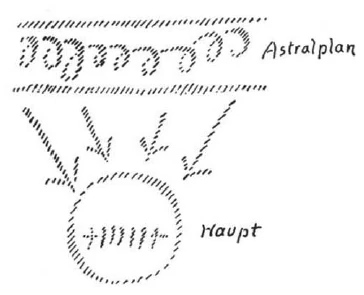
[ 9 ] Dieses Vorstellungsleben ist etwas, was dem äußeren, materialistisch denkenden Menschen als etwas Unwirkliches erscheint. Nicht wahr, wie oft hört man den Gedanken aussprechen: Ach, Vorstellungen und Gedanken sind ja nur Vorstellungen und Gedanken! Man will darauf hinweisen, dass, wenn man ein Stück Brot oder Fleisch in die Hand nimmt, dies eine Realität ist, dass ein Gedanke aber nur ein Gedanke ist. Man meint, Gedanken könne man nicht essen, sie seien daher nicht real, wirklich, es sind «nur» Gedanken. Warum sind es aber nur Gedanken? Aus dem Grunde, weil das, was der Mensch seine Gedanken nennt, sich zu dem, was Gedanken eigentlich sind, verhält wie ein Schattenbild zu einer Sache selber. Wenn Sie da eine Blume haben und Sie schauen ihr Schattenbild, so weist das Schattenbild auf die Blume, auf die Wirklichkeit hin. So ist es auch mit den Gedanken. Es ist so, dass das menschliche Denken das Schattenbild ist von Vorstellungen und Wesenheiten, die in einer höheren Welt sind: in dem, was man den Astralplan nennt. Und richtig stellen Sie sich eigentlich das Denken vor, wenn Sie sich hier - es ist das nicht ganz richtig, sondern schematisch gezeichnet - das menschliche Haupt vorstellen. In diesem Haupte sind die Gedanken, die ich hier durch Striche darstellen will. Aber diese Gedanken, die im Haupte sind, stellen wir uns als lebendige Wesen — hier auf dem Astralplane - vor. Da wirken die verschiedenartigsten Wesen, da wimmelt es nur so von Vorstellungen und Handlungen, die ihr Schattenbild in den Menschen hineinwerfen, und diese Vorgänge spiegeln sich ab im menschlichen Haupte als das Denken. Es ist eine richtige Vorstellung, wenn Sie sich denken: Von Ihrem Haupte gehen fortwährend Strömungen in den Astralplan, und diese sind die Schatten, die das Gedankenleben in Ihrem Haupte vermitteln. (Siehe Schema Seite 93.)
[ 9 ] This inner life of imagination is something that appears unreal to the outward, materialistically minded person. Isn’t it true that we often hear people say: “Oh, ideas and thoughts are just ideas and thoughts!” People want to point out that when you pick up a piece of bread or meat, that is a reality, whereas a thought is just a thought. People believe that thoughts cannot be eaten, and therefore they are not real, not actual—they are “only” thoughts. But why are they only thoughts? For the reason that what humans call their thoughts relates to what thoughts actually are in the same way that a shadow relates to the thing itself. If you have a flower there and you look at its shadow, the shadow points to the flower, to reality. It is the same with thoughts. Human thinking is the shadow of ideas and beings that exist in a higher world: in what is called the astral plane. And you actually imagine thinking correctly when you picture here—though this is not entirely accurate, but rather a schematic representation—the human head. Within this head are the thoughts, which I will represent here with lines. But we imagine these thoughts within the head as living beings—here on the astral plane. There, the most diverse beings are at work; it is teeming with ideas and actions that cast their shadows into the human being, and these processes are reflected in the human head as thinking. It is a correct conception if you imagine: From your head, currents are constantly flowing into the astral plane, and these are the shadows that convey the life of thought within your head. (See diagram on page 93.)
[ 10 ] Es gibt nun außer dem, was wir das Gedankenleben nennen können, für die menschliche Seele noch ein anderes Leben. Man unterscheidet im gewöhnlichen Leben - das ist nicht ganz. genau, aber ich sage es, damit man aus dem gewöhnlichen Leben heraus einen Begriff dafür bekommt - zwischen dem Gedankenleben und dem Empfindungsleben. Unter den Gefühlen unterscheidet man solche des Gefallens, sympathische, und des Missfallens, unsympathische Gefühle. Erstere stellen sich ein bei Handlungen des Rechtes, des Wohlwollens, Antipathie tritt auf bei Handlungen des Übelwollens, des Unrechtes. Das ist schon mehr als das bloße Vorstellen, das ist etwas anderes. Etwas uns vorstellen tun wir auch den gleichgültigen Dingen gegenüber. Aber diese Scelenerlebnisse der Sympathie und der Antipathie haben wir nur dem Schönen und Guten gegenüber oder dem Schlechten und Hässlichen. Gerade so wie alles, was im Menschen sich abspielt als Gedanken, auf den Astralplan hinweist, so weist alles, was verknüpft ist mit Sympathie und Antipathie, hin auf das, was wir das niedere Devachan nennen. Und ebenso könnte ich die Linien, die ich vorher bis in die Astralwelt bei diesen Vorstellungen gezeichnet habe, nun hinaufziehen ins Devachan oder die Himmelswelt. In uns, vorzugsweise in unserer Brust spielen sich Vorgänge ab der Himmelswelt oder des Devachan als Gefühle der Sympathie und Antipathie für das Schöne und das Hässliche, das Gute und Schlechte oder Böse, sodass wir mit dem, was wir nennen können unsere Empfindungen gegenüber der moralisch-ästhetischen Welt, die Abschattungen des niederen Devachan, der Himmelswelt, in unserer Seele tragen.
[ 10 ] In addition to what we might call the life of thought, there is another kind of life for the human soul. In everyday life—this isn’t entirely accurate, but I say it so that one can grasp the concept from the perspective of everyday life—we distinguish between the life of thought and the life of feeling. Among feelings, we distinguish between those of approval—sympathetic feelings—and those of disapproval—unsympathetic feelings. The former arise in connection with acts of justice and benevolence; antipathy arises in connection with acts of malice and injustice. This is already more than mere imagination; it is something else. We also form mental images of things that are indifferent to us. But these emotional experiences of sympathy and antipathy we have only toward the beautiful and the good, or the bad and the ugly. Just as everything that takes place within a human being as thoughts points to the astral plane, so everything connected with sympathy and antipathy points to what we call the lower Devachan. And in the same way, I could now extend the lines that I previously drew as far as the astral world in these concepts, all the way up into the Devachan or the heavenly world. Within us, particularly in our hearts, processes from the heavenly world or Devachan unfold as feelings of sympathy and antipathy toward the beautiful and the ugly, the good and the bad or evil, so that we carry within our souls what we might call our sensibilities toward the moral-aesthetic world—the reflections of the lower Devachan, the heavenly world.
[ 11 ] Dann gibt es noch ein Drittes im menschlichen Seelenleben, was wir genau unterscheiden müssen von der bloßen Vorliebe für wohlwollende Handlungen. Es ist ein Unterschied, ob man dasteht und dort eine schöne, wohlwollende Handlung sicht und Gefallen daran findet, oder ob man selber den Willen in Tätigkeit umsetzt, um selbst eine wohlwollende Handlung auszuführen. Ich möchte das Wohlgefallen an guten, schönen, das Missfallen an bösen, hässlichen Handlungen das ästhetische Element nennen, dagegen das, was den Menschen treibt, gut zu handeln, das moralische. Das Moralische steht höher als das bloß Ästhetische, das bloße Gefallen oder Missfallen steht tiefer als das Sich-gedrängt-Fühlen, Gutes oder Böses zu tun. Insofern unsere Seele sich angetrieben fühlt, insofern sie die moralischen Impulse fühlt, sind diese Impulse die Schattenbilder des höheren Devachan, der oberen Himmelswelt.
[ 11 ] There is also a third aspect of human inner life that we must clearly distinguish from a mere preference for benevolent actions. There is a difference between standing by and observing a beautiful, benevolent act and taking pleasure in it, and actually putting one’s will into action to perform a benevolent act oneself. I would like to call the pleasure derived from good, beautiful acts and the displeasure derived from evil, ugly acts the aesthetic element, whereas that which drives a person to act well is the moral element. The moral stands higher than the merely aesthetic; mere pleasure or displeasure stands lower than the feeling of being compelled to do good or evil. To the extent that our soul feels driven, to the extent that it feels the moral impulses, these impulses are the shadow images of the higher Devachan, the upper heavenly world.
[ 12 ] Wir können uns ganz gut vorstellen, dass diese drei stufenweise übereinanderstehenden Seelentätigkeiten, die rein intellektuelle des Denkens, Vorstellens, Betrachtens, die ästhetische des Gefallens und Missfallens und die moralische in den Impulsen gegenüber dem Bösen und Guten, dass diese drei auseinandergelagerten Erlebnisse des Seelen-Erlebens des Menschen mikrokosmische Bilder sind dessen, was in der großen Welt draußen im Makrokosmos sich übereinanderlagert in den drei Welten: der astralischen Welt, die sich spiegelt als die Gedankenwelt, die intellektuelle Welt; der devachanischen Welt, die sich abschattet als ästhetische Welt des Gefallens und Missfallens; der höheren Devachanwelt, die sich abschattet als Moralität.
[ 12 ] We can quite well imagine that these three successive levels of soul activity—the purely intellectual aspects of thinking, imagining, and contemplating; the aesthetic aspect of liking and disliking; and the moral aspect in the impulses toward good and evil—that these three distinct experiences of the soul experience of the human soul are microcosmic images of what, in the great world outside in the macrocosm, overlaps in the three worlds: the astral world, which is reflected as the world of thought, the intellectual world; the Devachanic world, which is shadowed as the aesthetic world of pleasure and displeasure; the higher Devachanic world, which is reflected as morality.
| Gedanken: | Schattenbilder von Wesenheiten des Astralplanes | (Wachen) |
| Sympathie und Antipathie: | Schattenbilder von Wesenheiten des niederen Devachen | (Träumen) |
| Moralische Impulse: | Schattenbilder von Wesenheiten des höheren Devachan | (Schlafen) |
| Thoughts: | Shadow images of beings from the astral plane | (Waking) |
| Sympathy and Antipathy: | Shadow images of beings of the lower Devachan | (Dreaming) |
| Moral impulses: | Shadow images of beings of the higher Devachan | (Sleeping) |
[ 13 ] Wenn wir das, was wir jetzt gesagt haben, verbinden mit dem früher von den beiden Polen der menschlichen Seele Gesagten, so müssen wir eben das Intellektuelle als einen Pol empfinden, als jenen Pol, der vorzugsweise das wachende Tagesleben beherrscht, wo wir wachen in Bezug auf das intellektuelle Leben. Der Mensch wacht während des Tages in Bezug auf seinen Intellekt, während des Schlafes wacht er in Bezug auf seinen Willen. Weil er aber dann schläft in Bezug auf seinen Intellekt, wird er sich dessen nicht bewusst, was er mit dem Willen unternimmt. Aber indirekt wirkt in den Willen hinein das, was wir moralische Grundsätze und Impulse nennen. Und in der Tat braucht der Mensch das Schlafleben, damit das, was er durch das Gedankenleben an moralischen Impulsen aufnimmt, wirklich zu effektiver Wirksamkeit kommen kann. Wahr ist es: So wie der Mensch heute ist im gewöhnlichen Leben, vermag er nur etwas Rechtes auf dem intellektuellen Plan auszuführen; weniger vermag er auf dem moralischen Plan: da sind wir darauf angewiesen, dass uns geholfen werde aus dem Makrokosmos heraus.
[ 13 ] If we connect what we have just said with what was previously said about the two poles of the human soul, we must perceive the intellectual as one pole—the pole that primarily governs waking life, when we are awake in relation to our intellectual life. During the day, a person is awake in relation to their intellect; during sleep, they are awake in relation to their will. But because they are then asleep in relation to their intellect, they are not aware of what they are doing with their will. Yet what we call moral principles and impulses indirectly influence the will. And indeed, human beings need the life of sleep so that what they take in through their thought life in the form of moral impulses can truly come into effective action. It is true: as human beings are today in ordinary life, they are only capable of carrying out what is right on the intellectual plane; they are less capable on the moral plane: there we are dependent on being helped from the macrocosm.
[ 14 ] Was in uns ist, kann uns in der Intellektualität eine Spanne weiterführen, beim Schritt des moralisch Besserwerdens müssen uns Götter zu Hilfe kommen. Deshalb versinken wir in Schlaf, damit wir untertauchen können in den göttlichen Willen, wo wir nicht dabei sind mit dem machtlosen Intellekt und wo göttliche Kräfte das, was wir als moralische Grundsätze aufnehmen, umwandeln in die Kraft des Willens, wo sie hineinimpfen in unseren Willen dasjenige, was wir sonst nur in unsere Gedanken aufnehmen können.
[ 14 ] What lies within us can take us a step further in intellectual terms, but when it comes to becoming morally better, we need the gods to come to our aid. That is why we sink into sleep, so that we may immerse ourselves in the divine will, where we are not present with our powerless intellect and where divine powers transform what we take in as moral principles into the power of the will, where they instill into our will that which we can otherwise only take in through our thoughts.
[ 15 ] Zwischen diesen zwei Polen, dem Willenspol, der bei Nacht wacht, und dem Intellektpol, der bei Tag wacht, liegt der ästhetische Kreis, der immer im Menschen vorhanden ist. Denn der Mensch ist bei Tage so, dass er nicht ganz wach ist. Nur die nüchternsten, philiströsesten Menschen wachen immer, wenn sie wach sind. Die Menschen müssen im Grunde genommen auch bei Tag etwas träumen, sie müssen während des Wachens auch etwas träumen können, müssen sich hingeben können der Kunst, der Dichtung oder sonstiger Lebensbetätigung, die nicht nur auf das derb Wirkliche gerichtet ist. Die sich so dem überlassen, die wirken da ein Band, das gar sehr erfrischend und belebend auf das ganze Dasein zurückwirken kann. Sich solchen Gedanken überlassen, das ist gewissermaßen das, was wie ein Traum in das Wachleben hineindringt. Und in das Schlafleben, da wissen Sie ja, dass man da das Träumen hineinbringt; da sind es die realen Träume, die das sonstige Bewusstsein im Schlafe durchdringen. Das ist etwas, was alle Menschen brauchen, die nicht bloß ein nüchternes, trockenes, ungesundes Tagesleben führen wollen. Und das Träumen kommt ohnedies in der Nacht, das braucht man nicht zu rechtfertigen. Dies ist das Mittlere, das zwischen den zwei Polen drinnenliegt: das nächtliche und das Tagesträumen, das in der Phantasie leben können.
[ 15 ] Between these two poles—the pole of the will, which is awake at night, and the pole of the intellect, which is awake by day—lies the aesthetic circle, which is always present in human beings. For by day, human beings are not fully awake. Only the most sober, most philistine people are always awake when they are awake. People must, in essence, also dream a little during the day; they must be able to dream a little while awake, must be able to surrender themselves to art, poetry, or other life activities that are not directed solely toward the crude reality. Those who surrender themselves in this way create a bond that can have a very refreshing and invigorating effect on their entire existence. Surrendering to such thoughts is, in a sense, what penetrates waking life like a dream. And in sleep, as you know, dreaming is introduced there; it is the real dreams that permeate the rest of consciousness during sleep. This is something that all people need who do not wish to lead merely a sober, dry, unhealthy daily life. And dreaming comes at night anyway; there is no need to justify it. This is the middle ground that lies between the two poles: night-time and day-time dreaming, which allows one to live in the imagination.
[ 16 ] So haben wir auch hier ein Dreifaches in der Seele: Das Intellektuelle, durch das wir so recht wachen und die Schattenbilder des Astralplanes in uns tragen, wenn wir bei Tag uns den Gedanken überlassen, sodass die fruchtbarsten Einfälle des Alltagslebens und die großen Erfindungen hervorkommen. Und während des Schlafes, wenn wir träumen, wenn diese Träume hereinspielen in unser Schlafleben, dann ist es so, dass in uns sich abschatten die Bilder der niederen Himmelswelt oder des Devachan. Und wenn wir dann im Schlafe arbeiten und Moralität unserem Willen einprägen - das können wir direkt nicht wahrnehmen, wohl aber in seinen Wirkungen -, dann, wenn wir imstande sind, diesen Einfluss der göttlich-geistigen Mächte während der Nacht unserem Denken einzuimpfen, so sind die Impulse, die wir da wahrnehmen, die Abschattungen aus dem oberen Devachan, der oberen Himmelswelt. Das sind die moralischen Impulse und Gefühle, die in uns leben und die uns sagen lassen: Im Grunde genommen ist das menschliche Leben nur dadurch gerechtfertigt, dass wir unsere Gedanken in den Dienst des Guten und Schönen stellen und unser intellektuelles Wirken durchströmt sein lassen von dem wahren, echten Herzblut des göttlich-geistigen Lebens, durchströmt sein lassen von moralischen Impulsen.
[ 16 ] Thus, here too we have a threefold aspect within the soul: the intellectual aspect, through which we are truly awake and carry within us the shadow images of the astral plane when we give ourselves over to our thoughts during the day, so that the most fruitful ideas of everyday life and the great inventions emerge. And during sleep, when we dream, when these dreams enter our sleep-life, then the images of the lower heavenly world or of Devachan are reflected within us. And when we then work in sleep and imprint morality upon our will—we cannot perceive this directly, but we can perceive its effects—then, when we are able to instill this influence of the divine-spiritual powers into our thinking during the night, the impulses we perceive there are the reflections from the upper Devachan, the upper heavenly world. These are the moral impulses and feelings that live within us and cause us to say: Ultimately, human life is justified only by the fact that we place our thoughts in the service of the good and the beautiful and allow our intellectual activity to be permeated by the true, genuine lifeblood of divine-spiritual life, to be permeated by moral impulses.
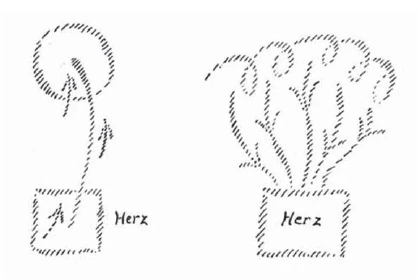
[ 17 ] Was wir so als das menschliche Seelenleben hinstellen durch eine zuerst äußerliche exoterische Betrachtung, dann durch eine etwas mystischere Lebensbetrachtung, ergibt sich aus der tieferen okkulten Forschung. Und da zeigt sich uns dasjenige, was wir jetzt mehr äußerlich beschrieben haben, an Vorgängen, die das Hellsehen auch am Menschen wahrnehmen kann. Wenn der Mensch heute im Wachzustand vor uns steht und das hellseherische Auge betrachtet ihn, so zeigt sich, dass fortwährend vom Herzen nach dem Kopfe gewisse Lichtstrahlen gehen. Wenn wir das schematisch zeichnen wollen, müssten wir das so machen, dass wir hier die Herzgegend zeichnen, dann gehen fortwährend Strömungen nach dem Gehirn hin und umspielen im Innern des Hauptes dasjenige Organ, das in der Anatomie beschrieben wird als Zirbeldrüse. Wie Lichtstrahlen geht es vom Herzen nach dem Kopfe herauf und umströmt die Zirbeldrüse. Diese Strömungen entstehen dadurch, dass das menschliche Blut, das eine physische Substanz, ein Stoff ist, sich fortwährend auflöst in ätherische Substanz, sodass in der Gegend des Herzens ein fortwährender Übergang des Blutes in feine ätherische Substanz stattfindet, und diese strömt nach dem Kopfe herauf und umspielt glimmernd die Zirbeldrüse. Dieser Vorgang, das Ätherischwerden des Blutes, zeigt sich immerwährend am wachenden Menschen. Jetzt ist es aber anders am schlafenden Menschen. Da ist es so, dass wenn wir hier die Gehirn-, hier die Herzgegend hätten, so würde für den okkulten Beobachter eine fortwährende Strömung von außen herein, auch von rückwärts herein zum Herzen wahrnehmbar sein. Diese Strömungen aber, die beim schlafenden Menschen von draußen, vom Weltenraum, aus dem Makrokosmos in das Innere dessen, was da im Bette liegt als physischer und Ätherleib, hereinströmen, die stellen, wenn man sie untersucht, in der Tat etwas sehr Merkwürdiges dar. Diese Strahlen sind recht verschieden bei den verschiedenen Menschen. Die schlafenden Menschen sind recht verschieden voneinander, und wenn die Menschen, die noch ein bisschen eitel sind, zuletzt immer wüssten, wie schlimm sie sich verraten für den okkulten Blick, wenn sie in öffentlichen Versammlungen einschlafen, würden sie es verhindern, weil das verräterisch wirkt.
[ 17 ] What we describe as the human soul life—first through an external, exoteric perspective, then through a somewhat more mystical view of life—arises from deeper occult research. And there we see, in the processes that clairvoyance can also perceive in human beings, what we have just described in more external terms. When a person stands before us today in the waking state and the clairvoyant eye observes them, it becomes apparent that certain rays of light are constantly flowing from the heart to the head. If we were to draw this schematically, we would have to depict the heart region here, with currents continuously flowing toward the brain and circulating within the head around the organ described in anatomy as the pineal gland. Like rays of light, they rise from the heart to the head and flow around the pineal gland. These currents arise because human blood, which is a physical substance, a material, is continually dissolving into ethereal substance, so that in the region of the heart a continuous transition of the blood into fine ethereal substance takes place, and this flows upward toward the head and shimmers around the pineal gland. This process, the etherization of the blood, is constantly evident in the waking human being. But it is different in the sleeping human being. Here, if we were to observe the brain region here and the heart region there, the occult observer would perceive a continuous flow coming in from the outside, and also flowing backward into the heart. These currents, however, which in the sleeping person flow in from outside—from outer space, from the macrocosm—into the interior of what lies there in bed as the physical and etheric body, present, when examined, something truly remarkable. These rays are quite different from person to person. Sleeping people are quite different from one another, and if people who are still a bit vain were always aware of how badly they betray themselves to the occult gaze when they fall asleep in public gatherings, they would prevent it, because it has a telltale effect.
[ 18 ] In der Tat ist es so, dass sich im hohen Grade die moralischen Qualitäten zeigen in der eigenartigen Färbung dessen, was beim Schlafe in ihn einströmt, sodass der Mensch, der niedere moralische Grundsätze hat, eine ganz andere Strömung hat als ein Mensch mit hohen Grundsätzen. Da nützt es nichts, sich bei Tag zu verstellen. Den höheren Weltenmächten gegenüber kann man sich nicht verstellen. Es ist so, dass in einem, der nur ganz leise Neigung hat zu nicht ganz moralischen Grundsätzen, fortwährend einströmen so bräunlich-rote und allerlei sonstige nach dem Rotbräunlichen hinneigende Strahlungen. Und lila-violette Strahlungen treten auf bei denjenigen, die hohe moralische Ideale haben. Es ist nun im Moment des Aufwachens oder des Einschlafens in der Gegend der Zirbeldrüse eine Art Kampf vorhanden zwischen dem, was von oben nach unten, und dem, was von unten nach oben strömt. Das intellektuelle Element strömt von unten nach oben in Form von Lichtwirkungen beim wachenden Menschen, und das, was eigentlich moralisch-ästhetischer Natur ist, das strömt von oben nach unten. Und im Moment des Aufwachens und des Einschlafens begegnen sich die nach aufwärts- und abwärtsgehenden Ströme, und da kann man beurteilen, ob jemand besonders gescheit ist und niedere Grundsätze hat, wo sich dann ein starker Kampf abspielt in der Nähe der Zirbeldrüse, oder ob er gute Grundsätze hat und einem entgegenströmt seine Intellektualität: Dann zeigt sich ein ruhiges Ausbreiten einer glimmerigen Lichterscheinung um die Zirbeldrüse herum. Diese ist gleichsam eingebettet im Moment des Aufwachens oder Einschlafens in ein kleines Lichtmeer. Und darin, dass ein ruhiger Schein die Zirbeldrüse umgibt im Moment des Aufwachens und Einschlafens, zeigt sich die moralische Vornehmheit. So spiegelt sich im Menschen seine moralische Beschaffenheit. Und dieser ruhige Schein dehnt sich oftmals aus weit bis in die Herzgegend hinein. So zeigen sich im Menschen zwei Strömungen, die eine aus dem Makrokosmos, die andere eine mikrokosmische.
[ 18 ] In fact, moral qualities are revealed to a high degree in the unique character of what flows into a person during sleep, so that a person with low moral standards experiences a completely different flow than a person with high standards. It is of no use to pretend otherwise during the day. One cannot pretend in the presence of the higher world powers. The fact is that in a person who has even the slightest inclination toward less-than-moral principles, brownish-red and all manner of other reddish-brownish rays continually flow in. And lilac-violet rays appear in those who have high moral ideals. At the moment of waking or falling asleep, a kind of struggle takes place in the region of the pineal gland between what flows from above downward and what flows from below upward. The intellectual element flows from below upward in the form of light effects in the waking person, and that which is essentially of a moral-aesthetic nature flows from above downward. And at the moment of waking and falling asleep, the upward and downward currents meet, and one can then judge whether someone is particularly clever but has base principles—in which case a fierce struggle takes place near the pineal gland—or whether they have good principles and their intellectuality flows toward one: Then a calm spreading of a shimmering light appears around the pineal gland. At the moment of waking or falling asleep, it is, as it were, embedded in a small sea of light. And in the fact that a calm glow surrounds the pineal gland at the moment of waking and falling asleep, moral nobility is revealed. Thus, a person’s moral character is reflected within them. And this gentle glow often extends far into the region of the heart. Thus, two currents manifest within the human being: one from the macrocosm, the other microcosmic.
[ 19 ] Die ganze Tragweite dessen, wie diese beiden Strömungen sich im Menschen treffen, würden wir erst ermessen, wenn wir einerseits bedenken das, was vorher mehr äußerlich gesagt worden ist vom Seelenleben, wie es sich zeigt in seiner dreifachen Polarität des Intellektuellen, des Ästhetischen und des Moralischen, das von oben nach unten, vom Gehirn nach dem Herzen zu strömt, auf der anderen Seite aber kommen wir zu der ganzen Bedeutung des Gesagten, wenn wir nun die entsprechende Erscheinung im Makrokosmos uns vor Augen führen. Diese entsprechende Erscheinung, sie ist heute so zu schildern, wie sie als Ergebnis vorliegt gerade durch die sorgfältigsten okkulten Forschungen der letzten Jahre, unternommen in den geistigen Untersuchungen einzelner der wahren, echten Rosenkreuzer. Dementsprechend ist dieses Makrokosmische zu schildern gegenüber dem Mikrokosmischen. Und da zeigt sich denn - Sie werden in Ihrem Verständnis der Sache immer näherkommen -, dass ein Ähnliches wie das, was jetzt gesagt worden ist für den Mikrokosmos, auch im Makrokosmos sich abspielt.
[ 19 ] We would only fully grasp the full significance of how these two currents converge within the human being if, on the one hand, we consider what has previously been said—in more external terms—about the life of the soul, as it manifests itself in its threefold polarity of the intellectual, the aesthetic, and the moral, which flows from the brain to the heart, from the brain to the heart; on the other hand, however, we grasp the full significance of what has been said when we now bring the corresponding phenomenon in the macrocosm before our eyes. This corresponding phenomenon can be described today as it has been established precisely through the most meticulous occult research of recent years, undertaken in the spiritual investigations of individual true, genuine Rosicrucians. Accordingly, this macrocosmic aspect must be described in relation to the microcosmic. And there it becomes apparent—you will come ever closer to understanding this—that something similar to what has just been said about the microcosm also takes place in the macrocosm.
[ 20 ] So wie in der Gegend des menschlichen Herzens ein fortwährendes Verwandeln des Blutes in Äthersubstanz. stattfindet, so findet ein ähnlicher Vorgang im Makrokosmos statt. Wir verstehen dieses, wenn wir unser Auge hinwenden auf das Mysterium von Golgatha und auf jenen Augenblick, in dem das Blut des Christus Jesus geflossen ist aus den Wunden. Dieses Blut darf nicht nur als chemische Substanz betrachtet werden, sondern es ist durch alles das, was geschildert worden ist als die Natur des Jesus von Nazareth, etwas ganz Besonderes. Und indem es ausfloss und hineinströmte in die Erde, ist unserer Erde eine Substanz gegeben worden, die, indem sie sich mit der Erde verband, ein Ereignis war, das ein bedeutendstes ist für alle Folgezeiten der Erde und das auch nur einmal auftreten konnte. Was geschah mit diesem Blut in den folgenden Zeiten? Nichts anderes, als was sonst im Herzen des Menschen geschieht. Dieses Blut machte im Verlaufe der Erdenevolution einen Ätherisierungsprozess durch. Und wie unser Blut als Äther vom Herzen nach oben strömt, so lebt im Erdenäther seit dem Mysterium von Golgatha das ätherisierte Blut des Christus Jesus. Der Ätherleib der Erde ist durchsetzt von dem, was aus dem Blute geworden ist, das auf Golgatha geflossen ist; und das ist wichtig. Wäre das nicht geschehen, was durch den Christus Jesus geschehen ist, dann wäre nur das mit den Menschen auf der Erde der Fall, was vorher geschildert worden ist. So aber ist seit dem Mysterium von Golgatha eine fortwährende Möglichkeit vorhanden, dass in diesen Strömungen von unten nach oben die Wirkung des ätherischen Blutes des Christus mitströmt.
[ 20 ] Just as a continuous transformation of blood into etheric substance takes place in the region of the human heart, so a similar process occurs in the macrocosm. We understand this when we turn our gaze to the Mystery of Golgotha and to that moment when the blood of Christ Jesus flowed from the wounds. This blood must not be regarded merely as a chemical substance; rather, through all that has been described as the nature of Jesus of Nazareth, it is something quite special. And as it flowed out and poured into the earth, our earth was given a substance which, by uniting with the earth, constituted an event of the utmost significance for all subsequent ages of the earth—an event that could occur only once. What happened to this blood in the ages that followed? Nothing other than what otherwise happens in the human heart. This blood underwent a process of etherization in the course of Earth’s evolution. And just as our blood flows upward from the heart as ether, so has the etherized blood of Christ Jesus lived in the Earth’s ether since the Mystery of Golgotha. The Earth’s etheric body is permeated by what has become of the blood that flowed on Golgotha; and that is important. Had what happened through Christ Jesus not taken place, then only what has been described above would be the case for human beings on Earth. But since the Mystery of Golgotha, there has been a continuous possibility that the effect of the etheric blood of Christ flows along with these currents from below to above.
[ 21 ] Dadurch, dass in dem Erden-Ätherleib das ätherische Blut des Jesus von Nazareth ist, strömt mit dem von unten nach oben, vom Herzen nach dem Gehirn strömenden ätherisierten Menschenblute dasjenige, was das ätherisierte Blut dieses Jesus von Nazareth ist, sodass nicht nur das zusammentrifft im Menschen, was früher geschildert worden ist, sondern es trifft zusammen die eigentliche menschliche Blutströomung und die Blutströmung des Christus Jesus. Aber eine Verbindung dieser beiden Strömungen kommt nur zustande, wenn der Mensch das richtige Verständnis entgegenbringt dem, was im Christus-Impuls enthalten ist. Sonst kann keine Verbindung zustande kommen, sonst stoßen sich die beiden Strömungen gegenseitig ab, prallen ebenso wieder auseinander, wie sie zusammengeprallt sind. Verständnis können wir nur erwerben, wenn wir in jedem Zeitalter der Erdenentwicklung dieses Verständnis so uns aneignen, wie es angepasst ist in diesem Zeitalter. In der Zeit, als der Christus Jesus auf Erden lebte, da konnten der bevorstehenden Tatsache das richtige Verständnis entgegenbringen jene, die zu seinem Vorläufer Johannes kamen und sich taufen ließen durch die Formel, die im Evangelium ausgedrückt ist. Sie empfingen die Taufe, um die Sünde, das heißt das zu Ende gekommene Karma ihrer vorigen Leben zu ändern, und um zu erkennen, dass der wichtigste Impuls der Erdenentwicklung nunmehr in einen physischen Leib herabsteigen wird. Die Menschheitsentwicklung aber schreitet weiter, und für unsere heutige Zeit ist es wichtig, dass der Mensch einsehen lernt, dass er die theosophische Erkenntnis aufnehmen muss und allmählich das, was vom Herzen zum Gehirn strömt, so befeuert, dass es der Theosophie Verständnis entgegenbringt. Die Folge wird sein, dass er das entgegennehmen kann, was vom zwanzigsten Jahrhundert an beginnt einzugreifen: Das ist gegenüber dem physischen Christus von Palästina der ätherische Christus.
[ 21 ] Because the etheric blood of Jesus of Nazareth is present in the Earth’s etheric body, the etheric human blood flowing from the heart to the brain from the heart to the brain, so that not only does what has been described earlier come together in the human being, but the actual human blood flow and the blood flow of Christ Jesus also come together. But a connection between these two currents can only come about if the human being brings the right understanding to what is contained in the Christ impulse. Otherwise, no connection can be established; otherwise, the two currents repel one another, colliding and then scattering apart just as they had collided. We can only acquire understanding if, in every age of Earth’s development, we appropriate this understanding in a way that is suited to that age. In the time when Christ Jesus lived on Earth, those who came to his forerunner John and were baptized through the formula expressed in the Gospel were able to meet the impending event with the right understanding. They received baptism to transform sin—that is, the karma of their past lives that had come to an end—and to recognize that the most important impulse of Earth’s evolution would now descend into a physical body. But human development continues, and for our present time it is important that people learn to realize that they must take in theosophical knowledge and gradually kindle what flows from the heart to the brain in such a way that it fosters an understanding of theosophy. The result will be that they can receive what begins to take effect from the twentieth century onward: This is the etheric Christ, in contrast to the physical Christ of Palestine.
[ 22 ] Denn an jenem Zeitpunkt sind wir angelangt, wo der ätherische Christus in das Erdenleben eingreift und zunächst einer kleinen Anzahl von Menschen sichtbar wird wie in einem natürlichen Hellsehen. Dann in den nächsten dreitausend Jahren wird er immer mehr Menschen sichtbar werden. Das muss kommen, das ist ein Naturereignis. Dass es kommt, ist ebenso wahr als im neunzehnten Jahrhundert die Errungenschaften der Elektrizität gekommen sind. Dass eine gewisse Anzahl von Menschen den Äther-Christus sehen wird, das Ereignis von Damaskus haben wird, ist wahr. Aber es wird sich darum handeln, dass die Menschen lernen, den Moment zu beachten, wo der Christus an sie herantritt. Es werden nur wenige Jahrzehnte vergehen, und für die Menschen besonders der jugendlichen Jahre wird der Fall eintreten - jetzt schon überall bereitet es sich vor: Irgendein Mensch kommt da oder dorthin, dieses oder jenes erlebt er. Wenn er nur wirklich das Auge durch Beschäftigung mit der Theosophie geschärft hätte, könnte er schon bemerken, dass plötzlich um ihn irgendjemand ist, kommt, um zu helfen, ihn auf dieses oder jenes aufmerksam zu machen: dass ihm der Christus gegenübertritt - er aber glaubt, irgendein physischer Mensch sei da. Aber daran wird er merken, dass es ein übersinnliches Wesen ist, dass es sogleich verschwindet. Gar mancher wird erleben, wenn er gedrückten Herzens, leidbelastet, still in seinem Zimmer sitzt und nicht aus noch ein weiß, dass die Tür geöffnet wird: Der ätherische Christus wird erscheinen und wird Trostesworte zu ihm sprechen. Ein lebendiger Trostbringer wird der Christus für die Menschen werden! Mag es auch heute noch grotesk erscheinen, aber wahr ist es doch, dass manchmal, wenn die Menschen zusammensitzen, nicht ein noch aus wissen, und auch wenn größere Menschenmengen zusammensitzen und warten: dass sie dann den ätherischen Christus sehen werden! Da wird er selber sein, wird beratschlagen, wird sein Wort auch in Versammlungen hineinwerfen. Diesen Zeiten gehen wir durchaus entgegen. Das ist das Positive, dasjenige, was als positives aufbauendes Element in die Menschheitsentwicklung eingreifen wird.
[ 22 ] For we have now reached the point where the etheric Christ intervenes in earthly life and first becomes visible to a small number of people, as in a natural form of clairvoyance. Then, over the next three thousand years, he will become visible to more and more people. This must come to pass; it is a natural phenomenon. That it will come is just as certain as the advent of electricity in the nineteenth century. It is true that a certain number of people will see the etheric Christ and experience a Damascus moment. But the crucial point will be that people learn to recognize the moment when Christ approaches them. Only a few decades will pass, and for people—especially those in their youth—this will come to pass—it is already being prepared everywhere: a person goes here or there, and experiences this or that. If only they had truly sharpened their vision through engagement with theosophy, they might already notice that suddenly someone is there, coming to help, to draw their attention to this or that: that the Christ is standing before them—but they believe some physical human being is there. Yet they will realize it is a supersensible being because it vanishes immediately. Many a person will experience, when sitting quietly in their room with a heavy heart, burdened by sorrow, and not knowing what to do, that the door opens: the ethereal Christ will appear and speak words of comfort to them. Christ will become a living bringer of comfort for humanity! It may still seem grotesque today, but it is nevertheless true that sometimes, when people sit together, at a loss, and even when large crowds gather and wait: they will then see the ethereal Christ! There he will be in person, offering counsel, and speaking his word even into gatherings. We are certainly moving toward these times. This is the positive aspect, the element that will intervene as a positive, uplifting force in the development of humanity.
[ 23 ] Kein Wort soll gegen die großen Kulturfortschritte unserer Zeit gesagt werden, sie sind notwendig zum Heil und zur Befreiung der Menschen. Aber nehmet alles, was Ihr nehmen könnt an äußeren Fortschritten in der Beherrschung der Naturkräfte, es ist nicht einmal als etwas Kleines und Unbedeutendes zu vergleichen gegenüber dem, was dem Menschen gegeben wird, der in seiner Seele das Erwachen durch den Christus erleben wird, der jetzt in die Menschheitskultur und in ihre Angelegenheiten eingreifen wird. Was dadurch den Menschen dann erwachsen wird, das sind zusammensetzende, positive Kräfte. Der Christus bringt aufbauende Kräfte in die Menschheitskultur.
[ 23 ] Not a word should be spoken against the great cultural advances of our time; they are necessary for the salvation and liberation of humanity. But take all the external progress you can in mastering the forces of nature—it is not even comparable, as something small and insignificant, to what is given to the person who will experience the awakening in their soul through Christ, who is now intervening in human culture and its affairs. What will then grow within people as a result are unifying, positive forces. Christ brings uplifting forces into human culture.
[ 24 ] Ja, wenn wir die ersten nachatlantischen Zeiten nehmen würden, so würden wir sehen, dass die Menschen da ihre Wohnungen auf andere Weise gebaut haben als heute. Da haben sie allerlei benützt, was gewachsen ist, dem sie nur nachhalfen. Selbst Paläste haben sie so gebaut, indem sie nachgeholfen haben der Natur, die Zweige und die Pflanzen miteinander verschlungen haben und so weiter. Heute müssen die Menschen aus den Trümmern bauen. Wir machen alle Kultur der Außenwelt aus den Zertrüämmerungsprodukten. Und im Laufe der nächsten Jahre werden Sie noch besser verstehen, wie verschiedenes anderes in unserer Kultur Zerstörungsprodukt ist.
[ 24 ] Yes, if we were to look at the early post-Atlantean era, we would see that people back then built their homes differently than they do today. They used all sorts of things that grew naturally, simply giving them a helping hand. They even built palaces this way, by giving nature a helping hand, intertwining branches and plants, and so on. Today, people have to build from the rubble. We create all of the external world’s culture from the products of destruction. And over the next few years, you will understand even better how various other aspects of our culture are products of destruction.
[ 25 ] Das Licht zerstört sich innerhalb unseres nachatlantischen Erdenprozesses. Bis in die Atlantis hinein war der Erdenprozess ein fortschreitender, seither ist er ein zerfallender. Was ist das Licht? Es zerfällt, und das zerfallende Licht ist Elektrizität. Was wir als Elektrizität kennen, das ist Licht, das sich selber zerstört innerhalb der Materie. Und die chemische Kraft, die innerhalb der Erdenentwicklung eine Umwandlung erfährt, ist Magnetismus. Und noch eine dritte Kraft wird auftreten. Und wenn den Menschen heute schon Wunder wirkend die Elektrizität erscheint, so wird diese dritte Kraft in noch viel wunderbarerer Weise die Kultur beeinflussen. Und je mehr wir von dieser Kraft anwenden, desto eher wird die Erde zu einem Leichnam werden, damit das, was das Geistige der Erde ist, sich hinüberwirken kann zum Jupiter. Die Kräfte müssen angewandt werden, um die Erde zu zerstören, damit der Mensch frei wird von der Erde und damit der Erdenleib abfallen kann. Solange die Erde im fortschreitenden Prozess war, hat man dies nicht gemacht, weil nur die zerfallende Erde die große Kulturerrungenschaft der Elektrizität gebrauchen kann. So sonderbar dies gegenwärtig auch klingt, aber es muss nach und nach ausgesprochen werden. Wir müssen den Entwicklungsprozess verstehen, die Menschen werden dadurch lernen, unsere Kultur in richtiger Weise zu bewerten. Wir werden dadurch lernen, dass es notwendig ist, die Erde zu zerstören, sonst wird der Geist nicht frei. Aber man wird auch lernen, das Positive zu schätzen: das Hereindringen der geistigen Kräfte in unser Erdendasein.
[ 25 ] Light is disintegrating within our post-Atlantean Earth process. Up until the time of Atlantis, the Earth process was one of progression; since then, it has been one of disintegration. What is light? It is disintegrating, and this disintegrating light is electricity. What we know as electricity is light that destroys itself within matter. And the chemical force that undergoes a transformation within Earth’s development is magnetism. And a third force will yet appear. And if electricity already seems miraculous to people today, this third force will influence civilization in an even more wondrous way. And the more we apply this force, the sooner the Earth will become a corpse, so that what is the spiritual essence of the Earth can carry its influence over to Jupiter. The forces must be applied to destroy the Earth, so that humanity may be freed from the Earth and so that the Earth’s body may fall away. As long as the Earth was in a process of development, this was not done, because only the decaying Earth can make use of the great cultural achievement of electricity. As strange as this may sound at present, it must be stated little by little. We must understand the process of development; through this, people will learn to evaluate our culture in the right way. We will thereby learn that it is necessary to destroy the Earth; otherwise, the spirit will not be set free. But we will also learn to appreciate the positive aspect: the penetration of spiritual forces into our earthly existence.
[ 26 ] So sehen wir schon den großen, gewaltigen Fortschritt darin, dass der Christus notwendig hatte, durch die drei Jahre in einem gut zubereiteten Menschenleib zu wandeln, damit er sichtbar werden konnte den sinnlichen Augen. Durch das, was da während dieser drei Jahre geschehen ist, sind die Menschen reif geworden, denjenigen Christus zu sehen, der herumgehen wird im ätherischen Leibe, der ebenso real und wirklich eingreifen wird in das Erdenleben wie der physische Christus zur Zeit der palästinensischen Wirklichkeit. Die Menschen werden wissen, wenn sie nicht mit unklaren Sinnen solche Sachen betrachten, dass sie es mit dem ätherischen Leibe zu tun haben, der innerhalb der physischen Welt herumwandeln wird, aber sie werden wissen, dass dies der einzige ätherische Leib ist, der wirken kann in der physischen Welt, wie sonst ein physischer Menschenleib wirkt. Er wird sich von einem physischen Leib nur dadurch unterscheiden, dass er sozusagen an zwei, drei, ja an hundert und an tausend Orten zu gleicher Zeit sein kann, was nur einer ätherischen, nicht aber einer physischen Gestalt möglich ist. Dasjenige, was durch diesen Fortschritt der Menschheit bewirkt wird, ist, dass die zwei Pole, die ich vorhin erwähnt habe, der intellektuelle und der moralische Pol immer mehr eins werden, zu einer Einheit verschmelzen. Das werden sie dadurch, dass die Menschen immer mehr lernen werden im Verlaufe der nächsten Jahrtausende, den ätherischen Christus in der Welt zu betrachten. Sie werden immer mehr durchdrungen werden auch bei Tag von der direkten Wirkung des Guten in den geistigen Welten. Während jetzt der Wille bei Tag schläft und der Mensch im Grunde genommen nur indirekt durch Vorstellung wirken kann, wird es im Verlauf der nächsten Jahrtausende immer mehr geschehen, dass durch dasjenige, was von unseren Tagen an hereinwirkt und dem der Christus vorsteht, des Menschen Wirken auch im Tageszustand direkt verbessert werden kann.
[ 26 ] Thus we can already see the great and tremendous progress in the fact that it was necessary for the Christ to walk for three years in a well-prepared human body so that He might become visible to the physical eyes. Through what took place during those three years, people have become ready to see the Christ who will walk about in the etheric body, who will intervene in earthly life just as truly and really as the physical Christ did during the time of the Palestinian reality. People will know—if they do not view such things with clouded senses—that they are dealing with the etheric body that will walk about within the physical world, but they will know that this is the only etheric body capable of acting in the physical world in the same way that a physical human body otherwise acts. It will differ from a physical body only in that it can, so to speak, be in two, three, indeed a hundred or a thousand places at the same time—something possible only for an etheric form, but not for a physical one. What is brought about by this progress of humanity is that the two poles I mentioned earlier—the intellectual and the moral pole—will increasingly become one, merging into a unity. This will happen because, over the course of the next millennia, people will increasingly learn to contemplate the etheric Christ in the world. They will also be increasingly permeated, even during the day, by the direct influence of the good in the spiritual worlds. Whereas now the will sleeps during the day and human beings can, in essence, act only indirectly through imagination, it will increasingly be the case over the course of the next millennia that, through what is working in from our own time—and which is presided over by the Christ—human activity can also be directly improved even in the waking state.
[ 27 ] Wovon Sokrates geträumt hat, dass die Tugend lehrbar sei, wird wirklich eintreten. Und immer mehr und mehr wird auf Erden die Möglichkeit vorhanden sein, dass nicht nur unser Intellekt durch die Lehren angeregt, angespornt wird, sondern dass durch diese Lehren auch moralische Impulse verbreitet werden. Schopenhauer hat gesagt: Moral predigen ist leicht, Moral begründen sei sehr schwierig. - Warum ist das so? Weil man mit dem Predigen noch keine Moral wirklich verbreitet hat. Man kann ganz gut Moralgrundsätze einsehen und sie nicht halten. Für die meisten Menschen gilt das Christus-Wort: Der Geist ist willig, das Fleisch aber ist schwach. — Das ändert sich dadurch, dass das moralische Feuer ausströmt von dieser Christus-Gestalt. Dadurch aber tritt für die Erde immer mehr das ein, dass der Mensch die Notwendigkeit des Moralischen und seiner Impulse einsieht. Und dadurch wandelt er die Erde um, insofern der Mensch immer mehr fühlen wird, dass das Moralische zur Erde gehört. Und in Zukunft werden nur jene Menschen unmoralisch sein können, die im Unmoralischen Hilfe bekommen, die von bösen Dämonen, von ahrimanischen, asurischen Mächten besessen werden und diese Besessenheit erstreben. Das ist der Zukunftszustand der Erde: dass eine genügende Anzahl von Menschen da sein wird, welche immer mehr das Moralische lehren und zu gleicher Zeit Begründung der Moral geben werden; aber auch dass solche, welche aus ihrem freien Willen heraus es wollen, sich den bösen Mächten hingeben werden und gegenüber den guten Menschen ein Heer des Bösen bilden werden. Dazu wird niemand gezwungen werden, es wird eines jeden freier Wille sein.
[ 27 ] Socrates’ dream that virtue can be taught will indeed come true. And more and more, the possibility will arise on earth that not only will our intellect be stimulated and inspired by these teachings, but that moral impulses will also be spread through them. Schopenhauer said: Preaching morality is easy; justifying morality is very difficult. — Why is that so? Because preaching does not actually spread morality. One can fully understand moral principles and yet fail to uphold them. For most people, the words of Christ apply: The spirit is willing, but the flesh is weak. — This changes as the moral fire radiates from this Christ-figure. Through this, however, it becomes increasingly evident on Earth that human beings recognize the necessity of morality and its impulses. And through this, humanity transforms the earth, insofar as people will increasingly feel that morality belongs to the earth. And in the future, only those people will be able to be immoral who receive help from the immoral, who are possessed by evil demons, by Ahrimanic and Asuric forces, and who seek this possession. This is the future state of the Earth: that there will be a sufficient number of people who will increasingly teach morality and at the same time provide a foundation for it; but also that those who, of their own free will, choose to do so, will surrender themselves to the evil forces and form an army of evil against the good people. No one will be forced to do this; it will be the free will of each individual.
[ 28 ] Dann kommt jene Zeit über die Erde, wo das eintritt, was wie so vieles eigentlich nur in den grandiosen Definitionen von orientalischem Okkultismus, orientalischer Mystik enthalten ist, wo diese moralische Atmosphäre bis zu einem hohen Grade zugenommen haben wird. Von diesem Zeitpunkt spricht die orientalische Mystik seit vielen Jahrtausenden. Und namentlich stark spricht sie seit dem Auftreten des Buddha von jenem Zukunftsstandpunkt, wo die Erde getaucht sein wird in eine moralische Äther-Atmosphäre. Und wie eine große Zukunftshoffnung stand es immer schon seit der Zeit der alten Rishis vor der orientalischen Mystik, dass der Erde dieser Impuls kommen wird und dass er ein Wesensteil sein wird von Vishva-Karman, oder wie Zarathustra sagte, von Ahura Mazdao. So stand es jener Mystik bereits vor Augen, dass von der Wesenheit, die wir den Christus nennen, dieser moralische Impuls, diese moralische Erden-Atmosphäre ausgehen wird, und auf ihn, den Christus, setzte diese orientalische Mystik ihre Hoffnung.
[ 28 ] Then there will come a time upon the earth when what is—like so much else—actually contained only in the grand definitions of Eastern occultism and Eastern mysticism will come to pass, when this moral atmosphere will have intensified to a high degree. Eastern mysticism has been speaking of this time for many millennia. And since the appearance of the Buddha, it has spoken particularly strongly of that future state in which the Earth will be immersed in a moral etheric atmosphere. And as a great hope for the future, it has always stood before Oriental mysticism since the time of the ancient Rishis that this impulse will come to the Earth and that it will be an essential part of Vishva-Karman, or as Zarathustra said, of Ahura Mazdao. Thus it was already clear to that mysticism that this moral impulse, this moral atmosphere of the Earth, would emanate from the being we call the Christ, and it was upon him, the Christ, that this Eastern mysticism placed its hope.
[ 29 ] Die Mittel der orientalischen Mystik reichten nicht aus, um sich dies vorzustellen, aber was als Gefolgschaft dieses Ereignisses auftritt, das konnten sie sich vorstellen. Sie konnten sich vorstellen, dass die in das Feuer, das Licht der Sonne eingetauchten reinen AkashaGestalten innerhalb von fünftausend Jahren nach der Erleuchtung des großen Buddha als die Gefolgschaft dessen kommen werden, der durch morgenländische Mystik allein nicht zu erkennen ist. Eine wunderbare Vorstellung fürwahr: Es wird etwas kommen, was möglich machen wird, dass durch eine geläuterte moralische Atmosphäre der Erde die Licht- und Feuersöhne nicht in physisch verkörperter Gestalt, sondern als reine Akasha-Gestalten innerhalb der moralischen Atmosphäre der Erde herumwandeln werden. Dann wird aber auch der Lehrer da sein, fünftausend Jahre nach der Erleuchtung des Gautama Buddha, der die Menschen lehrt, was das für wunderbare Gestalten sind, diese reinen Feuer- und Lichtgestalten. Dieser Lehrer, das wird der Maitreya-Buddha sein, der dreitausend Jahre nach unserer Zeit auftreten wird, der den Menschen den Christus-Impuls wird lehren können.
[ 29 ] The tools of Eastern mysticism were not sufficient to imagine this, but they could imagine what would follow in the wake of this event. They could imagine that the pure Akashic beings, immersed in the fire and light of the sun, would come within five thousand years after the enlightenment of the great Buddha as the retinue of the One who cannot be recognized through Eastern mysticism alone. A wondrous vision indeed: something will come that will make it possible for the Sons of Light and Fire to walk about within the moral atmosphere of the Earth—not in physically embodied form, but as pure Akashic beings—through a purified moral atmosphere of the Earth. But then the Teacher will also be there, five thousand years after the enlightenment of Gautama Buddha, to teach people what wonderful beings these pure beings of fire and light are. This Teacher will be the Maitreya Buddha, who will appear three thousand years after our time and will be able to teach humanity the Christ impulse.
[ 30 ] So vereinigt sich orientalische Mystik mit dem christlichen Wissen des Abendlandes zu einer schönen, wunderbaren Einheit. Und klar gemacht wird auch, dass derjenige, der dreitausend Jahre nach unserer Zeit als der Maitreya-Buddha erscheinen wird, immer wieder als der Bodhisattva, als der Nachfolger des Gautama Buddha verkörpert auf der Erde erscheint. Eine seiner Verkörperungen war die des hundert Jahre vor Beginn unserer Zeitrechnung lebenden Jeshu ben Pandira. Dieser in Jeshu ben Pandira Verkörperte ist derselbe, der einstmals der Maitreya-Buddha sein wird und der von Jahrhundert zu Jahrhundert immer wieder in einem fleischlichen Leibe erscheint, und zwar noch nicht selber als Buddha, sondern als Bodhisattva. Auch in unserem Zeitalter gehen von diesem, der einstmals — nicht jetzt, sondern einstmals - der Maitreya-Buddha werden wird, die bedeutendsten Lehren über die Christus-Wesenheit und über die Feuersöhne der Inder - die Agnishvattas - aus.
[ 30 ] Thus, Eastern mysticism unites with Western Christian knowledge to form a beautiful, wondrous unity. It is also made clear that the one who will appear as the Maitreya Buddha three thousand years after our era has repeatedly incarnated on Earth as the Bodhisattva, the successor to Gautama Buddha. One of his incarnations was that of Jeshu ben Pandira, who lived a hundred years before the beginning of our era. This being incarnated as Jeshu ben Pandira is the same one who will one day be the Maitreya Buddha and who appears again and again from century to century in a physical body—not yet as a Buddha himself, but as a Bodhisattva. Even in our age, the most significant teachings concerning the Christ-being and the Fire Sons of the Indians—the Agnishvattas—emanate from this one who will one day—not now, but one day—become the Maitreya Buddha.
[ 31 ] Dasjenige, woran der Mensch erkennen kann den, der einstmals der Maitreya-Buddha werden wird, ist aller wahren morgenländischen Mystik und christlichem Wissen wiederum gemeinsam. Erkennen kann man denjenigen, der einstmals der Maitreya-Buddha sein wird, der im Gegensatz zu den Feuersöhnen im physischen Leibe als Bodhisattva erscheinen wird, daran, dass er zunächst in seiner Jugend heranwächst so, dass kein Mensch ahnen kann, was für eine Individualität in ihm ist. Immer wird es so sein, dass diejenigen, die es verstehen, an einem solchen Menschen erst zwischen dem dreißigsten und dreiunddreißigsten Jahre erkennen, dass in ihm ein Bodhisattva ist. Da tritt etwas ein wie eine Umwechslung der Persönlichkeit. Und der Maitreya-Buddha wird selber gerade im dreiunddreißigsten Jahre seines Lebens sich der Menschheit zu erkennen geben. Wie der Christus Jesus im dreißigsten Jahre seines Lebens sein Werk begann, so geben sich die Bodhisattvas, die weiterhin den Christus verkündigen werden, im dreiunddreißigsten Jahre ihres Lebens zu erkennen. Und der Maitreya-Buddha selber, der mit großen, gewaltigen Worten, von denen heute noch keine Vorstellung gegeben werden kann, als umgewandelter Bodhisattva von den großen Geheimnissen des Daseins verkünden wird, er wird sprechen in einer Sprache, die erst geschaffen werden muss, denn heute könnte kein Mensch die Worte finden, mit denen einstmals der Maitreya-Buddha zu den Menschen sprechen wird. Aus dem Grunde kann noch nicht so zu den Menschen gesprochen werden, weil es noch nicht das physische Werkzeug dazu gibt. Die Lehren des Erleuchteten werden nicht bloß Lehren sein, sondern sie werden moralische Impulse in die Menschenscelen einströmen. Solche Worte können noch nicht von einem physischen Kehlkopf ausgesprochen werden. Sie können jetzt nur in den geistigen Welten da sein.
[ 31 ] The characteristic by which one can recognize the one who will one day become the Maitreya Buddha is common to all true Eastern mysticism and Christian knowledge. One can recognize the one who will one day be the Maitreya Buddha—who, unlike the Sons of Fire, will appear in a physical body as a Bodhisattva—by the fact that he grows up in his youth in such a way that no one can guess what kind of individuality lies within him. It will always be the case that those who understand will only recognize in such a person, between the ages of thirty and thirty-three, that a Bodhisattva dwells within him. At that point, something like a transformation of the personality takes place. And the Maitreya Buddha himself will reveal himself to humanity precisely in the thirty-third year of his life. Just as Christ Jesus began his work in the thirtieth year of his life, so the Bodhisattvas, who will continue to proclaim the Christ, reveal themselves in the thirty-third year of their lives. And the Maitreya Buddha himself, who, as a transformed Bodhisattva, will proclaim the great mysteries of existence with grand, powerful words of which no conception can yet be given today—he will speak in a language that must first be created, for today no human being could find the words with which the Maitreya Buddha will one day speak to humanity. For this reason, it is not yet possible to speak to humanity in this way, because the physical instrument for it does not yet exist. The teachings of the Enlightened One will not merely be teachings, but they will flow into human lives as moral impulses. Such words cannot yet be uttered by a physical larynx. They can only exist in the spiritual worlds at present.
[ 32 ] Theosophie ist die Vorbereitung zu alledem, was in der Zukunft kommen wird. Jene, die es mit der Menschheitsentwicklung ernst nehmen, die wollen, dass die Seelenentwicklung nicht versumpfe, sondern so weiter schreite, dass die Erde nun wirklich in ihrem geistigen Teil frei werden kann, dass sie den gröberen Teil wie einen Leichnam abfallen lassen kann - denn es könnten Menschen das ganze Werk verpfuschen -, diejenigen, die wollen, dass das Weltenwerk gelinge, sollen sich Verständnis des spirituellen Lebens erwerben durch das, was wir heute Theosophie nennen. So wird Theosophie zur Pflicht, Erkenntnis wird etwas, was wir empfinden, etwas, demgegenüber wir Verantwortung haben. Und wenn wir so empfinden und wollen lernen, wenn wir aus diesen Weltengeheimnissen heraus so empfinden, dass wir Theosophen sein wollen, dann empfinden wir richtig. Dann aber auch darf Theosophie nicht für uns etwas sein, was unsere Neugierde befriedigt, sondern sie soll etwas werden, ohne das wir nicht leben können. Erst wenn das der Fall ist, empfinden wir im richtigen Sinne, dann erst leben wir als lebendige Bausteine innerhalb jenes großen Baues, der aufgeführt werden soll in den Seelen der Menschen und der sich über die Menschen breiten kann.
[ 32 ] Theosophy is the preparation for all that is to come in the future. Those who take human evolution seriously, who want the development of the soul not to stagnate but to continue in such a way that the Earth can truly become free in its spiritual aspect, that it can shed its coarser aspect like a corpse—for people could ruin the whole work— those who want the world’s work to succeed should acquire an understanding of spiritual life through what we today call Theosophy. Thus Theosophy becomes a duty; knowledge becomes something we feel, something toward which we have a responsibility. And if we feel this way and wish to learn, if we feel from these world mysteries that we want to be Theosophists, then we are feeling correctly. But then, too, Theosophy must not be for us something that merely satisfies our curiosity; rather, it must become something without which we cannot live. Only when that is the case do we feel in the true sense; only then do we live as living building blocks within that great edifice that is to be erected in the souls of human beings and that can spread out over humanity.
[ 33 ] So ist die Theosophie die Eröffnung gegenüber den wahren Welterscheinungen, wie sie herantreten an den Menschen der Zukunft, an unsere eigenen Seelen, ob wir noch im physischen Leibe oder schon zwischen Tod und neuer Geburt sein werden. Diese Umwälzung wird uns berühren, ob wir noch im Leibe wandeln oder ob wir den physischen Leib abgelegt haben werden. Nur dass die Menschen sich schon hier auf dem Erdenrund im physischen Leibe Verständnis aneignen müssen für diese Ereignisse, wenn sie berührt werden sollen zwischen Tod und neuer Geburt von dem, was da geschieht. Für jene, die sich jetzt im physischen Leibe Verständnis für den Christus aneignen, für jene ist es einerlei, ob sie noch leben werden, wenn der Moment heranrückt, den Christus zu schauen, oder ob sie dann bereits durch die Pforte des Todes geschritten sein werden. Diejenigen aber, die jetzt ablehnen das Verständnis des Christus, die müssen, wenn sie zur Zeit des Eintretens dieses Ereignisses bereits durch die Pforte des Todes geschritten sind, warten bis zur nächsten Verkörperung, denn die Grundlage kann nicht erworben werden zwischen Tod und Geburt. Wenn die Grundlage aber einmal erworben ist, setzt sie sich fort, dann ist der Christus auch schaubar zwischen Tod und neuer Geburt. So wird uns Theosophie nicht nur etwas, was wir lernen für das physische Leben, sondern was auch Wert hat, wenn wir den physischen Leib im Tode abgelegt haben werden.
[ 33 ] Thus, Theosophy is an opening to the true phenomena of the world, as they will present themselves to the people of the future, to our own souls, whether we are still in the physical body or already between death and a new birth. This upheaval will affect us, whether we are still walking in the body or whether we will have shed the physical body. It is only that people must already here on Earth, in the physical body, acquire an understanding of these events if they are to be touched between death and new birth by what is happening there. For those who now acquire an understanding of the Christ while in the physical body, it makes no difference whether they will still be alive when the moment approaches to behold the Christ, or whether they will have already passed through the gate of death by then. But those who now reject an understanding of the Christ—if they have already passed through the gate of death by the time this event occurs—must wait until their next incarnation, for the foundation cannot be acquired between death and birth. But once the foundation has been acquired, it continues; then Christ is also visible between death and new birth. Thus, Theosophy becomes for us not only something we learn for physical life, but also something of value once we have laid down the physical body in death.
[ 34 ] Das wollte ich heute geben zum Verständnis des Menschen und als Handhabe zur Beantwortung mancher Fragen. Selbsterkenntnis ist schwierig, weil der Mensch ein so kompliziertes Wesen ist. Dadurch ist der Mensch so kompliziert, dass er mit allen höheren Welten und Wesen zusammenhängt. Was in uns ist, das sind Schattenbilder der großen Welt, und was unsere Organisation ist, unser physischer, Äther- und Astralleib und unser Ich, was so unsere Glieder bedeutet, das sind für die göttlichen Wesen Welten. Was bei uns physischer, Äther-, Astralleib und Ich ist, das ist die eine Welt, die andere Welt ist die höhere, die Himmelswelt. Für die göttlich-geistigen Wesen der höheren Welten sind die Leibesglieder hohe göttlich-geistige Welten. Deshalb ist der Mensch etwas so Kompliziertes, weil er ein wirkliches Spiegelbild der geistigen Welt ist. Das soll ihn zum Bewusstsein seiner Menschenwürde bringen. Aber aus jener Erkenntnis, dass wir zwar ein Bild sind, dass wir aber noch sehr fernestehen dem, was wir sein sollen, auf dem Umwege dieser Erkenntnis eignen wir uns an neben der Menschenwürde auch die rechte Bescheidenheit und Demut gegenüber dem Makrokosmos und seinen Göttern.
[ 34 ] This is what I wanted to share today to help you understand human nature and as a guide for answering certain questions. Self-knowledge is difficult because human beings are such complex beings. This complexity means that human beings are connected to all the higher worlds and beings. What is within us are shadows of the great world, and what constitutes our organization—our physical, etheric, and astral bodies and our ego, which together form our members—are worlds in themselves for the divine beings. What for us is the physical, etheric, and astral bodies and the ego is one world; the other world is the higher one, the heavenly world. For the divine-spiritual beings of the higher worlds, the members of the body are high divine-spiritual worlds. That is why the human being is something so complex, because he is a true mirror image of the spiritual world. This should lead him to an awareness of his human dignity. But from the realization that while we are indeed an image, we are still very far from what we are meant to be—through the detour of this realization—we acquire, alongside human dignity, the proper modesty and humility toward the macrocosm and its gods.
Aus der an den Vortrag sich anschließenden Fragenbeantwortung
From the Q&A session following the lecture
Frage: Wie ist das Wort «mit Zungen reden» beim Apostel Paulus zu verstehen?
Question: How should the phrase “speaking in tongues” be understood in the writings of the Apostle Paul?
[ 35 ] Antwort: Bei Ausnahmemenschen kann es vorkommen, dass nicht nur das Phänomen des Sprechens im Wachzustande allein da ist, sondern es geht etwas in dieses Sprechen, was sonst nur im Schlafbewusstsein da ist. Das ist das Phänomen, von dem Paulus spricht. Goethe spricht darüber von demselben Standpunkte aus. Er hat eine sehr schöne Abhandlung über dieses Phänomen geschrieben.
[ 35 ] Answer: In the case of exceptional individuals, it can happen that not only is the phenomenon of speaking while awake present, but something enters into this speech that is otherwise only present in the consciousness of sleep. This is the phenomenon of which Paul speaks. Goethe discusses this from the same perspective. He wrote a very beautiful essay on this phenomenon.
Frage: Wie wird man die Trostworte des Christus verstehen?
Question: How can we understand Christ’s words of comfort?
[ 36 ] Antwort: Die Menschen werden wie durch ihr eigenes Herz diese Trostworte fühlen. Es kann sich auch wie ein physisches Hören ausnehmen.
[ 36 ] Answer: People will feel these words of comfort as if they were coming from their own hearts. It may even feel like hearing them physically.
Frage: Was sind chemische Kräfte und Stoffe im Verhältnis zur geistigen Welt?
Question: What are chemical forces and substances in relation to the spiritual world?
[ 37 ] Antwort: In der Welt sind eine Anzahl Substanzen, die verbindbar und trennbar sind. Was wir Chemismus nennen, ist hineinprojiziert in die physische Welt aus der Welt des Devachan, der Sphärenharmonie. Sodass in der Verbindung zweier Stoffe nach ihren Atomgewichten wir die Abschattung haben zweier Töne der Sphärenharmonie. Die chemische Verwandtschaft zweier Stoffe in der physischen Welt ist eine Abschattung aus der Welt der Sphärenharmonie. Die Zahlenverhältnisse der Chemie sind wirklich die Ausdrücke für die Zahlenverhältnisse der Sphärenharmonie. Diese Letztere ist stumm geworden durch die Verdichtung der Materie. Würde man die Stoffe tatsächlich bis zur ätherischen Verdünnung bringen und die Atomzahlen als innerlich formendes Prinzip wahrnehmen können, so würde man die Sphärenharmonie hören. Man hat die physische, die astralische Welt, das untere Devachan und das obere Devachan. Wenn man nun einen Körper noch weiter hinunterdrückt als zur physischen Welt, dann kommt man in die unterphysische Welt, in die unterastralische Welt, das untere oder schlechte Unterdevachan und das untere oder schlechte Oberdevachan. Die schlechte Astralwelt ist das Gebiet des Luzifer, das schlechte untere Devachan ist das Gebiet des Ahriman und das schlechte obere Devachan ist das Gebiet der Asuras. Wenn man den Chemismus noch weiter hinunterstößt als unter den physischen Plan, in die schlechte untere devachanische Welt, entsteht Magnetismus, und wenn man das Licht ins Untermaterielle stößt, also um eine Stufe tiefer als die materielle Welt, entsteht die Elektrizität. Wenn wir das, was lebt in der Sphärenharmonie, noch weiter hinabstoßen bis zu den Asuras, dann gibt es eine noch furchtbarere Kraft, die nicht mehr lange wird geheim gehalten werden können. Man muss nur wünschen, dass wenn diese Kraft kommt, die wir uns viel, viel stärker vorstellen müssen als die stärksten elektrischen Entladungen, und die jedenfalls kommen wird- dann muss man wünschen, dass, bevor diese Kraft der Menschheit durch einen Erfinder gegeben wird, die Menschen nichts Unmoralisches mehr an sich haben werden!
[ 37 ] Answer: There are a number of substances in the world that can be combined and separated. What we call chemistry is projected into the physical world from the world of Devachan, the harmony of the spheres. Thus, in the combination of two substances according to their atomic weights, we have a reflection of two tones of the harmony of the spheres. The chemical affinity of two substances in the physical world is a reflection from the world of the harmony of the spheres. The numerical ratios of chemistry are truly the expressions of the numerical ratios of the harmony of the spheres. The latter has become silent due to the densification of matter. If one were to actually bring the substances down to an ethereal dilution and be able to perceive the atomic numbers as an inner-forming principle, one would hear the harmony of the spheres. There is the physical world, the astral world, the lower Devachan, and the upper Devachan. If one now pushes a body even further down than the physical world, one enters the subphysical world, the subastral world, the lower or evil lower Devachan, and the lower or evil upper Devachan. The evil astral world is the realm of Lucifer, the evil lower Devachan is the realm of Ahriman, and the evil upper Devachan is the realm of the Asuras. If one pushes chemism even further down than the physical plane, into the evil lower Devachanic world, magnetism arises; and if one pushes the light into the sub-material, that is, one level deeper than the material world, electricity arises. If we push down what lives in the harmony of the spheres even further, down to the Asuras, then there is an even more terrible force that will no longer be able to be kept secret for long. One can only hope that when this force comes—which we must imagine to be far, far stronger than the most powerful electrical discharges, and which will certainly come—one can only hope that, before this force is given to humanity by an inventor, people will no longer have anything immoral about them!
Frage: Was ist Elektrizität?
Question: What is electricity?
[ 38 ] Antwort: Elektrizität ist Licht in untermateriellem Zustand. Da ist das Licht in der schwersten Weise zusammengepresst. Dem Licht muss man auch Innerlichkeit zusprechen, es ist in jedem Punkte es selbst. Wärme kann sich in drei Richtungen des Raumes ausdehnen, beim Licht müssen wir von einer vierten sprechen: Es ist vierfach ausgedehnt; es hat Innerlichkeit als Viertes.
[ 38 ] Answer: Electricity is light in a sub-material state. Here, light is compressed in the most intense way. Light must also be said to possess innerness; at every point, it is itself. Heat can expand in three directions of space; with light, we must speak of a fourth: it is expanded in four directions; it possesses inner essence as a fourth dimension.
Frage: Was geschieht mit dem Erdenleichnam?
Question: What happens to the earthly body?
[ 39 ] Antwort: Wir haben als Rest der Mondenentwicklung unsern Mond, der die Erde umkreist. Ebenso wird für die Erde ein Rest sein, der den Jupiter umkreisen wird. Dann lösen sich die Reste allmählich auf zum allgemeinen Weltenäther. Auf der Venus wird ein Rest nicht mehr sein. Sie erscheint zunächst als reine Wärme, wird dann Licht und geht wiederum in die geistige Welt hinein. Für die Erde wird der Rest zum Leichnam. Aber das ist ein Weg, der von dem Menschen nicht mitgemacht werden darf, da er furchtbaren Qualen dadurch ausgesetzt sein würde. Aber es gehen wohl Wesen mit diesem Leichnam mit, da sie sich selber höher entwickeln werden dadurch.
[ 39 ] Answer: Our Moon, which orbits the Earth, is a remnant of the Moon’s development. Similarly, there will be a remnant of the Earth that will orbit Jupiter. Then the remnants will gradually dissolve into the general world ether. On Venus, there will be no remnant left. It first appears as pure heat, then becomes light, and finally returns to the spiritual world. For the Earth, the remnant becomes a corpse. But this is a path that human beings must not follow, as they would be subjected to terrible torments as a result. However, certain beings do accompany this corpse, as they will develop themselves to a higher level through this process. To the answer to the question
Zur Fragenbeantwortung:
To answer your question:
| Es spiegeln sich als Unterphysische Welt | |
|---|---|
| die Astralwelt | das Gebiet des Luzifer |
| unteres Devachan | das Gebiet des Ahriman |
| oberes Devachan | das Gebiet des Asuras |
| Reflected as Subphysical World | |
|---|---|
| the Astral World | the realm of Lucifer |
| lower Devachan | the realm of Ahriman |
| upper Devachan | the realm of the Asuras |