

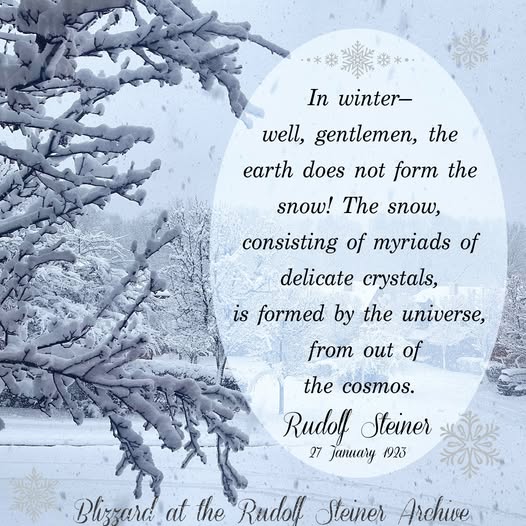
𝐀 𝐩𝐨𝐬𝐢𝐭𝐢𝐯𝐞 𝐨𝐮𝐭𝐥𝐨𝐨𝐤 𝐟𝐨𝐫 𝐭𝐡𝐨𝐬𝐞 𝐨𝐟 𝐮𝐬 𝐞𝐱𝐩𝐞𝐫𝐢𝐞𝐧𝐜𝐢𝐧𝐠 𝐦𝐚𝐣𝐨𝐫 𝐬𝐧𝐨𝐰𝐬𝐭𝐨𝐫𝐦𝐬 ... "The water is dependent on the earth. In spring, it begins to become dependent, it is most dependent in summer, and it ceases somewhat to be dependent in fall. In winter—well, gentlemen, the earth does not form the snow! The snow, consisting of myriads of delicate crystals, is formed by the universe, from out of the cosmos. Unlike in summer, the earth in winter doesn't abandon itself to the warmth of the world but rather to the formative forces. The water turns away from the earth in winter and receives the coldness of universal space. So we have discovered an interesting rhythm in the universe. One: spring; two: summer; three: fall; four: winter, and the water no longer directs itself to the earth but to the universe. Again, one, two three—spring, summer, fall; then four: the water follows the universe, no longer the earth."
Rudolf Steiner, 27 January 1922, Dornach.