

Basic Elements of Esotericism
GA 93a
30 September 1905, Berlin
Translate the original German text into any language:
Versions Available:
Basic Elements of Esotericism, tr. SOL
V
Lecture V
[ 1 ] Es wird immer betont, daß man, um okkult vorwärtszukommen, möglichst positiv und möglichst wenig negativ sein soll, daß man weniger sprechen soll von dem, was nicht ist, als von dem, was ist. Wenn das im gewöhnlichen Leben gefördert wird, so ist das eine Vorbereitung für die Arbeit im Okkulten. Der Okkultist muß nicht fragen: Hat der Stein Leben? -, sondern: Wo ist das Leben des Steins, wo ist das Bewußtsein des Mineralreiches zu finden? — Das ist die höchste Form des Nichtkritisierens. Gerade den höchsten Fragen gegenüber muß man diese Gesinnung ausbilden.
[ 1 ] It is always emphasized that in order to advance in the occult, one should be as positive and as little negative as possible, that one should speak less about what is not than about what is. If this is encouraged in everyday life, it is a preparation for work in the occult. The occultist must not ask: Does the stone have life? — but rather: Where is the life of the stone, where is the consciousness of the mineral kingdom to be found? — This is the highest form of non-criticism. It is precisely in relation to the highest questions that one must develop this attitude.
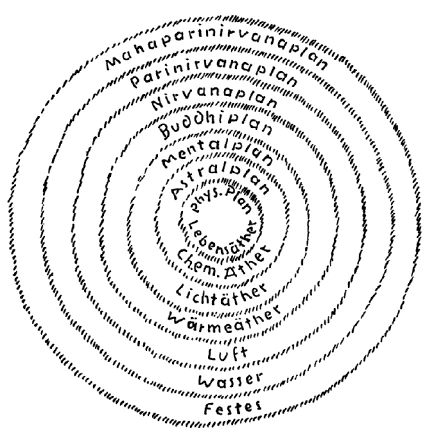
[ 2 ] Im gewöhnlichen Leben unterscheidet man drei Zustände der Körper: das Feste, das Flüssige und das Gas- oder Luftförmige. Fest muß man unterscheiden von mineralisch. Auch Luft und Wasser sind mineralisch. In den theosophischen Schriften rechnet man noch vier andere feinere Stoffarten dazu. Das nächste nämlich, was feiner ist als die Luft, ist dasjenige Element, das sie ausdehnt, sie dem Rauminhalt nach immer größer macht. Was die Luft so auseinandertreibt, ist die Wärme; es ist eigentlich ein feiner ätherischer Stoff, der erste Äthergrad, der Wärmeäther. Nun folgt als zweite Ätherart der Lichtäther. Körper, die leuchten, senden einen Stoff aus, den man in der Theosophie als Lichtäther bezeichnet. Die dritte Ätherart ist der Träger alles dessen, was die feinsten Stoffe formt, der formende Äther, auch chemischer Äther genannt. Daß sich Sauerstoff und Wasserstoff verbinden, bewirkt dieser Äther. Und der allerfeinste Äther ist der, der das Leben bildet: Prana oder Lebensäther.
[ 2 ] In ordinary life, we distinguish between three states of matter: solid, liquid, and gaseous or airy. Solid must be distinguished from mineral. Air and water are also mineral. In theosophical writings, four other finer types of matter are added to this list. The next thing that is finer than air is the element that expands it, making it ever larger in terms of volume. What drives air apart is heat; it is actually a fine ethereal substance, the first degree of ether, the heat ether. The second type of ether is the light ether. Bodies that glow emit a substance that is referred to in theosophy as light ether. The third type of ether is the carrier of everything that forms the finest substances, the forming ether, also called chemical ether. This ether causes oxygen and hydrogen to combine. And the very finest ether is that which forms life: prana or life ether.
[ 3 ] Die Wissenschaft wirft alle vier Ätherarten zusammen. Aber sie wird sie allmählich doch in dieser Weise herausfinden. Unsere Bezeichnung ist die im Sinne der Rosenkreuzer, während die indische Literatur von vier verschiedenen Graden des Äthers spricht.
[ 3 ] Science lumps all four types of ether together. But it will gradually discover them in this way. Our designation is that of the Rosicrucians, while Indian literature speaks of four different degrees of ether.
[ 4 ] Nehmen wir zunächst alles das, was fest ist. Was fest ist, hat scheinbar kein Leben. Wenn man sich mit dem Leben in das Feste hineinversetzt, was dadurch geschieht, daß man wach in dem Zustand lebt, den man als Traumwelt bezeichnet und dann das Feste aufsucht, zum Beispiel sich in eine felsige Gebirgslandschaft hineinversetzt, dann fühlt man in sich selbst das eigene Leben verändert, man fühlt sich von einem Leben durchrieselt. Man ist nicht mit dem Bewußtsein dort, sondern mit dem eigenen Leben, dem Ätherkörper; man ist dann an einem Ort, in einem Zustande, den man den Mahaparinirvanaplan nennt. Auf diesem Mahaparinirvanaplan ist das Leben des Festen. Dieser Plan ist der andere Pol des Festen. Daß man dann mit dem Leben auf dem Mahaparinirvanaplan war, kann man aus anderen Wirkungen wahrnehmen. Wenn man von dort zurückkommt, hat man die Einwirkung von Wesen im Mahaparinirvana-Zustande erfahren. Dort hat der feste Stein sein Leben.
[ 4 ] Let us first take everything that is solid. What is solid apparently has no life. When one transports oneself with life into the solid, which happens by living awake in the state that is called the dream world and then seeking out the solid, for example, transporting oneself into a rocky mountain landscape, then one feels one's own life changed within oneself, one feels oneself permeated by life. You are not there with your consciousness, but with your own life, your etheric body; you are then in a place, in a state called the Mahaparinirvana plane. On this Mahaparinirvana plane is the life of the solid. This plane is the other pole of the solid. That you were then with life on the Mahaparinirvana plane can be perceived from other effects. When one returns from there, one has experienced the influence of beings in the Mahaparinirvana state. There, the solid stone has its life.
[ 5 ] Als zweites folgt das Flüssige, das Wasser. Wenn man sich im Traumzustand ins Meer versetzt, als ob man selbst Meer wäre, dann versetzt man sich mit dem Leben des Flüssigen auf den Parinirvanaplan. Durch diese Prozedur weiß man etwas von den verschiedenen Planen.
[ 5 ] Second is the liquid, water. When one transports oneself into the sea in the dream state, as if one were the sea itself, then one transports oneself with the life of the liquid to the Parinirvana plane. Through this procedure, one learns something about the different planes.
[ 6 ] Drittens, wenn man sich in das Luftförmige versetzt im Traum, so befindet man sich auf dem Nirvanaplan. Nirvana heißt wörtlich «verlöschen», in Luft verlöschen, so wie man ein Feuer auslöscht. Wenn man darin das Leben sucht, ist man mit dem eigenen Leben auf dem Nirvanaplan. Der Mensch atmet Luft ein. Wenn er das Leben der Luft in sich erlebt, dann ist das der Weg, um auf den Nirvanaplan zu kommen. Daher die Atemübungen der Jogis. Niemand kann den Nirvanaplan erreichen, wenn er nicht wirklich Atemübungen macht. Es sind nur dann Hathajoga-Übungen, wenn sie auf der falschen Stufe gemacht werden. Sonst sind sie Rajajoga-Übungen. Man atmet tatsächlich das Leben ein, den Nirvanaplan.
[ 6 ] Thirdly, when one transports oneself into the air-like state in a dream, one finds oneself on the Nirvana plane. Nirvana literally means “to extinguish,” to extinguish in air, just as one extinguishes a fire. When one seeks life there, one is on the Nirvana plane with one's own life. Human beings breathe in air. When they experience the life of the air within themselves, that is the way to reach the Nirvana plane. Hence the breathing exercises of the yogis. No one can reach the Nirvana plane unless they really do breathing exercises. They are only Hatha Yoga exercises when they are done at the wrong level. Otherwise, they are Raja Yoga exercises. One actually breathes in life, the Nirvana plane.
[ 7 ] Viertens: Unter dem Nirvanaplan ist der Buddhi- oder Shushuptiplan. Da hat die Wärme das Leben. Wenn Buddhi im Menschen entwickelt wird, wird alles Kama in Selbstlosigkeit, in Liebe umgewandelt. Diejenigen Tiere, welche keine Wärme entwickeln, sind auch leidenschaftslos. Auf höheren Stufen muß der Mensch diese Leidenschaftslosigkeit wieder erreichen, weil er sein Leben auf dem Shushuptiplan hat. Fünftens kommt der Devachan- oder Mentalplan. Da hat der Lichtäther sein Leben. Das Sonnenlicht lebt auf dem Devachanplan; daher die innere Beziehung zwischen Weisheit und Licht. Wenn man das Licht im Traumbewußtsein erlebt, so erlebt man darin die Weisheit. Immer, wenn Gott sich im Lichte offenbarte, ist das der Fall gewesen. Im brennenden Dornbusch, das heißt im Licht, erschien Jehova dem Moses, um die Weisheit zu offenbaren.
[ 7 ] Fourth: Below the Nirvana plane is the Buddhi or Shushupti plane. There, warmth has life. When Buddhi is developed in humans, all Kama is transformed into selflessness, into love. Those animals that do not develop warmth are also passionless. At higher levels, humans must regain this passionlessness because their life is on the Shushupti plane. Fifth is the Devachan or mental plane. This is where the light ether has its life. Sunlight lives on the Devachan plane; hence the inner relationship between wisdom and light. When one experiences the light in dream consciousness, one experiences wisdom in it. Whenever God revealed himself in light, this has been the case. In the burning bush, that is, in the light, Jehovah appeared to Moses to reveal wisdom.
[ 8 ] Der sechste ist der Astralplan. Auf dem lebt der chemische Äther. Wenn man somnambul ist, nimmt man auf dem Astralplan die Eigenschaften der Chemikalien, die chemischen Eigenschaften wahr, weil auf dem Astralplan der chemische Äther wirklich sein Leben hat.
[ 8 ] The sixth is the astral plane. This is where the chemical ether lives. When one is somnambulistic, one perceives the properties of chemicals, the chemical properties, on the astral plane, because the chemical ether truly has its life on the astral plane.
[ 9 ] Der siebente ist der physische Plan. Da lebt der Lebensäther in seinem eigentlichen Elemente. Beim Lebensäther nimmt man das Leben wahr. Der Lebensäther wird auch atomistischer Äther genannt, weil er auf diesem Plan sein eigenes Leben, seinen eigenen Mittelpunkt hat. Was auf demselben Plan lebt, hat auf demselben Plan seinen Mittelpunkt.
[ 9 ] The seventh is the physical plane. This is where the life ether lives in its actual element. With the life ether, one perceives life. The life ether is also called the atomistic ether because it has its own life, its own center, on this plane. What lives on the same plane has its center on the same plane.
[ 10 ] Tatsächlich enthält alles, was wir um uns haben, die sieben Plane. Sie sind tatsächlich um uns. Man muß nur fragen: Wo hat das Feste, wo das Gasförmige sein Leben? - und so weiter.
[ 10 ] In fact, everything around us contains the seven planes. They are actually around us. One only has to ask: Where does the solid, where does the gaseous have its life? - and so on.
[ 11 ] Wir haben nun gehört, daß die Wärme ihr eigenes Leben auf dem Buddhi- oder Shushuptiplan hat. So bestehen bestimmte Beziehungen zwischen allen Dingen. Auffällig ist die Beziehung zwischen dem Ohr und dem Sprechen. Das Ohr war in der Evolution viel früher vorhanden als das Sprechen. Das Ohr ist das Aufnahmeorgan, die Sprache ist das Hervorbringungsorgan für den Ton. Diese zwei Dinge, Ohr und Sprache, gehören im wesentlichen zusammen. Der Ton, wie er erscheint, ist die Wiedergabe von Schwingungen in der Luft, und ein jeder Ton entspringt einer besonderen Schwingung. Die Pythagoreer sagten: Wenn ihr studiert, was draußen, außer euch im Ton ist, dann studiert ihr die Arithmetik der Luft. - Der gleichförmige Raum wäre ein tonloser, der arithmetisch durchorganisierte ist ein tönender Raum. Da hat man ein Beispiel, wie man hineinblicken kann in die Akasha-Chronik. Kann man sich aufschwingen, die innere Arithmetik, die vom Ton im Raume bleibt, wahrzunehmen, so kann man jederzeit einen Ton wiederhören, den ein Mensch gesprochen hat. Zum Beispiel kann man hören, was Cäsar beim Übergang über den Rubikon gesprochen hat. Die innere Arithmetik des Tones bleibt vorhanden in der Akasha-Chronik. Dem Ton entspricht etwas von dem, was man Manas nennt. Was dem Ohr Ton ist, ist Weisheit der Welt. Man hört die Weisheit der Welt, indem man den Ton wahrnimmt. Man bringt die Weisheit der Welt hervor, indem man selber spricht. Das, was in unserem Sprechen arithmetisch ist, bleibt in der AkashaChronik vorhanden. Der Mensch drückt sich unmittelbar in der Weisheit aus, wenn er hört oder spricht. Das Denken ist die Form, in der der Mensch jetzt seinen Willen in der Sprache zum Ausdruck bringen kann. Nur im Denken können wir jetzt den Willen entfalten. Erst später kann der Mensch über das Denken hinaus seinen Willen im Wort entfalten.
[ 11 ] We have now heard that heat has its own life on the Buddhi or Shushupti plane. Thus, certain relationships exist between all things. The relationship between the ear and speech is striking. The ear existed much earlier in evolution than speech. The ear is the organ of reception, speech is the organ of production for sound. These two things, ear and speech, essentially belong together. Sound, as it appears, is the reproduction of vibrations in the air, and each sound arises from a particular vibration. The Pythagoreans said: When you study what is outside of you in sound, you are studying the arithmetic of the air. Uniform space would be a soundless space, while arithmetically organized space is a sounding space. This is an example of how one can look into the Akashic Records. If one can rise to perceive the inner arithmetic that remains from the sound in space, one can hear again at any time a sound that a person has spoken. For example, one can hear what Caesar said when he crossed the Rubicon. The inner arithmetic of the sound remains present in the Akashic Records. The sound corresponds to something called Manas. What is sound to the ear is the wisdom of the world. One hears the wisdom of the world by perceiving sound. One brings forth the wisdom of the world by speaking oneself. That which is arithmetic in our speech remains present in the Akashic Records. Human beings express themselves directly in wisdom when they hear or speak. Thought is the form in which humans can now express their will in language. Only in thought can we now unfold the will. Only later can humans unfold their will in words beyond thought.
[ 12 ] Die nächste Stufe hängt zusammen mit der Wärme. Die Aktivität des Menschen haben wir zu suchen in dem, was er als innere Wärme ausstrahlt. Aus dem, was aus der Wärme folgt: Leidenschaften, Triebe, Instinkte, Begierden, Wünsche und so weiter, entsteht das Karma. Wie nun das Parallelorgan zum Ohr das Sprechorgan ist, so ist zu der Wärme des Herzens das Parallelorgan der Schleimkörper, die Hypophyse. Das Herz nimmt von außen die Wärme auf, wie das Ohr den Ton. Dadurch nimmt es die Wärme der Welt wahr. Das entsprechende Organ, das wir haben müssen, damit wir bewußt die Wärme hervorbringen können, ist der Schleimkörper im Kopfe, der jetzt nur am Anfange seiner Entwickelung steht. So wie man mit dem Ohr wahrnimmt und mit dem Kehlkopfe hervorbringt, nimmt man die Wärme der Welt auf im Herzen und strömt sie wieder aus durch den Schleimkörper im Gehirn. Ist diese Fähigkeit erworben, dann ist das Herz zu dem Organ geworden, wozu es eigentlich werden soll. Darauf beziehen sich die Worte in «Licht auf den Weg»: «Eh’ vor den Meistern stehen kann die Seele, muß ihres Herzens Blut die Füße netzen.» Dann strömt unser Herzblut aus, wie jetzt unsere Worte die Welt überfluten. Später wird die Seelenwärme die Menschen überfluten.
[ 12 ] The next stage is related to warmth. We must seek human activity in what they radiate as inner warmth. Karma arises from what follows from warmth: passions, drives, instincts, desires, wishes, and so on. Just as the parallel organ to the ear is the speech organ, so the parallel organ to the warmth of the heart is the mucous body, the pituitary gland. The heart absorbs warmth from the outside, just as the ear absorbs sound. In this way, it perceives the warmth of the world. The corresponding organ that we must have in order to consciously produce warmth is the mucous body in the head, which is now only at the beginning of its development. Just as one perceives with the ear and produces with the larynx, one absorbs the warmth of the world in the heart and flows it out again through the mucous body in the brain. Once this ability has been acquired, the heart has become the organ it is meant to be. This is referred to in the words in “Light on the Path”: “Before the soul can stand before the Masters, the blood of its heart must wet its feet.” Then our heart's blood flows out, just as our words now flood the world. Later, the warmth of the soul will flood over people.
[ 13 ] Etwas tiefer in der Evolution als das Wärmeorgan, steht das Sehorgan. In der Entwickelung folgten aufeinander Hörorgan, Wärmeorgan, Sehorgan. Das Sehorgan ist noch ganz auf der Stufe, daß es nur aufnehmen kann. Das Ohr nimmt schon aus dem Ton, zum Beispiel aus dem Glockenton, das innerste Wesen wahr. Die Wärme muß uns von dem Wesen selbst zuströmen. Das Auge hat nur ein Bild, das Ohr hat die Wahrnehmung des innersten Wesens. Das Wahrnehmen der Wärme ist ein Aufnehmen einer Ausstrahlung. Ein Organ wird nun auch das aktive Organ zum Auge werden. Das ist heute veranlagt in der Zirbeldrüse, Epiphyse, welches Organ den Bildern, die das Auge heute erzeugt, Wirklichkeit verleihen wird. Diese beiden Organe, Zirbeldrüse und Schleimkörper, müssen sich als aktive Organe zum Sehorgan (Auge) und Wärmeorgan (Herz) hinzuentwikkeln. Die Phantasie ist heute die Anlage zu dem späteren Schaffen. Jetzt hat der Mensch höchstens die Imagination. Später wird er magische Kraft haben. Das ist die Kriyashakti. Diese Kraft entwickelt sich in demselben Maße, in dem sich physisch die Zirbeldrüse entwickelt.
[ 13 ] Somewhat lower in evolution than the warmth organ is the organ of sight. In development, the organ of hearing was followed by the warmth organ and then the organ of sight. The organ of sight is still at the stage where it can only receive. The ear already perceives the innermost essence from sound, for example from the sound of a bell. The warmth must flow to us from the being itself. The eye has only an image, the ear has the perception of the innermost essence. The perception of warmth is the reception of a radiation. An organ will now also become the active organ for the eye. This is now predisposed in the pineal gland, the epiphysis, which organ will give reality to the images that the eye produces today. These two organs, the pineal gland and the mucous body, must develop as active organs alongside the organ of sight (eye) and the organ of warmth (heart). Imagination today is the predisposition for later creativity. At present, human beings have at most the power of imagination. Later, they will have magical power. This is kriyashakti. This power develops to the same extent as the pineal gland develops physically.
[ 14 ] In dem gegenseitigen Verhältnis von Ohr und Kehlkopf haben wir ein Vorbild. Das Denken wird dann später durchdrungen von der Wärme, und noch später lernt der Mensch selbst schaffen. Zuerst lernt er ein Bild schaffen; dann Ausstrahlung schaffen, hinaussenden; dann Wesenheiten schaffen. Die Freimaurerei nennt diese drei Kräfte: Weisheit, Schein (Schönheit) und Gewalt. (Siehe Goethes «Märchen».)
[ 14 ] We have a model in the mutual relationship between the ear and the larynx. Thinking is then later permeated by warmth, and even later, humans learn to create themselves. First, they learn to create an image; then to create radiance, to send it out; then to create beings. Freemasonry calls these three powers: wisdom, appearance (beauty), and power. (See Goethe's “Fairy Tales.”)
[ 15 ] Die Wärme hat ihr Leben auf dem Shushuptiplan. Diese in bewußter Weise zu verwerten, ist dem möglich, der das Leben der Wärme kennt und beherrscht, wie der Mensch heute das Leben der Luft in gewisser Weise beherrscht. In der Entwickelung muß sich der Mensch jetzt nähern den Kräften des Shushuptiplanes (BuddhiManas). Die fünfte Unterrasse (Kulturperiode) hat hauptsächlich die Aufgabe, Kama-Manas zu entwickeln. Manas findet man in allem, was in den Dienst des Menschengeistes gestellt ist. Doch im Grunde genommen steht alles dies jetzt im Dienste von Kama. Die höchsten Errungenschaften des Geistes sind in den Dienst von Kama gestellt. Unsere Zeit hat die höchsten Kräfte in den Dienst dieser Bedürfnisse gestellt, die das Tier auch ohne diese Errungenschaften befriedigt.
[ 15 ] Warmth has its life on the Shushupti plane. Those who know and master the life of warmth can consciously utilize it, just as human beings today master the life of air in a certain way. In their development, human beings must now approach the forces of the Shushupti plane (Buddhi-Manas). The main task of the fifth sub-race (cultural period) is to develop Kama-Manas. Manas is found in everything that is placed at the service of the human spirit. But basically, all of this is now at the service of Kama. The highest achievements of the spirit are placed at the service of Kama. Our time has placed the highest powers at the service of these needs, which the animal satisfies even without these achievements.
[ 16 ] Jetzt muß aber auch schon Buddhi-Manas entwickelt werden. Der Mensch muß etwas mehr lernen als Sprechen. Es muß sich mit dem Sprechen eine andere Kraft verbinden, wie wir das in den Schriften von Tolstoj finden. Es kommt dabei nicht so sehr auf das an, was er sagt, sondern daß hinter dem, was er sagt, eine elementare Kraft steht, die etwas von dem Buddhi-Manas hat, das in unsere Kultur hineinkommen muß. Tolstojs Schriften wirken deshalb so stark, weil sie in bewußtem Gegensatz zu westeuropäischer Kultur etwas Neues, Elementares enthalten. Die Art Barbarei, die noch darin liegt, wird später ausgeglichen werden. Tolstoj ist bloß ein ganz kleines Werkzeug einer höheren geistigen Kraft, die auch hinter dem gotischen Initiierten Ulfilas stand. Diese geistige Kraft gebraucht Tolstoj als ihr Werkzeug.
[ 16 ] But now Buddhi-Manas must also be developed. Human beings must learn more than just how to speak. Speaking must be combined with another power, as we find in the writings of Tolstoy. It is not so much what he says that matters, but that behind what he says there is an elemental power that has something of the Buddhi-Manas that must enter our culture. Tolstoy's writings have such a powerful effect because, in conscious contrast to Western European culture, they contain something new and elemental. The barbarism that still lies within them will be balanced out later. Tolstoy is merely a very small tool of a higher spiritual power, which also stood behind the Gothic initiate Ulfilas. Tolstoy uses this spiritual power as his tool.