

Anthroposophy, Psychosophy
and Pneumatosophy
GA 115
4 November 1910, Berlin
Translated by Steiner Online Library
Psychosophy IV
[ 1 ] Today, too, a short poem will be recited before the lecture, once again by the young Goethe.
Poetic Reflections on the Descent of Jesus Christ into Hell
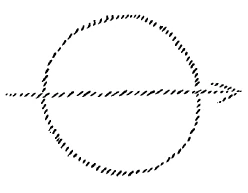
What an extraordinary commotion!
A shout of joy resounds through the heavens,
A great army marches on in splendor.
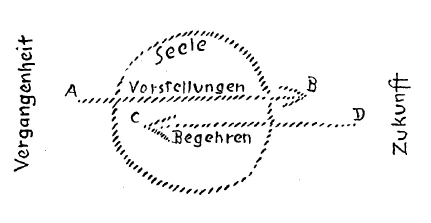
Followed by a thousand million,
God’s Son descends from His thrones,
And hastens to that dark place.
He hastens, surrounded by storms,
He comes as Judge and as Hero;
He goes, and all the stars tremble,
The sun quakes, the world quakes.
I see Him on the chariot of victory,
Carried away by wheels of fire,
He who died for us on the cross.
He shows victory even to those far away,
Far from the world, far from the stars,
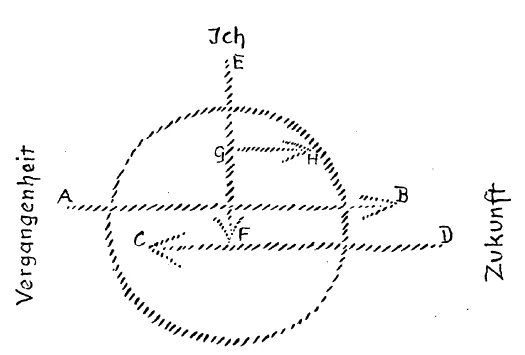
The victory He won for us.
He comes to destroy hell,
Which His death has already struck down;
It shall hear its judgment from Him:
Hear! Now the curse is fulfilled.
Hell sees the Victor coming,
It feels its power taken away,
It trembles and shuns His face;
It knows the terror of His thunder,
It tries in vain to hide,
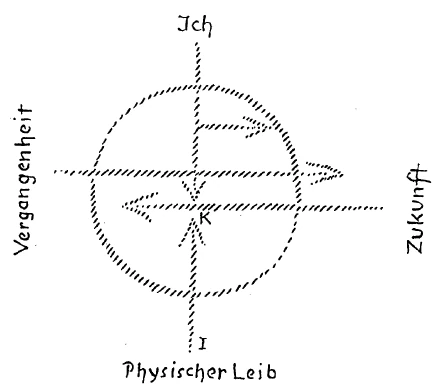
It tries to flee but cannot;
It rushes in vain to save itself
And to escape the Judge,
The Lord’s wrath, like chains of iron,
Holds its foot; it cannot flee.
Here lies the vanquished dragon,
He lies and feels the Most High’s vengeance,
He feels it and gnashes his teeth in rage;
He feels the torments of all Hell,
He groans and howls a thousand times:
Destroy me, O fiery heat!
There he lies in the sea of flames,
Eternal fear and torment torment him;
He curses that the torment may consume him,
And hears that the torment shall be eternal.
Here, too, are those great multitudes,
Who were guilty of the same vice as he,
Yet by no means as wicked as he.
Here lies the countless multitude
In a black, dreadful throng,
Amid the fiery storm around him;
He sees how they shun the Judge,
He sees how the storm devours them,
He sees it and yet cannot rejoice,
For his torment is even greater.
The Son of Man descends in triumph
Down to the black swamps of Hell,
And there displays His glory.
Hell cannot bear the radiance;
Since the days of its creation
Darkness has reigned there.
It lay far from all light,
Filled with torment in this chaos;
The radiance of His countenance
God ever turned away from it.
Now she sees within her limits
The glory of the Son shining,
The terrible majesty.
She sees Him surrounded by thunder,
She sees that all the rocks tremble,
As God stands before her in wrath.
She sees Him coming to judge her,
She feels the pain that torments her,
She wishes in vain to destroy herself;
Even this comfort is denied her.
Now she thinks of her former happiness,
Looking back with anguish on those days,
When that splendor gave her joy;
When her heart was still in the state of virtue,
Her cheerful spirit in the freshness of youth
And always full of new delight.
She thinks with fury of her crime,
How she boldly deceived people;
She thought to take revenge on God,
Now she feels what it entailed.
God became a man. He came to earth.
“This one, too, shall be my sacrifice,”
said Satan, and rejoiced.
He sought to destroy Christ,
the Creator of the worlds was to die;
But woe to you, Satan, for all eternity!
You thought you could overcome Him,
You rejoiced in His distress;
But victorious He comes to bind you:
Where is your sting, O Death?
Speak, Hell! Speak, where is your victory?
Behold how your powers lie;
Will you soon recognize the power of the Most High?
Behold, Satan! Behold your kingdom destroyed,
Burdened by a thousand torments,
You lie in eternal, dark night.
There you lie as if struck by lightning,
No glimmer of happiness delights you.
It is in vain. You may hope for nothing,
The Messiah died for me alone!
A howl rises through the air,
Those black tombs quickly tremble,
As Christ reveals Himself to Hell.
It grinds its teeth in rage; yet our great hero
Can command its fury;
He beckons—and all of Hell falls silent.
Thunder rolls before His voice,
The high banner of victory flies;
Even angels tremble before His wrath,
When Christ goes forth to judge.
Now He speaks; His speech is thunder,
He speaks, and all the rocks shatter,
His breath is like fire.
Thus He says: “Tremble, you wicked ones!
He who cursed you in Eden,
Comes to destroy your kingdom.
Look up! You were My children,
You rebelled against Me,
You fell and became brazen sinners,
You have the reward that is yours,
You became My greatest enemies,
You led My best friends astray,
People fell just as you did.
You wanted to destroy them forever,
All were to die; but weep!
I have won them for Myself. For them I have come down,
I suffered, I pleaded, I died for them.
You shall not achieve your purpose;
Whoever believes in Me shall never die.
Here you lie in eternal chains,
Nothing can save you from the Pit,
Neither repentance nor recklessness.
There you lie, writhing in sulfuric flames,
You hastened to condemn yourselves,
There you lie and lament for eternity!
You too, whom I chose for Myself,
You too forfeited My favor;
You too are lost for all eternity.
You murmur? Do not blame Me.
You were meant to live with Me forever,
My Word was given to you for this purpose,
But you sinned and did not obey.
You lived in the slumber of sin;
Now the just punishment torments you,
You feel My terrible judgment.”
So He spoke, and a terrible storm
Goes forth from Him, the lightning glows,
The thunder seizes the transgressors
And hurls them into the abyss.
The God-Man shuts the gates of hell,
He rises from the dark places Back into His glory.
He sits at the Father’s side,
He still will fight for us,
He will! O friends, what joy!
The angels’ solemn choirs,
Who rejoice before the great God,
So that all creation may hear:
Great is the Lord, God of Hosts!
[ 2 ] It may contribute to a deeper understanding of what was said yesterday and what will be said today if we try to draw a comparison between Hegel’s poetry, which was recited yesterday, and the poetry of the young Goethe, which we have just heard. This comparison will be useful because it can help us become aware of the diversity of the souls of those from whom the two poems originate. Let us try to imagine just how vastly different the two poems are—the one recited yesterday and the one recited today. Due to the limited time available, it is necessary that certain things can only be more or less hinted at. Nevertheless, I believe it will be possible for us to understand one another.
[ 3 ] Yesterday we heard the poetry of a philosopher, a man who has reached tremendous heights in the realm of pure thought. And we have seen that in this poem, “Eleusis,” thought itself has, in a sense, become creative within Hegel’s soul. If you now reflect on how yesterday’s poem affected you, you will be able to say to yourself: One senses mighty thoughts wrestling with the greatest questions of humanity as well as with the great questions of the ages that tie in with the so-called mysteries. One senses that someone has drilled the thought into these great mysteries of the world, but one senses a certain awkwardness in the poetic treatment. One senses, so to speak, from this poem that it is something that does not lie within the main mission of the personality from whom it originates. It is a struggle with the poetic form, and one can see from the poetry that the thought has had difficulty struggling to find the form through which the poetic form becomes possible in the first place. One can see from the poetry that the personality from whom it originates would not have been capable of producing many poems in life.
[ 4 ] Let us compare this with the poem we have just heard, but by focusing on a specific detail. Before the first lecture, I had you read a poem from Goethe’s youth that had been adapted for this purpose, and through which we were able to see quite clearly how two souls lived within Goethe’s breast—two spiritual powers, two spiritual forces—and we saw what in this poem—worthy also of what lived in the older Goethe as the core of his being—nevertheless presents itself to people in powerful images. But we see in the poetry of the young Goethe that a very different soul force is at work in Goethe than, say, in Hegel. Everywhere in Goethe it is what we might call: the rich, vivid images flow to him. And how rich in imagery is the poem that has just appeared before us as a work of the young Goethe! This, then, was already inherent in his nature: that rich, meaningful images flowed to him. And where the grandeur of the subject overwhelms him, we perceive how that which still stood in his way as a hindrance in his early poetry is pushed back by a powerful inner life that expresses itself in rich imagery.
[ 5 ] In a sense, we see a threefold aspect in the poems presented. We see how, in Hegel, thought takes effect, giving rise to images more or less solely through the immense struggle it undergoes. We can still see from the pallor of the images just how intense that struggle was. We see it in the poetry of the young Goethe, as it flows along in richly vivid images. And we see how these richly vivid images in Goethe’s poetry, where he dealt with the legend of the “Perpetual Jew,” could be so impaired in a certain way—because those two souls were struggling within him—that he was unable to bring them to completion. It has, after all, remained only a fragment. Here we are pointed to a diversity of the soul’s life. Let us keep this before our eyes: how a soul force that we might, in a certain sense, call “conceptual”—as in Hegel—struggles to penetrate that soul force which is the greatest in Goethe, and how this soul force, within Goethe’s own soul, in turn penetrates into its opposite.
[ 6 ] And now let us continue with our psychosophical reflections. Let us remember that within our inner life, judgments and the experiences of love and hate—which stem from the faculty of desire—are at work. We can also summarize, in a different way than we did yesterday, what lives in our soul on the one hand as a judging power, by recalling that this power of judgment confronts us when we speak of the soul’s intellectual capacity—the ability to understand the truths of the world—and, on the other hand, by considering that a completely different soul power confronts us when we say: a soul is interested in the external world in one way or another. — Depending on how the experiences of love and hate take effect, a soul is interested in the external world. But these phenomena of love and hate themselves have nothing to do with the power of thought, with intelligence. The power of judgment and the power of interest are two forces that operate differently within the soul. A simple observation already shows this. Anyone who believes that volition is still something special in the soul can see, when they look into their soul, that they encounter there only an interest in what is willed. In short, apart from interest through love and hate and the power of judgment, which manifests itself in judgment, apart from these two realms you will find nothing within the inner realm of the soul. With this, you have exhausted the life of the soul in terms of its content. But in doing so, you leave one thing completely unaccounted for—something that belongs to the most important aspects, something that immediately confronts us in the life of the soul: namely, consciousness. Consciousness belongs to the life of the soul. That is to say, when we seek to explore the content of the life of the soul from every angle, we encounter the power of judgment and interest; but when we look at the inner nature, at the character of the life of the soul, we must say: We may only count the experiences of love and hate and the power of judgment as part of the life of the soul to the extent that we apply the word “consciousness” to them. We must therefore ask ourselves: What, then, is consciousness? I will not define it for you now, but I will characterize it.
[ 7 ] If you approach human consciousness with the help of what we have already considered, you will find yourself saying, in the face of the flowing stream of ideas you have taken in: It turns out that, in the soul, consciousness does not coincide with the life of the soul after all. For we have seen that there is a certain difference between the life of the soul in general and consciousness. An idea that we once took in days, weeks, or years ago continues to live within us, for we can remember it. But if we do not remember it at this very moment, but perhaps only after two days, then this idea has indeed continued to live, but it was not conscious at this moment; that is to say, it was in our soul, but not in our consciousness.
[ 8 ] So the stream of soul life flows on, and consciousness is yet something else entirely from the flowing stream of soul life. In short, we must say: If we describe the ideas we can recall as a stream that—conceiving the soul as a circle—flows in the direction of the arrow [see diagram], then this stream can contain within itself all the ideas that, so to speak, flow in our soul from the past into the future; but if they are to become conscious, they must first be brought up into consciousness through an act of striving, out of the way in which they live unconsciously in the soul. Consciousness is therefore something that belongs to the soul. But consciousness does not belong to the life of the soul in such a way that everything that is in the soul must fall into consciousness. The stream of the life of the imagination flows on, and consciousness illuminates only a certain part of our soul life at a certain moment.
[ 9 ] Since we are, after all, dealing with other people and must be prepared for objections, the following must be said, as it were, in parentheses. Someone might now object: What you call the flowing stream of ideas is nothing more than the disposition of the soul or brain, which, once established, remains; and nothing further needs to happen other than for the brain’s disposition to be illuminated by consciousness at a certain moment. - That would be the case if it were not necessary for something to be detached from perception immediately after perception, so that the perception can be carried forward. If the disposition for memory were truly already created by perception, there would be no need for something to first be detached from the entire process and for the perception to be transformed into a representation. Perception develops in relation to the external object, but the idea does not; the idea is a response from within. We thus have within us that which has been experienced in the world and which flows on with the current of time from the past into the future, yet does not always coincide with consciousness, but must first be illuminated by consciousness if it is to be remembered.
[ 10 ] How is it possible, then, to shed light on the flowing stream of ideas in our soul, so that parts of it can become visible in memory or in some other way? A fact of ordinary soul life, as it unfolds on the physical plane, can lead us to an understanding of how this happens. This is the following fact, which is not taken into account at all in conventional psychology, because there one works not with facts but with prejudices. We, however, wish to work impartially with the facts.
[ 11 ] There are many different kinds of human emotions. I wish only to draw your attention to a few that we mentioned yesterday, and to a few others—emotions, for example, that express themselves in longing, impatience, hope, and doubt; I wish to refer you to emotions such as anxiety and fear. What do all such emotions tell us? If we truly examine them, they all share a remarkable commonality: they all relate to the future; they relate to what may happen, or to what we wish to happen. Thus, human beings live in their souls in such a way that their emotions are concerned not only with the present but also with the future. And indeed, they are quite keenly interested in the future! You can take this further: you can compare the fact that feelings relating to the future live within us with another. Try to recall from your memories something you experienced in your youth—or perhaps even just recently—as joy or as pain. Try just a little to compare what lives in your feelings from the past—whether a pain you have overcome or a joy you have experienced—and how infinitely faint the memory of such things can be when refreshed. If they have left a mark, if they have affected our health or otherwise, then they make themselves felt; then they force their way into our consciousness. But there is the present! What we have experienced in the past with regard to our emotional life, however, fades the more we distance ourselves from it. And now consider how it is with expressed desires. When you desire something that is to be granted to you in the future, try to observe the turmoil in your soul quite closely. But I would like to know how many people complain that this or that did not come to them ten years ago, unless it has continued into the present and caused a current lack. There is a tremendous difference between our life of interest, insofar as we look toward the future and insofar as we turn our gaze to the past. No matter how far you look around, no matter what you consult, there is only one explanation for the fact I have just described to you. The fact is obvious; but there is only one explanation: that what we desire does not flow in the same direction as the passing stream of ideas at all, but rather that it flows against this stream. You will be able to cast a tremendous flash of light upon your entire inner life if you assume just this one thing: that everything—desires, wishes, interests, the phenomena of love and hate—constitutes a stream in the inner life that does not flow from the past into the future at all, but rather comes toward us from the future, flowing from the future into the past [see diagram, D-C]. Suddenly the whole sum of soul experiences becomes clear! It took me days to elaborate on this further, and so I can now say only the following.
[ 12 ] If you assume that the stream of phenomena—of love and hate, of desires, and so on—is flowing toward you from the future and intersects with the stream of ideas we described earlier, what then is our inner life at that moment? It is nothing other than the encounter of a stream flowing from the past into the future and a stream flowing from the future into the past. And if the present moment in our inner life is such an encounter, then you will easily understand that these two streams converge within the soul itself, so to speak, surging over one another. This surging over one another is consciousness. There is no other explanation for consciousness than the one just given. Thus, our soul participates in everything that flows from the past into the future, and in everything that comes toward us from the future. So if you look into your inner life at any moment, you can say: There is something like an interpenetration of what flows from the past into the future with what flows from the future into the past and opposes the former as desires, as interest, as wishes, and so on. Two things interpenetrate each other.
[ 13 ] Since this distinction is quite clear, we want to give these currents in the life of the soul two names. If I were speaking to an audience right now as if there were no such thing as the spiritual science movement, I would choose the strangest possible names to describe the two currents. But the names are not what matters. I would like to choose names at this moment in which you will recognize what you have already come to know from another perspective, so that you can now view it from two sides: first from the perspective of the pure empiricist, who describes to you the phenomena of the soul as they unfold on the physical plane, and who can therefore choose names for something he has observed as he pleases; and then you can view it from the perspective of occult research. Let us first consider this latter aspect. Names are quite irrelevant here, but I would nevertheless like to choose such names as those chosen by one who views things from the standpoint of clairvoyance and therefore truly sees them flowing into one another—names from spiritual science through which you will recognize in psychosophy what you have learned in spiritual science. Let us therefore designate the stream that contains the ideas currently unconscious, which comes from the past and flows into the future, as the etheric body, and the other stream, which goes from the future into the past, which merges with the former and brings about the intersection, as the astral body. And what is consciousness? The mutual encounter of the astral body and the etheric body.
[ 14 ] Try this experiment: Take everything you have learned from the research of clairvoyant consciousness regarding the etheric body, and apply it to what has been said here. You will recognize it. And try to compare everything you have learned about the astral body with what has been said here: you will also be able to make sense of it and recognize your truths from there. You need only ask yourself the question: What is it that causes the congestion, that produces the cross-section? —That something accumulates there is because the two currents meet in physical human life. Suppose the physical human body were removed, and the etheric body were also removed. But this is the case after death, where the current flowing from the past into the future is no longer present. Then the current pushing from the future into the past—that is, the astral body—has free rein and now makes itself felt immediately after death. And the result is that life in Kamaloka runs backward, as you have been told.
[ 15 ] As you can see, what we have learned in the field of spiritual science is reflected in the field of psychosophy. I would like you to note one more thing, however: that in fact there is sometimes quite a long way from the knowledge of spiritual scientific truths derived from clairvoyant research to what can actually be experienced on the physical plane, for this must first be brought into order. But once it has been put in order, you will find everywhere that the research of clairvoyant consciousness can be justified everywhere through observations of the physical plane.
[ 16 ] But now let us consider another aspect of our inner life, one that is usually described by words such as “surprise” or “astonishment” in response to some event. When can we be surprised by something we encounter? Only when, at the very moment it approaches us, we are unable to judge it immediately—when, so to speak, an impression is made on our inner life and we are thus not yet able to cope with the matter through our judgment. The moment we are able to cope with the thing through our judgment, the astonishment, the surprise, ceases. And whatever we encounter in such a way that we are immediately able to cope with it does not lead us to surprise or astonishment at all. Thus we can say: When a phenomenon confronts us in such a way that we are surprised, perhaps even feel fear—for even there we will be able to characterize the feeling in such a way that we are not yet able to cope with the phenomenon confronting us through our judgment—where, then, the phenomenon makes a conscious impression on our inner life without our judgment being able to intervene immediately, there the future forces its way into our inner life. That is when our feeling, our interest, comes into play, but our judgment cannot immediately catch up. From this we must conclude that, in fact, our interest, our feelings, and our life of desire cannot have a direction that runs from the past into the future, for then judgment could flow directly from that same direction. Thus, judgment must be something other than mere interest. We have already deduced this from ordinary observation. But this judgment cannot merge with, nor can it be one and the same as, the stream of soul life flowing from the past into the future. If that were the case, judgment would have to coincide with the stream of perceptions at every moment. Our entire soul life would have to be active at every moment when we judge. It would have to be finished with the ideas at every moment. But judgment is a conscious act. Consider, however, how far removed you are, at the moment you judge, from having all the ideas you could possibly have present in your mind! Judgment enters into consciousness, but it is incapable of capturing the flowing stream of soul life. You do not always have all your ideas at your disposal. Thus, our judging cannot coincide with the flowing stream of soul life. Nor can it coincide with the stream flowing from the future into the past, because otherwise feelings such as fear, surprise, and wonder would not be possible. It follows, therefore, that what we call judging does not coincide with either of these directions.
[ 17 ] Let us keep this in mind and now consider the flowing stream of our etheric body, which moves from the past into the future. Its most distinctive feature is that it can flow on unconsciously within the soul, yet it can also become conscious. Let us now consider how unconscious ideas flowing within the soul can become conscious. We must be clear about this: these ideas are constantly present. But what happens at the moment when they become conscious? Let us consider the moment when, in a most peculiar way, images that have slipped away from us become conscious. I will evoke such a moment for you. You are walking through an art gallery; you see a painting, you look at it. At that very moment, the same image surfaces within you: for you have already seen it. Let us assume this. What has evoked the memory? It has been evoked by the impression of the new picture. It was, therefore, the impression of the new picture that, if I may say so, conjured up in the visibility of your soul the old image of the picture that had lived on within you. If the new picture had not appeared, it would not have surfaced.
[ 18 ] We can only begin to understand this process if you realize the following. What happened when you saw the new image? Your ego is willing to encounter the image. It enters into interaction with the image through the senses. And this fact—that your ego has a new impression, that it takes something new into itself—strangely enough affects something in the flowing stream of your inner life in such a way that this, too, now becomes visible. Let us try to form a mental image to characterize this process. Think for a moment of all the objects that, when you are standing facing one direction, are behind you. You do not see them because they are behind you. You can only see them if you hold up a mirror; then you see in the mirror the objects that are behind you. From this you can already conclude that something quite similar must be the case with the ideas that live on unconsciously in the soul. When the new impression arrives, it enters the soul life in such a way that the old impression becomes visible in the soul. If you now imagine that the ego in the soul life is something that stands before the old, unconscious ideas, and that the moment of remembering is characterized by the fact that these ideas are caused by an inner soul process to, so to speak, reflect themselves, by the creation of a cause for this reflection, then you have the process of remembering, of the old ideas becoming conscious.
[ 19 ] And what is the reason that such a reflection arises? You can easily find it if you are willing to think about it. You will gain an insight into the reason why such a reflection arises if you recall something I even mentioned recently in a public lecture on “Life and Death”: that a highly significant fact to be observed in the life of the soul is that the backward-flowing memory of the soul’s life stops at a certain point. From this point backward, the human being no longer remembers. At this point, memory begins in the human being. In other words: Which images are remembered at all in the ordinary physical life of the human being? Only those in which the ego was present, those that the ego has truly taken in. For I have already pointed out: Roughly as far back as the memory of earlier events extends lies also the moment when the child first became capable of developing the concept of the ego, ego-consciousness. Only those impressions that have been taken in in such a way that the ego was actively involved, that an active force was present in that the ego felt itself as a conscious ego—only these impressions are remembered at all in ordinary human life; only these can be remembered. So what does this ego do, so to speak, when it is born, let us say in the second or third year of a child’s life? Previously, it had, so to speak, absorbed impressions unconsciously; it was not present in the process itself. Then it begins to truly develop as ego-consciousness, and with this ego-consciousness the child then begins to link all the ideas it takes in from the outside. This is the moment when the human ego begins to place itself before its ideas and to set them behind itself. You can grasp this almost tangibly: Before, the ego was, so to speak, entirely immersed in its imaginative life; then it steps out and positions itself so that it now faces the future freely and is, so to speak, equipped to take in everything that comes from the future, while placing past ideas behind it.
[ 20 ] If we take to heart what we have just said, what must then happen at the moment when the “I” begins, so to speak, to take all perceptions into itself, when the “I” becomes conscious? At that moment, the “I” must connect with the flowing stream, with what we have called the etheric body. And indeed, at the very moment when the child begins to develop its sense of self, the current of soul life has made a distinct impression on the etheric body. But this also gives rise to the concept of the self. For consider that the concept of the self can never be given to you from outside. All other concepts relating to the physical world are given to you from the outside. The concept of the “I,” indeed even the perception of the “I,” can never flow to you from the outside. This will only become clear to you if you now imagine that the child, before it has the concept of the “I,” is incapable of sensing its own etheric body; the moment it begins to develop self-consciousness, it senses its etheric body, and it reflects back into the “I” the essence of its own etheric body. Therein lies the “mirror.” While all other perceptions relating to physical space and life within physical space are received through the human physical body—namely, through the sense organs—self-consciousness arises precisely because the “I” fills the etheric body and, as it were, reflects itself upon its inner walls. This is the essence of ego-consciousness: that it is the etheric body reflecting inward.
[ 21 ] What, then, can cause the I to reflect itself in this way within? Only this can cause the etheric body to attain a certain inner closure. We have seen, after all, that the astral body corresponds to the etheric body. It is, so to speak, the ego that fills the etheric body and becomes conscious of this etheric body as such, as through an inner reflection.
[ 22 ] But this concept of the self, this self-consciousness, has one characteristic: it is powerfully seized by all interests and desires. For these take firm root in the ego. But even though these interests and desires take such a firm hold in the ego—what we call the various forms of egoism—we must say: This perception of the ego has something very peculiar about it. In a certain sense, it is, after all, independent of these desires. For there is a certain demand within the human soul that it makes of itself, and which can very easily be verified by the soul itself. Every soul will say to itself: I cannot possibly bring forth my ego through mere desire. No matter how much I desire my ego: it is not there simply because I desire it. - Just as the self does not consist solely of the flowing stream of ideas, neither does it consist of the other stream that flows from the future into the past, the stream of desires. It is an element fundamentally different from both streams, yet one that encompasses both streams within itself.
[ 23 ] We can represent this graphically—and in this case the graphical representation corresponds exactly to reality—by letting the stream of the “I” intersect perpendicularly with the stream of time. This is precisely what must be done if one is to take all phenomena of the soul properly into account. You can make sense of the phenomena of the soul if, in addition to the two currents—the one flowing from the past into the future and the one flowing from the future into the past [arrow C-D]—you also assume a third current in the human soul that is perpendicular to the other two [arrow E-F]. This is the one that corresponds to the human ego impulse itself.
[ 24 ] Now, however, there is something connected with the ego that you can easily discover simply by observing the life of the soul, namely the power of judgment. With the ego comes the power of judgment. You can grasp this quite easily right now by considering a phenomenon such as surprise. When the ego—albeit indirectly—is at work, an event may approach you that will evoke a wealth of interest in you. But if the ego’s judging activity cannot strike simultaneously from the side, then it is impossible for the event to encounter the judgment. But what happens when the ego strikes from the side? We have seen that ego-perception is like an inner reflection in the soul. The reflection must occur in such a way that the ego literally has the ideas flowing unconsciously behind it. That would be the case if the ego-current flowed in such a way that it actually has, in its own inflow, the direction I have indicated with the arrow E-F, but in life would have the direction I indicate with the arrow G-H, namely toward the future.
[ 25 ] Now suppose that the ego, insofar as it has become embedded in the etheric body, has itself become a mirror. This is strikingly true. If the I has left behind the ideas that flow on unconsciously, what then does it have before it when it looks toward the future—since it is indeed the nature of the I to live toward the future? What must be there?
[ 26 ] Imagine this: You are standing in front of a mirror and looking into it. If there is no reflective coating on the back of the mirror, you see nothing at all; you are looking out into infinite distance. This, at first, is the human gaze into the future. In this way, humans do indeed look into the stream flowing in from the future. It flows toward him in a spiritual sense: he sees nothing. When, then, does he see something? When he sees something from the past in there—in the mirror. Then, of course, he does not see the future, but the past! You do not see the objects that are in front of you when you look into the mirror, but those that are behind you. When the ego—at the moment when the child attains self-consciousness, which arises from the ego’s entry into the etheric body—reflects itself inwardly, all soul life from that point on consists of a mirroring of experiences, a mirroring of impressions. That is why you cannot remember anything before the ego has become a mirroring apparatus. The very first childhood impressions remain outside of memory. The essential point is that the human ego, insofar as it enters the etheric body—that is, absorbs the images from the past—thereby becomes a soul-reflecting apparatus itself. And it is accessible to everything it takes in from that point onward into its reflecting apparatus. What, then, must happen so that the ego can, so to speak, truly reflect the past?
[ 27 ] One might say: When you have an external impression, such as the one I described earlier—when you see an image recently that you have already seen—this causes a reflection in relation to the old mental image that was previously unconscious; this is thereby held back in its radiance from the other side in such a way that it falls into the inner mirror of the soul. But if no new impression occurs, no repetition of any old impression, then the ego itself must draw forth what is to appear as a reflection; it must act from the other side and create a substitute for what the external impression would otherwise have brought about. But what, then, is this ego initially, as it lives out its life in physical human existence? It is the inner fulfillment of the etheric body. Thus, it must have brought this etheric body to a state of reflection internally so that it can be mirrored on its inner walls. This can only happen by the etheric body being truly enclosed. It is enclosed for external sensory impressions because you are in the physical body; for through this you are surrounded by eyes, ears, and so on, and what lives within the etheric body can thus be reflected back. But for that which you are to recall freely, you must have another power; for if the etheric body is to reflect, it must have a mirror-like surface. The sensory organs—that is, the physical body—provide this mirror-like surface for new impressions. But when the physical body is not active, as is the case with free recollection, when we have no new impressions to refresh our memory, the surface must be taken from the other side. This can only happen by using what strikes the ego—we might say, strikes the ego from the side—as a primary force, by drawing in the desire, pushing the incoming stream in, and making it into the mirror coating. That is to say, only by correspondingly strengthening our astral body can we bring about the development of the forces of striving and desire that enable us to summon into memory an image that refuses to be reflected. Only by strengthening our ego—as it lives out its life in the physical world—are we alone capable of actually drawing in this stream, which otherwise eludes us and comes from the future, and making it into a mirror surface. Thus, only by strengthening our ego, only by making the ego the master of the astral body and the stream from the future, can we enable the ego to recall images that do not wish to be reflected, that refuse to yield to us. There is a struggle here that we wage with the unconscious images. The ego is not strong enough to bring them forth, and so we must borrow from what comes to meet us.
[ 27 ] One might say: When you have an external impression, such as the one I described earlier—when you see an image recently that you have already seen—this causes a reflection in relation to the old mental image that was previously unconscious; this is thereby held back in its radiance from the other side in such a way that it falls into the inner mirror of the soul. But if no new impression occurs, no repetition of any old impression, then the ego itself must draw forth what is to appear as a reflection; it must act from the other side and create a substitute for what the external impression would otherwise have brought about. But what, then, is this ego initially, as it lives out its life in physical human existence? It is the inner fulfillment of the etheric body. Thus, it must have brought this etheric body to a state of reflection internally so that it can be mirrored on its inner walls. This can only happen by the etheric body being truly enclosed. It is enclosed for external sensory impressions because you are in the physical body; for through this you are surrounded by eyes, ears, and so on, and what lives within the etheric body can thus be reflected back. But for that which you are to recall freely, you must have another power; for if the etheric body is to reflect, it must have a mirror-like surface. The sensory organs—that is, the physical body—provide this mirror-like surface for new impressions. But when the physical body is not active, as is the case with free recollection, when we have no new impressions to refresh our memory, the surface must be taken from the other side. This can only happen by using what strikes the ego—we might say, strikes the ego from the side—as a primary force, by drawing in the desire, pushing the incoming stream in, and making it into the mirror coating. That is to say, only by correspondingly strengthening our astral body can we bring about the development of the forces of striving and desire that enable us to summon into memory an image that refuses to be reflected. Only by strengthening our ego—as it lives out its life in the physical world—are we alone capable of actually drawing in this stream, which otherwise eludes us and comes from the future, and making it into a mirror surface. Thus, only by strengthening our ego, only by making the ego the master of the astral body and the stream from the future, can we enable the ego to recall images that do not wish to be reflected, that refuse to yield to us. There is a struggle here that we wage with the unconscious images. The ego is not strong enough to bring them forth, and so we must borrow from what comes to meet us.
[ 29 ] There is another exercise for this, one that is again connected to everything we have considered in the past few days and today as well, and it consists of the following. Let us suppose that someone suffers from a noticeable loss of memory, and he makes the effort to take up again, with full devotion, some activity he undertook in his youth. Imagine that this person is now forty-seven years old, and that at the age of fifteen he was particularly engrossed in a book that gave him great pleasure at the time, and he now takes up this book again and tries to go through it anew. When, in such a case, you bring those same facts back to mind, the new stream flows toward you, and you draw strength from the astral stream that comes to meet you from the future. When this is done by a person—for example, when an elderly person returns to activities they engaged in between the ages of seven and fourteen—it is a very special aid to improving memory.
[ 30 ] These things can thus show you that our ego must indeed draw strength from the astral current flowing toward the etheric body if it is to enhance our capacity for memory. All of these are extraordinarily important matters for practical living. And if, for example, more attention were paid to such things in the classroom, this could have an immensely beneficial effect. For example, one could have a beneficial effect if the successive grades in a seven-grade school were organized in such a way that, so to speak, a middle grade were established that would then stand on its own, and that in the fifth grade—in a modified form—what was covered in the third grade would be repeated, and likewise in the sixth grade, what was covered in the second grade would be repeated, and in the seventh, what was covered in the first grade. This would be an excellent way to strengthen memory, and people would see, if they put this into practice, how beneficial these things would be, simply because they stem from the laws of real life.
[ 31 ] From this we can see at the same time that the human being, in his conception of the “I,” in his “I”-consciousness, possesses something that is only just coming into being. It does not emerge until childhood. And we have also pointed out how it comes into being: namely, through the etheric body reflecting inward. It is therefore no wonder—certainly not for those familiar with spiritual science, since they know that at night the human being is outside the physical body and the etheric body—that ego-consciousness cannot be present at night, because the ego cannot reflect itself in the etheric body. We are therefore not at all surprised to hear that the sense of the ego must also descend into unconsciousness during sleep, for the etheric body is the continuous flow of time; it contains the perceptions that must first be illuminated from the other side, that is, by the astral body. Then what, so to speak, swims forward in the etheric body can be illuminated by the life of the soul. What the human being has as the sense of the ego is itself only in the etheric body; it is itself only the entire etheric body viewed from within. The concept of the ‘I’ is itself effective only in the etheric body, but not the ‘I’ itself, for—as we have said—the ‘I’ is the power of judgment that strikes from the side. At the very moment when you wish to grasp the ‘I,’ you must not turn to ‘I’-consciousness, but rather you must turn to judgment. And curiously enough, judgment asserts itself quite confidently in relation to ‘I’-consciousness. We have made a very clear distinction between what is grasped by judgment and what is not yet grasped by it. When we have the impression of the color red, no judgment has yet been made by the soul life. There the faculty of judgment stands still. It surges in from the outside, which determines the impression. The moment we make the simplest judgment: “Red is,” when we ascribe being to the red, a judgment is already being made by the soul life. The moment we make judgments, the ego stirs. If the ego now makes its judgments based on the results of external impressions, then the external impressions enter into the judgment; then the external impressions are the object of judgment, for example, “Red is.” But what must be possible if the ego is an entity distinct from all ideas and also from its own perception? If the “I” is the instigator of “I”-perception, what must be there? Then there must be a capacity for judgment. Among the various judgments in our inner life, there must be one in relation to which the “I” feels sovereign, not dependent on an external impression. This indeed occurs when you make the judgment: “I am.” “I am” is, after all, just another expression of this. There you have filled what otherwise lives in the “I”—but which you have not yet brought to consciousness—with the power of judgment in the “I is” or “I am.” What was previously an empty bubble, which dissolves like foam when the life of the soul becomes unconscious, you have filled with the power of judgment.
[ 32 ] If that is the case, if the “I” fills itself, what happens then? Judging is a mental activity. Mental activities arise in the inner life of the mind, internally. They lead to ideas. Within the realm of these ideas, the concept of the “I” also emerges. However, we have been unable to learn anything about the “I” itself from the concept of the “I.” But one thing is now clear: nothing from external impressions can lead us to the concept of the “I.” In other words: The concept of the self does not originate from the physical world. Since it does not originate from the physical world, yet otherwise has the same character as concepts that do originate from the physical world, and since judgment in the soul—which belongs to the elementary contents of the soul’s life—is applied to the self, the self must enter the soul’s life from somewhere else. This means we have thus demonstrated that just as the concept “red” enters the soul from the external world and is encompassed by the ego through judgment, so too does something enter the soul from the other side that is encompassed by judgment. If we take the impression “red” and encompass it with a judgment, we have “red is.” If we take the “I” in a similar way and say “I is,” we take an impression from that external world we call the spiritual world and frame it with a judgment. “Red” as such corresponds to the forms of existence in the physical world. “Red is” is a judgment and can only come about within the life of the soul. “I” is a fact, just as “red” is a fact, and it can only enter the life of the soul—that is, be encompassed by a judgment—when the judgment comes from the other side of the soul and encompasses the “I” with the judgment, saying “I am” or “I is.” “I is” is merely the reversal of “I am” to the other side. The linguistic genius is indeed very clever and expresses things very concisely.
[ 33 ] If I now draw the fourth direction, from bottom to top, I would have to describe the direction running opposite to the “I” as the direction of the physical world [see Figure I-K]. This would correspond to the physical body.
[ 34 ] The impressions of the physical world thus flow, as depicted graphically, from bottom to top and manifest themselves in the soul as sensory impressions. On one side stand the ego and its physical sensory organs in opposition; on the other side, the currents of the etheric body and those of the astral body stand in opposition to one another. When the ego now encounters what the physical body is—when it flows directly toward its eye, toward its ear—it receives the impressions of the physical world. These are conveyed further into the soul through the soul’s consciousness arising from the counter-flow of the astral and etheric worlds. And from this entire picture, you can see clearly that one obtains a relatively good graphic representation of the relationship between the various worlds interacting within the human soul when one says to oneself: On the one hand, the ego and the physical body with its sense organs stand in opposition; they face each other directly. Then, standing directly opposite them—forming, as it were, a right angle to the other two currents—are the etheric body and the astral body.
[ 35 ] I can assure you that countless mysteries of the soul will be resolved for you if you use this diagram as a basis. You will then understand that this cross, traversed by a circle, provides a very good diagram of the life of the soul, as it adjoins the spiritual above, the physical below, the etheric to the left, and the astral to the right. You must, however, rise to the conception that the stream of time is not merely something flowing calmly by, but that something meets it; and that the ego-life and the sensory life can only be grasped when they are understood as occurring at a right angle to the flow of time. If you take this into account, you will surely understand that truly diverse forces meet within our soul. Our soul is, so to speak, the stage upon which forces of the most diverse directions meet.
[ 36 ] Let us suppose—since these forces will manifest themselves in the most diverse ways, especially given the diversity of human beings—that the judging self is predominant in a person. Then it will be exceedingly difficult for his soul to imbue abstract concepts with such richness that they directly appeal to the emotions. Therefore, we can expect that in a person whose primary activity is judgment, it will not be easy for what lies in his words to yield a richness that speaks to our emotional life. A person, on the other hand, whose soul life is so constituted that a rich astral life already flows within their dispositions—rich interests that flow counter to the continuous stream of physical life—will bring into life the dispositions for vivid concepts. Such a person will not, so to speak, enter the physical plane as a thinker, but rather in such a way that they demonstrate how easily they can clothe what they experience inwardly in words that speak to our interest. And since human beings live through various incarnations and bring with them in their dispositions a predisposition for one current or another, you must imagine that the Goethe soul brought with it the predisposition for the current coming from the future. And when he surrenders to this, he brings the ideas lying in the future into life from the very beginning as rich and vivid concepts. But if he allows this element—which is his own life—to enter into conflict with what lies beneath the threshold of consciousness, namely the images floating in his etheric body, in short, what he has absorbed from his surroundings, then something emerges that does not harmonize, just as the two things we have designated as useless in the poem of the “Eternal Jew,” and those we have set apart from it. And in a person like Hegel, who has brought with him a disposition for judgment, it is the case that he wrestles with everything that the stream flowing from the future into the past sends his way. In fact, it is so that the human being, with his ego, continually positions himself in such a way that the continuous stream from the past into the future is covered up in every present moment. The ego covers it up, and it allows the stream of the faculty of desire to flow toward it. It looks into the infinite future as into a mirror that has no coating. And the moment the mirror receives its coating, past things become visible.
[ 37 ] In these lectures, I have been able to present to you only a few aspects of the infinitely rich field of psychosophy. However, if you allow these ideas to take root, you will be able to draw many conclusions from what has been said. In particular, much will become clear to you when you realize that the stream of soul life flowing from the past into the future—the etheric body—contains unconscious images that are present even when they do not enter consciousness. But if you know from spiritual science that the etheric body is the architect of the physical body, then you will be able to say to yourself: Even if the ideas are not in consciousness, they are still present; the etheric body carries them. And such ideas present in the etheric body can—precisely because they are not conscious—develop a lively activity on the other side. And anyone who is a connoisseur of the body and soul knows how infinitely destructive ideas can be that consciousness cannot draw up from the unconscious life of the soul, and which nevertheless continue to flow in the unconscious life of the soul with the etheric current. They then develop all their forces into the physical body.
[ 38 ] There is a fact in life that relates to this. Consider a person who, between the ages of ten and twelve, experienced something that has been completely forgotten. It cannot be recalled into consciousness. Yet it continues to exert an influence in the etheric body and can make the person ill. Down there in the unconscious, many ideas are at work that are truly, as ideas, causes of illness. Whoever knows this also knows that, in a certain way, there is a remedy for it. It consists in taking away the power of these ideas, that is, in directing them toward other directions by attempting to give the person in question—who is not strong enough to do so themselves—clues so that their ideas can rise into their consciousness. This achieves quite a great deal. When one helps someone with ideas against which they are powerless and which continue to work in the etheric body, so that these ideas rise into consciousness, one has an immensely healing effect on their life.
[ 39 ] Perhaps some of you are now thinking: People are already trying that! There is even a school—the Freudian school of psychiatry—that focuses on bringing memories of past actions and experiences into consciousness. But: I cannot regard this school as having anything to do with what I have just said, because this school applies this method precisely where it is ineffective: namely, it does not apply to the mental images of sexual life. It applies to everything else. And this method is extended with particular enthusiasm to the mental images of sexual life. But there it bears no fruit. And that must be taken into account. So it is not a matter of stumbling upon something under the influence of materialistic ideas that the facts already encounter, but rather of knowing the facts very precisely.
[ 40 ] So, in addition to the individual insights you can take home with you, you may have gained something else. If one approaches the observation of ordinary life on the physical plane conscientiously and with discernment, such observation provides, everywhere, what one might call evidence for spiritual science. And it is precisely through such lectures that you will be able to gain a certain confidence in the information you may receive that is based on clairvoyant research. Clairvoyant research, however, does not seek out facts in physical life through such means. I can assure you that the clairvoyant himself is often surprised when, after discovering something through clairvoyance, he proceeds to verify the facts in physical life and then finds a wonderful harmony. Conversely, the approach might not have been successful. If one tries to remain solely on the physical plane, one groups things incorrectly; one fails to arrive at the correct groupings and continually runs counter to the facts.
[ 41 ] So the fundamental sense of confidence you have been able to gain—which may also include a certain assurance regarding research in the spiritual sciences—is something you can carry with you as a source of confidence for psychosophical research as well. That is why I also strive, when I speak to you about higher worlds, to occasionally approach the subject with sobriety and objectivity, in accordance with a strictly scientific examination of the physical plane. This corresponds to the duty: to observe that human beings are placed on the physical plane so that they may learn to understand it. Our time requires two things. The first is to study the physical plane with a truly self-sacrificing mindset, for it is not without reason that we have been placed here by the great laws of the universe. On the other hand, we are already at a stage today where we can no longer master the physical plane by ordinary means unless occult research comes to our aid. No matter how much acumen ordinary science may apply to these matters today, it will inevitably err unless it has occult science as its guide, which can give it direction. Since humanity stood at a turning point at the turn of the 15th, 16th, and 17th centuries, when physical research in the modern sense was born and attention could therefore be focused on it, we have now reached a point where, alongside this physical research, another form of research—occult research—must now step in to provide physical research with its guiding principles. But by not only knowing this but also incorporating it into his duties, the occultist fulfills something that our time must take in as a twofold reality: a sense that we must stand firm on the physical plane, not shy away from devoting ourselves to thinking in a self-sacrificing manner, and that physical facts in particular require self-sacrificing thinking. These lectures, in which I approach you with sobriety, are intended to evoke this sense. And certainly, on the other hand, those who take to heart the idea of the astral current flowing in from the future will be able to gain immensely for their lives.
[ 42 ] I must confess—I could almost prove it to you with my own eyes that this is the case; I have mentioned the relevant fact elsewhere—among all contemporary psychologists who, without wishing to know anything about occultism, have approached the phenomena of the soul with a refined training and have therefore, albeit in a somewhat skewed manner, also sensed the truth regarding the most elementary things, the only name that really needs to be mentioned is Franz Brentano. Franz Brentano tackled psychological problems in the 1860s and 1870s. And although what is written in his psychology is actually scholastic speculation, there is nevertheless something alive in it that strikes one as the first childlike steps we are now to take further. For example, his doctrine of desire and feeling, as well as what he says about judgment, is flawed; but the tendency is one that could have taken remarkably correct paths, had it not been for an absolute ignorance regarding all occult influences. Here, so to speak, the most capable psychologist has entered the physical plane. He also published the first volume of his “Psychology” in the spring of 1874, with the promise that the second volume would follow in the fall. But this second volume has not yet appeared to this day. There is only the first volume. Why is that? You can look for the answer in the Psychosophical Lectures: Franz Brentano had to get stuck; he could not go on at all. He outlined in a very nice way what the next sections were supposed to bring. He even wanted to provide a view from the “I” toward spiritual life and from there into immortality. All of that is laid out. But he got stuck! For it would have had to be carried out by drawing in, from the other side, the current of occult research, so that the stream of soul phenomena could have been observed from the perspective of occult research.
[ 43 ] There you have the factual evidence: Franz Brentano lived as a child of our time. He began to organize the facts that you find on the physical plane. But he got stuck; he couldn’t go any further. Today he lives as an elderly gentleman in Florence. Thus everything in our time will have to get stuck if it wants to tackle reality. Of course, one can write works of psychology, such as those by Lipps and Wundt; but these are all preconceived concepts and not processes that actually occur in the life of the soul, but rather exist only in the preconceived opinions of the authors in question. Precisely where they venture into the psychological realm, they thresh—and I do not mean this maliciously, but simply to state it clearly—nothing but empty straw, even in ethnic psychology or linguistic psychology. And so all sciences would remain stuck if not for what comes from the other side to meet them.
[ 44 ] Therefore, take from this page the sense that, through your own interests, you have placed yourself within a movement that seeks to understand what the true mission of our time is, and that your trust, knowledge, and faith can grow if you accept this as a karmic reality, telling yourself: My karma has led me to participate at a crossroads of the current of time, and I must draw courage, strength, and confidence precisely from this realization in order to work energetically in this field! And this work must be fruitful, because it is driven by the necessity of human progress. And if I myself can contribute, I will seize the opportunity to perform such selfless work—now or in a future life—that can serve the further development of all humanity. — And with that we come to the greatest ideal that anyone who believes in the spirit can feel. Do not regard this ideal merely as an abstract ideal, but gain it through the constant, repeated return to our spiritual scientific work, for which ample opportunity is offered in our gatherings. And try to take with you the feeling of belonging to this work. If I have done anything to instill this feeling in your souls, then I have given you a greeting to take home with you, to those who are now dispersing to their respective homes. Take this greeting with you as an outpouring of the power of solidarity that should exist among all members of our spiritual scientific movement. Feel this, even when we are not physically together, and try to draw courage, confidence, and energy from our physical togetherness—even as we disperse back into the world—just as they have now been described.