

Anthroposophy, Psychosophy
and Pneumatosophy
GA 115
3 November 1910, Berlin
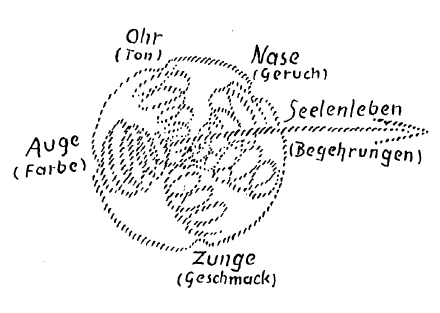
Translated by Steiner Online Library
Psychosophy III
Eleusis
To Hölderlin
Around me, within me, dwells peace. The restless people
Never tire of their cares. They grant me freedom
And leisure. Thanks to you, my
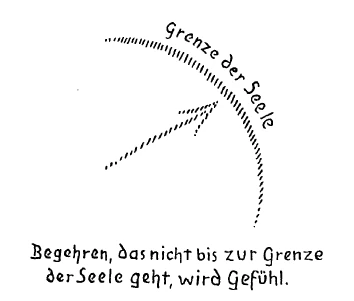
Liberator, O Night!—With a white misty veil
The moon traces the uncertain boundaries
Of the distant hills. A friendly glimmer
Of the lake’s bright strip shines across.
It banishes the memory of the day’s tedious clamor,
As if years lay between it and now.
Your image, beloved, steps before me,
And the joy of days gone by. Yet soon it gives way
To sweeter hopes of reunion.
Already I envision the scene of the long-awaited, fiery
Embrace; then the scene of questions, of the more secret,
Of mutual scrutiny,
What in my friend’s bearing, expression, and disposition
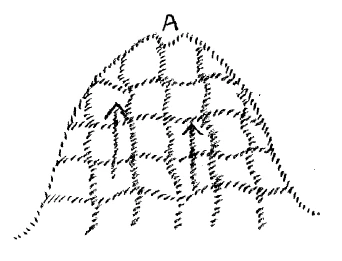
Has changed since that time;—the joy of certainty,
To find the faith of the old bond, firmer, more mature still,
The bond that no oath sealed:
To live by free truth alone,
At peace with the constitution,
Which governs thought and feeling, never, never to yield!
Now the mind negotiates with sluggish reality,
Which once carried me lightly over mountains and rivers to you.
But a sigh soon announces their discord, and with it
The sweet dream of fantasy flees.My eye rises to the vault of the eternal sky,
To you, O shining star of the night!
And all desires, all hopes
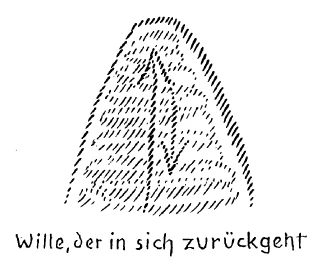
Forgotten, flow down from your eternity.
The mind loses itself in the vision,
What I called “I” fades away.
I surrender myself to the Immeasurable.
I am in it, am everything, am only it.
The recurring thought grows estranged,
It shudders at the Infinite, and in wonder
It cannot grasp the depth of this vision.
Imagination brings the eternal closer to the senses,
Marries it to form. — Welcome, you,
Sublime spirits, lofty shadows,
From whose brows perfection shines!
Do not be alarmed. I feel that it is also my home,
The radiance, the solemnity that surrounds you.Ha! If now the gates of your sanctuary were to burst open,
O Ceres, who once reigned in Eleusis!
Drunk with inspiration, I would now feel
The thrills of your presence,
Understand your revelations,
I would interpret the lofty meaning of the images, I would hear
The hymns at the gods’ feast,
The lofty sayings of their council.But your halls have fallen silent, O Goddess!
The circle of gods has fled to Olympus
Back from the desecrated altars,
Fleeing from the grave of desecrated humanity
The genius of innocence that conjured them here.
The wisdom of your priests is silent.
No sound of the sacred consecrations
Has reached us, and in vain does
The seeker’s curiosity seeks more than love
For wisdom. They possess the seekers and despise you.
To master them, they dig for words,
In which your lofty spirit would be imprinted.”
In vain! They catch only dust and ashes,
In which your life will never return to them again.
Yet even amidst decay and lifelessness, there dwell
The eternally dead, the contented! — In vain, there remained
No sign of your feasts, no trace of an image.
To the son of consecration, the abundance of lofty teachings,
The depth of inexpressible feeling was far too sacred,
That he should deign to honor them with dry symbols.
Even the thought does not grasp the soul,
Which, beyond time and space, immersed in a sense of infinity
Forgets itself and now awakens once more to consciousness.
Whoever would even speak of this to others,
Even if he spoke with the tongues of angels, would feel the poverty of words.
He dreads having conceived the sacred as so small,
Having made it so small through them, that speech seems a sin to him,
And that he tremblingly seals his lips.
What the consecrated one thus forbade himself, a wise
Law forbade the poorer spirits from making known,
What they saw, heard, and felt on that holy night,
provided that the better ones themselves were not disturbed by the clamor of their own folly
in their devotion, nor did their hollow verbiage
enrage them against the Holy One Himself, so that this
would not be trampled into the mud, that one might
memory, lest it
become a plaything and merchandise of the sophist,
whom he sold for a few obols,
the cloak of the eloquent hypocrite, or even
the rod of the merry boy, and thus become so empty
in the end that it would find the root of its life only in the echo
From foreign tongues would have the root of its life.
Your sons, goddess, carried it sparingly,
Not your honor in the streets and markets; they kept it
In the inner sanctuary of the breast.
Therefore you did not live on their lips.
Their lives honored you. In their deeds you still live.This night, too, I heard you, holy deity.
The lives of your children often reveal you to me,
I often sense you as the soul of their deeds!
You are the lofty spirit, the faithful faith,
That does not waver in a deity, even if all else perishes.
[ 1 ] We will once again begin this lecture with the recitation of a poem intended to illustrate some of the points I will be discussing today and tomorrow. This time, it is, so to speak, a poem by a non-poet, which, in contrast to the other intellectual pursuits of the person in question, appears as a sort of occasional byproduct of those pursuits. We are thus dealing with a revelation of the soul that, in a sense, did not arise from the innermost impulse of that soul. And it is precisely this fact that will enable us, within these lectures, to observe certain aspects of the subject particularly well. The poem is by the German philosopher Hegel and deals with his relationship to certain initiatory mysteries of humanity.
[ 2 ] If we consider the assertion made in the last two lectures—that when we survey the life of the soul, it essentially reveals to us, right up to its limits, its two elements: judgment and the experiences of love and hate associated with desire— it might seem as though this assertion overlooks precisely the most essential aspect of the life of the soul—that through which the soul truly experiences itself in its innermost being: feeling. Thus, one might be led to say that in these lectures, the life of the soul has been characterized precisely by what is, in a sense, not peculiar to it, and that no account has been taken, at least initially, of what surges back and forth, up and down in the life of the soul as feeling and gives it its respective character.
[ 3 ] We shall now see that we can indeed understand the dramatic nature of the life of the soul—which we tried to highlight yesterday—if we approach the feeling by starting from the two elements of the life of the soul that we have characterized. To do this, we must first return to the simple facts of the life of the soul. And the simplest facts of the life of the soul have, of course, been mentioned many times before. They are the sensory experiences gained through the gates of our senses, which penetrate into our life of the soul and continue to exist within it. Compare this fact—that, so to speak, the life of the soul sends out its waves to the gates of the senses and, from these gates of the senses, takes back into itself the experiences of sensory perceptions, which then continue to live on independently within the life of the soul— compare this fact with the other, that everything that can be summed up in the experiences of love and hate, which arise from desires, rises as if from the inner life of the soul itself. As if from a center of the soul’s life, desires first arise for mere observation of the soul, and it is these desires that, even upon superficial observation, lead to the experiences of love and hate within the soul. But we would be mistaken if we were to seek these desires, for instance, first within the soul itself. For [precise] observation of the soul, these desires are not to be sought in the soul itself. They could not be found there. If, on the other hand, you engage in a comprehensive observation of the soul, you will find, when you observe your inner life, how desires arise in relation to the external world, and how love and hatred—the expressions of desire—now well up within the soul itself. Thus we can say that by far the greatest extent of soul experiences, insofar as they concern perceptions, is gained at the boundaries of the soul life through the gates of the senses. That which, on the other hand, plays out in the soul as desire—as love and hatred—arises from the center of the soul.
[ 4 ] We will be able to communicate most effectively if we represent what we recognize as a fact in a kind of visual image. We will be able to characterize this inner life of the soul—which we are to consider first in its inner nature—well if we view it as the interior of a circle, which is to represent the content of our multifaceted inner life. Let us now imagine the sense organs truly as gates, as we must indeed regard them. You can also glean this from the lectures on anthroposophy. Now it suffices that we regard them as gates, as openings toward the outer world. If we now wished to represent the inner life of the soul graphically, we could do nothing better than to let the flood of desires—which play out in the phenomena of love and hate—well up from the center of this inner life and flow in every direction into the soul. In this way, we would, as it were, have filled our soul entirely with desires and would find the flood of desires surging all the way to the gates of the senses.
[ 5 ] What happens when a sensory experience occurs, for example, that of sound through the organ of hearing or that of color through the organ of sight? Let us initially disregard the external world in terms of its content and say: Let us take, on the one hand, the moment in which sensory perception occurs—this interaction between the soul and the external world. Let us vividly place ourselves in this moment, where the soul, experiencing it inwardly, has the direct experience of color or sound through the gateway of the sense organ. Now imagine turning away from the sensory experience, and imagine that the soul now lives on in time, taking with it and retaining as a memory-image what it has, as it were, captured from the sensory experience. This is what the soul now carries forward.
[ 6 ] We have said that we must distinguish between what the soul carries forward as a memory-image of sensory perception and sensory perception itself; for if one does not make this distinction properly, the result is not truth, but Schopenhauerianism. Therefore, we must distinguish between the experience that persists in the soul as a memory image and the experience that arises in the activity of sensory perception. What happened at the moment when the soul was exposed to the external world through the gateway of sensory perception?
[ 7 ] As experience immediately reveals, our soul truly lives within the surging sea of desires, the phenomena of love and hate, to the extent that I described yesterday and the day before. And as the soul allows its own waves to crash up to the gates of the senses, desire strikes precisely at the gate of the senses, and this desire actually comes into contact with the external world at the very moment of sensory experience. It is this desire that, as it were, receives a seal impression from the other side. Take a seal bearing the name Müller and press it into sealing wax; the name Müller remains imprinted in the sealing wax. What has remained in the seal impression? An imprint caused by the seal. You cannot say that what has been pressed into it does not correspond to what the external world has brought about! That would again not be unbiased observation, but Kantianism. Insofar as you wish to look merely at the external material, it is already Kantianism. But if you look at what matters—in this case, the name Müller—and not at the brass, then you must say: In what has opposed the sensory experience, an impression has been pressed in from the outside, a mark has been formed. That is what is taken along. Just as you do not take the seal with you, so you do not take the color or the tone with you, but you do take with you what has arisen in the soul as an imprint. What one might call desire, what one might call the phenomena of love and hate, that meets the sensory experiences.
[ 8 ] Can one really call it that? Is there really, even in the mere sensory experience, anything to be felt of a phenomenon of love or hate? Is there anything in the immediate sensory experience that truly must push its way forward as a kind of outward desire? If there were nothing resembling or akin to a desire pushing its way into the sensory experience, you would not register it in your further inner life; then no memory image would form. But there is a fact that supports the idea that desire extends outward, whether you are perceiving sounds, colors, smells, or the like, and that fact is the fact of attention. A sensory experience that we merely stare at naturally makes an impression on us according to the laws that govern the relationship between the external world and the sensory organ, but the impression that you merely stare at does not carry over into the life of the soul. You must meet it from within with the power of attention. And the greater the attention, the more easily the soul carries the sensory experiences forward as memories in the course of life. Thus the soul is connected to the external world in such a way that, as it were, this soul allows what it is inwardly to extend substantially to the outermost limits of its being, and this is still evident at the outermost limits of its being in the very fact of attention.
[ 9 ] The other aspect of the soul’s life—judgment—is suspended precisely during the immediate sensory experience. Here, only the soul’s desire, its self-surrender, and its exposure to external impressions come to the fore. A sensory impression is characterized precisely by the fact that attention is directed toward it in such a way that judgment as such is suspended. When the soul exposes itself to the color red or to any ‘tone,’ only desire lives in this exposure, and the other activity of the soul—judgment—is in this case suspended, suppressed. One must, however, be clear that one must draw the line very precisely here if one wishes to observe accurately and not fantastically. For example, if you have seen a red color and say, “Red is”—then you have already judged; only if you stop at the color impression are you dealing with a mere correspondence of the soul with the external world. What now arises from the interaction of the element of desire with the external world?
[ 10 ] Since we want to explain this precisely, we have distinguished between sensory perception and sensory sensation, calling sensory perception the experience that occurs when exposed to external impressions—what is experienced during the impression itself—while sensory sensation is what remains, what the soul carries with it. Therefore, we can say: In what we carry with us, we have a modification of desire. Attention shows us that desire is present, and what remains turns out to be a sensory sensation. What lives on in our soul is therefore modified desire as sensation. We do indeed carry the essence of our own soul along with the sensory images and sensations. Through what surges and swells through our entire soul, through the power of desire within us, the sensory sensation arises.
[ 11 ] As we have seen, sensory perception arises at the boundary between the life of the soul and the external world, at the gateway of the senses. But let us suppose for a moment that the power of desire within us did not extend to the boundary of the life of the soul, but remained within it. When we speak of a sensory experience, we would say that the power of desire penetrates to the surface of the soul. But let us now imagine that a desire were to arise, yet it would not reach the boundary of the soul’s life; rather, it would, as it were, be blunted within the soul’s being, remain within it, and not extend as far as the gateway of a sense. What would have happened in this case? We have seen: When desire advances and is compelled to withdraw, the sensation—the sensory perception—arises. Sensory perception arises only when the withdrawal is caused by a counterforce from the outside, that is, by what the sense organ does. Inner sensation arises when the desire is not pushed back into itself by direct contact with the external world, but is repelled within the soul—somewhere just before the boundary. This is where inner sensation arises, and this is the feeling. Feelings are therefore, for the observation of the soul, modified desire. Feelings are, as it were, such desires that remain stationary, rebounding within themselves, which do not burn their way to the boundary of the soul’s life, but which live within the soul’s life. Thus we can say: Even in feelings, we essentially have contained within the substance of the soul that which we call desire. If this is the case, feelings as such are not in any way something new in the life of the soul when we consider its elements; rather, feelings are then substantial, real processes of desire taking place within the life of the soul itself.
[ 12 ] Let us first take stock of what we have now established, and then characterize the two elements of the life of the soul—judgment and the experiences of love and hate that arise from desires—from a certain perspective. For we can say: Everything that takes place in the soul as a judgmental activity—and that is what matters—comes to an end at a certain moment; but what unfolds as desire also comes to an end at a certain moment. — The soul’s activity of judgment ends where the decision has been reached, where we have, so to speak, concluded the judgment in a conception that we then carry forward with us as true. And if we ask about the end of desire, we find satisfaction. So that, in fact, every desire in our soul strives, so to speak, for satisfaction, and every activity of judgment for a decision. So when we look, as it were, into our inner life, we find, on the one hand, the activity of judgment. As long as it has not yet come to a conclusion, it urges the inner life toward a decision. And on the other hand, we find desires. As long as they have not found their satisfaction, they urge the living soul toward satisfaction. So we can now say: Because our soul life consists of the elements of judgment and desire, the most important facts of soul life—which we must continually find in every soul, since every soul constantly contains these elements—are the soul’s flow toward decisions and toward satisfaction. If, then, we were to observe a soul life in its flowing stream, we would find it, so to speak, filled with the striving toward decisions and the striving toward satisfactions. This is indeed the case.
[ 13 ] If you now consider certain aspects of the human emotional life, you will easily be able to find the origins of a great variety of feelings, if you bear in mind that this must bring about something in the life of the soul when the striving for gratification and for decisions flows on continuously. If you consider, within the emotional life, phenomena that fall, for example, under the concept of impatience, under the concept of hope, of longing, of doubt, and perhaps even of despair, then you have points of reference for connecting something real, something spiritually tangible, with these words, when you say to yourself: All of this—impatience, hope, longing, doubt, despair—are different ways in which the flowing stream within the soul expresses itself in the striving of the powers of judgment for decisions or of the powers of desire for gratification. Try to grasp this concretely in the feeling of impatience. There you will be able to feel it vividly, how the striving for satisfaction lives within impatience. There you can grasp how something lives within the feeling of impatience that one might call a desire flowing in the stream of the soul. And this can only find resolution when it flows into satisfaction. The powers of judgment are scarcely deployed in this process. Or take the feeling of hope. In hope, you will easily be able to recognize the continuous stream of desire, but that desire which, on the other hand, is interwoven with the other element of soul life, with what we have called the movement of the powers of judgment toward decision. Anyone who analyzes the feeling of hope will easily see these two elements flowing within it: the desire that is permeated by the striving of the powers of judgment toward a decision. And because it is precisely in this feeling that these two elements maintain such a balance for the life of the soul—balancing each other perfectly like two equal weights on the two pans of a scale—that is why the feeling of hope possesses a sense of completeness. There is just as much desire for satisfaction as there is prospect of a favorable decision.
[ 14 ] Suppose a different feeling were to arise from the presence of a desire that urges for fulfillment; this desire, however, would be permeated in the soul by an act of judgment that, by its own strength and power, could not bring about a decision. The act of judgment would be incapable of bringing about a decision. Yet the desire is connected to such an act of judgment that cannot bring about a decision. Therein lies the feeling of doubt.
[ 15 ] Thus, within the broad sphere of feelings, we might find that the activity of judgment and desires interact in a remarkable way. And if someone has not yet found these two elements in a feeling, they must continue searching. They can be quite certain that they have not yet searched far enough.
[ 16 ] If we take the significance of the activity of judgment for the life of the soul as the one element, we must say: The activity of judgment culminates in a concept, and the concept has meaning in life only if it is a true one. Truth has its foundation in itself. The soul cannot decide for itself regarding truth. Everyone must feel this when they compare the life of the soul in its peculiar way with that which is ultimately to be conquered by truth. One need only consider the following: What we call judgment in the life of the soul is something that can also, in other words, be called reflection, and reflection ultimately leads to what we form as a judgment from the idea. But it is not through our deliberation that the decision, the judgment, becomes correct; rather, it becomes correct for entirely different, objective reasons that are removed from the arbitrariness of the life of the soul, so that the judgment toward which the soul strives in its decision comes into being outside the realm of the soul.
[ 17 ] If we inquire into the other element that wells up, as it were, from unknown depths, from the center of the soul, and spreads out in all directions within the life of the soul—if we inquire into the origin of desire—we do not find it initially within the life of the soul, but outside of it, so that desires and decisions reach into our life of the soul from the outside. But within the life of the soul, what takes place is the end of desires: satisfaction. And within the life of the soul, in contrast to the truth that has its foundation outside, the struggle for truth—the struggle leading to a decision—takes place. Thus, in our judgments we are, so to speak, fighters, and within the life of our soul, in relation to our desires, we are enjoyers. And it is important to distinguish that, in the case of judgment, only the beginning belongs to the life of the soul; the decision leads us beyond the life of the soul. With desire, it is the reverse; there, it is not the beginning but the end—satisfaction—that enters into the life of the soul.
[ 18 ] Let us examine more closely what it is that enters into the life of the soul as satisfaction, and let us consider it in conjunction with what we said earlier: that sensation is, in essence, a burning of desire to the very limits of the life of the soul, and that feeling is something that remains in the middle, where desire, as it were, dulls itself within itself. So what will be present at the point where the inner life experiences satisfaction—the end of desire—within itself? There will be the feeling. Therefore, we can say: When, within the inner life, desire reaches its end “in satisfaction,” then the feeling arises.
[ 19 ] But this is only one kind of feeling, where desire reaches its end in the midst of the inner life of the soul. Another kind of feeling arises in yet another way, namely through the fact that, in reality, there are connections in the depths of the soul’s life between the inner life of the soul—as it were, the soul’s inner world—and the external world. This is expressed in the fact that our desires are directed toward external objects. But they do not therefore reach out everywhere—as with sensory perceptions—to the external objects themselves. When we perceive a color, the desire reaches out to the external world. But a feeling can also develop from the desire within the inner life of the soul that nevertheless has a connection to an external object. Desire can develop toward any object, even if it remains within the soul. It still has a connection to the object, as if through a distant effect, similar to how a magnetic needle aligns itself with the pole without reaching it. From this we see: Desires can be contained within the inner life of the soul, even if they are related to the external world; so that the external world also has a relationship with the life of the soul that does not come into direct contact with the very limits of that life. Then those feelings can arise in which the desire remains active toward the object, and in which it persists toward the object even if the object is not in a position to satisfy the desire. Suppose a soul approaches an object, a desire is aroused toward the object, but the object is not in a position to satisfy this desire: then the desire remains intact in the soul and does not experience satisfaction.
[ 20 ] Consider this phenomenon very closely and compare it to a desire that has come to an end within the life of the soul. There is a significant difference between these two desires, one of which has come to an end in the soul, while the other has not. A desire that has ended in satisfaction—which is carried on by the soul’s life to such an extent that it is, as it were, neutralized—has such an effect within the soul’s life that everything connected with the soul’s life receives a healing influence. But through the desire that remains unsatisfied and is now carried on within the soul—because the object could not satisfy it—the soul, after the object is gone, retains a living connection—so to speak, to nothing. And the consequence is that the soul lives in an unsatisfied desire as in an inner fact not grounded in reality. This fact alone suffices for the soul life to exert an unfavorable influence, a sickening influence, on that with which it is connected—namely, the life of the spirit and the body—through the unsatisfied desires. Feelings associated with satisfied desires are therefore quite distinguishable in direct observation of the soul from those that arise, so to speak, from lingering desires. When things manifest coarsely, they are indeed easy to distinguish. But when they manifest more subtly, people usually do not believe that they are dealing with what they are, in fact, dealing with.
[ 21 ] Suppose a person stands facing an object. He walks away from it. What matters here is not a desire that has reached the object, but a desire that has reached the inner life of the soul. He can therefore walk away and say afterward that the object satisfied him, or he can say that the object did not satisfy him. Even if they express it differently, it is still the same thing, for example, if they say they liked it or did not like it. In the former case, however hidden it may be, there is a desire that has found satisfaction; in the latter, there is a desire that has remained as a desire.
[ 22 ] There is initially only one kind of feeling—and this is something deeply characteristic of the life of the soul—which manifests itself in a somewhat different way in the life of the soul. You will easily see that feelings—that is, either desires that have found their end or those that have not—can be based not only on external objects but also on internal mental experiences. Thus, the feeling that we must describe as an unsatisfied desire can be based on a sensation that perhaps brings something to mind that we have long since left behind. So within ourselves we find the causes of our feelings, of satisfied or unsatisfied desires. Let us distinguish within ourselves between the arousal of desires by external objects and the arousal of desires by ourselves, by our own inner life. There are, for example, other, very prominent inner experiences that can show us how we have desires left over from our inner life that have not reached their final goal.
[ 23 ] Imagine you are reflecting on a matter. Your power of judgment is too weak; you reach no conclusion in your reflection and must conclude without a decision. There you stand before your inner life, your own desires, with a sense of dissatisfaction. There you experience a sense of pain in your feeling of dissatisfaction. There is only one kind of feeling in which we neither reach a decision through judgment nor does the desire end in satisfaction, and yet no feeling of pain arises. These are feelings in which we are neither directly confronted with an external object through our desires nor directly with our inner experiences. In the ordinary sensory experiences of everyday life, we face the object directly with our desires, but we do not judge in the process. As soon as judgment begins, we have already moved beyond the sensory experience. Let us suppose we carry both judgment and desire to the very edge of the soul’s life, where the sensory impression from the external world surges directly toward us; we thus develop a desire that, being aroused by the object, penetrates us completely to the very limit—but now to the exact limit of the impression—with the power of judgment, with the capacity to judge. Then a peculiar feeling will arise that is, so to speak, composed in a very strange way. We can best clarify this for ourselves in the following manner.
[ 24 ] We allow [as indicated by the diagonal lines] our desire to extend to the very limits of our inner life, for example, to the eye. We strain our soul life in relation to our desires, allowing it to flow—insofar as it is a capacity for desire—to the gates of sensory experience, A. But we also strain our power of judgment and allow it to flow just as far toward the external impression [indicated by the vertical lines]. Then we would have a symbol for the feeling just indicated, composed in a wholly unique way.
[ 25 ] We will truly appreciate the difference between these two currents, which extend all the way to external impressions, when we consider what has already been said. When we develop our power of judgment, the focus of the soul’s activity lies not within the soul, but outside of it. For it is not the soul that decides what is true. Truth overwhelms desire. Desire must capitulate before truth. And if we are to decide something in our soul through our power of judgment—something that is to be true in the most eminent sense—then we must take into our soul something that is foreign to the soul. We can therefore say: The lines from bottom to top, which are meant to represent the powers of judgment, extend outward from us and encompass something external. But our soul life, as the life of desires, cannot go any further than the boundary. There it is either thrown back upon itself, or it withdraws into itself beforehand, remaining confined to itself. Our desire feels overwhelmed when the judgment in the soul concludes with the decision of truth. But in our example we are precisely assuming that up to the point of the impression both desire and judgment flow, and that the two streams coincide completely with regard to the impression. And there we then see: it is not our desire that flows out and brings us, so to speak, something foreign back in truth, but rather our desire goes forth and brings us back the judgment that has gone to the very limit of the life of the soul. There the desire surges to the very limit of the soul, turns back there, as it were, and returns with the judgment into itself. But what kind of judgments can we bring back there? Only aesthetic judgments that are somehow connected with art and beauty. This can only occur in the contemplation of art, where, so to speak, our own soul life goes precisely to the limits of its effectiveness and there turns back immediately at the object of the external world and returns with the judgment into itself. You may find this strange at first, but your own observation of the soul could confirm it to you.
[ 26 ] Suppose you are standing before the Sistine Madonna or the Venus de Milo or before any work of art that is truly a work of art in the genuine sense. Can you say that the object in this case arouses your desire? Yes, it does; but not through itself. If the object were to arouse desire through itself—which is, of course, possible—then whether desire is aroused at all would not depend on a certain development of the soul. It is entirely conceivable that you might stand before the Venus de Milo and feel no inner stirring whatsoever toward the work of art. Certainly, this can also be the case with other objects. But when this happens with other objects, the usual indifference arises toward those other objects. This indifference also arises in those who do not direct a corresponding activity of the soul toward the Venus de Milo. But those who direct a corresponding inner life toward the work of art allow the stream of desire to flow to its limit, and then something returns to them. Nothing returns to the others. But it is not a desire that returns. It is not even a desire that pushes back toward the object, but rather the desire that expresses itself in a judgment: This is beautiful. — Here, the forces of desire and the forces of judgment engage with one another within the soul. And a person can find satisfaction in the external world only if the external world serves merely as the stimulus for their own inner soul activity. A person can experience in the Venus de Milo only as much as they already possess within their own soul, and just as much will return to them as they allow to flow outward from the immediate impression. Therefore, the enjoyment of beauty requires the immediate presence of the work of art, because the substance of the soul must indeed strive to the very limits of the soul’s life. And every memory of the work of art essentially yields something other than an aesthetic judgment. The aesthetic judgment arises under the immediate impression of the work of art, where the waves of soul life reach the very limits, willingly reaching the limits, and returning as aesthetic judgments.
[ 27 ] Thus, in truth, we have something before which, as it were, as before something external to the life of the soul, desire capitulates; and thus, in beauty, we have something where desire immediately coincides with judgment, where the decision itself is brought about by the desire that voluntarily concludes itself at the limits of the life of the soul and returns as judgment. Hence, the inner experience of the soul in beauty spreads such an infinitely warm satisfaction within the soul. And the highest equilibrium of the soul’s powers is essentially present when desire surges to the very limits of the soul’s life and now does not return to itself as mere desire, but as a judgment, which is now to the soul like a thing of the external world. Therefore, there is hardly anything else where a condition for a healthy soul life can be developed as strongly as in devotion to beauty. When we strive for the intellectual fruits of the soul, we are essentially working within the soul with a material before which the power of desire must continually capitulate. This power of desire will certainly have to capitulate before the majesty of truth; but this is not possible without impairing the health of the soul and that which is connected with the life of the soul. A sort of ceaseless striving in the realm of thought, in which desires must continually capitulate, is something that, in a certain sense, will nevertheless drain a person physically and spiritually. In contrast, with those judgments that simultaneously bring back an equal measure of satisfied desires into our inner life, it is the case that the desires as such are most fully balanced by the judgment. |
[ 28 ] Now do not misunderstand me. None of this is meant to imply that it would be good for a person to continually revel in the enjoyment of beauty and to claim, with regard to truth, that it is unhealthy. This would provide an easy excuse for a lazy pursuit of truth, if someone were to argue: You said that thinking is unhealthy, and revelling in beauty is healthy; so I will do the latter! — This is not something that should happen, but rather the following should result for the soul. Because truth is a duty with regard to the progress of human culture as well as of the individual human life, human beings are compelled, in the pursuit of truth, to suppress their life of desire. Because the decision regarding truth does not lie with them, truth compels us to suppress the life of desire within ourselves. And we must do this calmly within the pursuit of truth. Therefore, the pursuit of truth is, in essence, what most effectively brings our sense of self back into proper perspective. When we experience for ourselves how our pursuit of truth continually finds its limit in our own capacity for judgment and we view the situation objectively, then we can be fully content. The pursuit of truth makes us ever more humble. But if a person were to act this way constantly, if they were to continue living solely in such a manner that they became ever more humble, they would eventually arrive at their own dissolution; they would lack something necessary for the fulfillment of the soul’s life: the feeling, the sensing of their own inner self. Human beings must not lose themselves by merely surrendering to that before which the inner turmoil of their life of desire must capitulate. And this is where the work of aesthetic judgment comes in. The life of aesthetic judgment is such that a person brings back what they bring to the limits of the soul. This is a life in which a person is allowed to do what they truly ought to do. What one ought to do in truth is this: to allow the decision to be brought about in a completely selfless, unselfish manner. There is no other way to pursue the truth. But what of beauty? There it is somewhat different. There, too, we surrender ourselves completely, allowing, almost as in sensory perception, the inner surging of the soul to flow to its very limits. But what then returns to us? That which cannot be given to us from without, that which cannot be decided from without: we ourselves return to ourselves. We have surrendered ourselves and are returned to ourselves. This is the peculiarity of the aesthetic judgment, that it contains within itself the element of selflessness, just as truth does, and at the same time the assertion of the human sense of self, that which we called the “inner Lord” yesterday and the day before. Like a free gift, we are returned to ourselves in the aesthetic judgment.
[ 29 ] You see: I must, especially in these lectures, give you something that is least likely to lead to definitions and so on. I have, after all, often spoken out against defining things. And so I will not say: This is a feeling and so on, but I will try to characterize it by simply delineating the scope of soul life, by simply immersing ourselves in the scope of soul life.
[ 30 ] In last year’s lectures on anthroposophy, we saw that physicality adjoins the life of the soul from below, and at the boundary between the physical and the soul we tried to grasp the human being and to deduce what is connected with the outer physical form. If you recall this, you will gain a foundation for much of what is to be said in these lectures, and for what these psychosophical lectures ultimately aim at. After all, they are ultimately intended to offer rules for living and wisdom for life. To this end, we first had to lay a broad foundation in the earlier lectures.
[ 31 ] Through today’s characterizations, we may have gained an indication that what we desire surges within our inner soul life. Now, we said yesterday that certain experiences, including those of an emotional nature such as judgments, depend in a certain sense on the life our ideas lead within us. We concluded yesterday by saying: The ideas we have acquired in the past come alive; they are like bubbles in our inner life, in that they lead a life of their own, a life of their own desires. — Much depends on the kind of life they lead at a certain moment of our existence. What we were able to characterize yesterday as boredom or as other soul events that are harmful or beneficial to the human being determines whether the person is happy or unhappy at a certain moment. Thus, our present soul experience depends on how the ideas we have acquired in the past behave as independent entities.
[ 32 ] This then raises the question: How should we behave when we consider our inner life, particularly in light of the fact that we are, for example, in a certain sense powerless in the face of certain ideas that we are supposed to bring into our present inner life? Other ideas enter our inner life more easily. And you know how much depends on whether we are powerful or powerless in this regard, whether we can bring these ideas to mind easily or with difficulty, and whether we are able to recall them from memory easily or with difficulty. When we recall a particular thing, we must ask: Which ideas arise more easily, and which arise more with difficulty?—For this can be extraordinarily important in life. Can we do something from the outset when taking in ideas, so that we give them something that makes them arise more easily for us again? Yes, we can give them something. And simply contemplating this fact would be infinitely useful for many people, for many people would make their outer life and their inner life immensely easier if they were to consider what makes an idea easier to recall, what can promote the process of being more easily recalled. If you cultivate soul observation in all its aspects, it can show you that you must give the idea something to take with it if it is to come more easily to mind. We have found desire and judgment to be elements of the soul life. Since the soul life consists of these two elements, we will also be able to find only within these two elements what we must give an idea to take with it if it is to be remembered more easily. What can we impart to an idea from our desire? We can impart nothing but desire to the idea. How do we do that? By transferring as much of our own desires as possible onto the idea at the very moment we take it in. It is a good practice for our soul life when we impart a part of our desire to the idea. We can only do this by taking in the idea in question with love, by permeating it with love. The more lovingly we take in an idea—and this can be expressed in another way: the more interest we show in an idea, the more we lose ourselves in our egoism while taking in an idea—the better it will remain in our memory. For those who cannot lose themselves in an idea, it will not easily remain in their memory. In the course of these lectures, we will also gain further insights into how we can surround an idea with an atmosphere of love.
[ 33 ] The other thing we can impart to an idea is the power of judgment we possess in our soul. In other words: Any idea will be easier to recall if it has been taken in through the soul’s power of judgment than if it has simply been imprinted. So, when you encounter an idea that you take into your soul, if you judge it and take it in by embracing it, by enveloping it with your judgment, you are giving it something that promotes its recall. In this way, you are giving it something like an atmosphere. And it depends on the person themselves how they prepare their ideas, whether they will resurface more easily or with greater difficulty. We will see that the way we surround an idea with love or judgment is something extraordinarily important for our soul life.
[ 34 ] That is one question for tomorrow. The other point is that our inner life stands in a continuous relationship to the I-center. And if we follow the path we have outlined today with some difficulty, we will find the possibility tomorrow of bringing together the two directions: the direction of memory and the direction of the I-experience.
[ 35 ] It might surprise some that all human feelings are, in essence, supposed to be desires. And it might surprise, in particular, those who know that the higher life of the soul—the life of the soul sought through esoteric development—is precisely connected with overcoming desire in a certain way. However, when one says, “Overcome desire,” this is not a precise expression in terms of the science of the soul; for desire does not arise within the soul itself, but surges in from unknown depths. What is it that surges into the soul? What is it an expression of? We can provisionally—we will grasp it concretely tomorrow—conceive of it as that which, on a higher plane, corresponds to desire and emerges from the very essence of the human being as the will. And when we combat desire for the sake of higher development, we do not combat the will that underlies desire, but only the individual modifications, the individual objects of desire. In this way we purify the will, and then the will acts within us in a purified state. And such a will, which has become free from objects, which is objectless, represents, in a certain sense, a supreme reality within us. You must not think here of the “will to exist”—that would not be an objectless will—but you must think of a will with a content of desire that is directed toward no object. Will is pure and free only when it is not initially modified into a specific desire, that is, when it leads away from a specific desire.
[ 36 ] Thus we can see the life of the will extending even into our emotional life. If that is the case, one ought to be able to study it in such a way that will and feeling are seen to have something in common. One can, of course, give all sorts of fanciful definitions of will and feeling, and so, for example, someone might say: Will must lead to an object, must pass into action. — But such definitions do nothing to capture reality, and we shall see that they are usually entirely unjustified, and that the person who offers such definitions would do well to surrender to the genius of language, which is wiser than the individual human soul. For example, language has a brilliant word for that inner experience where the will immediately becomes feeling. Suppose the will were to go as far as a certain limit, then become dulled within itself, and the person were to observe from within this striving of the will that is becoming dulled within itself, as it were, to let the will recede within oneself and then observe it: This would occur if a person were to face another being, and the inner surge of the will were to go as far as a certain point and then be held back. This is most certainly a profound sense of the will’s unchallenged state. Here language invents a brilliant word for this will, which certainly does not become action, for it withdraws into itself. Here it invents the word “reluctance,” and this is quite clearly not will for anyone; so that this will, when it recognizes itself, is for the feeling the will that withdraws into itself. And language has the word “reluctance” for this self-contemplation of the will, thereby expressing a feeling. From this we can see how nonsensical the definition would be that the will is the starting point for action. And within the will, the modified will—desire—then surges; and depending on how it plays itself out in one way or another, the various soul formations reveal themselves.