

An Occult Physiology
GA 128
27 March 1911, Prague
Translate the original German text into any language:
Versions Available:
An Occult Physiology, tr. SOL
Siebenter Vortrag
Seventh Lecture
[ 1 ] Wir haben im Verlaufe dieser Vorträge wohl den Eindruck bekommen können, daß sich die verschiedenen Organsysteme und Gliederungen des menschlichen Organismus in der allerverschiedensten Weise beteiligen an dem Gesamtprozesse dieses menschlichen Organismus. Wir haben auf verschiedenes in dieser Richtung hinweisen können und uns schon im Verlaufe der bisherigen Vorträge bemüßigt gesehen, die Tätigkeiten, die in den verschiedenen Organsystemen wirken, vorläufig einmal zuzuteilen höheren, übersinnlichen Gliedern der menschlichen Organisation. So zum Beispiel mußten wir sagen, daß mit dem, was wir das menschliche Ich nennen, in einem innigen Zusammenhange steht der menschliche Blutkreislauf, so daß wir das Blut ansprechen konnten als ein Werkzeug des menschlichen Ich. Wir haben ferner das, was wir Bewußtseinsleben nennen, zuteilen können dem Nervensystem. Wir haben aber auch gezeigt, wie ein besonderer Teil des Nervensystems — das sympathische Nervensystem — in gewisser Weise eine entgegengesetzte Aufgabe hat wie der andere Teil des Nervensystems, eine Aufgabe, welche darin besteht, alles, was in den Tiefen des Organismus des Menschen sich abspielt, was hervorgerufen wird durch die Tätigkeit des inneren Weltsystems, sozusagen zurückzuhalten, so daß es bei normaler körperlicher Verfassung nicht bis zum Horizonte des Ich, also bis ins Tagesbewußtsein heraufdringt. Wir haben gestern ferner versucht, wenigstens annähernd zu erkennen, daß sich dem bewußten Leben des Menschen am meisten das entzieht, was sich in dem festen Knochengerüst aufbaut; wir haben aber doch betonen müssen, wie schon in diesem festen Knochengerüst des Menschen tätig sein muß ein solches Wesenhaftes, das zuletzt den Menschen fähig macht, das Organ seines bewußten Ich-Lebens, den Blutkreislauf, zu entfalten. So können wir auch sagen: die Einlagerung des menschlichen Knochensystems bedeutet für den Gesamtorganismus des Menschen, daß er überhaupt eine menschliche Form erhalten kann und daß alles, was vorgeht innerhalb der Prozesse, die sich in dem festen Knochensystem abspielen, unterhalb der Schwelle des Bewußtseins gehalten wird. Immer haben wir es in der menschlichen Organisation mit etwas ähnlichem zu tun, nämlich damit — wir wollen uns insbesondere in diesem Punkte richtig verstehen —, daß das, was innerhalb dieser menschlichen Organisation ist, gleichsam behütet wird vor den Einflüssen, die in unserem Umkreise und in der großen Welt des Kosmos sich abspielen. Wir haben gesagt, daß die Glieder des iinneren Weltsystems, jene sieben Organe, die gewissermaßen das äußere Planetensystem in unserem Innern spiegeln — insbesondere die Milz -, die äußeren Gesetze dessen, was wir als Nahrung aufnehmen, zurückhalten, gleichsam von diesen Gesetzen befreien, und daß die Nahrungsstoffe so in den menschlichen Organismus aufgenommen werden, daß sie sich als filtriert erweisen, so daß sie nicht in einer solchen Gestalt in den menschlichen Organismus hineinkommen, daß sie innerhalb desselben in einer eigenen Gesetzmäßigkeit und eigenen Regsamkeit walten können. In der, ich möchte sagen, gröbsten Weise haben wir für den Menschen und die höheren Tiere dieses Behüten innerer Vorgänge gegenüber den äußeren Einflüssen ja schon in der Blutwärme gegeben. Diese Blutwärme, die innerhalb enger Temperaturgrenzen liegt, wird durch eine innere Gesetzmäßigkeit erhalten und ist unabhängig von den Wärmevorgängen des Makrokosmos, der großen Welt, die um uns herum sich abspielen. Hier haben Sie recht anschaulich eine Art von Grundphänomen in dieser Konstanz der Blutwärme. So müssen wir immer darauf hinweisen, wie ein Wesentlichstes der inneren Organisation des Menschen darin besteht, daß ein begrenztes Wesenhaftes abgeschlossen wird gegenüber dem Makrokosmos und seine eigenen Regsamkeiten entwickelt.
[ 1 ] In the course of these lectures, we have likely gained the impression that the various organ systems and structures of the human organism participate in the overall processes of this organism in a wide variety of ways. We have been able to point out various aspects in this regard and have already, in the course of the lectures so far, felt compelled to provisionally assign the activities operating within the various organ systems to higher, supersensible members of the human organism. For example, we had to say that the human blood circulation is intimately connected with what we call the human ego, so that we could speak of the blood as an instrument of the human ego. We have also been able to assign what we call the life of consciousness to the nervous system. But we have also shown how a specific part of the nervous system—the sympathetic nervous system—has, in a certain sense, a task opposite to that of the other part of the nervous system, a task that consists in to hold back, so to speak, everything that takes place in the depths of the human organism, everything that is brought about by the activity of the inner world system, so that under normal physical conditions it does not rise up to the horizon of the ego, that is, into waking consciousness. Yesterday we also attempted to recognize, at least approximately, that what eludes human conscious life most of all is that which builds itself up within the solid skeletal framework; but we had to emphasize how, even within this solid human skeletal framework, there must be at work a vital force that ultimately enables the human being to develop the organ of their conscious ego life, the blood circulation. Thus we can also say: the embedding of the human skeletal system means for the human organism as a whole that it can take on a human form at all, and that everything that occurs within the processes taking place in the solid skeletal system is kept below the threshold of consciousness. We are always dealing with something similar in the human organism, namely—and let us be particularly clear on this point—that what is within this human organism is, as it were, shielded from the influences taking place in our surroundings and in the vast world of the cosmos. We have said that the members of the inner world system—those seven organs that, in a sense, mirror the outer planetary system within us—especially the spleen—retain the external laws of what we take in as food, freeing it, as it were, from these laws, and that the nutrients are thus taken up by the human organism in such a way that they prove to be filtered, so that they do not enter the human organism in a form that would allow them to act within it according to their own laws and their own activity. In the, I might say, most basic sense, we already have this protection of inner processes against external influences in the form of blood warmth for humans and higher animals. This blood warmth, which lies within narrow temperature limits, is maintained by an inner law and is independent of the thermal processes of the macrocosm, the greater world, that unfolds around us. Here you have a very vivid example of a kind of fundamental phenomenon in this constancy of blood temperature. Thus we must always point out that one of the most essential aspects of the inner organization of the human being consists in the fact that a limited, essential being is sealed off from the macrocosm and develops its own activities.
[ 2 ] Nun werden wir heute gut tun, um dem menschlichen Organismus noch weiter beizukommen, ein wenig von der anderen Seite auszugehen und auf das bewußte Leben einen kurzen Blick zu werfen. Wir wissen schon aus den vorhergehenden Vorträgen, wie das bewußte Leben des Menschen sich der Werkzeuge des Blutes und des Nervensystems bedient, wir konnten aber noch nicht auf die feineren Vorgänge eingehen. Was ich jetzt sagen werde, ist etwas, was geeignet ist, die äußere Welt, die heute gebräuchliche Wissenschaft — das sei ganz offen gestanden — noch in hohem Grade zu schockieren. Aber ein jeder, der auf dem Boden des echten, wahren Okkultismus wahrhaft steht, wird Ihnen sagen, daß die Tendenz der Wissenschaft dahin geht, daß durch sie im Verlaufe von wenigen Dezennien auch diejenigen Dinge bestätigt und anerkannt werden, die wir heute noch nur aus okkulten Beobachtungen heraus sagen können. Wenn ich statt einer so kurzen Reihe von Vorträgen ein halbes Jahr über diese Dinge hier sprechen könnte, so wäre es möglich, aus den Ergebnissen der heutigen Wissenschaft alles das herbeizutragen, was geeignet ist, auch äußerlich zu belegen, was im heutigen Vortrag gesagt werden soll. Aber ich muß da manches schon dem eigenen guten Willen und den Fähigkeiten der verehrten Zuhörer überlassen. Es ist ja überall möglich, die Wege zu suchen zur äußeren Wissenschaft, die, wenn sie nicht von theoretischen Vorurteilen, sondern von den Tatsachen ausgeht, auch heute schon überall Bestätigungen finden kann für das, was auf dem Felde des Okkultismus gesagt wird. Ich bitte, alle diese Ausführungen in diesem Sinne zu nehmen.
[ 2 ] Today, to gain a deeper understanding of the human organism, we would do well to approach the subject from a slightly different angle and take a brief look at conscious life. We already know from the previous lectures how human conscious life makes use of the instruments of the blood and the nervous system, but we have not yet been able to go into the finer processes. What I am about to say is something that is likely to shock the outer world—and, to be perfectly frank, the science commonly accepted today—to a great degree. But anyone who truly stands on the ground of genuine, true occultism will tell you that the trend in science is such that, within the course of a few decades, even those things that we can say today only on the basis of occult observations will be confirmed and recognized through it. If, instead of such a short series of lectures, I could speak here for half a year on these matters, it would be possible to draw from the findings of modern science everything that is suitable for providing external evidence to support what is to be said in today’s lecture. But I must leave much of this to the good will and abilities of my esteemed listeners. It is, after all, possible everywhere to seek paths to external science which, if it proceeds not from theoretical prejudices but from the facts, can already find confirmation everywhere today for what is said in the field of occultism. I ask that you take all these remarks in this spirit.
[ 3 ] Wenn wir von unserem bewußten Leben ausgehen, namentlich wenn wir das Verhältnis unseres bewußten Seelenlebens zu unserem Organismus betrachten, ist es zunächst notwendig, alles das ins Auge zu fassen, was wir unsere Denktätigkeit im umfassendsten Sinne nennen. Wir brauchen uns dabei nicht einzulassen auf feinere logische oder psychologische Unterscheidungen, wir brauchen uns zunächst nur vor unsere Seele zu stellen, daß wir es zu tun haben mit dem denkerischen Leben des Menschen, mit dem Gefühlsleben und mit dem Willensleben des Menschen.
[ 3 ] When we take our conscious life as our starting point—specifically, when we consider the relationship between our conscious inner life and our physical body—it is first necessary to take into account everything we call our thinking activity in the broadest sense. In doing so, we need not concern ourselves with finer logical or psychological distinctions; for the time being, we need only place ourselves before our soul and recognize that we are dealing with the human life of thought, the human life of feeling, and the human life of will.
[ 4 ] Nun werden Sie unter denjenigen, die auf dem Boden des wahren Okkultismus stehen, niemals einen Widerspruch finden, wenn gesagt wird, daß durch alle solche Prozesse, die sich in unserem Seelenleben im wachen Tagesbewußtsein abspielen und die unter die Kategorien des Denkerischen, des Gefühlsmäßigen oder des Willensimpulsmäßigen fallen, im Organismus wirklich materielle — sei es belebte oder andere — Vorgänge bewirkt werden, so daß wir überall für ein jegliches, was in unserer Seele vorgeht, die entsprechenden materiellen Prozesse in unserem Organismus finden können. Das ist von allerhöchstem Interesse. Denn erst in unserer Zeit wird es aus gewissen Tendenzen, die erst heute in der Wissenschaft vorhanden sind, in den nächsten Jahrzehnten möglich sein, diese Entsprechungen von Seelenvorgängen und physiologischen Vorgängen im Organismus wirklich herauszufinden und das aus dem Okkultismus Gewonnene zu bestätigen.
[ 4 ] Now, among those who stand on the ground of true occultism, you will never find any contradiction when it is said that all such processes—which take place in our soul life within our waking daytime consciousness and which fall under the categories of thought, feeling, or volitional impulse—actually bring about material processes in the organism—whether animate or otherwise — processes are actually brought about in the organism, so that for everything that takes place in our soul, we can find the corresponding material processes in our organism. This is of the utmost interest. For it is only in our time, due to certain trends that have only recently emerged in science, that it will be possible in the coming decades to truly identify these correspondences between soul processes and physiological processes in the organism and to confirm what has been gained from occultism.
[ 5 ] Jedem denkerischen Vorgange entspricht ein Vorgang in unserem Organismus, ebenso jedem Gefühlsvorgange und ebenso jedem Vorgange, der mit dem Ausdruck Willensimpuls bezeichnet werden muß. Gleichsam könnten wir sagen: Wenn in unserem Seelenleben etwas vorgeht, wird eine Welle angeschlagen, die sich bis hinunter in den physischen Organismus fortpflanzt. - Nehmen wir zunächst den Vorgang des Denkens. Da ist es am besten, einen solchen Gedankenprozeß ins Auge zu fassen, der wie das rein mathematische Denken oder ein ähnliches objektives Denken unsere Gefühle und unseren Willen unbeeinflußt läßt. Solche Gedankenprozesse, die denkerische Prozesse «in Reinkultur» sind, wollen wir zunächst ins Auge fassen. Was geht in unserem Organismus vor, wenn sich solche Gedankenprozesse in unserem Seelenleben abspielen? Jedesmal, wenn wir denken, wenn wir Gedanken fassen, findet in unserem Organismus ein Prozeß statt, den wir vergleichen können - ich sage das nicht als Analogie, sondern als eine Tatsache, der Vergleich soll uns auf Tatsachen führen -, den wir vergleichen können mit dem Prozeß einer Kristallisation. Wenn wir in einem Glase Wasser haben, das bis zu einem gewissen Grade erwärmt ist, und darin irgendein Salz, Steinsalz zum Beispiel, aufgelöst haben und bringen nun durch Abkühlung des Wassers dieses aufgelöste Salz zur Kristallisation, dann vollzieht sich der der Auflösung entgegengesetzte Prozeß. Wenn das Salz ganz aufgelöst ist, ist das Wasser durchsichtig. Wenn aber das Wasser wieder abgekühlt wird und der der Auflösung entgegengesetzte Prozeß im Wasser sich vollzieht, dann wird das Salz wieder herauskristallisiert aus dem Wasser; es geschieht eine Salzrückbildung, eine Salzeinlagerung im Wasser. Der Prozeß stellt sich also so dar, daß wir sehen: In dem vorher warmen Wasser entsteht, wenn wir es abkühlen, ein Festes; es lagert sich im Flüssigen ein Festes ein, eine Salzablagerung. Wie gesagt, ich habe vorausgesetzt, daß durch die Angaben okkulter Resultate derjenige, der nur pedantisch im rein philiströsen Sinne die Tatsachen zugeben will, die von der Wissenschaft registriert sind, zunächst schockiert werden kann.
[ 5 ] Every mental process corresponds to a process in our organism, just as every emotional process does, and just as every process that must be described as a “will impulse” does. We might say, as it were: When something takes place in our inner life, a wave is set in motion that propagates all the way down into the physical organism. - Let us first consider the process of thinking. It is best to focus on a thought process that, like purely mathematical thinking or similar objective thinking, leaves our feelings and will unaffected. Let us first consider such thought processes, which are “pure” thought processes. What happens in our organism when such thought processes take place in our inner life? Every time we think, every time we form thoughts, a process takes place in our organism that we can compare—I say this not as an analogy, but as a fact; the comparison is meant to lead us to facts—that we can compare to the process of crystallization. If we have a glass of water that has been heated to a certain degree, and we have dissolved some salt in it—rock salt, for example—and then, by cooling the water, cause this dissolved salt to crystallize, then the process opposite to dissolution takes place. When the salt is completely dissolved, the water is transparent. But when the water is cooled again and the process opposite to dissolution takes place in the water, the salt crystallizes out of the water once more; a salt reformation occurs, a salt deposit in the water. The process thus presents itself as follows: In the previously warm water, when we cool it, a solid forms; a solid is deposited in the liquid, a salt deposit. As I said, I have assumed that the presentation of occult findings may initially shock those who, in a purely philistine sense, wish to acknowledge only the facts recorded by science.
[ 6 ] Ein ganz gleicher Prozeß spielt sich nun ab in unserem Organismus, wenn wir denken. Es ist der Prozeß des Denkens entsprechend einem Einlagerungsprozeß von Salzen, der ausgeht von einer Wirkung unseres Blutes und der irritierend zurückwirkt auf unser Nervensystem, ein organischer Prozeß also, der sich abspielt an der Grenze unseres Blutes und unseres Nervensystems. Und geradeso, wie wir beim Anschauen des Wassers in dem Wasserglase das Auskristallisieren des Salzes beobachten können, so können wir sehen, wenn wir einen Menschen beobachten, der in der befriedigenden Lage ist zu denken, wie sich in der Tat — für das hellseherische Auge sehr genau übersinnlich wahrnehmbar - ein solcher Prozeß abspielt. So haben wir das physische Korrelat des Denkprozesses einmal vor unsere Seele hingestellt.
[ 6 ] An identical process now takes place in our body when we think. It is a process of thinking analogous to the deposition of salts, which originates from an effect of our blood and has an irritating effect on our nervous system—an organic process, in other words, that takes place at the boundary between our blood and our nervous system. And just as we can observe the crystallization of salt when looking at water in a glass, so too can we see—when observing a person who is in the favorable position to think—how such a process actually takes place, a process that is very clearly perceptible to the clairvoyant eye. Thus we have set before our soul the physical correlate of the thought process.
[ 7 ] Fragen wir uns jetzt: Wie nimmt sich das Entsprechende beim Fühlen aus? — Beim Fühlen haben wir es nicht mit einer Einlagerung von festwerdenden Salzen, also nicht mit einem umgekehrten Auflösungsprozeß zu tun, sondern es finden in unserem Organismus feine Prozesse statt, die sich etwa so abspielen, wie wenn ein Flüssiges halbfest wird. Denken Sie sich: Ein Flüssiges wird so halbfest wie etwa flüssiges Eiweiß, es koaguliert zur Konsistenz von verdicktem Eiweiß; also es findet ein Festwerden eines Flüssigen statt. Während wir es beim Denkprozeß zu tun haben mit einem Herausholen eines Festen, Salzartigen aus einem Flüssigen, das sich ablagert, haben wir es beim Gefühlsmäßigen zu tun mit einem Übergehen gewisser Teilchen im Blut aus einem mehr flüssigen Zustand in einen dichteren Zustand. Die Substanz selber wird durch eine Art Gerinnung in einen dichteren Zustand gebracht. Dem hellseherischen Auge zeigt sich das wie ein Sichbilden kleiner Flöckchen, geradeso, wie Sie in einem Glase, in welchem eine bestimmte Flüssigkeit ist, durch bestimmte Vorgänge einen Prozeß innerer Flockenbildung bewirken können, ein Ausscheiden quellbarer kleiner Tröpfchen aus einer flüssigen Substanz.
[ 7 ] Let us now ask ourselves: What does this correspond to in the experience of feeling? — When we feel, we are not dealing with the deposition of solidifying salts—that is, not with a reverse dissolution process—but rather with subtle processes taking place in our organism that unfold much like when a liquid becomes semi-solid. Imagine this: A liquid becomes semi-solid, like liquid egg white; it coagulates to the consistency of thickened egg white; in other words, a liquid is solidifying. While in the thought process we are dealing with the extraction of a solid, salt-like substance from a liquid that precipitates, in the emotional realm we are dealing with the transition of certain particles in the blood from a more liquid state to a denser state. The substance itself is brought into a denser state through a kind of coagulation. To the clairvoyant eye, this appears as the formation of small flakes, just as you can, in a glass containing a certain liquid, bring about a process of internal flocculation through certain procedures—the separation of small, swellable droplets from a liquid substance.
[ 8 ] Wenn wir jetzt übergehen zu dem, was wir unsere Willensimpulse nennen können, so ist das physische Korrelat dafür wiederum anders. Das ist nun sogar leichter zu fassen, denn da kommen wir nach der Seite, wo die Sache schon etwas offenbarer wird. Der unseren Willensimpulsen entsprechende physische Prozeß ist eine Art Erwärmungsprozeß, der Temperaturerhöhungen im Organismus hervorruft, eine Art Heißwerden des Organismus in gewisser Beziehung. Da nun diese Erwärmung eng mit der ganzen Pulsation des Blutes zusammenhängt, so können wir sagen, daß die Willensimpulse mit einer Temperatursteigerung des Blutes verbunden sind. Dazu gehört nicht viel; wenn man nur einigermaßen Sinn hat für wirkliche Beobachtungen, kann man auch schon am tierischen Organismus beobachten, daß die Willensimpulse in der Erwärmung des Blutes ihr physisches Korrelat haben.
[ 8 ] If we now turn to what we might call our volitional impulses, their physical correlate is, in turn, different. This is actually easier to grasp, for here we are entering the realm where the matter becomes somewhat more apparent. The physical process corresponding to our volitional impulses is a kind of heating process that causes increases in temperature within the organism—a kind of heating up of the organism, in a certain sense. Since this heating is closely connected to the entire pulsation of the blood, we can say that the volitional impulses are associated with an increase in the blood’s temperature. It doesn’t take much; if one has even a modicum of aptitude for genuine observation, one can already observe in the animal organism that the volitional impulses have their physical correlate in the warming of the blood.
[ 9 ] So können wir die physischen Korrelate, die sich abspielen bei inneren, seelischen Vorgängen, einigermaßen charakterisieren. Was ich Ihnen jetzt charakterisiert habe, ist natürlich nicht etwas, was sich sehr im groben abspielt, sondern das sind außerordentlich feine, minuziöse Prozesse, Prozesse von einer Feinheit, von welcher man sich allerdings gewöhnlich gar keine Vorstellung machen kann. Aber mit Ausnahme der Erwärmungsprozesse spielen sich diese Prozesse so ab, daß sie in bezug auf alles, was wir an ähnlichen Prozessen in der äußeren physischen Welt kennen, eben eine ungeheure Feinheit darbieten. Alles dieses sind Prozesse, die der Organismus durch seine gesamten Kräfte ausführt, wenn das Ich in Tätigkeit ist, mit Hilfe des Instrumentes des Blutes. Von der Salzablagerung bis zur Quellbarkeit und zur Erwärmung spielen sich diese Prozesse so ab, daß der ganze Organismus ergriffen wird oder auch, zum Beispiel beim denkerischen Prozeß, hauptsächlich ein Teil unseres Organismus, Gehirn und Rückenmarksystem. In der mannigfaltigsten Weise im menschlichen Organismus verteilt sind diese Prozesse, welche Folgen der Einwirkung der seelischen Prozesse sind. Wenn man diese Dinge allmählich als Tatsachen kennenlernt, kommt man dahin, allerdings zugeben zu müssen, daß das, was man Gedanken oder Gefühle oder Willensimpulse nennt, reale Kräfte sind, die reale Wirkungen haben innerhalb des physischen Organismus und sich in realen Wirkungen aussprechen. Wir müssen rein aus der okkulten Beobachtung heraus sprechen von einer realen Wirkung der Seele auf den menschlichen Organismus. Es werden sich diese realen Wirkungen auf den menschlichen Organismus nach und nach in den folgenden Jahrzehnten der Wissenschaft schon enthüllen. Diese feinen Prozesse im Organismus werden den sorgfältigeren und subtileren Untersuchungsmethoden der Wissenschaft schon zugänglich werden; und dann wird jenes Sträuben mehr und mehr von selber aufhören, das heute — nicht aus den Tatsachen, die die Wissenschaft erforscht hat, wohl aber aus gewissen vorurteilsvollen Theorien, die an diese Tatsachen sich anknüpfen - sich erhebt gegen Behauptungen, die aus der okkulten Erkenntnis gemacht werden können.
[ 9 ] In this way, we can to some extent characterize the physical correlates that occur during inner, psychological processes. What I have just described to you is, of course, not something that takes place in a very crude manner, but rather these are extraordinarily subtle, minute processes—processes of a subtlety that one usually cannot even begin to imagine. But with the exception of the warming processes, these processes take place in such a way that, compared to everything we know of similar processes in the external physical world, they exhibit an immense subtlety. All these are processes that the organism carries out with all its powers when the ego is active, with the aid of the instrument of blood. From salt deposition to swelling and heating, these processes unfold in such a way that the entire organism is involved, or, for example in the case of the thinking process, mainly a part of our organism—the brain and spinal cord system. These processes, which are the consequences of the influence of the soul processes, are distributed throughout the human organism in the most manifold ways. When one gradually comes to know these things as facts, one is led to the point of having to admit that what we call thoughts, feelings, or impulses of the will are real forces that have real effects within the physical organism and express themselves in real effects. We must speak, purely on the basis of occult observation, of a real effect of the soul on the human organism. These real effects on the human organism will gradually reveal themselves to science in the coming decades. These subtle processes within the organism will become accessible to science’s more careful and refined methods of investigation; and then the resistance that today—not based on the facts science has investigated, but rather on certain prejudiced theories linked to these facts—arises against assertions that can be made from occult knowledge will gradually cease of its own accord.
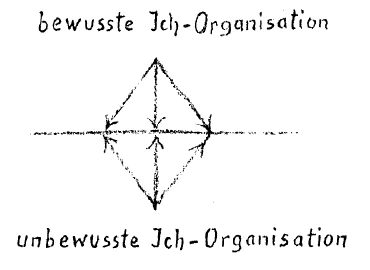
[ 10 ] Nun haben wir noch darauf hingewiesen, daß das, was wir als eine bewußte Tätigkeit des Ich auffassen, im Grunde genommen nur ein Teil der menschlichen Wesenheit ist und daß unter der Schwelle dessen, was auf diese Art in unseren Bewußtseinshorizont hereindringt, Prozesse sich abspielen, die unterhalb des Bewußtseins liegen und die gleichsam ferngehalten werden von unserem Bewußtsein durch das sympathische Nervensystem. Wir haben von verschiedenen Seiten her darauf hinweisen können, wie das, was wir dergestalt unbewußt in uns tragen, auch in einer gewissen Art im Zusammenhange steht mit unserem Ich. Wir haben von dem Unbewußtesten, von unserem Knochensystem, gesagt, daß es von vornherein so organisiert ist, daß es dem Werkzeuge des bewußten Ich geradezu die Grundlage geben kann. So wächst aus dem Unbewufßten heraus eine unbewußte Ich-Organisation der bewußten Ich-Organisation entgegen. Gleichsam teilt sich für uns der Mensch in zwei Teile: Es wirkt von der einen Seite her die bewußte Ich-Organisation und von der anderen Seite her die unbewußte Ich-Organisation in den Menschen hinein (siehe Zeichnung S. 136). Wir haben in dieser Beziehung gesehen, daß Blutsystem und Knochensystem einen gewissen Gegensatz bewusste Ich-Organisation bilden, sich wie entgegengesetzte Pole ausnehmen. Während das Blut in seiner inneren Regsamkeit als ein schmiegsames Werkzeug der Tätigkeit des Ich folgt, entzieht sich der andere Pol, das Knochensystem, der Regsamkeit des Ich so, daß von allem, was im Knochensystem geschieht, das Ich kein Bewußtsein hat, das heißt, daß alle im Knochensystem vorgehenden Prozesse vollständig unter der Oberfläche der eigentlichen bewußten Ich-Geschehnisse ablaufen. Es sind zwar Prozesse, welche unserer Ich-Tätigkeit entsprechen, aber sie sind ebenso tot, wie unsere Blutprozesse lebendig sind; sie sind damit im Grunde genommen ein Teil solcher Prozesse, die dem Ich unbewußt bleiben, die sich nur stufenweise herauferheben aus dem Unbewußten zum Bewußtsein.
[ 10 ] We have also pointed out that what we perceive as a conscious activity of the ego is, in essence, only a part of the human being, and that beneath the threshold of what enters our field of consciousness in this way, processes are taking place that lie below the level of consciousness and are, as it were, kept at a distance from our consciousness by the sympathetic nervous system. We have been able to point out from various angles how what we carry within us in this unconscious way is also, in a certain sense, connected to our ego. We have said of the most unconscious aspect, our skeletal system, that it is organized from the outset in such a way that it can provide the very foundation for the instruments of the conscious ego. Thus, an unconscious ego-organization grows out of the unconscious toward the conscious ego-organization. As it were, the human being divides into two parts for us: the conscious ego-organization acts from one side, and the unconscious ego-organization acts from the other side into the human being (see diagram on p. 136). In this regard, we have seen that the blood system and the bone system form a certain contrast to the conscious ego organization, appearing as opposite poles. While the blood, in its inner activity, follows the ego’s activity as a pliable instrument, the other pole—the skeletal system—eludes the ego’s activity to such an extent that the ego has no awareness of anything that occurs in the skeletal system; that is to say, all processes taking place in the skeletal system unfold entirely beneath the surface of the actual conscious ego events. These are indeed processes that correspond to our ego activity, but they are just as dead as our blood processes are alive; they are thus, in essence, part of those processes that remain unconscious to the ego, which rise only gradually from the unconscious to consciousness.
[ 11 ] Wenn wir das Knochensystem in seiner Gesamtfunktion im menschlichen Organismus einmal eingehend betrachten, so muß uns ja überall auffallen, daß es sich allem bewußten Leben entzieht, und zwar am stärksten von allen Organsystemen. Wenn wir aber nun vom Knochensystem übergehen zu den Organsystemen, die wir das innere Weltsystem des Menschen genannt haben, zum Leber-GalleMilzsystem, zum Lungen-Herzsystem und so weiter, so müssen wir nach dem in den früheren Vorträgen hierüber Mitgeteilten sagen: In hohem Grade sind die Vorgänge innerhalb dieser Systeme auch unserem Bewußtsein entzogen, aber doch nicht ganz so, wie die Vorgänge in unserem Knochensystem. An unser Knochensystem brauchen wir doch viel weniger zu denken, auf dasselbe zu achten als auf die Organe, die eben genannt worden sind. Einige dieser genannten Organe geben sich dem Menschen sogar sehr deutlich in ihren Funktionen kund als etwas, was über das Unbewußte herausragt. Es ist etwa so, wie wenn ein Gegenstand, der im Wasser des Meeres schwimmt, teilweise heraufstößt und wie eine Insel über der Oberfläche sichtbar wird. So dringt zum Beispiel manches von dem, was im Herzen vorgeht, in das Bewußtsein herauf. Sie wissen ja aus Erfahrung, wie besonders hypochondrische Naturen — zu ihrem Schaden natürlich — etwas von den Dingen verspüren, die in ihren inneren Organen vorgehen, allerdings wird es ihnen ganz anders bewußt, als es drinnen vorgeht, aber sie empfinden es doch. Ich spreche jetzt nicht davon, wie es ist, wenn ein gewisser Grad von Erkrankung in den Organen schon eingetreten ist. Beim Krankwerden nämlich wird man sich der Organe bewußt; da liegt aber eine wirkliche Ursache vor, wodurch die Wirkungen der inneren Weltsysteme heraufsteigen bis in das Bewußtsein; sondern ich spreche davon, daß lange nicht diese Grenze erreicht zu werden braucht, welche ein gesunder Mensch gegenüber dem Kranksein hat. Diese Grenze verschiebt sich aber leider recht oft. Was oft schon als Krankheit angesprochen wird, kann durchaus als ein geringerer oder höherer Grad des Hinaufdringens innerer Vorgänge in das Bewußtsein angesehen werden. Wir müssen also wirklich die Ursachen der verschiedenen Krankheiten immer so untersuchen, daß wir uns fragen: Liegen die Ursachen der Schmerzen in Krankheiten der Organe, oder haben wir sie anderswo zu suchen? - Wir wissen ja, daß wir vor dem Ins-Bewußtsein-Treten dessen, was sich da unten im Organismus abspielt, geschützt sind durch das sympathische Nervensystem.
[ 11 ] If we take a close look at the skeletal system and its overall function within the human organism, we cannot help but notice that it eludes all conscious life—more so than any other organ system. But when we now turn from the skeletal system to the organ systems—which we have called the inner world system of the human being—to the liver-bile-spleen system, the lung-heart system, and so on, we must say, in accordance with what was shared in earlier lectures on this subject: To a high degree, the processes within these systems are also hidden from our consciousness, but not quite to the same extent as the processes in our skeletal system. We need to think about our skeletal system far less, and pay far less attention to it, than to the organs just mentioned. Some of these organs even reveal their functions to the human being very clearly as something that rises above the unconscious. It is somewhat like an object floating in the sea, part of which rises up and becomes visible above the surface like an island. For example, much of what goes on in the heart rises into consciousness. You know from experience how particularly hypochondriacal types—to their detriment, of course—sense something of what is happening in their internal organs; admittedly, they become aware of it quite differently from what is actually happening inside, but they do perceive it. I am not speaking now of what it is like when a certain degree of illness has already set in within the organs. For when one falls ill, one becomes aware of the organs; yet there is a real cause at work whereby the effects of the inner world systems rise up into consciousness; rather, I am speaking of the fact that this boundary—which a healthy person maintains against illness—need not be reached by a long shot. Unfortunately, however, this boundary shifts quite often. What is often already referred to as illness can certainly be regarded as a lesser or greater degree of the intrusion of inner processes into consciousness. We must therefore always investigate the causes of various illnesses by asking ourselves: Do the causes of the pain lie in diseases of the organs, or must we look for them elsewhere?—We know, after all, that we are protected from the intrusion into consciousness of what is taking place down there in the organism by the sympathetic nervous system.
[ 12 ] Wenn wir im Knochensystem etwas sehen, was den Menschen seiner Form, seiner Gestaltung nach so aufbaut, daß das Blutsystem darin in der entsprechenden Weise ein Werkzeug für sein Ich sein kann, so müssen wir uns nach dem, was eben jetzt gesagt worden ist, darüber klar sein, daß auch die anderen Organsysteme in einer gewissen Weise dem bewußten Leben des Menschen, das sich zuletzt wie eine Blüte entfalten soll, entgegenwachsen. Wir müssen uns klar sein, daß alle diese Organe auch schon, obwohl sie nicht durchdrungen sind von vollbewußtem Leben, das enthalten, was unserem bewußten Seelenleben entgegenwächst, so wie wir gesehen haben, daß unser Knochensystem entgegenwächst dem Ich-Leben.
[ 12 ] If we see something in the skeletal system that structures the human being in such a way—in terms of its form and configuration—that the circulatory system can function within it as an instrument for the ego, then, in light of what has just been said, we must be clear that the other organ systems, too, grow in a certain way toward the human being’s conscious life, which is ultimately to unfold like a flower. We must be clear that all these organs, even though they are not permeated by fully conscious life, already contain what grows toward our conscious soul life, just as we have seen that our skeletal system grows toward the life of the ego.
[ 13 ] Wir müssen uns nun die Frage vorlegen: In welchem Grade wächst denn dieses innere System, das wir als ein inneres Weltsystem bezeichnet haben, dem bewußten Seelenleben des Menschen entgegen? — Wenn wir auf der einen Seite bedenken, daß wir in dem Knochensystem die festeste Stütze in unserem physischen Körper haben, die dem Blutsystem so seine Anordnung gibt, daß es an den richtigen Orten wirkt, um sich als Werkzeug des Ich entfalten zu können, so müssen wir auf der anderen Seite auch sagen, daß das Knochensystem diejenigen Organe stützt und in der richtigen Lage hält, die wir früher als innere Weltsysteme bezeichnet haben. Denn was mit dem Blute geschieht, das kommt auch diesen Organen zugute. Wenn Sie alle diese Organsysteme betrachten, wird Ihnen auffallen, daß Sie in deren Anordnung nichts entdecken können, was so wesentlich und innig mit der äußeren Form des Menschen zusammenhängt wie das Knochensystem. Es ist die Grundlage der menschlichen Form, und was sich um das Knochensystem herum hineinbaut und auflagert, das kann sich nur so hineinbauen und auflagern, weil das Knochensystem die Grundform abgibt. Auch die Haut als äußere Körperbegrenzung ist gleichsam vorgebildet durch die ganze Gestaltung des Knochensystems. Goethe hat das in einem schönen Ausspruch gesagt, nicht bloß vom ästhetischen, sondern auch vom wissenschaftlichen Standpunkt aus: «Es ist nichts in der Haut, was nicht im Knochen ist.» Das heißt, in der äußeren Hautgestaltung drückt sich dasjenige aus, was schon durch das Knochensystem vorgebildet ist. Dasselbe können wir von unserem inneren Weltsystem nicht sagen. Andererseits zeigt aber gerade das Heraufrücken der Wirkungen des inneren Weltsystems zu niederen Graden des Bewußtseins, daß dieses innere Weltsystem etwas zu tun hat mit unserem Astralleib; denn der Astralleib ist der Träger des Bewußtseins. So müssen wir daher sagen, daß zwar dieses innere Weltsystem uns nicht erscheinen kann als ein Ausdruck des unterbewußten Ich, des in tiefen Untergründen gelegenen formbildenden Ich, daß es uns aber als das erscheinen kann, was uns durch den ganzen Weltenprozeß als Ausdruck der Umwelt so eingegliedert ist, daß es einen ähnlichen Bezug hat zu unserem Astralleib, wie das Knochensystem die Grundlage abgibt zu der das Ich umfassenden menschlichen Form. Wir können daher sagen: Wir haben im Knochensystem schon vorgebildet, tief unten im Unterbewußten, das menschliche Ich, und in dem, was wir unser inneres Weltsystem nennen, haben wir dasjenige vorgebildet, was wir unseren Astralleib nennen.
[ 13 ] We must now ask ourselves: To what extent does this inner system—which we have described as an inner world system—develop in harmony with the conscious life of the human soul? — If, on the one hand, we consider that the skeletal system provides the firmest support in our physical body, giving the circulatory system its structure so that it acts in the right places to unfold as an instrument of the ego, then on the other hand we must also say that the skeletal system supports and holds in the correct position those organs that we previously referred to as inner world systems. For whatever happens to the blood also benefits these organs. If you consider all these organ systems, you will notice that you cannot discover anything in their arrangement that is as essentially and intimately connected with the outer form of the human being as the skeletal system. It is the foundation of the human form, and whatever builds itself up and settles around the skeletal system can only do so because the skeletal system provides the basic form. The skin, too, as the body’s outer boundary, is, as it were, preformed by the entire structure of the skeletal system. Goethe expressed this in a beautiful saying, not merely from an aesthetic but also from a scientific standpoint: “There is nothing in the skin that is not in the bone.” That is to say, the outer structure of the skin expresses what is already preformed by the skeletal system. We cannot say the same of our inner world system. On the other hand, however, the very fact that the effects of the inner world system emerge at lower levels of consciousness shows that this inner world system has something to do with our astral body; for the astral body is the bearer of consciousness. We must therefore say that, although this inner world system cannot appear to us as an expression of the subconscious ego—the form-shaping ego lying in the deep depths—it can appear to us as that which is so integrated into us through the entire world process as an expression of the environment that it has a similar relationship to our astral body just as the skeletal system provides the foundation for the human form encompassing the ego. We can therefore say: We have already preformed the human ego in the skeletal system, deep down in the subconscious, and in what we call our inner world system, we have preformed what we call our astral body.
[ 14 ] Nun stammt dieses innere Weltsystem in seiner ganzen Organisation, weil es eben noch unter dem Bewußtsein liegt, gar nicht aus dem bewußten Seelenleben; es ist unserem Organismus eingefügt aus dem Makrokosmos. Es ist also damit dem Menschen etwas, was wir ein kosmisches Astrales nennen können, so eingefügt, daß es sich ausdrückt als unser inneres Weltsystem. Und in unserem Knochensystem haben wir wiederum in unseren Organismus etwas eingegliedert bekommen aus unserer Umgebung, aus dem großen Weltsystem, und weil das zusammenhängt mit der gesamten Form unseres physischen Organismus, müssen wir sagen: Dieses Knochensystem ist eigentlich dadurch die Grundlage für unser Ich in unserem physischen Leib, weil es ein makrokosmisches oder schlechtweg ein kosmisches System ist, das uns zu diesem physisch gestalteten Menschen macht. Neben diesem Knochensystem wird uns eingelagert ein makrokosmisches astrales Weltsystem als unser inneres Weltsystem. Insofern unser Ich als bewußtes Ich auftritt, hat es zum Werkzeug das Blutsystem, insofern unser Ich vorgebildet ist als Form und Gestalt, liegt ihm zugrunde ein kosmisches Kraftsystem, das hindrängt zur festen Gestaltung, das sich am dichtesten zum Ausdruck bringt in unserem Knochensystem.
[ 14 ] Now, because this inner world system lies just below the level of consciousness, its entire organization does not originate from the conscious life of the soul; it is embedded in our organism from the macrocosm. Thus, something we might call a cosmic astral realm is so embedded in the human being that it expresses itself as our inner world system. And in our skeletal system, we have in turn had something incorporated into our organism from our surroundings, from the great world system, and because this is connected to the entire form of our physical organism, we must say: This skeletal system is in fact the foundation for our ego in our physical body, because it is a macrocosmic or simply a cosmic system that makes us into this physically formed human being. Alongside this skeletal system, a macrocosmic astral world system is embedded within us as our inner world system. Insofar as our ego appears as a conscious ego, it has the blood system as its instrument; insofar as our ego is preformed as form and shape, it is based on a cosmic system of forces that drives toward solid formation, which finds its densest expression in our skeletal system.
[ 15 ] Fassen wir die Sache noch von einem anderen Gesichtspunkt ins Auge. Wir wissen ja jetzt, daß alles, was wir als bewußte Denktätigkeit, die vom Ich bewirkt wird, bezeichnet haben, sich zum Ausdruck bringt durch eine Art von feinster Salzablagerung im Blut. Es gibt sich also das bewußte Denken zu erkennen durch eine Art von innerer Salzablagerung. Wir können daher also erwarten, daß da, wo aus dem Kosmischen heraus unser Knochensystem vorgebildet wird, so daß der Organismus die materielle Stütze bilden kann für den Menschen als denkerisches Wesen, wir auch den physischen Prozeß einer Salzablagerung finden müßten. Wir müßten also Salzablagerungen im Knochensystem finden können; und tatsächlich bestehen die Knochen zum Teil aus phosphorsaurem und kohlensaurem Kalk, also aus abgelagerten Kalksalzen.
[ 15 ] Let us now consider the matter from another perspective. We now know that everything we have described as conscious thought activity brought about by the “I” is expressed through a kind of extremely fine salt deposit in the blood. Conscious thinking thus reveals itself through a kind of internal salt deposit. We can therefore expect that where our skeletal system is preformed from the cosmic realm so that the organism can provide the material support for the human being as a thinking entity, we should also find the physical process of salt deposition. We should therefore be able to find salt deposits in the skeletal system; and indeed, the bones consist in part of phosphoric and carbonic calcium, that is, of deposited calcium salts.
[ 16 ] So haben wir auch hier die beiden entgegengesetzten Pole. Indem der Mensch denkerisch tätig ist, sind die Gedankenprozesse dasjenige, was uns innerlich zu einem festen Wesen macht. Unsere Gedanken sind in einer gewissen Weise unser inneres Knochengerüst. Der Mensch hat bestimmte scharfumrissene Gedanken; unsere Gefühle dagegen sind unbestimmt, lavierend, bei jedem Menschen mehr oder weniger anders. Die Gedanken bilden feste Einschlüsse im Gefühlssystem. Während diese festen Einschlüsse im bewußten Leben sich ausdrücken im Blut durch eine Art von regsamem, beweglichem Salzablagerungsprozeß, drückt sich das, was das Ich vorbereitet, im Knochensystem so aus, daß der Makrokosmos unser Knochensystem so bildet, daß es zum größten Teil aus abgelagerten Salzen aufgebaut ist. Diese sind nun das ruhende Element in uns, der andere, der entgegengesetzte Pol zu den Vorgängen der inneren Regsamkeit, welche in den Salzablagerungsprozessen im Blut sich abspielen. So werden wir als Menschen von zwei Seiten her in unserer Organisation zum Denker gemacht, von der einen Seite her unbewußt, indem unser Knochensystem aufgebaut wird, von der anderen Seite aus bewußt, indem wir — nach dem Muster unseres Knochenaufbauprozesses — dieselben Prozesse bewußt vollziehen, die sich im Organismus als solche Salzablagerungsprozesse zeigen, von denen wir sagen können, daß sie innerlich regsame sind. Die beim Denken gebildeten Salze müssen sogleich durch den Schlaf wieder aufgelöst, fortgeräumt werden, sonst würden sie etwas wie Zersetzungsprozesse, Auflösungsprozesse im Organismus herbeiführen. Wir haben also im Denken einen wirklichen Zerstörungsprozeß zu sehen. Und durch den wohltätigen Schlaf wird ein Rückbildungsprozeß ausgeübt, der bewirkt, daß das Blut wieder frei wird von Salzablagerungen, so daß wir von neuem bewußte Gedanken im wachen Tagesleben entwickeln können.
[ 16 ] Here, too, we have the two opposing poles. When a person engages in thought, it is the thought processes that make us, inwardly, a coherent being. In a certain sense, our thoughts are our inner skeletal framework. Human beings have certain sharply defined thoughts; our feelings, on the other hand, are indefinite, fluctuating, and more or less different in every person. Thoughts form solid inclusions within the emotional system. While these solid inclusions express themselves in conscious life through a kind of active, dynamic salt-deposition process in the blood, what the ego prepares expresses itself in the skeletal system in such a way that the macrocosm shapes our skeletal system so that it is largely composed of deposited salts. These are now the resting element within us, the other, the opposite pole to the processes of inner activity that take place in the salt deposition processes in the blood. Thus, as human beings, we are made into thinkers from two sides within our organism: on the one hand unconsciously, through the formation of our skeletal system; on the other hand consciously, by consciously carrying out—following the pattern of our bone-building process—the very same processes that manifest in the organism as salt-deposition processes, which we can describe as internally active. The salts formed during thinking must be immediately dissolved and cleared away again through sleep; otherwise, they would bring about something like processes of decomposition or dissolution in the organism. We must therefore regard thinking as a genuine process of destruction. And through the restorative power of sleep, a process of regression is set in motion that frees the blood from salt deposits, enabling us to develop conscious thoughts anew in our waking daily life.
[ 17 ] Es geht aber nicht an, daß man nun einfach sagt: Denken ist ein Salzbildungsprozeß -, denn wenn die Menschen das nicht in der richtigen Weise verstehen, könnte wohl jemand sagen, die Geisteswissenschaft behaupte das dümmste Zeug.
[ 17 ] However, it is not acceptable to simply say: “Thinking is a process of salt formation”—because if people do not understand this correctly, someone might well say that spiritual science asserts the most ridiculous nonsense.
[ 18 ] Gehen wir nun weiter. Wir können uns denken, daß zwischen diesen beiden äußersten Polen der Salzbildung sich alle anderen Prozesse im menschlichen Organismus abspielen, und zwar im wesentlichen diejenigen, auf die wir schon hingewiesen haben. Wie wir regsame Salzbildungsprozesse haben durch das Denken, die ihren Gegenpol haben im Salzbildungsprozeß in den Knochen, der bis zu einem gewissen Grade zur Ruhe gekommen ist, so haben wir auch einen Gegenpol zu demjenigen, was wir bezeichnet haben als den innerlichen Quellungsprozeß, als Koagulation, als Flockenbildungsprozeß, als etwas Ähnliches wie eiweißartige Einschlüsse, welche unter dem Einflusse unseres Gefühlslebens entstehen, als äußeren Ausdruck unseres Gefühlslebens. Dieser Gegenpol zeigt sich in dem, was mehr innere Prozesse unseres Organismus sind, und nimmt teil an einem solchen unbewußten Quellen, an einem Dichterwerden von Substanzen, welche sich bilden und einlagern als Wirkung des makrokosmischen Astralsystems. Es ist der Knochenleim, der teilnimmt an dem Knochenbildungsprozeß und der den anderen Knochensubstanzen eingefügt wird. Das ist der andere Pol des Quellungsprozesses gegenüber dem, was als physisches Korrelat durch unser Gefühl entsteht.
[ 18 ] Let us now move on. We can imagine that between these two extreme poles of salt formation, all other processes in the human organism take place—namely, essentially those we have already pointed out. Just as we have active salt formation processes through thinking, which have their opposite pole in the salt formation process in the bones, which has come to rest to a certain degree, so we also have an opposite pole to what we have described as the inner swelling process, as coagulation, as the flocculation process, as something akin to protein-like inclusions that arise under the influence of our emotional life, as an outward expression of our emotional life. This counterpole manifests itself in what are more internal processes of our organism and participates in such an unconscious welling up, in a thickening of substances that form and are deposited as an effect of the macrocosmic astral system. It is the bone glue that participates in the bone-formation process and is incorporated into the other bone substances. This is the other pole of the swelling process, as opposed to what arises as a physical correlate through our emotions.
[ 19 ] Unsere Willensimpulse drücken sich ja organisch in einem Wärmeprozeß, in einem inneren Erwärmungsprozeß aus. Verbindungen, die sich bilden und die wir bezeichnen können als Produkte innerer Verbrennungsprozesse, als innere Oxidationsprozesse, finden sich durch unseren ganzen Organismus hindurch. Und insofern sie unter der Schwelle des Bewußtseins verlaufen und nichts zu tun haben mit dem bewußten Leben, gehören sie der anderen Seite an, dem Gegenpol, der abgeschlossen ist von dem, wovon das bewußte Leben Einflüsse erhalten kann. Dadurch ist der Mensch durch einen Teil seines Organismus innerlich geschützt vor Störungen, damit sich innerhalb desselben Prozesse vollziehen können, die von größter Zartheit sind, die von dem Seelenleben veranlaßt sind.
[ 19 ] Our volitional impulses are, after all, organically expressed in a thermal process, in an internal heating process. Compounds that form—and which we can describe as the products of internal combustion processes, as internal oxidation processes—are found throughout our entire organism. And insofar as they occur below the threshold of consciousness and have nothing to do with conscious life, they belong to the other side, the opposite pole, which is separated from that from which conscious life can receive influences. Thus, through a part of their organism, human beings are internally protected from disturbances, so that processes of the utmost delicacy, initiated by the life of the soul, can take place within it.
[ 20 ] Wie wir erfahren haben, finden also in unserem Organismus solche physiologische Vorgänge wie Salzbildung, Quellbildung und Wärmebildung statt, die unserem bewußten Leben folgen, und solche Prozesse, die außerhalb unseres bewußten Lebens sich so abspielen, daß sie erst die Grundlage abgeben für das, was sich vorbereitet im menschlichen Organismus, damit das bewußte Leben sich überhaupt entfalten kann. So also ist unser gesamter Organismus ein Durcheinanderweben von Prozessen, die wir als unserem bewußten Leben zugehörig, und solchen, die wir als unserem unbewußten Leben zugehörig zu bezeichnen haben. Das ist eine außerordentlich bedeutungsvolle Tatsache, daß unser Organismus wirklich etwas darstellt wie ein Zusammengehöriges aus zwei Polaritäten: daß sich gleichartige Prozesse einmal so vollziehen, daß sie hereinragen in den Organismus aus dem Makrokosmos und gleichsam im gröberen sich abspielen, und auf der anderen Seite solche Prozesse, welche als Folgen des bewußten Lebens des Menschen im feineren vor sich gehen können.
[ 20 ] As we have learned, physiological processes such as salt formation, swelling, and heat generation take place in our organism; these processes follow our conscious life, while other processes occur outside our conscious life in such a way that they first provide the foundation for what is being prepared in the human organism, so that conscious life can unfold at all. Thus, our entire organism is an interwoven tapestry of processes that we must describe as belonging to our conscious life, and those that we must describe as belonging to our unconscious life. This is an extraordinarily significant fact: that our organism truly represents something like a unity of two polarities—that processes of one kind take place in such a way that they penetrate the organism from the macrocosm and unfold, as it were, in the coarser realm, while on the other hand there are processes that can take place in the finer realm as consequences of human conscious life.
[ 21 ] Nun ist im heutigen fertigen Organismus die Sache so, daß alle diese Prozesse durchaus ineinanderspielen und daß wir sie, so wie der Organismus vor uns steht, nicht eigentlich so voneinander trennen können, daß wir überall bestimmte Grenzen zu bezeichnen vermöchten; der eine Prozeß spielt in den anderen hinein. Sie brauchen nur das Blutsystem, das regsamste, feinste Element zu betrachten. Im Blut sehen Sie sowohl den Erreger der Salzablagerungsprozesse wie auch der Prozesse der Koagulierung einer flüssigen Substanz und auch der Erwärmungsprozesse. In ähnlicher Art finden wir diese Prozesse auch bei anderen Organsystemen miteinander in enger Beziehung stehend. Wenn wir zum Beispiel Nahrungsmittel von außen in unseren Verdauungskanal aufnehmen, so haben diese Nahrungsmittel noch das, was ich als ihre äußere Regsamkeit bezeichnet habe. Sie machen eine erste Stufe der Durchsiebung durch, indem sie aufgenommen werden im Munde und durch den Kauprozeß vorbereitet werden für den Verdauungsprozeß im Magen; in weiterer Stufenfolge werden sie verarbeitet durch die Organe, die wir als das innere Weltsystem bezeichnet haben, und endlich werden sie herangeführt bis dahin, wo sie das feinste Instrument des menschlichen Organismus, das Blut, ernähren können. Nachdem wir so in gewisser Beziehung eine Stufenfolge der Durchsiebung der Nahrungsstoffe durch die inneren Organsysteme angedeutet haben, können wir uns jetzt leicht denken, daß in der Tat das feinste System, das Blutsystem, sozusagen die durchgesiebtesten Nahrungsregsamkeiten in sich aufnehmen muß und daß das, was an das Blut herantritt, schon am allerwenigsten von demjenigen enthält, was die Nahrungsstoffe an eigener Regsamkeit in sich hatten, als sie aufgenommen wurden. Wenn die Stoffe aufgenommen werden, haben sie noch ein gut Teil ihrer eigenen Natur und Gesetzmäßigkeit. Sie haben diese im Magen und den weiteren Organsystemen, die sie passierten, aufgeben müssen, und soweit sie sich im Blut befinden, sind sie zu etwas vollständig Neuem geworden. Daher ist das Blut auch dasjenige Organ, das am meisten von allen geschützt ist gegen die Eindrücke der Außenwelt, das seine Prozesse am meisten unabhängig von der Außenwelt vollzieht. Das ist die eine Seite; aber wir haben schon eingehend gezeigt, daß das Blut nach zwei Seiten sich wendet, daß es wie eine Tafel sowohl nach der einen wie nach der anderen Seite hin Einwirkungen ausgesetzt ist. Das Blut wird auf der einen Seite ja zu denjenigen Organen in den tieferen Regionen des menschlichen Organismus hingeführt, wo alles, was an Prozessen vorgeht, durch das sympathische Nervensystem zurückgehalten, abgewehrt wird, so daß es nicht zum Bewußtsein kommt. Nun muß das Blut sich ja auch der anderen Seite zuwenden, den Erlebnissen des bewußten Seelenlebens. Es muß nicht nur die unbewußten Vorgänge aufnehmen, sondern es muß auch das bewußte Ich sich einprägen dem Blut. Unsere bewußten Seelentätigkeiten müssen sich so wandeln können, bis sie das Blut erreichen, damit sie in diesem Blute zum Ausdruck werden für das, was wir um uns haben. Was haben wir denn um uns? Die physisch-sinnliche Welt; denn das, was der Pflanzenwelt eingegliedert ist - der Ätherleib -, das ist für das normale Bewußtsein nicht da. Für das helle Tagesbewußtsein gehört der Mensch nur der physischen Welt an; die Lebenswelt ist für uns unsichtbar.
[ 21 ] In today’s fully developed organism, the situation is such that all these processes are thoroughly intertwined, and that, given the organism as it stands before us, we cannot really separate them from one another in such a way that we could define clear boundaries everywhere; one process flows into the other. You need only consider the circulatory system, the most active and delicate element. In the blood, you see both the agent of the salt-deposition processes and of the processes of coagulation of a liquid substance, as well as the processes of heating. In a similar way, we also find these processes in close relationship with one another in other organ systems. When, for example, we take in food from the outside into our digestive tract, this food still possesses what I have called its external activity. They undergo an initial stage of sifting by being taken into the mouth and prepared through the chewing process for the digestive process in the stomach; in a subsequent sequence of stages, they are processed by the organs we have referred to as the inner world system, and finally they are brought to the point where they can nourish the finest instrument of the human organism, the blood. Having thus outlined, in a certain sense, a sequence of stages in the sifting of nutrients through the internal organ systems, we can now easily imagine that, in fact, the finest system—the blood system—must take in, so to speak, the most thoroughly sifted nutritional activities, and that what reaches the blood already contains the very least of what the nutrients possessed of their own activity when they were ingested. When the substances are ingested, they still retain a good portion of their own nature and laws. They have had to relinquish these in the stomach and the subsequent organ systems they passed through, and to the extent that they are found in the blood, they have become something entirely new. Therefore, the blood is also the organ that is most protected of all against the influences of the external world, the one that carries out its processes most independently of the external world. That is one side of the matter; but we have already shown in detail that the blood turns toward two sides, that it is exposed to influences from both sides, like a tablet. On the one hand, the blood is indeed led to those organs in the deeper regions of the human organism where all the processes taking place are held back and repelled by the sympathetic nervous system, so that they do not reach consciousness. Now the blood must also turn toward the other side, the experiences of conscious soul life. It must not only take in the unconscious processes, but the conscious ego must also imprint itself upon the blood. Our conscious soul activities must be able to transform themselves until they reach the blood, so that they may find expression in this blood for what we have around us. What do we have around us? The physical-sensory world; for that which is incorporated into the plant world—the etheric body—is not present for normal consciousness. For clear daytime consciousness, the human being belongs only to the physical world; the world of life is invisible to us.
[ 22 ] So stehen wir mit der anderen Seite der Blutstafel der physischsinnlichen Welt gegenüber. Das ganze Seelenleben, wie es verläuft unter den Eindrücken der physisch-sinnlichen Welt, wie es zu Gedanken erregt wird, wie es zu Gefühlen entflammt wird, wie es zu Willensimpulsen angeregt wird, das muß alles im Blutsystem sein Werkzeug finden können, insofern es bewußtes Ich-Leben ist. Das alles muß im Blut pulsieren können. Was heißt das? Das heißt nichts anderes, als daß wir in unserem Blut nicht nur dasjenige haben dürfen, was aus den Nahrungsstoffen ist, nachdem sie in hohem Grade filtriert, ihrer Eigenregsamkeit enteignet, geschützt von allen makrokosmischen Gesetzen sind, sondern es muß — damit das Einschreiben auf die Blutstafel auch von der anderen Seite möglich ist — in dem Blut auch etwas zu finden sein, was verwandt ist mit dem Physisch-Sinnlichen, mit dem Unlebendigen der physisch-sinnlichen Welt. Was das Leben ausmacht, kann ja für das gewöhnliche Bewußtsein nur durch Kombination der physisch-sinnlichen Eindrücke erkannt werden, in seiner Wirklichkeit kann es erst erkannt werden durch das unterste übersinnliche Glied der menschlichen Wesenheit, durch den Ätherleib.
[ 22 ] Thus we stand face to face with the other side of the blood-table of the physical-sensory world. The entire life of the soul—as it unfolds under the impressions of the physical-sensory world, as it is stirred into thoughts, as it is kindled into feelings, as it is stimulated into impulses of will—must be able to find its instrument in the blood system, insofar as it is conscious ego-life. All of this must be able to pulsate in the blood. What does that mean? It means nothing other than that we must not have in our blood only that which comes from foodstuffs, after they have been highly filtered, stripped of their own activity, and protected from all macrocosmic laws, but—so that inscription on the blood tablet is also possible from the other side—there must also be found in the blood something related to the physical-sensory, to the inanimate of the physical-sensory world. For ordinary consciousness, what constitutes life can indeed be recognized only through the combination of physical-sensory impressions; in its reality, it can be recognized only through the lowest supersensible member of the human being, through the etheric body.
[ 23 ] Das Blut muß also verwandt sein mit der physisch-sinnlichen Welt, so wie diese unmittelbar ist. Wir werden nun sehen, daß sich dem Blute etwas eingliedert, wovon wir sagen können: Das ist nun nicht so in unserem Blut, wie wenn es bestimmt würde durch die Prozesse, die aus unserem Wesen, aus den Tiefen unseres Organismus heraufdringen zum Blut, deren Gesetzmäßigkeit also der unsrigen angepaßt ist, sondern es ist so, als ob es durch die Wirkungen äußerer makrokosmischer Gesetzmäßigkeiten und Regsamkeiten unserem Blut eingegliedert würde. Wir müssen in unserem Blut etwas haben, was so ist und so wirkt wie unmittelbare äußere Prozesse, die aber innerlich sich geradeso abspielen wie äußerlich im Makrokosmos, die also ihre Eigengesetzmäßigkeit nicht verlieren. Es müssen also in unser Blut physische, chemische, anorganische Prozesse hineinspielen; die sind notwendig, damit unser Ich Teilnehmer werden kann an der physischen Welt. Wir werden also in dem Blut solche Stoffe zu suchen haben, die so wirken können, daß ihr physischer Charakter, ihre Eigengesetzmäßigkeit beibehalten wird. Das finden wir in der Tat im Blut. In unseren roten Blutkörperchen ist uns etwas gegeben, das deutlich zeigt, daß es eben erst zu leben anfängt und an dem Punkte ist, wo es vom Leben in die Leblosigkeit übergeht. Auf der anderen Seite haben wir dem Blut eingegliedert einen fortwährenden Erwärmungsprozeß, der sich vergleichen läßt mit einem äußeren Verbrennungsprozeß, wo der Oxidationsprozeß wieder neue Lebensmöglichkeiten gibt. Wir haben also dem Blute eingeordnet dasjenige, was den Menschen zu einem physisch-sinnlichen Wesen macht.
[ 23 ] Blood must therefore be related to the physical-sensory world, just as that world is immediate. We shall now see that something is incorporated into the blood of which we can say: This is not the case in our blood as if it were determined by the processes that rise up to the blood from our being, from the depths of our organism, whose laws are thus adapted to our own; rather, it is as if it were incorporated into our blood through the effects of external macrocosmic laws and activities. We must have something in our blood that is and acts like immediate external processes, but which unfold internally just as they do externally in the macrocosm, and thus do not lose their own laws. Physical, chemical, and inorganic processes must therefore be at work in our blood; these are necessary so that our ego can participate in the physical world. We must therefore seek in the blood such substances that can act in such a way that their physical character, their inherent laws, are preserved. We do indeed find this in the blood. In our red blood cells, we are given something that clearly shows that it is just beginning to live and is at the point where it transitions from life to lifelessness. On the other hand, we have incorporated into the blood a continuous heating process that can be compared to an external combustion process, where the oxidation process in turn provides new possibilities for life. We have thus incorporated into the blood that which makes the human being a physical-sensory being.
[ 24 ] So zeigt sich uns bis in die Organisation des Blutes hinein, wie bedeutsam die physische, die chemische Untersuchung erleuchtet werden kann durch das, was aus okkulter Anschauung mitgeteilt werden kann, und wie diese erst verständlich macht, was sich dem unmittelbaren äußeren Anblick darbietet.
[ 24 ] Thus, even in the structure of blood, we see how significantly physical and chemical analysis can be illuminated by what can be conveyed from an occult perspective, and how this alone makes it possible to understand what presents itself to direct external observation.
[ 25 ] So können wir sagen: Wir haben im menschlichen Organismus, im Blut, Prozesse, die angeregt werden durch die Einwirkung der Außenwelt, die physisch-sinnlicher Art sind; wir haben außerdem aber auch solche Prozesse im Blut, die von der inneren Seite her heraufreichen und die auf der Einlagerung der bis zum äußersten Grade filtrierten und veränderten Nahrungsstoffe beruhen. Wenn wir das ins Auge fassen, so wird uns das Blut erst recht bedeutungsvoll als «ein ganz besonderer Saft» erscheinen, kehrt es doch auf der einen Seite seine Wesenheit dem niedersten, untersten uns bekannten Reiche zu und zeigt sich als eine Materie, die fähig ist, äußere chemische Prozesse auszuführen, um dadurch ein Werkzeug sein zu können für das Ich. Auf der anderen Seite ist das Blut jene Substanz, die am geschütztesten ist, um innerliche Prozesse auszuführen, die sonst nirgends ausgeführt werden können, weil alle übrigen Organprozesse dazu als Voraussetzung notwendig sind.
[ 25 ] So we can say: In the human organism, in the blood, we have processes that are stimulated by the influence of the external world and are of a physical-sensory nature; but we also have processes in the blood that arise from within and are based on the storage of nutrients that have been filtered and transformed to the utmost degree. When we consider this, blood will appear all the more significant to us as “a very special fluid,” for on the one hand it turns its nature toward the lowest, most fundamental realm known to us and reveals itself as a substance capable of carrying out external chemical processes, thereby serving as a tool for the ego. On the other hand, blood is the substance best suited to carrying out internal processes that cannot be performed anywhere else, since all other organ processes are necessary prerequisites for this.
[ 26 ] Die feinsten, die höchsten Prozesse, die angeregt werden aus den Tiefen unseres Organismus, verbinden sich in unserem Blut mit physikalisch-chemischen Prozessen, wie wir sie überall in der Welt vor Augen haben. In keiner anderen Substanz trifft so unmittelbar die physisch-sinnliche materielle Welt mit einer anderen, inneren Welt zusammen, die voraussetzt das Dasein, die Tätigkeit von übersinnlichen Kraftsystemen, wie in unserer Blutsubstanz. Das tritt in keiner anderen Substanz so zutage wie in dem Blut, das unseren Organismus durchfließt. Dieses Blut ist in der Tat etwas, worin sich das Niederste, das der Mensch um sich herum schauen kann, zusammenfügt mit dem Höchsten, das sich in seiner Natur organisch ausbilden kann. Daher wird es uns wohl klar sein, daß wir in bezug auf diese im Blut sich abspielenden komplizierten Vorgänge etwas vor uns haben, das, wenn es etwas unregelmäßig wird oder Störungen eintreten, in einem hohen Maße Unregelmäßigkeiten in unserem Gesamtorganismus hervorrufen muß. Und daß wir da, wo solche Unregelmäßigkeiten sich zeigen, immer überlegen müssen, wie diese entstanden sind. Es wird schwierig sein, auseinanderzuhalten, ob wir diese Unregelmäßigkeiten im einzelnen Falle solchen Prozessen zuzuschreiben haben, die nach dem Muster physischer chemischer Prozesse verlaufen, oder ob sie anderen Prozessen des Blutes entsprechen. Wenn die Unregelmäßigkeiten verlaufen nach dem Muster physisch-chemischer Prozesse, dann müssen wir uns klar sein, daß ihnen begegnet werden muß von der Seite des Bewußtseins her, und zwar in dem Sinne, wie das Bewußtsein mit dem physischen Plan zusammenhängt. Hier eröffnet sich ein therapeutisches Gebiet, dessen Charakteristisches ist, darauf zu achten, ob gewisse Unregelmäßigkeiten zusammenhängen mit solchen Prozessen, die wir als physisch-chemische bezeichnen können. Bei dieser Voraussetzung ist es günstig, einzugreifen durch äußere Impressionen, durch entsprechende Regelung der äußeren Eindrücke, welche diese physisch-chemischen Prozesse hervorrufen können. Damit sind weniger seelisch-geistige Impressionen gemeint, dagegen namentlich alles dasjenige, was wir bewirken können durch eine Regelung des Atmungsprozesses und durch Überwachung der Prozesse der Wechselwirkung des inneren ÖOrganismus mit der Außenwelt durch die Haut.
[ 26 ] The most subtle, the highest processes, which are stimulated from the depths of our organism, combine in our blood with physical-chemical processes such as we see everywhere in the world. In no other substance does the physical-sensory material world meet so directly with another, inner world—one that presupposes the existence and activity of supersensible force systems—as in our blood substance. This is evident in no other substance as much as in the blood that flows through our organism. This blood is indeed something in which the lowest, that which a human being can observe around them, merges with the highest, that which can organically develop within their nature. Therefore, it should be clear to us that, with regard to these complex processes taking place in the blood, we are dealing with something that, if it becomes somewhat irregular or disturbances occur, must cause irregularities in our entire organism to a high degree. And that wherever such irregularities appear, we must always consider how they arose. It will be difficult to distinguish whether, in individual cases, we are to attribute these irregularities to processes that follow the pattern of physical-chemical processes, or whether they correspond to other processes in the blood. If the irregularities follow the pattern of physical-chemical processes, then we must be clear that they must be addressed from the perspective of consciousness, specifically in the sense that consciousness is connected to the physical plane. This opens up a therapeutic field characterized by the need to observe whether certain irregularities are related to processes that we can describe as physical-chemical. Under these conditions, it is beneficial to intervene through external impressions, by appropriately regulating the external stimuli that can trigger these physical-chemical processes. This refers less to mental and spiritual impressions and more specifically to everything we can achieve by regulating the respiratory process and by monitoring the processes of interaction between the internal organism and the external world through the skin.
[ 27 ] Dann können wir aber auch von der anderen Seite her im Blut die feinsten organischen Vorgänge feststellen, und wir werden uns klar sein müssen, daß wir darin sozusagen die dritte Stufe der Verfeinerung unserer vorverarbeiteten Nahrungsstoffe zu sehen haben. Wenn im Blutorganismus jene feinen Prozesse der Salzbildung, der Quellbarkeit, der Wärme hervorgerufen werden durch äußere Vorgänge, also von außen in ihrem chemischen Verlauf bestimmt werden, so dürfen wir auf der anderen Seite fragen, wodurch die Prozesse im Blut von der inneren Seite her bestimmt werden. Wir müssen da unterscheiden zwischen der Aufgabe, die das Blut hat, und der Tatsache, daß es so ernährt werden muß wie jedes andere Organ auch. Zugleich müssen wir es auch als das Organ erkennen, das auf der höchsten Stufe der organischen Tätigkeit steht. Es kommt hier dasjenige in Betracht, was wir als die innerliche Stütze des menschlichen Lebens bezeichnen können. Das Blut muß vor allen Dingen davor geschützt werden, daß die äußere Welt auf dem Wege der Nahrungsstoffe unmittelbar in das Blut hineinwirkt, es wird sonst seine Tätigkeit als Werkzeug unseres Denkens unterbunden, es wird der Vorgang gestört, den wir als einen Prozeß der Salzablagerung früher bezeichnet haben. Dieser Schutz muß vom Blute selbst ausgehen; es muß imstande sein, nach der geistigen Seite hin gerichtet gleichsam ein geistiges Knochensystem aufzubauen durch die sich täglich wiederholenden Salzablagerungsprozesse. Das ist eine Aufgabe des Blutes, die es unterscheidet von anderen Organen. Von den anderen Organen des menschlichen Organismus erhält es dabei am wenigsten Unterstützung. Am wenigsten spielen die anderen Organe in diesen Salzbildungsprozeß des Blutes herein, so daß das Blut in bezug auf die durch das Denken bedingten Prozesse am meisten verinnerlicht ist, wie Ja in der Tat unsere Gedanken das Innerlichste sind, was wir haben. Mit unseren Gefühlen stehen wir an der Grenze von außen und innen, und mit seinen Willensimpulsen strömt der Mensch so stark nach außen, daß er sich unter Umständen gar nicht wiedererkennt. In seinem Denken wird sich der Mensch immer wiedererkennen, aber in seinen Willensimpulsen nicht. Daß es nicht so klar ist, wie die Willensimpulse entspringen, das können Sie schon daraus sehen, daß in bezug auf Freiheit und Unfreiheit des menschlichen Willens so viel in der Welt gestritten wird. In unserem Denken haben wir also das Innerlichste dessen, was das Blut als Werkzeug des Ich zu verrichten hat. Und weil nun der Prozeß der Salzablagerung am meisten verinnerlicht ist und auch am meisten geschützt sein muß, so kann durch Unregelmäßigkeiten oder Abnormitäten des Blutes auch diese Tätigkeit des Blutes am meisten behindert werden. Und wenn wir merken, daß das Blut so behindert ist, daß es nach dieser Richtung hin seine Tätigkeiten nicht mehr zeigt, so müssen wir uns darüber klar sein, daß es angeregt werden muß zu einer regelmäßigen Tätigkeit, wenn sein Eigenleben unter eine gewisse Grenze heruntergesunken ist.
[ 27 ] But then we can also observe the most subtle organic processes in the blood from the other side, and we must realize that we are seeing, so to speak, the third stage of refinement of our pre-processed nutrients. If, in the blood organism, those subtle processes of salt formation, swelling, and heat are brought about by external processes—that is, if their chemical course is determined from the outside—then we must ask, on the other hand, what determines the processes in the blood from the inside. Here we must distinguish between the task that the blood has and the fact that it must be nourished just like any other organ. At the same time, we must also recognize it as the organ that stands at the highest level of organic activity. What comes into consideration here is what we can describe as the inner support of human life. Above all, the blood must be protected from the external world directly influencing it through nutrients; otherwise, its function as an instrument of our thinking is impeded, and the process we previously described as salt deposition is disrupted. This protection must emanate from the blood itself; it must be capable of building up, as it were, a spiritual skeletal system oriented toward the spiritual realm through the daily recurring processes of salt deposition. This is a task of the blood that distinguishes it from other organs. In this, it receives the least support from the other organs of the human organism. The other organs play the smallest role in this salt-forming process of the blood, so that the blood is most internalized with regard to the processes conditioned by thinking, just as our thoughts are indeed the most inner aspect of our being. With our feelings, we stand at the boundary between the external and the internal, and through their impulses of will, human beings flow so strongly outward that under certain circumstances they may not even recognize themselves. In their thinking, human beings will always recognize themselves, but not in their impulses of will. That it is not so clear how the impulses of will arise can already be seen from the fact that there is so much debate in the world regarding the freedom and lack of freedom of the human will. In our thinking, therefore, we have the innermost aspect of what the blood, as an instrument of the ego, is to accomplish. And because the process of salt deposition is the most internalized and must also be the most protected, this activity of the blood can also be most hindered by irregularities or abnormalities in the blood. And when we notice that the blood is so impeded that it no longer manifests its activities in this direction, we must be clear that it must be stimulated to regular activity if its own life has fallen below a certain threshold.
[ 28 ] Es kann aber auch der andere Fall eintreten, daß die innere Regsamkeit des Blutes über ein gewisses Maß hinausgeht, daß dieses Eigenleben stürmischer wird. Das ist der weitaus wichtigere Fall, weil er bei Erkrankungen viel häufiger vorkommt. In den seltensten Fällen haben wir es mit dem Entgegengesetzten zu tun. Meist haben wir es damit zu tun, daß die Tätigkeit der sonst geschützten inneren Organe zu stark angeregt wird und in gleichem Sinne auf das Blutsystem wirkt. Wenn sich das Blut so zeigt, daß es übermäßig nach der Richtung der Willenstätigkeit sich entfalten will, dann muß diesem Drang therapeutisch entgegengewirkt werden. Das können wir tun durch die Zuführung von solchen Substanzen, die zur normalen Salzbildung, zur normalen Salzablagerung im Sinne von seelischgedanklichen Prozessen führen. Das führt uns dazu einzusehen, daß ein gewisses System hineingebracht werden kann in die Art, wie wir solchen Unregelmäßigkeiten unseres Organismus entgegenwirken können. Es kann hier natürlich nur darauf hingewiesen werden, eine genauere Angabe würde über die Grenzen dieses Vortragszyklus hinausgehen.
[ 27 ] But then we can also observe the most subtle organic processes in the blood from the other side, and we must realize that we are seeing, so to speak, the third stage of refinement of our pre-processed nutrients. If, in the blood organism, those subtle processes of salt formation, swelling, and heat are brought about by external processes—that is, if their chemical course is determined from the outside—then we must ask, on the other hand, what determines the processes in the blood from the inside. Here we must distinguish between the task that the blood has and the fact that it must be nourished just like any other organ. At the same time, we must also recognize it as the organ that stands at the highest level of organic activity. What comes into consideration here is what we can describe as the inner support of human life. Above all, the blood must be protected from the external world directly influencing it through nutrients; otherwise, its function as an instrument of our thinking is impeded, and the process we previously described as salt deposition is disrupted. This protection must emanate from the blood itself; it must be capable of building up, as it were, a spiritual skeletal system oriented toward the spiritual realm through the daily recurring processes of salt deposition. This is a task of the blood that distinguishes it from other organs. In this, it receives the least support from the other organs of the human organism. The other organs play the smallest role in this salt-forming process of the blood, so that the blood is most internalized with regard to the processes conditioned by thinking, just as our thoughts are indeed the most inner aspect of our being. With our feelings, we stand at the boundary between the external and the internal, and through their impulses of will, human beings flow so strongly outward that under certain circumstances they may not even recognize themselves. In their thinking, human beings will always recognize themselves, but not in their impulses of will. That it is not so clear how the impulses of will arise can already be seen from the fact that there is so much debate in the world regarding the freedom and lack of freedom of the human will. In our thinking, therefore, we have the innermost aspect of what the blood, as an instrument of the ego, is to accomplish. And because the process of salt deposition is the most internalized and must also be the most protected, this activity of the blood can also be most hindered by irregularities or abnormalities in the blood. And when we notice that the blood is so impeded that it no longer manifests its activities in this direction, we must be clear that it must be stimulated to regular activity if its own life has fallen below a certain threshold.
[ 29 ] Wie wir Erkrankungen einer zu großen Regsamkeit im Blutsystem zuschreiben mußten, so können wir uns auch fragen, wie wir den Organen unserer inneren astralischen Welt, unseres inneren Weltsystems, Milz, Leber, Galle und so weiter, beikommen können, wenn sie in ihrer Tätigkeit in einer zu großen inneren Regsamkeit sind. Da müssen wir uns vor allen Dingen vor die Seele führen, daß diese Organe ja bestimmt sind, heraufzuwirken bis zur Blutzirkulation, daß sie die Nahrungsstoffe so zu übernehmen haben, wie sie vom Verdauungskanal zugeführt werden, und diese hinzuleiten haben in umgewandelter Regsamkeit bis zum Blut, daß sie also die Vermittler zwischen diesen beiden Systemen sind. Wie das Blutsystem sich als Werkzeug erweist der größten inneren Regsamkeit, des bewußten denkerischen Lebens, so wird es auch zu einer Tätigkeit angeregt, die sich als zusammenhängend zeigt mit unserem Gefühlsleben, das wir schon beschrieben haben als Prozeß des inneren Verdichtens, des inneren Quellens. Hier wird das Blut — abgesehen von äußeren Einwirkungen — angeregt von der Tätigkeit der inneren Weltsysteme, die in ihrer charakteristischen Eigenart ihre Wirkungen in das Blut hineinstrahlen können. Wir haben hier auf eine Tätigkeit im Blut hingewiesen, die schon über das Eigenleben des Blutes hinausgehen, deren Ursache aber dem inneren Weltsystem angehört. Wir können nun die Frage aufwerfen: Können nicht auch diese Organe — Leber, Galle, Milz, Nieren, Lunge, Herz — eine zu große Regsamkeit, ein überquellendes Leben und damit eine unregelmäßige Einwirkung auf das Blut entwickeln? Und wenn sie das tun, wie können wir — in ähnlicher Weise wie beim Blut — die zu große Regsamkeit dieser Organe therapeutisch paralysieren? Da müssen wir — da diese Organe in direktem Zusammenhang stehen mit dem kosmischen Astralsystem — solche Stoffe zuführen, die die Regsamkeit des kosmischen Lebens entfalten. So wie wir durch Zuführen von salzhaltigen Stoffen die innere übertriebene Regsamkeit des Blutes verhindern können, so können wir die krankhafte Regsamkeit der inneren Organe abdämpfen und ihr entgegenwirken, indem wir Stoffe zuführen, deren Energie derjenigen der betreffenden Organe entspricht und die geeignet sind, sie wieder in Zusammenklang zu bringen mit der allgemeinen Gesetzmäßigkeit.
[ 29 ] Just as we have had to attribute certain illnesses to excessive activity in the circulatory system, we may also ask ourselves how we can address the organs of our inner astral world—our inner world system—such as the spleen, liver, gallbladder, and so on, when their activity is characterized by excessive inner agitation. Above all, we must bear in mind that these organs are indeed intended to influence the blood circulation, that they must take in the nutrients as they are supplied by the digestive tract and convey them in a transformed state to the blood; in other words, they are the mediators between these two systems. Just as the blood system proves to be the instrument of the greatest inner activity, of conscious intellectual life, so too is it stimulated to an activity that proves to be connected with our emotional life, which we have already described as a process of inner condensation, of inner welling up. Here the blood—apart from external influences—is stimulated by the activity of the inner world systems, which, in their characteristic nature, can radiate their effects into the blood. We have pointed here to an activity in the blood that already goes beyond the blood’s own life, but whose cause belongs to the inner world system. We can now raise the question: Can these organs—liver, gallbladder, spleen, kidneys, lungs, heart—not also develop excessive activity, an overflowing life, and thus an irregular effect on the blood? And if they do, how can we—in a similar way to what we do with the blood—therapeutically paralyze the excessive activity of these organs? Since these organs are directly connected to the cosmic astral system, we must supply substances that unfold the activity of cosmic life. Just as we can prevent the excessive internal activity of the blood by administering salt-containing substances, so can we dampen and counteract the pathological activity of the internal organs by administering substances whose energy corresponds to that of the organs in question and which are capable of bringing them back into harmony with the general laws of nature.
[ 30 ] Für uns entsteht also jetzt die Frage: Wie können wir auf diese Organe einwirken? Wie können wir den Unregelmäßigkeiten der einzelnen Organsysteme und auch dem Verdauungssystem beikommen? Damit stellt sich die Frage überhaupt: Wie stellt sich uns ein Krankheitsbild im okkult-physiologischen Sinne dar, und wie sind die Krankheitserscheinungen zu heilen? - Wir werden morgen darauf zu antworten haben und dabei auch Rücksicht nehmen zum Beispiel auf das Muskelsystem. Unsere Betrachtungen werden darin ausklingen, daß wir zeigen, wie das, was als bewundernswerter fertiger Organismus uns entgegentritt, sich als werdender Organismus im Keimesleben deutlich ankündigt. Dann wird sich uns ganz von selbst ergeben, wie sich die übersinnlichen Glieder beteiligen an der menschlichen Organisation.
[ 30 ] This raises the question for us: How can we influence these organs? How can we address the irregularities in the individual organ systems, including the digestive system? This raises the fundamental question: How does a clinical picture present itself to us in the occult-physiological sense, and how are the symptoms of disease to be healed?—We will have to answer this tomorrow, taking into account, for example, the muscular system. Our reflections will conclude by showing how what appears to us as an admirable, fully formed organism is clearly foreshadowed as a developing organism in embryonic life. Then it will become clear to us quite naturally how the supersensible members participate in the human organism.