

Initiation from Eternity to the Present
From the Light of the Spirit and the Darkness of Life
GA 138
29 August 1912, Munich
Translated by Steiner Online Library
Fifth Lecture
[ 1 ] Yesterday I tried, using the words available for such matters, to describe the difference between stepping out of the physical body and the experience of feeling one’s way into the etheric or elemental body and the astral body. And I noticed that the experience proceeds in such a way that entering into the elemental or etheric body feels like a kind of flowing out into the vastness of the world, while one retains full awareness that one is streaming out from a central point—namely, one’s own physical body—in all directions into the infinite. The experience in the astral body, however, presents itself in such a way that it feels like leaping out of oneself and into the astral body, so that one now truly feels oneself to be outside one’s physical body, to the extent that one perceives everything one was in the physical body—what one calls “oneself” in the physical body, is perceived as something outside oneself, as something existing outside oneself. One is inside another. I already indicated yesterday that the world one then finds oneself facing must bear the designation of the spirit realm in accordance with, for example, my “Theosophy.” One could also say it is the lower mental plane, for it would be incorrect to believe that, when one arrives in a proper, selfless way at living in the astral body, one is then in what is usually called the astral world, since this term is associated with something lowly. Now, the difference between life, observation, and experience in the sensory realm and experience in the astral body in relation to the spirit realm is quite distinct, enormously distinct. For in the sensory realm we are confronted with substances, forces, things, processes, and so on. We also face beings in the sensory realm; above all, apart from the beings of the other natural kingdoms—insofar as we are justified in calling them that—we face our own fellow human beings. In the sensory realm, we face these other beings in such a way that we know these beings take into themselves the substances and forces of the very world of the sensory realm, permeate themselves with them, and thereby live the life that unfolds within the laws of nature and through the natural forces of the outer world. In short, we must distinguish in the realm of the senses between the course of nature and the beings that live out their existence within this course of nature and permeate themselves with its substances and forces. We have the course of nature and the beings.
[ 2 ] When we perceive things in the spiritual world through our astral body, we can no longer make this distinction either. In this spiritual world, we actually encounter only beings, and these beings are not opposed by what one might call the course of nature. Everything one encounters is being, to which one is led in the manner indicated yesterday. Wherever there is something, there is being, and one cannot say, as in the physical world: There is an animal, and there are external substances that it eats. — This duality does not exist there; rather, what is, is being. And I have already said how one is to relate to these beings: that it is primarily the world of the hierarchies, which we have often characterized from other points of view. Through their successive stages, one comes to know the world of the hierarchies, beginning with those beings one first encounters as the Angeloi and Archangeloi—angels and archangels, as they are called in our terminology—up to the beings who seem almost to vanish from view, so indistinct do they become: the Cherubim and Seraphim. But one thing is possible when one is in these worlds: to establish a relationship with these beings. What one is in the state of sentience must first be left behind in the sense of yesterday’s discussions; but as I have told you, one nevertheless retains it in memory. One carries the memory of one’s past life into these worlds, and just as one looks back on memories while in the physical realm, so does one look back on what one is in the physical realm from the higher world; one holds it in one’s memory.
[ 3 ] Now, when taking the first steps of initiation into the higher worlds, it is good to learn to distinguish between the first step and the next step. It is not good if one does not learn to make this distinction. It essentially consists in the fact that one learns to orient oneself best in the higher worlds if, in the first mental images one carries over there—which remind one of the sentient state—one does not have the image of one’s own physical body and its form. It is simply an experience that this is better. And anyone who is to give advice regarding the exercises to be performed to bring about the first steps of initiation ensures that the first recollections after crossing the threshold, after passing the Keeper of the Threshold, do not include a vision of the physical body’s form, but that the first recollections are essentially those that could be summarized under the heading: moral-intellectual perception of oneself. One should first perceive how one is to assess oneself morally, should perceive what moral or immoral inclinations one has, what sense of truth or superficiality one possesses—in other words, perceive how one is to evaluate oneself as a soul-being. This is what arises as the first sensation. It does not occur in such a way that one best chooses the expression for it with words taken from the sensory realm, for the experience is much more intensely connected with us than anything similar in the sensory realm is, when one first enters the spiritual world. After one has done something with which one cannot morally agree, one’s entire inner being is filled, as it were, with a bitterness, with something that spreads into the world into which one has immersed oneself, filling this world with an aroma of bitterness—though I ask you not to think of a sensory aroma, but one feels a permeation with an aroma of bitterness approaching. What one can morally justify is filled with a pleasant aroma. One could also say: dark and gloomy is the sphere one enters when one has disagreed with something; light and bright is the sphere of the world one enters when one can be content with oneself. Thus, in order to orient oneself well, the moral or intellectual evaluations one allows oneself to receive—and which, like the atmosphere, fill the world one enters—should be such. It is best, then, to perceive this world spiritually, and only after one has become familiar and acquainted with this spiritual perception—let us say of the spiritual space—does the memory arise, which can take on the very form and shape of what the physical body is in the realm of the senses, so that this, as it were, settles into one’s newly acquired moral atmosphere.
[ 4 ] What I have described to you here, however, can occur not only—for example—in the midst of daily life, as if entering the spiritual world once one has taken the necessary steps toward initiation, but it can also occur in other ways. Whether it occurs in one way or another depends, fundamentally, on the individual’s karma; it depends on the whole nature of their disposition. One cannot say that one way of occurring is better or less good than the other; both can happen. In the midst of daily life, a person may feel drawn into the spiritual world, but it can also happen that they experience sleep in a different way. The ordinary experience of sleep is such that a person loses consciousness upon falling asleep, regains consciousness upon waking, and then, in daily life—with the exception of memories of dreams—has no recollection of the sleep life; they experience it unconsciously. Now, in the early stages of initiation, something else may unfold in the life of sleep, so that initially a different kind of falling asleep occurs. One experiences a different kind of consciousness upon entering the sleep life. This lasts for varying lengths of time, more or less interrupted by unconscious periods, depending on how far the person has progressed, but then, as morning approaches, it fades away again. And in the first period after falling asleep, what one might call a recollection of one’s moral conduct and the qualities of one’s soul sets in. This recollection is particularly strong immediately after falling asleep and diminishes more and more as one approaches waking.
[ 5 ] What may occur as a result of the exercises leading to the first steps of initiation is thus a brightening, a permeation of the otherwise unconscious sleep-consciousness with awareness. One then enters the worlds of the higher hierarchies and feels a sense of belonging to them. But this inner life in the world where everything is being must now be characterized in contrast to the ordinary world of sensory existence in roughly the following way. In the sensory world, for example, a flowerpot stands before the observer; the observer stands in front of it; the flowerpot is outside, separate from him; he observes it by standing there and looking at it. We cannot compare the experience in the higher world just mentioned to such an observation at all. You would form a completely false mental image if you believed that one walks around in there and views the beings from the outside in the same way, by standing in front of them and observing them, just as one might observe a bouquet of flowers in the sensory world. It is not like that. But if one wants to compare something in sensory life with the way one relates to the world of hierarchies, it could only be the following. It is, of course, a comparison I need, but it helps to clarify the matter.
[ 6 ] Suppose you sit down somewhere and resolve not to think laboriously about this or that, but rather to think of nothing in particular at first. As if unprompted, a certain thought arises within you, one you hadn’t initially intended to think about. It takes such hold of your soul that it fills it, so that you may come to feel: you can no longer distinguish this thought from yourself; you are completely one with the thought that has emerged. When you have the feeling that the thought is alive and draws your soul along with it—that it is connected to it; and one might just as well say that the thought is in the soul as the soul is in the thought—then this is something similar in the state of being of the mind to how one becomes acquainted with and behaves toward the beings of the higher hierarchies. The words “one is beside them, one is outside them” lose all meaning. One is within them, just as thoughts live with one, but not in such a way that one can say: the thoughts live within one—but rather, one must say: the thought thinks itself within one. — They experience themselves, and one experiences the beings’ experience along with them. One is within the beings, one is one with them, so that one has poured out one’s entire being into the sphere in which the beings live, and one shares in their existence by knowing quite precisely that they experience themselves within it.
[ 7 ] No one should believe that, immediately after taking the first steps on the path to initiation, they will feel as though they are experiencing everything that these beings experience. They need know no more than that, in relation to these beings, they are as they are in their conscious state toward a person they are meeting for the first time. The validity of the expression “the beings experience themselves in one” remains, and yet, upon first acquaintance, one need not know any more than one knows about a human being whom one meets for the first time. In this sense, therefore, it is a shared experience. This becomes increasingly intense, and through it, one also penetrates ever more deeply into the essence of these beings.
[ 8 ] But now something else is connected to what has been described as a spiritual experience. It is connected to a certain fundamental feeling that actually resides in the soul as a kind of real outcome of all individual experiences. It is a fundamental feeling that I might be able to illustrate to you through its opposite. Exactly opposite to this fundamental feeling that one experiences there is, in the sensory world, what one experiences when one stands in some place and looks at what is all around. Imagine someone standing in the middle of the hall and seeing everything that is here. There he would say: here is this person, there is that person, and so on. That would be their relationship to the environment. But that is the opposite of the fundamental mood one has in the world just described. There one cannot say: I am here, there is this being, there that one—but rather one must say: I am this being. For in fact, that is a true sensation. What I have just said about all individual beings, one also feels toward the totality of the world. One is actually everything oneself. This being-in-the-being spreads throughout the entire mood of the soul. This mood of the soul is indeed present when the time from falling asleep to waking up is consciously experienced. In that conscious experience, one cannot help but feel oneself poured out over everything one experiences, oneself within everything, to the very ends of the world that one can still perceive at all.
[ 9 ] I once tried the following, and I would like to include it here as an anecdote—not to tell you anything in particular, but simply to explain myself. For years ago, I noticed that certain more or less supernatural states appear in the great works of world literature as if in a reflection. I mean, when the clairvoyant becomes aware of the underlying mood of the soul in certain supernatural experiences, and then goes through world literature, he finds in the truly great works here and there such moods that pervade certain chapters or sections of these works. These need not be occult experiences of the poets. But the clairvoyant can tell himself that if he wishes to relive what he has experienced as a mood of the soul, as if in an echo within the sensory world, he can turn to this or that great work of poetry and find there something like a shadow image in the work in question. When the clairvoyant reads Dante, for example, with his experience, he sometimes has the feeling that such a reflection, a shadow—which can actually only be experienced in its original state through clairvoyance—is present in the poem. So I once tried to seek out certain states that can be described in the poems, in order to find a kind of concordance between experiences in the higher worlds and what exists as a reflection in the physical world. Specifically, I asked myself: Could it not be that that peculiar mood of the soul, which is poured out over the soul when fully conscious sleep takes place—that is, a being in the higher worlds, as I have just described it, but grasped in the mood—is also found in world literature as an echo in the mood? —Nothing so direct emerged, however. But when the question was posed differently, something emerged. For one can also ask—since the experiences allow it—how would another being that is not human, for example some other being of the higher hierarchies, perceive this mood of the soul, this being within the higher worlds? Or to put it more precisely: The human being feels at home in this world and observes beings of the other hierarchies. Just as one can ask in the sensory world: What does another person feel toward something that one feels oneself? — so one can also pose this question regarding a being of the higher hierarchies and has the opportunity to form a mental image of what another being experiences. One can then form a mental image of life in the higher worlds—as would be possible in truly conscious sleep—of a certain kind of higher experience that is not the case for human beings themselves, yet an experience that is nonetheless intimately connected to the human soul. One can thus think of a being that belongs to a higher hierarchical order than that of human beings on Earth, yet is still capable of perceiving all that is human in a higher way. If one poses the question in this way—that is, if one reflects not on the ordinary human being but on a typical human being, and forms a mental image of the mood—one gains the opportunity to find something in world literature from which one can at least form a concept: such a mood has been poured out in the afterglow, of which one can actually only get a true mental image in its original state when one places oneself within the world described and characterized above. Now, however, there is nothing to be found within European literature of which one could say: The mood of the soul is palpable in it—that which has been poured out over a soul that feels itself in everything within the characterized world. But it is wonderful how one begins to understand in a new way and to feel anew a sense of admiring rapture when one allows this mood to take effect in the afterglow, arising from the words of Krishna in the “Bhagavad Gita.” A whole new light pours out over these lines of the Bhagavad Gita when one realizes that what I have just described is not contained in the words themselves, but in the mood poured out in the afterglow. I wanted to describe this merely as an illustration of clairvoyance, and to describe it in such a way that you can now take this text in hand and try to find the mood that is poured out within it, and from there gain a sense of what the corresponding experience of the clairvoyant is when he is consciously transported from daily life into the corresponding worlds, or when consciousness extends beyond sleep.
[ 10 ] This mood, this underlying feeling, has something else mixed in with it; something else is added to it. And so I have no choice but to try to convey a sense of it by attempting to describe in words—words must, after all, always be borrowed from the realm of the senses—as best I can what is being experienced there. What is being experienced is something like the following:
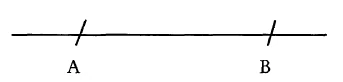
[ 11 ] Insofar as one feels anything of the world at all, one feels poured into this world. At first, one actually feels nothing external anywhere except at that one point in the world where one was previously inside. That is what one feels as the only external reality. What one has done wrong, what one has done good—one finds all of this compressed into that one point in the world. That is external. Otherwise, one feels poured out over the entire world with what one has oneself wrought in the world. Specifically, one has the feeling that it is absurd to experience this relationship to the world in such a way that one applies certain words to it that are natural in the sense of being. For example, the words “before” and “after” cease to make sense. For when one falls asleep, it is not that one feels: “Now is the before, and waking up will be the after,” but rather one experiences certain sensations that occur upon falling asleep and continue thereafter. But once one has lived through a certain sum of experiences, one stands in a certain relationship back at the same point, yet one does not stand at that same point as one did when falling asleep. When speaking of before and after, the “before,” if depicted graphically, is at A and the “after” at B. Rather, one has the feeling: I have fallen asleep. Then “before” would already be incorrectly used. Experiences have simply taken place. “Before” and “after” lose their meaning in this context. And if I now use the word—though it is not correct!—after a certain time one stands where one stood before, one must imagine that one stands, as it were, facing oneself, as if one had stepped out of one’s body, walked around, and were looking at oneself. So you’re standing roughly at the same spot where you were when you stepped out, but you’re facing yourself. One has changed direction. Then—again, used only comparatively—events continue, and it goes on as if one were returning to the body and were inside it again. One does not experience a before and after, but one can describe it only as a circular movement in which beginning, middle, and end cannot really be used otherwise than when used together. Just as with a circle, when it is fully drawn, one must say of every point that this is where it begins, and—once one has gone all the way around—this is where it ends again—but one can say this of every point—so it is with this experience. One does not have the feeling of living through a period of time, but rather of undergoing a circular movement, describing a cycle—and in this experience one completely loses the sense of time that one usually has in ordinary consciousness. One has only the feeling: You are in the world, and the world has as its fundamental character the cyclical, the circular. And a being who had never set foot on Earth, who had never been in sensory existence, but had always lived only in this world, would never entertain the thought that the world once had a beginning and might be heading toward an end; rather, it would always appear to him as a self-contained, circular world. Such a being would have no reason whatsoever to say that it aspires to eternity, for the simple reason that everywhere everything is eternal, because nowhere is there anything beyond which one could look—beyond something temporal into something eternal.
[ 12 ] This sense of timelessness and cyclicality thus arises at the corresponding level of clairvoyance or during the conscious experience of the dream state. But this is mingled with a certain longing. This longing arises because one is never truly at rest during this experience in the higher world; one feels oneself to be everywhere within the circular movement, always in motion, never coming to a halt anywhere. And the longing one feels is to be able to come to a halt somewhere, to be able to step into time somewhere! Exactly, I would say, the opposite of what one experiences in sensory life. In that, one always feels oneself in time and has a longing for eternity. In the world of which I have spoken, one feels oneself in eternity and has but a single longing: If only the world would stand still somewhere and step into the realm of time! This is what one comes to know as a fundamental feeling: the ever-present movement in the universe and the longing for time, the experience of being in the ever-present, self-perpetuating becoming—and the longing: Oh, if only one could somehow pass away somewhere, just once!
[ 13 ] Yes, one is fully justified in finding such things paradoxical when applying the concepts of sensory existence. But one must not take offense at these paradoxes, for that would mean one is unwilling to engage with the true description of the higher worlds; upon entering them, one must abandon not only everything else but also the ordinary descriptions of the sensory world if one wishes to describe these higher worlds in their reality.
[ 14 ] This feeling I have described to you—which I ask you to regard as an experience one has within oneself and of oneself—and it is important to have this experience within oneself and of oneself, for it is one of the first steps on the path of initiation—can manifest in two ways. On the one hand, this feeling can arise in such a way that one would have to express what one experiences as follows: I have a longing for transience, for being compressed within time; I do not wish to be poured out into eternity. Please note this carefully: one has this feeling in the spiritual world—that is, not in the sensory realm—but when one returns to the sensory world, it need not be present at all; it exists only in the spiritual world. So one can say that in the spiritual world one has the feeling: you wish to experience yourself fully within temporality, to be fully concentrated in self-existence at a single point of worldly being, and to accomplish this to such an extent that you can say: Ah, what is the point of all eternity that otherwise extends throughout the universe? I want to secure this one self-existent point for myself; that is where I want to be!
[ 15 ] Imagine this desire, this feeling, as experienced in the world. It has not yet been expressed with complete precision; rather, we must add another characteristic, we must connect it with something else, if the expression is to be accurate. If one wishes to relate this feeling to human sensory experience, one characterizes it with references to the sensory world. But I have said, up there everything is being, and one cannot speak of it in any other way. Yet one is not quite right when one says that everything is being. When one is seized by a desire in the sensory world, one can say to oneself: Oh, if only you could secure this one point. When one speaks of the higher worlds in reality, one must say that one feels driven by a being, and this works within one and causes one to express oneself in such a way that one wants to enter into this point. Once one has understood such a desire—to secure this point, to be concentrated in temporality—as an impulse given by a being in the world—and it can only be so—then one has grasped the influence of the Luciferic being in the world.
[ 16 ] Now we come to the concept where one might ask: How can one speak of standing face to face with a Luciferic being? When such an influence arises in the worlds of the higher hierarchies—a drawing away from eternity toward an independent, self-centered existence in the world—one experiences the Luciferic activity. And once one has experienced it, one knows how the forces that are Luciferic can be described. Then they are described as I have characterized them, and only then does one gain the ability to speak realistically about an opposition that also sends its reverberations into our sensory world. It is the contrast that simply arises from the fact that one now knows: in the realm of the senses, it is entirely natural to be situated within temporality. For the spiritual world, which, figuratively speaking, lies above the astral world, it is entirely natural that one no longer senses temporality there, but only eternity. And the resonance of the Devachanic experience, which manifests as longing within temporality, is the longing for eternity. The interplay of truly experienced time—truly experienced time in the moment—with the longing for eternity arises because our sensory world permeates the Devachanic world, the world of the spirit realm. And just as the spirit realm itself is hidden from ordinary sensory perception behind our sensory world, so is the eternal hidden behind the moment. And just as one cannot say anywhere that the sensory world ends and the spiritual world begins, but rather that the spiritual world permeates sensory existence everywhere, so does eternity permeate every moment according to its nature. One does not experience eternity by stepping outside of time, but by being able to experience eternity clairvoyantly within the moment itself. It is guaranteed within the moment itself, for it is contained within every moment.
[ 17 ] If you take the world as a whole, you cannot say—speaking from the standpoint of clairvoyant consciousness—that, insofar as there is a being anywhere in the world, this being is temporal or that this being is eternal. For spiritual consciousness, the expression makes no sense: “Here is a being that is temporal”—or: “Here is a being that is eternal”—but something quite different makes sense. What underlies existence—the moment and eternity—is always and everywhere. The question cannot be posed any other way than: How is it that eternity appears at times as a moment, that the eternal appears at times as temporal, and that a being in the world takes on the form of the temporal? This stems from nothing other than the fact that our sentient being, wherever it occurs, is simultaneously permeated by Luciferic beings. And to the extent that the Luciferic being intervenes, to that extent is eternity made into temporality. You must therefore say: A being that appears somewhere in time is an eternal being to the extent that it is able to free itself from the Luciferic existence, and it is a temporal being to the extent that it succumbs to the Luciferic existence. When one begins to characterize things spiritually, one ceases to use the terms of ordinary life. If one were to apply in ordinary life what the religions teach and what theosophy teaches, one would say: Human beings have their body as an outer shell, and within themselves they have their soul and spirit; the body is transitory, the soul and spirit are eternal and immortal. This is correctly stated insofar as one is within the sensory world and wishes to characterize things there. It is no longer correctly stated when one wishes to apply the perspective of the spiritual world; rather, one must say: Human beings are beings in whose entire nature progressive divine beings and Luciferic beings must play a part. And to the extent that progressive divine beings are present within them, a part of their being detaches itself so completely from all that is Luciferic in it that it partakes of eternity. To the extent that the divine beings are at work, the human being has a share in the eternal; to the extent that the Luciferic world is at work within him, everything connected with transience and temporality becomes part of the human being.
[ 18 ] Eternity and temporality thus appear as the interplay of different kinds of beings. In the higher worlds, it no longer makes sense to speak of such abstract opposites as eternity and temporality; they cease to have any meaning in the higher worlds. There one must speak of beings. That is why we speak of progressive divine beings and of Luciferic beings. Because they exist in the higher worlds, their relationship to one another is reflected as the contrast between eternity and temporality.
[ 19 ] I have said that it is good if, upon entering the world referred to here, a person initially feels more moral memories rather than their external physical form. Only gradually—through continued exercises for the first steps of initiation—should a person become clairvoyant enough for the memory image of their outer physical form to appear. But something else is connected with this emergence of the memory image of one’s own physical form: that it is actually only from that point on that the human being—and this is good—feels not only his soul life in general as a memory, not only his good and bad deeds, his moral and foolish deeds, but feels his entire self. He feels his entire self as a memory at the moment when he can look back upon his body as a form. Then he feels his being as if split. He looks upon a part that he has left with the Guardian of the Threshold, and looks upon what he calls his “I” in the sensory world. Now, when one looks back upon one’s ego, one is also split in relation to one’s ego and says to oneself quite calmly: What you used to call your ego, you now merely remember; now you live in a higher ego, and this relates to the former ego just as you, as a thinker, relate to the memories of life in the sensory realm. It is only at this stage that one looks down upon what the human being actually is as an earthly human being, upon one’s ego-human. But at the same time, one is transported into an even higher world, which one can call the higher spiritual realm or—if one wills—the higher mental world, a world somewhat different from the others. One is within it when one feels the ego split in two and perceives the ordinary ego only as a memory. Only then does one have the possibility of judging human beings on Earth correctly. When one looks back from there, one begins to know what the human being is in terms of his deepest essence. There one also gains the ability to form a lived judgment about the course of history. There the lived development of humanity unfolds before one as the progression of souls as ego-beings; there, the beings who are the leaders in the progress of humanity stand out from the ordinary course of events. It is then as I characterized it in the second lecture: one truly experiences the impulses that continually flow into the evolution of humanity through the Initiates, who must pass from the sensory realm into the spiritual realm everywhere so that they may impart their impulses. It is only at the point where one experiences the human being as an I-being that one also gains true insight into the human being as such. There is only one exception to this.
[ 20 ] Let us summarize what has been said so far. When a person takes the first steps toward initiation, they can rise clairvoyantly to the world of the lower spirit realm; they experience mental images of the soul, the moral, and the intellectual, and look down upon what is taking place in souls, even if they do not yet constitute an “I”-being. The unification of beings as I-beings is experienced in the higher spirit realm, and with it all the blossoms of spiritual life in the initiated—with a single exception, which is right and good if it can occur as an exception and thereby break the general rule: From the lower spirit realm, one sees the entire being of Christ Jesus! So that, looking back, seeing purely from a human perspective, and holding fast to the images of memory, one has the memory of Christ Jesus, of all the events that took place with him, provided the other condition is fulfilled, of which I spoke in the second lecture. The truth about all other initiates is experienced only in the higher spirit realm.
[ 21 ] Here we have a difference of immense significance. When a person ascends into the spiritual world, they look back upon the earthly realm, which they initially perceive through their soul—unless they retain the memory, when looking back on their earthly existence, of the physical forms of people walking about. They are to experience this only when they reach the higher stage described above. Only Christ Jesus may and should they see during the first characterized steps on the path to initiation! And they can see him when they ascend and find themselves surrounded everywhere by the purely soul-world, which at first is not permeated by the I-being, but within which, like a kind of center, the Christ-being, accomplishing the Mystery of Golgotha, is permeated by the I.
[ 22 ] What I have just told you cannot, of course, be interpreted in any way as an expression of any existing Christian denominational worldview, for I do not believe it would fit into any existing framework. But in a certain sense—since Christianity, in its course up to now, has by no means achieved what it must achieve—one might say that the opposite of what has been described is present, but in a very peculiar way that one only comes to understand when one perceives things with occult precision. Perhaps some of you are aware that among the official representatives of Christianity there are many who have a hopeless fear of everything called occultism, and regard all of this as pure devilry that can bring only ruin to humanity. Why is that so? Why do we experience time and again, when speaking with representatives of any priesthood and the topic of occultism or theosophy comes up, that they reject it? And if one says to such a gentleman: “Just consider that the Christian saints have always experienced the higher worlds and that this is described in their respective biographies”—then one receives the reply: “Yes, that is true, but one must not strive for it. One may read the lives of the saints, but if one does not want to expose oneself to the danger of devilry, one must not imitate them.” — Where does this come from?
[ 23 ] If you take everything I have said together, you will understand: it is a kind of feeling of fear that expresses itself in this way—a rather strong feeling of fear. People do not know where it comes from, but the occultist can know. As I told you in the second lecture, a person can only have this memory of Christ in the higher worlds if they have truly grasped him here in the physical-sensory world on Earth. And it is right to already have him in the very next world one enters, where one still retains the remaining human aspects as a memory image. On the one hand, it is necessary to have this memory-image; on the other hand, one can only have it if one has already imbued oneself with it here. That is why it happens that those who have become acquainted with occultism but have not penetrated certain important and striking facts consider it irrelevant whether a person in our present times, when ascending into the higher worlds, has become acquainted with the mental image of Christ or not. For they believe that what is up there does not depend so much on what one has experienced down below, even though they otherwise always emphasize it. Yet the very way one encounters Christ in the higher worlds depends on how one has related to him in the physical world. If one does not attempt to evoke the correct mental image of him in the physical world, one ascends in a certain sense immature and cannot find him there, even though one ought to find him; so that if one is not mindful of this very significant, striking matter, the mental image of Christ can in fact be completely lost through the ascent into the higher worlds. So if someone were to neglect to develop a relationship with the Christ even while still in the sensory realm, they could become a great occultist and yet know nothing of the Christ through their perceptions in the higher worlds, for they would not find him there and would be unable to learn anything from him. Their mental images of him would always be deficient. That is the crucial point. I am not telling you this out of some subjective opinion of my own, but rather as a common objective finding of those who have conducted research on the matter. Among occultists, it can be objectively described that this is the case; in the person who feels no compulsion to become an occultist, but who is merely a devout adherent of his religious creed, it manifests itself with all that unawareness which I have just described as a state of anxiety. And if someone then wishes to embark on the path to the higher worlds, that is considered a great evil, and such people believe that perhaps he has not yet attained the right relationship to Christ, so he must under no circumstances be led out of the ordinary world. So this fear is, in a certain sense, justified. These people do not know the way to Christ, and if they then enter the higher worlds, they lose Christ. It is something that can be understood as a kind of fear among a certain priesthood, but one that cannot be accommodated in any way. I ask that you regard this brief digression—which is interesting from a cultural-historical perspective because it helps us understand much of what takes place in life—as significant, and that you reflect on it thoughtfully in your own life.
[ 24 ] From two different perspectives, I have, so to speak, shown you aspects of Christ and have tried to shed some light on the essence of Christ. Everything I have said can also be said without these two aspects and remains valid and understandable. But it is necessary to face the facts objectively and to view them as cosmic realities, entirely free from the influence of denominational orientations.
[ 25 ] We have thus attempted to shed some light on the concepts of temporality, transience, the moment, and eternity on the one hand, and mortality and immortality on the other. And the concepts of transience and temporality have become linked to the Luciferic principle. With the Christ principle, concepts such as eternity and immortality will come together for us. One might believe that this could, at the very least, be seen as some kind of belittling of the Luciferic principle, a rejection under all circumstances, in that the Luciferic is associated with the temporal, the transitory, and a concentration on a single point. For today, I would like to say only this: one is not right under all circumstances to regard the bearer of light as something to be feared, or to reject Lucifer as something from which one must break free under all circumstances. If one does so, one fails to consider that true occultism teaches that there is a similar feeling here in the sensory world as in the supersensory world. In the sensory realm, the human being feels: I live in the temporal and long for eternity; I live in the moment and desire eternity. In the spiritual realm, there is the feeling: I live in the eternal and long for the moment. And now follow the messages from the Akashic Records. Was not becoming human in the ancient time we often call the Lemurian era a kind of transition from a state such as we experience in sleep to the states of wakefulness? Follow closely what happened in the Lemurian era, and you can say to yourself: As humanity underwent a transition from a spiritual state of sleep into the waking states of the earth, the entire evolution at that time shifted from the spiritual to the sensory. There is a transition, and our present sensory existence has only made sense since the Lemurian era. And consider whether it is so unnatural that when humanity slipped out of the higher world to be seized by the Luciferic, it took with it something like a longing for the eternal! Then, with regard to the Luciferic, you have a kind of memory of a pre-earthly state, a memory of what humanity possessed before entering the sensory realm, and what should not have been preserved: the longing for the moment, for the temporal. To what extent this is involved in the overall evolution of humanity—more on that tomorrow.