Anthroposophy's Response
to Universal Questions
GA 108
14 December 1908, Stuttgart
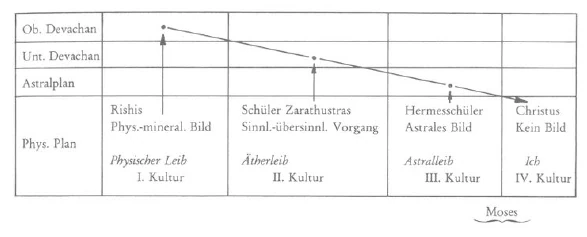
Translate the original German text into any language:
Versions Available:
Anthroposophy's Response to Universal Questions, tr. SOL
4. Die Zehn Gebote
4. The Ten Commandments
[ 1 ] Es soll uns heute ein wichtiges Menschheitsdokument beschäftigen, das, wenn es auch fern abzuliegen scheint außerhalb des Rahmens unserer bisherigen Betrachtungsfolge, dennoch im inneren Zusammenhang mit dieser steht. Es sind dies die Zehn Gebote, die wir einmal vom geisteswissenschaftlichen Gesichtspunkt aus beleuchten wollen, aus dem Grunde, weil vielleicht auch gerade gegenüber diesem Dokument der Menschheit die Geisteswissenschaft das richtige Licht zu seinem Verständnis zu bringen vermag.
[ 1 ] Today we will examine an important document of humanity which, although it seems to lie far outside the scope of our previous considerations, is nevertheless closely connected with them. These are the Ten Commandments, which we would like to examine from the perspective of spiritual science, because it is perhaps precisely in relation to this document of humanity that spiritual science is able to shed the right light on its understanding.
[ 2 ] Es wird von seiten der gelehrten Theologie vielfach behauptet, daß diese Zehn Gebote mit mancherlei Gesetzen und Geboten anderer Völker des Altertums übereinstimmen und eigentlich nichts Besonderes darstellen. Sie seien höchstens nur insofern bemerkenswert, als sie eine Zusammenstellung dessen seien, was als Gebote und Gesetze bei den verschiedenen alten Völkern da und dort zu finden sei, zum Beispiel bei Lykurg von Sparta oder in den Gesetzestafeln des Hammurabi.
[ 2 ] Scholarly theology often asserts that these Ten Commandments correspond to various laws and commandments of other ancient peoples and are actually nothing special. At most, they are remarkable in that they are a compilation of what can be found here and there as commandments and laws among various ancient peoples, for example in Lycurgus of Sparta or in the tablets of Hammurabi.
[ 3 ] Dasjenige, was uns beschäftigt hat, als wir den Entwickelungsgang der Menschheit in der nachatlantischen Zeit betrachtet und auf unsere Seelen haben wirken lassen, das wird uns auch in einer gewissen Beziehung ein Leitfaden sein können, um uns begreiflich erscheinen zu lassen das Große und Gewaltige, was in die Menschheit eingeschlagen hat, als die Zehn Gebote auf dem Sinai gegeben worden sind. Erinnern wir uns daran, was uns bei der Betrachtung des Entwickelungsganges der Menschheit in der nachatlantischen Zeit entgegengetreten ist. Wir haben gesehen, daß die fünf Kulturepochen - die indische, persische, chaldäisch-ägyptisch-jüdische, die griechisch-römische und die germanische Kulturepoche - ein allmähliches Erobern des physischen Planes durch die Menschheit bedeuten. Nun steht uns am Ende der dritten und am Anfang der vierten Epoche dasjenige gegenüber, was wir die «Sendung des Moses» nennen können. Worin besteht diese Sendung?
[ 3 ] What has occupied us as we have considered the course of human development in the post-Atlantean era and allowed it to work upon our souls will also be able to serve as a guide for us in a certain sense, enabling us to comprehend the great and powerful event that struck humanity when the Ten Commandments were given on Mount Sinai. Let us remember what we encountered when we considered the course of human development in the post-Atlantean era. We have seen that the five cultural epochs—the Indian, Persian, Chaldean-Egyptian-Jewish, Greek-Roman, and Germanic cultural epochs—represent a gradual conquest of the physical plane by humanity. Now, at the end of the third epoch and at the beginning of the fourth, we are confronted with what we can call the “mission of Moses.” What does this mission consist of?
[ 4 ] Da wollen wir uns noch einmal genauer vor die Seele führen, wie die Inspirationen der Eingeweihten eigentlich in den aufeinanderfolgenden Zeiträumen waren. Gestern haben wir von den Rishis gesprochen, die in der altindischen Zeit die Inspiratoren ihres Volkes waren. Es wurde von den Rishis mitgeteilt, daß sie im gewöhnlichen Leben sozusagen schlichte Menschen waren, daß sie aber zu gewissen Zeiten das Instrument, das Mundstück waren für die Inspirationen höherer geistiger Wesenheiten. Diese Tatsache war besonders hervorstechend in den Zeiten des alten Indertums, und es konnten reden diese alten Rishis, diese größten Lehrer der nachatlantischen Kulturepoche, von hohen geistigen Wahrheiten. Fragen wir uns einmal, in welche Regionen des Geistes hinein haben sich diese alten Rishis versetzt, wenn sie innerlich durchweht und durchzogen sein sollten von den höheren Wesenheiten, die durch sie sprachen? Es erhoben sich diese Rishis, während in ihnen die höheren Mächte lebten, nicht bloß zum Astral- oder unteren Devachanplan, sondern hinauf bis zum oberen Devachan, so daß das, was sie lehrten, ursprünglich vom oberen Devachan ausging. In jenen alten Zeiten, kurz nach der atlantischen Katastrophe, war das noch möglich, weil die alten indischen Leiber noch durchaus den Menschen die Möglichkeit boten, aus ihnen herauszukommen und mit den Wesenheiten höherer Welten in Beziehung zu treten.
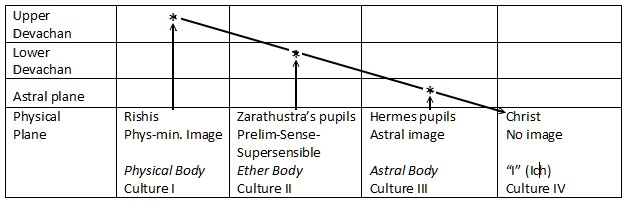
[ 4 ] Let us once again consider more closely how the inspirations of the initiates actually were in the successive periods. Yesterday we spoke of the rishis who were the inspirers of their people in ancient India. It was said of the rishis that in ordinary life they were, so to speak, simple human beings, but at certain times they were the instruments, the mouthpieces for the inspirations of higher spiritual beings. This fact was particularly striking in the times of ancient India, and these ancient Rishis, these greatest teachers of the post-Atlantean cultural epoch, were able to speak of high spiritual truths. Let us ask ourselves into which regions of the spirit these ancient Rishis transported themselves when they were inwardly permeated and filled with the higher beings who spoke through them. While the higher powers lived within them, these rishis rose not merely to the astral or lower devachan plane, but up to the higher devachan, so that what they taught originally came from the higher devachan. In those ancient times, shortly after the Atlantean catastrophe, this was still possible because the ancient Indian bodies still offered human beings the opportunity to emerge from them and enter into relationship with the beings of higher worlds.
[ 5 ] Nun schreiten die Kulturstufen fort. In der Kulturepoche des Zarathustra, der uralt-persischen, wissen die höchsten Eingeweihten zwar noch zu erzählen von den höchsten geistigen Wesenheiten, aber ihre Erhebung kann nicht so ohne weiteres bis in die oberen Partien des Devachan gehen. Sie können sich nur bis zu dem unteren Devachan erheben. Trotzdem aber können sie sich über die höheren Plane unterrichten lassen, denn diese hohen Wesenheiten des unteren Devachanplanes wissen ja auch von den höheren Planen.
[ 5 ] Now the stages of culture are progressing. In the cultural epoch of Zarathustra, the ancient Persian, the highest initiates still know how to tell of the highest spiritual beings, but their elevation cannot easily reach the upper parts of Devachan. They can only rise to the lower Devachan. Nevertheless, they can still receive instruction about the higher planes, for these high beings of the lower Devachan plane also know about the higher planes.
[ 6 ] In der Welt, in der die ägyptischen Eingeweihten hauptsächlich heimisch waren, erhob man sich gewöhnlich bis zum Astralplan, und es war keineswegs nur ein kleiner Kreis, der sich im alten Ägypten noch zu diesem Astralplan erheben konnte. Es war noch eine verhältnismäßig große Anzahl von Menschen, die aus eigener Beobachtung wußten, was auf dem Astralplan vorgehen kann. Wenigstens in gewissen Zwischenzuständen des Lebens, zwischen Schlafen und Wachen zum Beispiel, erlebten viele die Gemeinschaft mit jenen Wesenheiten, die nicht auf den physischen Plan herunterkommen, die aber auf dem astralischen Plan noch heimisch sind. So daß diejenigen, welche auf dem Astralplan aus und ein gingen, die alten ägyptischen Eingeweihten, es noch leicht hatten, die Dinge zu verkünden, die in höheren Welten vorgingen.
[ 6 ] In the world where the Egyptian initiates were mainly at home, people usually rose to the astral plane, and it was by no means only a small circle that was still able to rise to this astral plane in ancient Egypt. There was still a relatively large number of people who knew from their own observation what can happen on the astral plane. At least in certain intermediate states of life, between sleeping and waking, for example, many experienced communion with those beings who do not come down to the physical plane but are still at home on the astral plane. So those who entered and left the astral plane, the ancient Egyptian initiates, still found it easy to proclaim the things that were happening in higher worlds.
[ 7 ] Indem wir uns immer mehr den späteren Kulturepochen nähern, zieht sich sozusagen der Vorhang vor den geistigen Welten immer mehr zu. Immer geringer wird die Zahl der Menschen, die imstande sind, selbst noch in den geistigen Welten Beobachtungen zu machen, und dadurch wurde gegen die vierte Kulturepoche hin eine besondere Art der Verkündigung durch die Eingeweihten notwendig. Einer derjenigen Eingeweihten, der in allen okkulten Künsten der ägyptischen Eingeweihten bewandert war, war Moses; er bewegte sich durchaus frei auf dem Astralplan. Gerade sein Volk war dazu ausersehen, eine gewisse Offenbarung zu erhalten, die imstande war, den Menschen auch dann etwas zu sein, wenn sie nicht mehr in die höheren Welten hinaufblicken konnten. Es gab ja immer Eingeweihte, obwohl ihre Zahl immer geringer geworden war, die direkt oder indirekt von den höheren Welten wußten, weil sie bewußt außerhalb ihres Leibes leben konnten. Der größte Teil des Volkes jedoch mußte sein Leben ganz auf den physischen Plan beschränken. Die Aufgabe, die der Menschheit gegenüber zu erfüllen war in der Zeit, als die Sendung des Moses ihren Anfang nahm, war diese: denjenigen Menschen, die ganz und gar auf den physischen Plan angewiesen waren, eine Offenbarung aus dem Geistigen zu geben, das hinter dem physischen Plane steht, wonach sie ihr Leben regeln konnten. Wie mußte nun diese Sendung des Moses zunächst gestaltet werden?
[ 7 ] As we approach later cultural epochs, the curtain before the spiritual worlds draws closer and closer, so to speak. The number of people who are still able to make observations in the spiritual worlds is becoming smaller and smaller, and this made a special kind of proclamation by the initiates necessary towards the fourth cultural epoch. One of those initiates who was well versed in all the occult arts of the Egyptian initiates was Moses; he moved quite freely on the astral plane. His people in particular were chosen to receive a certain revelation that would be of value to them even when they could no longer look up to the higher worlds. There had always been initiates, although their numbers had dwindled, who knew directly or indirectly about the higher worlds because they were able to live consciously outside their bodies. The majority of the people, however, had to limit their lives entirely to the physical plane. The task to be fulfilled for humanity at the time when Moses' mission began was this: to give those people who were completely dependent on the physical plane a revelation from the spiritual world behind the physical plane, according to which they could regulate their lives. How, then, was this mission of Moses to be carried out at first?
[ 8 ] Denken Sie sich, daß den Leuten zunächst einmal klar gemacht werden mußte: Das, was draußen um euch herum ist, was ihr sehen und fühlen könnt, das ist eben der physische Plan; da ist nirgends etwas Geistiges. Das müßt ihr nicht ansehen als das, was euch irgendwie das Geistige darstellen könnte, sondern ihr müßt euch klar darüber sein, daß das Geistige eben im Geistigen gesucht werden muß, und daß es nur ein einziges gibt, wo ihr das Geistige suchen könnt.
[ 8 ] Imagine that it first had to be made clear to people that what is around them, what they can see and feel, is the physical plane; there is nothing spiritual anywhere. You must not regard this as something that could somehow represent the spiritual to you, but you must be clear that the spiritual must be sought in the spiritual, and that there is only one place where you can seek the spiritual.”
[ 9 ] In den Zeiten des alten Indertums, als die heiligen Rishis von den oberen Partien des Devachan aus sprachen, da konnte man auch Bilder geben, welche das, was vom oberen Devachan aus gesprochen wurde, als äußeres Bild symbolisierten und vergleichsweise andeuteten. Man konnte Bilder und Bildnisse geben, und es war verhältnismäßig leicht, den Menschen begreiflich zu machen: Wir geben euch zwar Bilder, aber da ihr die äußere Welt ja doch als Illusion, als Maja anseht, so werden diese Bilder euch nichts mehr sein als Bilder, Abbilder einer Welt des Übersinnlichen. - Es war keine Gefahr vorhanden, daß Götzendienerei mit diesen Bildern getrieben werden konnte. Wie hätte das auch sein können bei einem Volk, das alles Sinnliche für Maja, für Illusion ansah? Dieses Volk hätte niemals Götzendienerei treiben können. Das ist erst viel später gekommen. Allerdings ist gerade später in der morgenländischen Kultur an Stelle des Symbols das Götzenbild getreten. Aber leicht war es also den heiligen Rishis, dem ganzen indischen Volke klarzumachen: Dasjenige, was wir euch zu verkündigen haben, stammt aus den höheren Partien des Devachan, und das Sichtbare, das Physische, ist ein Sinnbild für das, was so hoch und erhaben ist, daß ihr es nur im Sinnbild aufnehmen könnt.
[ 9 ] In the times of ancient India, when the holy rishis spoke from the upper parts of Devachan, it was possible to give images that symbolized and comparatively hinted at what was spoken from the upper Devachan as an external image. It was possible to give pictures and images, and it was relatively easy to make people understand: We are giving you pictures, but since you regard the outer world as an illusion, as Maya, these pictures will be nothing more to you than pictures, images of a world beyond the senses. There was no danger that these pictures could be used for idolatry. How could that have been possible among a people who regarded everything sensual as Maya, as illusion? This people could never have practiced idolatry. That came much later. However, it was precisely later in Eastern culture that the idol replaced the symbol. But it was easy for the holy rishis to make it clear to the entire Indian people: What we have to proclaim to you comes from the higher parts of Devachan, and the visible, the physical, is a symbol of that which is so high and sublime that you can only perceive it in symbols.
[ 10 ] Während der persischen Kultur konnten aber die Schüler des Zarathustra nicht in derselben Weise verfahren. Diese konnten nur noch eine Art von Zusammenhang ihres Volkes mit den unteren Partien des Devachanplanes herstellen. Daher waren sie nur imstande, in Bildern, aber in geistigen Bildern, von dem Übersinnlichen zu sprechen. Sie haben kein sinnliches Bild genommen. Vor allen Dingen sprachen sie ihrem Volke von dem eigentlichen geistigen, guten Wesen, das sie Ahura Mazdao nannten, demjenigen Wesen, das seine äußere Körperlichkeit in der Sonne hat, und mit dem der Mensch sich verbündet gegen den finsteren Geist: Ahriman. Das wurde als ein sinnlich-übersinnliches Bild sozusagen vor die Menschen hingestellt. Die Menschen sollten sich im Bilde vorstellen dieses geistige Lichtwesen. Aber nicht ein fertiges Bild, kein Bildnis sollten sie machen. Allenfalls konnten sie sich diesen göttlichen Ahura Mazdao in einem Vorgange, zum Beispiel im Feuer vorstellen, aber nicht in einem starren, äußeren, sinnlichen Bild. Alles, was sinnliche Bilder, Götterbilder sind, stammt aus einer späteren Zeit. Die alte persische Kultur hatte bildliche Vorgänge, die das Übersinnliche ausdrücken sollten. Das war der Fortschritt.
[ 10 ] During the Persian culture, however, the disciples of Zarathustra could not proceed in the same way. They could only establish a kind of connection between their people and the lower parts of the Devachan plane. Therefore, they were only able to speak of the supersensible in images, but in spiritual images. They did not use any sensual images. Above all, they spoke to their people about the actual spiritual, good being whom they called Ahura Mazdao, the being who has his outer physicality in the sun and with whom man allies himself against the dark spirit, Ahriman. This was presented to people as a sensual-supersensible image, so to speak. People were to imagine this spiritual being of light in their minds. But they were not to make a finished image or portrait. At most, they could imagine this divine Ahura Mazdao in a process, for example in fire, but not in a rigid, external, sensual image. Everything that is sensual images, images of gods, comes from a later time. The ancient Persian culture had pictorial processes that were intended to express the supersensible. That was progress.
[ 11 ] Nun kommen wir zu der dritten Kulturstufe, die uns hauptsächlich im Ägyptertum entgegentritt. Da stand, wie wir wissen, gewissermaßen im Mittelpunkt alles religiösen Denkens und Fühlens die Gestalt des Osiris. Sie werden leicht verstehen, was jetzt gesagt werden muß. Was für ein Wesen ist Osiris, hauptsächlich in seiner göttlichen Gestalt? Bedenken Sie, daß die ägyptischen Kulturführer dem Menschen sagten: Wenn du deine Aufgabe hier in der physischen Welt richtig vollziehst, wenn du alles tust, was dich in bezug auf deine Seele zu einem würdigen Menschen macht, dann wirst du nach dem Tode mit Osiris vereinigt sein. - Auf der anderen Seite wurde ihm gesagt: Der Osiris hat nur ein kurzes Leben hier auf Erden gehabt, denn er wurde von seinem Bruder Typhon - Seth - überwunden und lebt seit jener Zeit in den Welten, die die überirdischen sind. Sein unterstes Gebiet ist nicht mehr der physische, sondern der Astralplan, weiter steigt er nicht herab. Es ist nicht mehr möglich, daß Osiris den physischen Plan betritt. Daher kann der Mensch im Leben nicht dem Osiris begegnen. Nach dem Tode aber, wenn er sich dessen würdig gemacht hat, dann wird er mit Osiris vereint sein, weil dann der Mensch die Welt, in der Osiris weilt, betritt. Der Mensch muß also dem Osiris entgegenkommen, entweder wenn er gestorben ist, oder wenn er als Eingeweihter den astralen Plan betritt. Daher wurde dem Bekenner der Osiris-Religion klargemacht: Das Übersinnliche, mit dem du selbst noch in einer Verbindung stehst, sollst du dir nicht anders als unter dem Bilde deiner eigenen Seele vorstellen, einer Seele, wie wir sie uns vorstellen unter dem Begriff des Astralleibes. Es wurde der Osiris als eine ideale Menschengestalt hingestellt, die alle möglichen Tugenden hat, und da Triebe sowohl als auch Tugenden im Astralleibe sind, so wurde sozusagen eine astralische Menschenwesenheit als die Wesenheit des Osiris hingestellt.
[ 11 ] Now we come to the third stage of culture, which we encounter mainly in Egypt. As we know, the figure of Osiris stood, as it were, at the center of all religious thought and feeling. You will easily understand what must now be said. What kind of being is Osiris, mainly in his divine form? Consider that the Egyptian cultural leaders told people: If you fulfill your task here in the physical world correctly, if you do everything that makes you a worthy human being in relation to your soul, then you will be united with Osiris after death. On the other hand, they were told: Osiris had only a short life here on earth, for he was overcome by his brother Typhon—Seth—and has lived since that time in the worlds that are above the earth. His lowest realm is no longer the physical, but the astral plane; he does not descend any further. It is no longer possible for Osiris to enter the physical plane. Therefore, man cannot encounter Osiris in life. But after death, if he has made himself worthy, he will be united with Osiris, because then man enters the world where Osiris dwells. Man must therefore meet Osiris, either when he dies or when he enters the astral plane as an initiate. Therefore, it was made clear to the followers of the Osiris religion: You should not imagine the supersensible, with which you yourself are still connected, as anything other than the image of your own soul, a soul as we imagine it under the concept of the astral body. Osiris was presented as an ideal human figure with all possible virtues, and since both instincts and virtues are found in the astral body, an astral human being was presented, so to speak, as the essence of Osiris.
[ 12 ] Für das Volk der Semiten, das durch die Schule des Ägyptertums gewissermaßen hindurchgegangen war, und welches jenes große Ereignis vorbereiten sollte, durch welches das Geistige, der Christus, in die physische Welt heruntergestiegen ist - nicht nur wie Osiris bis zum Astralplan, sondern wie Christus, der auf den physischen Plan gekommen ist -, für dieses Volk durfte weder ein Gott im Gleichnis, im Symbol leben, wie bei dem alten Indertum, noch durfte es einen Gott in einem sinnlich-übersinnlichen Bilde verehren, wie in der persischen Kultur, noch im Bilde einer Astralwesenheit, wie in der ägyptischen Kultur, sondern einzig und allein unter der unsinnlichen Vorstellung des Ich. Alle Bilder, die ursprünglich den alten Indern gegeben waren, um sich das Geistige vorzustellen, waren der physischen Welt, dem Mineralreiche entlehnt; es waren Bilder, welche in physisch-mineralischen Formen ausgeprägt waren. Die Gestalt, unter der die Eingeweihten der persischen Kultur ihrem Volke das Übersinnliche klarmachten, war demjenigen entnommen, was auch in dem menschlichen Ätherleibe lebt, dem Lebendig-Ätherischen, denn auch Ahura Mazdao wurde ihnen sichtbar dadurch, daß er in einer ätherischen Form, der Sonnenaura, sich ihnen kundgab. Osiris war unter einer astralischen Gestalt bei den Ägyptern vorgestellt worden. Diejenige Gottheit aber, die sich dem jüdischen Volk ankündigte, sollte keine anderen Eigenschaften haben als die des Ich, des vierten Gliedes der menschlichen Wesenheit. Unter dem Ich erfaßt der Mensch etwas, was allein zu sich selber «Ich» sagen kann.
[ 12 ] For the Semitic people, who had, in a sense, passed through the school of Egypt and were to prepare for that great event through which the spiritual, the Christ, descended into the physical world—not only as Osiris to the astral plane, but as Christ who came to the physical plane—for this people, neither a god in parable in symbols, as in ancient India, nor could they worship a god in a sensual-supersensory image, as in Persian culture, nor in the image of an astral being, as in Egyptian culture, but solely and exclusively under the non-sensory conception of the I. All the images originally given to the ancient Indians to help them imagine the spiritual world were borrowed from the physical world, from the mineral kingdom; they were images that were expressed in physical-mineral forms. The form in which the initiates of Persian culture made the supersensible clear to their people was taken from what also lives in the human etheric body, the living etheric, for Ahura Mazdao also became visible to them by revealing himself to them in an etheric form, the sun's aura. Osiris had been presented to the Egyptians in an astral form. But the deity who announced himself to the Jewish people was to have no other attributes than those of the I, the fourth member of the human being. Through the I, man grasps something that alone can say “I” to itself.
[ 13 ] Damit war aber noch etwa anderes verbunden. Der Mensch sollte nunmehr die Sendung des Moses in sich hineingießen; er sollte sich die Gottheit im Bilde dieses Ich vorstellen. Von nun an mußte den Menschen gesagt werden: So wie ein Ich in jedem Menschen lebt und Herrscher ist über alle Glieder der Menschennatur, so sollst du dir das Wesen vorstellen, das in der Welt als schöpferisches Wesen webt und lebt und herrscht und waltet über alles Geschaffene. Kein sinnliches, kein Äther- und kein Astralbild kann das wiedergeben. Bloß unter der Gestalt des «Ich», einzig unter dem Namen «Ich bin der Ich-bin» sollst du dir das höchste Wesen vorstellen. - In dem «Ich-bin» selber sollte jeder Mensch ein Ebenbild der Gottheit empfinden. Das war die Mission, die Sendung des Moses, dem Menschen zu sagen: Siehe hinein in dein Inneres; da allein findest du ein wirkliches Ebenbild der reinen Gottheit. - Daher sollte alle Wirkung unter den Menschen von nun an nur von Ich zu Ich gehen. Das sollte vorbereitet werden durch die Sendung des Moses.
[ 13 ] But there was something else connected with this. Man was now to pour the mission of Moses into himself; he was to imagine the deity in the image of this I. From now on, it had to be said to people: Just as an I lives in every human being and rules over all the members of human nature, so you should imagine the being that weaves and lives in the world as a creative being and rules and reigns over all that is created. No sensual, no etheric, and no astral image can reproduce this. Only in the form of the “I,” only under the name “I am the I am,” should you imagine the highest being. In the “I am” itself, every human being should feel an image of the divinity. That was the mission, the task of Moses, to tell people: Look within yourselves; there alone will you find a true image of the pure Godhead. From now on, therefore, all influence among people should come only from I to I. This was to be prepared by the mission of Moses.
[ 14 ] Stellen wir uns noch einmal hinein in die ägyptische Kultur. Da war viel Wirkung, aber sie ging nicht von Ich zu Ich, sondern von Astralleib zu Astralleib. Was heißt das? Denken Sie sich, wie eine solche gigantische Pyramide gebaut worden ist. Ein großes Heer von Menschen war nötig, um solch eine Pyramide zustandezubringen. Die Arbeiter an dem Bau einer solchen Pyramide folgten den Aufträgen derjenigen, die die Baumeister waren, und das waren die Tempelpriester, die geistigen Führer der Kultur. Glauben Sie nicht, daß diese Aufträge so gegeben wurden, wie man heute Aufträge gibt, von Ich zu Ich. Das war nicht der Fall. Sie werden am leichtesten verstehen, was damals vorging, wenn wir das Wort «Suggestion» gebrauchen. Kräfte psychischer Natur wurden angewendet, um die Massen zu leiten. Die ägyptischen Priester beherrschten solche Kräfte in hohem Maße. Sie wirkten nicht auf das Ich, indem sie sagten: Tue dies oder jenes -, sondern sie beherrschten die Menge, wie es derjenige tut, der psychische Kräfte handhaben kann, so daß die Menschen willenlos folgten diesen Priestern, mit Übergehen des Ich. Die Priester standen als Eingeweihte in hohem Dienste. Ihnen war nicht zuzutrauen, daß sie diese Kräfte mißbrauchten; sie stellten sie in den Dienst des Guten. So waren es also Eingebungen, psychische Eingebungen, durch die sie wirkten, und von einer Freiheit des Ich gegenüber dem Tempelpriester war nicht die Rede. Wenn Sie das verstehen, so begreifen Sie auch, daß im alten Indien die heiligen Rishis in noch höherem Maße spirituelle Kräfte anwendeten. Bei ihnen war es so: Wenn sie erschienen und bedeutsame Kundgebungen aus den geistigen Welten gaben, dann war es selbstverständlich, daß das ganze Volk ihnen willenlos folgte. Genauso wie bei uns die Hand dem Kopfe folgt, so folgten die großen Menschenmassen ihren Führern, den Eingeweihten. Das wurde immer weniger, je weiter der Mensch hinunterstieg auf den physischen Plan, aber im alten Ägyptertum war noch viel Wirksamkeit dieser psychischen Kräfte. Die Menschen aus dieser Art der Wirksamkeit herauszureißen und die Vorherverkündigung des Dem-Ich-Gegenüberstehens, das war die Sendung des Moses. In jedem Menschen den göttlichen Urquell zu suchen, das große Welten-Ich, das den Raum durchwellende und durchwehende Ich als Urbild anzusehen des eigenen Ich, das war der große Ruf, der mit der Sendung des Moses verknüpft war.
[ 14 ] Let us place ourselves once again in Egyptian culture. There was much influence, but it did not go from I to I, but from astral body to astral body. What does that mean? Think of how such a gigantic pyramid was built. A large army of people was needed to build such a pyramid. The workers building such a pyramid followed the orders of those who were the master builders, and these were the temple priests, the spiritual leaders of the culture. Do not believe that these orders were given as orders are given today, from I to I. That was not the case. You will understand most easily what was happening at that time if we use the word “suggestion.” Psychic forces were used to guide the masses. The Egyptian priests were highly skilled in such forces. They did not influence the ego by saying, “Do this or that,” but rather they controlled the crowd as one who can wield psychic forces, so that people followed these priests without will, bypassing their ego. The priests stood as initiates in high service. They could not be trusted to abuse these powers; they placed them in the service of good. So it was through inspiration, psychic inspiration, that they worked, and there was no question of freedom of the ego in relation to the temple priest. If you understand this, you will also understand that in ancient India the holy rishis used spiritual powers to an even greater extent. With them it was like this: when they appeared and gave significant announcements from the spiritual worlds, it was natural that the whole people followed them without question. Just as our hands follow our heads, so the great masses of people followed their leaders, the initiates. This became less and less as man descended further and further onto the physical plane, but in ancient Egypt these psychic forces were still very effective. To tear people away from this kind of influence and to announce in advance the confrontation with the “I” was the mission of Moses. To seek the divine source in every human being, to regard the great world-I, the I that permeates and blows through space, as the archetype of one's own I, that was the great call associated with the mission of Moses.
[ 15 ] Von diesem Gesichtspunkte aus werden wir verstehen, wie sich dieses große Welten-Ich durch Moses verkündigen mußte. In einer solchen Weise muß man die Ankündigung der Ich-Gebote in die heutige Sprache übersetzen, damit man wirklich das hat, was gefühlt und empfunden und gedacht wurde, wenn man in jener Zeit zum Beispiel das erste Gebot hörte. Alle lexikographischen Übersetzungen geben das denkbar Ungenaueste wieder. Und nun möchte ich Ihnen das erste Gebot darstellen wie man es wirklich übersetzen muß, um dasjenige zum Ausdruck zu bringen, was man sich damals beim Hören desselben vorgestellt hat.
[ 15 ] From this point of view, we will understand how this great world-I had to be proclaimed through Moses. In this way, the proclamation of the I-commandments must be translated into today's language so that we really have what was felt, sensed, and thought when, for example, the first commandment was heard at that time. All lexicographical translations render it in the most inaccurate way imaginable. And now I would like to present to you the first commandment as it really must be translated in order to express what was imagined at that time when it was heard.
[ 16 ] Erstes Gebot. Ich bin das ewig Göttliche, das du in dir empfindest. Ich habe dich aus dem Lande Ägypten geführt, wo du nicht Mir in dir folgen konntest. Fortan sollst du andere Götter nicht über Mich stellen. Du sollst nicht als höhere Götter anerkennen, was dir eine Abbildung zeigt von etwas, das oben am Himmel scheint, das aus der Erde heraus oder zwischen Himmel und Erde wirkt. Du sollst nicht anbeten, was von alldem unter dem Göttlichen in dir ist. Denn Ich bin als das Ewige in dir und bin ein fortwirkendes Göttliches. Wenn du Mich nicht in dir erkennst, werde Ich als dein Göttliches verschwinden bei Kindern und Enkeln und Urenkeln, und deren Leib wird veröden. Wenn du Mich in dir erkennst, werde Ich bis ins tausendste Geschlecht als Du fortleben, und die Leiber deines Volkes werden gedeihen.
[ 16 ] First commandment. I am the eternal Divine that you feel within you. I led you out of the land of Egypt, where you could not follow Me within yourself. From now on, you shall not place other gods above Me. You shall not recognize as higher gods what an image shows you of something that shines above in the sky, that works out of the earth or between heaven and earth. You shall not worship what is of all this under the divine within you. For I am the Eternal One within you and am a continuing Divine. If you do not recognize Me within you, I will disappear as your Divine in your children and grandchildren and great-grandchildren, and their bodies will wither away. If you recognize Me within you, I will live on as you until the thousandth generation, and the bodies of your people will flourish.
[ 17 ] Da haben wir den Hinweis darauf, in dem einzelnen Ich das Urbild des «Ich», das Nachbild des göttlichen Ur-Ich zu erkennen, und zugleich den Hinweis darauf, daß derjenige, der so sein Ich als Göttliches erkennt, frei wird von der Art, wie die Menschen im alten Ägypterlande ihren Führern gegenüberstanden. «Ich habe dich aus dem Lande Ägypten geführt, wo du nicht Mir in dir folgen konntest» Dem Willen der Eingeweihten folgte man da, da war der Mensch nicht frei. Diese Eingeweihten wendeten ihre psychischen Kräfte an, denen man folgte. Die erste Morgenröte jener menschlichen Freiheit, die dann als die Freiheit der Gnade im Christentum heraufgekommen ist, zeigt sich in diesem Hinweis: «Ich habe dich aus dem Lande Ägypten geführt, wo du nicht Mir in dir folgen konntest.» «Fortan sollst du andere Götter nicht über mich stellen.» Gerade darum, damit das jüdische Volk das große vorbereitende Volk werden konnte für die Kundgebung im Christentum, mußte klargelegt werden, daß alle anderen Darstellungen des Göttlichen, des Urbildes des Ich, wegfallen mußten. Was äußere Gestalt eines Göttlichen ist, seien es selbst die Sternbilder oder irgend etwas anderes, das mußte wegfallen. Durch gar nichts soll das Göttliche abgebildet werden, denn der Mensch soll, damit er frei wird, damit er den Quell von allem, was in ihm ist, findet: er soll alles, was er empfinden kann über das Göttliche, in seinem Ich als dem Nachbilde des großen Welten-Ichs empfinden. «Du sollst nicht als höhere Götter anerkennen, was dir ein Abbild zeigt von etwas, das oben am Himmel scheint, das aus der Erde heraus oder zwischen Himmel und Erde wirkt.» Ein bildloses Göttliches! Der einzige berechtigte Ausdruck dafür ist das menschliche Ich, das Abbild des «Ich bin der Ich-bin». «Du sollst nicht anbeten, was von alldem unter dem Göttlichen in dir ist.»
[ 17 ] Here we have the indication that in the individual “I” we are to recognize the archetype of the “I,” the image of the divine original “I,” and at the same time the indication that those who recognize their “I” as divine become free from the way in which the people of ancient Egypt stood before their leaders. “I brought you out of the land of Egypt, where you could not follow Me within yourself.” People followed the will of the initiates; they were not free. These initiates used their psychic powers, which people followed. The first dawn of that human freedom, which then emerged as the freedom of grace in Christianity, is revealed in this statement: “I have brought you out of the land of Egypt, where you could not follow Me within yourself.” “You shall have no other gods before Me.” Precisely in order for the Jewish people to become the great preparatory people for the manifestation of Christianity, it had to be made clear that all other representations of the divine, of the archetype of the I, had to be eliminated. Any external form of the divine, be it the constellations or anything else, had to be eliminated. The divine must not be represented by anything, for in order for human beings to become free, to find the source of everything within themselves, they must feel everything they can perceive about the divine in their own ego as the image of the great world ego. “You shall not acknowledge as higher gods what shows you an image of something that shines above in the heavens, that works out of the earth or between heaven and earth.” A god without an image! The only legitimate expression of this is the human self, the image of ‘I am the I am.’ ”You shall not worship what is of all this within you that is divine.”
[ 18 ] Wir haben es hervorgehoben: Aus dem physischen Leib wurde das Bild genommen im alten Indien, aus dem Ätherleib in der persischen Kultur, aus dem Astralleib bei den Ägyptern. Das alles ist unter dem Ich. Von daher soll fortan nichts im Bilde von dem Göttlichen genommen werden. Wir wissen, daß der physische Leib aus der mineralischen Natur, daß der Ätherleib aus der ätherischen Natur und der Astralleib aus demjenigen Reiche entnommen ist, aus dem auch der Astralleib der Tiere entnommen ist. Von all dem, was in den unteren Gliedern der Menschennatur ist, was aus der übrigen Natur herausgenommen ist, von all dem, was unter dem Ich ist, soll nichts genommen werden für das, was der Mensch anbetet. «Denn Ich bin das Ewige in dir und bin ein fortwirkendes Göttliches.» Da haben Sie einen wichtigen Satz. Da wurde den Juden als Gesetz gegeben, was vorher eine Tatsache war. Wir haben schon darauf aufmerksam gemacht, wie bei allen Völkern, durch die ein gemeinsames Blut floß, ein gewisses Bewußtsein durch die Generationen durchrann, wie der Sohn sich durch das Blut verbunden fühlte mit dem Vater und mit dem Großvater. Gemeinsames Blut fühlte sich als gemeinsames Ich. Das Ich lebte durch die Generationen hindurch. Der Gott, der sich zuerst als «Ich» ankündigte im jüdischen Volke, mußte sich ankündigen, indem er sagte, daß Er es ist, der als der Gott durch die Generationen hindurchwirkt. «Wenn du Mich richtig in dir erfassest, dann erfassest du, was fortwirkt von Generation zu Generation.» Es ist das übersetzt worden mit: «Ich bin ein eifernder Gott», oder sogar mit: «ein zorniger Gott», während die wirkliche Bedeutung ist: «Ich bin ein von Generation zu Generation fortwirkender Gott.»
[ 18 ] We have emphasized this: in ancient India, the image was taken from the physical body; in Persian culture, from the etheric body; and in Egyptian culture, from the astral body. All of this is below the I. From now on, nothing should be taken from the image of the divine. We know that the physical body is taken from the mineral nature, that the etheric body is taken from the etheric nature, and that the astral body is taken from the realm from which the astral body of animals is also taken. Nothing that is in the lower members of human nature, that is taken from the rest of nature, nothing that is below the ego, should be taken for what man worships. “For I am the eternal in you and am a continuing divine.” Here you have an important sentence. What was previously a fact was given to the Jews as law. We have already pointed out how, among all peoples through whom a common blood flowed, a certain consciousness ran through the generations, how the son felt connected through the blood to his father and grandfather. Common blood felt like a common self. The self lived on through the generations. The God who first announced himself as “I” to the Jewish people had to announce himself by saying that it is he who works through the generations as God. “If you understand me correctly, then you understand what continues to work from generation to generation.” This has been translated as “I am a jealous God,” or even “an angry God,” while the real meaning is “I am a God who continues to work from generation to generation.”
[ 19 ] «Suche nie, eine unrichtige Vorstellung von Mir zu bekommen; bewahre das Richtige in dir, als Vorstellung von Mir, dann pflanzest du in dem Blute Gesundheit von Geschlecht zu Geschlecht fort.» Eine richtige medizinische Vorstellung ist damit verbunden, denn derjenige, der dieses Gebot gab, verband damit die Vorstellung, daß dann, wenn der Mensch eine reine Vorstellung von seinem Zusammenhang mit dem Göttlichen hat, auch eine gesundende Ich-Vorstellung durch das Blut fließt, und das Volk von Generation zu Generation gesund bleibt. Wir bekommen keine richtige Vorstellung von dem lebensvollen Gehalt dessen, was Moses seinem Volk gab, als er die Gesetze verkündete, wenn wir bloß begrifflich denken, was er sagte. Nein, es wird gesagt unter der Voraussetzung, daß der richtige Gedanke eine wirkende Realität ist. «Wenn du dir eine falsche Vorstellung von dem Göttlichen machst, dann wird sich das von Geschlecht zu Geschlecht vererben, so daß es sich als Krankheit, als Siechtum äußert.» Richtige Gedanken bewirken Gesundheit, falsche aber Krankheit. Das ist eine im echten Sinn anthroposophisch oder okkult gehaltene Vorstellung. Das alles muß man bedenken, sonst bekommt man keinen richtigen Begriff, keine richtige Vorstellung gegenüber diesem ersten Gebot. Es wird dem jüdischen Volke darin aufgetragen: Stelle dir ja nicht deinen Gott vor unter einem falschen Bilde. Wenn ihr vor dem goldenen Kalb hinkniet, dann fließt eine falsche Vorstellung vom Gotte in euch ein, und dies falsche Gottesbild erzeugt, indem es mit dem Blute durch die Generationen hinunterzieht, die fortwirkende Sünde, die dann in Krankheit übergeht. «Wenn du Mich nicht in dir erkennst, werde Ich als dein Göttliches verschwinden bei Kindern und Enkeln und Urenkeln, und deren Leiber werden veröden.» Du erzeugst lebensfähige Kinder, Enkel und Urenkel, wenn du die richtige Vorstellung des Göttlichen aufnimmst; sonst aber stirbt das aus, was vom Blute abhängt. Indem du in deinem Ich Mich, den Urquell des Ich, richtig erkennst, geht eine Kraft über von Geschlecht zu Geschlecht, denn ein fortwirkendes Göttliches bin Ich. Aus den Leibern verschwinde Ich, wenn Ich in falscher Vorstellung in euch lebe. Das ist wiederum eine ganz okkult medizinische Anweisung. «Wenn du Mich in dir erkennst, werde Ich bis ins tausendste Glied fortleben, und die Leiber deines Volkes werden geläutert und deshalb gedeihen.» So wird das Physische gedeihen, im echt okkulten Sinne, wenn der Mensch an die richtige Vorstellung des Geistigen anknüpft. Damit zieht zugleich ein Hauch menschlicher Freiheit ein in die Menschenentwickelung: gerade auf die Spitze sozusagen des fortwirkenden Ich wird die Menschheit gestellt, und dann angeknüpft dieses Ich an das Göttliche. Das läßt sich mit keiner anderen Gesetzgebung vergleichen, und es ist ein reiner Dilettantismus, wenn man diese Zehn Gebote zusammenstellt mit anderen Gesetzgebungen und einseitig erklärt, weil sie sich äußerlich in Worten ähneln, sie seien dasselbe. Die Gesetzgebung der Zehn Gebote vom Sinai ist einzigartig und läßt sich nur aus der einzigartigen Sendung des Moses erklären. Und wie bei diesem ersten Gebot, so ist es bei allen anderen Geboten, wenn wir sie richtig übersetzen. Es wird uns aus allen der ganze Geist der Sendung des Moses klar, in bezug auf den Ich-Impuls, der jetzt in die Menschheit eingegossen werden soll.
[ 19 ] "Never seek to form an incorrect idea of Me; keep the right idea of Me within you, and you will plant health in the blood from generation to generation.” A correct medical understanding is connected with this, for the one who gave this commandment associated with it the idea that when a person has a pure understanding of his connection with the divine, a healing self-understanding flows through the blood, and the people remain healthy from generation to generation. We cannot gain a proper understanding of the life-giving content of what Moses gave his people when he proclaimed the laws if we merely think conceptually about what he said. No, it is said on the assumption that the right thought is an effective reality. “If you have a false idea of the divine, it will be passed down from generation to generation, manifesting itself as illness and infirmity.” Right thoughts bring about health, but wrong thoughts bring about illness. This is a truly anthroposophical or occult idea. All this must be taken into account, otherwise one cannot form a correct concept or idea of this first commandment. The Jewish people are instructed: Do not imagine your God in a false image. When you kneel before the golden calf, a false conception of God flows into you, and this false image of God, by passing down through the generations with the blood, produces the continuing sin that then turns into illness. “If you do not recognize Me in yourself, I will disappear as your Divine, and your children and grandchildren and great-grandchildren, and their bodies will become desolate.” You produce viable children, grandchildren, and great-grandchildren when you accept the correct conception of the Divine; otherwise, that which depends on the blood dies out. By recognizing Me, the original source of the I, correctly in your I, a power is passed on from generation to generation, for I am a continuing Divine. I disappear from bodies when I live in you in false ideas. This is again a completely occult medical instruction. “When you recognize Me in yourself, I will live on in every limb, and the bodies of your people will be purified and therefore flourish.” Thus, in the true occult sense, the physical will flourish when human beings connect with the correct conception of the spiritual. At the same time, a breath of human freedom enters human development: humanity is placed at the very peak, so to speak, of the continuing I, and then this I is connected to the divine. This cannot be compared to any other legislation, and it is pure amateurism to compile these Ten Commandments with other laws and declare them to be the same because they are similar in words. The legislation of the Ten Commandments from Sinai is unique and can only be explained by the unique mission of Moses. And as with this first commandment, so it is with all the other commandments, if we translate them correctly. From all of them, the whole spirit of Moses' mission becomes clear to us, in relation to the “I” impulse that is now to be poured into humanity.
[ 20 ] Zweites Gebot. Du sollst nicht im Irrtum von Mir in dir reden, denn jeder Irrtum über das Ich in dir wird deinen Leib verderben. Da haben Sie direkt die Notwendigkeit des geistig richtigen Gedankens hingestellt, der der eigentliche Schöpfer des richtigen gesunden Leibes ist. Irrtum über das Walten des höchsten Göttlichen in sich erzeugt Siechtum im Leibe im vollsten Maße. Es ist außerordentlich wichtig, einzusehen, daß in diesem zweiten Gebote gesagt wird: «Der Irrtum über das Ich in dir wird deinen Leib verderben.» Es gibt ein späteres Sprichwort: In einem schönen Körper wohnt eine schöne Seele. - Die moderne materielle Menschheit legt sich das zuweilen so aus: Also pflege deinen Körper wohl, dann ist auch eine schöne Seele darin. - Es ist aber so gemeint, daß eine Seele, die in sich kraftvoll ist, dadurch, daß sie aus früheren Inkarnationen etwas mitbringt, was sie durch eine Durchgeistigung der Seele sich erarbeitet hat, der richtige Schöpfer des Leibes ist und einen gesunden, kraftvollen Körper erzeugt. Nicht, daß der Körper die Seele macht; genau das Gegenteil davon ist gemeint. Da sehen wir, daß es manchmal gar nicht so sehr darauf ankommt, einen genauen Wortlaut anzuführen. Eine jede Zeit macht sich, nach den Impulsen, die in ihr leben, eine andere Vorstellung über den gleichen Wortlaut. Je nachdem die Zeit empfindet oder gesinnt ist, wird er so oder so ausgelegt. Damit hat man nicht immer das Richtige erwiesen, daß man auf einen gleichen Wortlaut hinweist, sondern erst dadurch, daß man in die Seele der Zeit eindringt und durch sie hindurch dieses oder jenes Wort zu verstehen sucht.
[ 20 ] Second Commandment. Thou shalt not speak in error about Me within thyself, for every error about the I in thyself will corrupt thy body. Here you have directly stated the necessity of spiritually correct thinking, which is the actual creator of a correct, healthy body. Error about the working of the highest Divine within oneself produces sickness in the body to the fullest extent. It is extremely important to understand that this second commandment says: “Error about the I in you will destroy your body.” There is a later saying: A beautiful body is home to a beautiful soul. Modern materialistic humanity sometimes interprets this as follows: Take good care of your body, and then you will have a beautiful soul. However, what is meant is that a soul that is powerful within itself, because it brings with it something from previous incarnations that it has acquired through spiritualization of the soul, is the true creator of the body and produces a healthy, powerful body. It is not that the body makes the soul; exactly the opposite is meant. Here we see that it is sometimes not so important to quote an exact wording. Every age, according to the impulses that live in it, forms a different idea about the same wording. Depending on how the age feels or thinks, it is interpreted in one way or another. It is not always right to point to the same wording, but only by penetrating the soul of the time and seeking to understand this or that word through it.
[ 21 ] Drittes Gebot. Du sollst Werktag und Feiertag scheiden, auf daß dein Dasein Bild Meines Daseins werde. Denn, was als Ich in dir lebt, hat in sechs Tagen die Welt gebildet und lebte in sich am siebenten Tage. Also soll dein Tun und deines Sohnes Tun und deiner Tochter Tun und deiner Knechte Tun und deines Viehes Tun und dessen, was sonst bei dir ist, nur sechs Tage dem Äußeren zugewandt sein; am siebenten Tage aber soll dein Blick Mich in dir suchen. - Das ist die absolut sinngemäße Übersetzung dieses dritten Gebotes. Nicht in äußerlichen Bildern muß das Göttliche im Menschen Abbild werden des Ur-Ich, sondern in dem, was dieses Ich tut, muß es Abbild werden des Ur-Ich, und wie das Ur-Ich geschaffen hat das Werk der Weltenschöpfung in sechs Weltentagen und am siebenten Tage in sich ruhte, so soll auch der Mensch Werktag und Feiertag scheiden, sechs Tage schaffen und am siebenten Tage das Göttliche mit Hilfe des Ich suchen. So sehen wir, in welch wunderbarer Weise in diesem dritten Gebot das Abbild des Ur-Ich in uns als das zu Gott führende hingestellt wird.
[ 21 ] Third commandment. You shall separate the workday from the holiday, so that your existence may become an image of My existence. For that which lives as I in you formed the world in six days and lived in itself on the seventh day. Therefore, your work and the work of your son and the work of your daughter and the work of your servants and the work of your cattle and the work of all that is with you shall be directed toward the external world for only six days; but on the seventh day, your gaze shall seek Me within you. This is the absolutely literal translation of this third commandment. It is not in external images that the divine in man must become the image of the original I, but in what this I does must it become the image of the original I, and just as the original I created the work of the creation of the worlds in six days and rested on the seventh day, so too should man divide workdays and holidays, create six days, and on the seventh day seek the divine with the help of the I. Thus we see in what a wonderful way the image of the original I within us is presented in this third commandment as that which leads to God.
[ 22 ] In diesen drei ersten Geboten haben wir den Hinweis darauf, wie der Mensch in dieser, mit der Sendung des Moses anbrechenden Zeit zu stehen hat dem Göttlichen gegenüber, daß sich in einer neuen Weise offenbart. In dem vierten Gebot haben wir ein Herausgehen auf den physischen Plan. Die drei ersten Gebote stellen dar, wie sich der Mensch in richtiger Weise zu den höheren Welten verhält durch die Wirksamkeit seines Ich.
[ 22 ] In these first three commandments, we have an indication of how man should stand in relation to the divine in this time, which began with the mission of Moses, which is revealed in a new way. In the fourth commandment, we have a departure to the physical plane. The first three commandments show how man relates to the higher worlds in the right way through the activity of his ego.
[ 23 ] Das vierte Gebot heißt: Wirke fort im Sinne deines Vaters und deiner Mutter, damit dir als Besitztum verbleibt das Eigentum, das sie sich durch die Kraft erworben haben, die Ich in ihnen gebildet habe.
[ 23 ] The fourth commandment is: Continue to work in the spirit of your father and mother, so that you may inherit the property they have acquired through the power I have formed in them.
[ 24 ] Hier haben wir nicht das ganz nichtsagende «Ehre Vater und Mutter, auf daß es dir wohlergehe und du lange lebest auf Erden.» Es handelt sich darum, daß er nun auch wirklich nach außen dasjenige tut, was die Taten des Ich fortpflanzt, nachdem der Mensch in sich geistig und, wie wir es fassen konnten, sozusagen auch medizinisch das Göttliche gegründet hat, das in ihm als Tropfen wirkt. Dies vierte Gebot ist sogar ein praktisches Gebot. Es sagt: Sieh hin als Nachkomme auf deine Vorfahren; wenn du als Nachkomme im Gegensatz zu ihnen stehst, kann niemals eine ruhig gedeihlich fortlaufende Entwickelung stattfinden. Wie sich innerlich das Ich durch das Blut überträgt, so muß auch dasjenige, was äußerlich als Besitztum durch das Ich erarbeitet ist, erhalten bleiben. Das starke Ich, das sich gebildet hat, das fließt auf der einen Seite durch das Blut hinunter durch die Generationen; auf der anderen Seite aber soll dadurch, daß man das Ich stark macht, auch auf die äußere Welt gewirkt werden. Es soll bewahrt werden, was ein starkes Ich begründet hat; es soll nicht fortwährend die Entwickelung unterbrochen werden. Wirke fort im Sinne deines Vaters, damit auch äußerlich zusammenbleibt, was dein Vater und deine Mutter durch die Arbeit ihres Ich geschaffen haben. - Das ist es, was Ihnen zeigt, wie nun auch die äußeren Verhaltungsmaßregeln gegeben werden, damit nicht von außen zerstört werde, was, eine neue Kultur schaffend, als Innenimpuls gegeben wird.
[ 24 ] Here we do not have the completely meaningless “Honor your father and mother, that it may be well with you and you may live long on earth.” It is a matter of the individual now actually doing outwardly what perpetuates the deeds of the ego, after the human being has established within himself spiritually and, as we have been able to understand, also medically, so to speak, the divine that works in him as a drop. This fourth commandment is even a practical commandment. It says: Look to your ancestors as descendants; if you stand in opposition to them as descendants, a peaceful and prosperous development can never take place. Just as the ego is transmitted inwardly through the blood, so too must that which is acquired outwardly as property through the ego be preserved. The strong ego that has been formed flows down through the generations on the one hand through the blood; on the other hand, however, by making the ego strong, one should also influence the external world. What a strong ego has established should be preserved; development should not be continually interrupted. Continue to work in the spirit of your father, so that what your father and mother have created through the work of their ego may also remain together externally. This is what shows you how the external rules of conduct are now also given, so that what is given as an inner impulse, creating a new culture, may not be destroyed from outside.
[ 25 ] Und nun kommen die Gebote, welche das Ich selbständig dem Ich des anderen gegenüberstellen, und welche in diesem Sinne die Tatsachenwelt, das soziale Leben regeln sollen. Sie sagen eigentlich dasselbe, was Paulus sagt, und was das Bibelwort umschreibt: Liebe deinen Nächsten wie dich selbst (Gal. 5, 14). - Sieh in dem anderen Menschen ebenso ein Ich wie in dir. - Als eine besondere Sendung hat dieses althebräische Volk den Impuls erhalten, das Göttliche bis in das in der Menschenseele webende Ich hinein zu verfolgen. Deshalb mußte dieses Volk die Gebote erhalten, die nicht nur die Bewahrung des eigenen Ich, sondern auch die Achtung und die Bewahrung des Ich des anderen vorschreiben.
[ 25 ] And now come the commandments, which the ego independently sets against the ego of the other, and which in this sense are intended to regulate the world of facts, social life. They actually say the same thing that Paul says, and what the Bible verse describes: Love your neighbor as yourself (Gal. 5:14). See in other people the same self that you see in yourself. As a special mission, the ancient Hebrew people received the impulse to pursue the divine into the self that weaves in the human soul. That is why this people had to receive commandments that prescribe not only the preservation of their own self, but also the respect and preservation of the self of others.
[ 26 ] Fünftes Gebot: Morde nicht.
[ 26 ] Fifth Commandment: You shall not murder.
[ 27 ] Sechstes Gebot: Brich nicht die Ehe.
[ 27 ] Sixth Commandment: You shall not commit adultery.
[ 28 ] Siebentes Gebot: Stiehl nicht.
[ 28 ] Seventh Commandment: You shall not steal.
[ 29 ] Als drei Gebote auseinandergelegt das eine Gebot: Sieh in deinem Nebenmenschen ebenso ein Ich wie in dir selbst! Damit war in der Tat das jüdische Volk geistig aus dem Lande Ägypten geführt, dadurch, daß das Ich auch erkannt werden soll im anderen Menschen durch die Wertschätzung des anderen Ich, denn im Ägypterlande wirkte man nicht, indem man das Ich des anderen respektierte, sondern indem man dieses Ich durch Suggestion unterdrückte. Und weiter heißt:
[ 29 ] These three commandments can be interpreted as one: See in your neighbor the same I that you see in yourself! In this way, the Jewish people were indeed led out of the land of Egypt spiritually, through the recognition that the self must also be recognized in other people through the appreciation of the other self, for in the land of Egypt, people did not act by respecting the self of others, but by suppressing this self through suggestion. And further it says:
[ 30 ] Das achte Gebot: Setze den Wert deines Mitmenschen nicht herab, indem du Unwahres von ihm sagst. - Nicht allein durch Taten soll man das Ich des anderen nicht in seinem Rechte schädigen und beeinträchtigen, sondern man soll auch nicht einmal mit einem gesprochenen Wort sein Ich in seinem Werte herabsetzen. Man soll nichts Unwahres über ein anderes Ich sagen. Wer etwas Unwahres über ein anderes Ich sagt, der anerkennt nicht, daß das andere Ich dasselbe ist wie das eigene Ich. So geht es systematisch fort in diesen Zehn Geboten. Es wird hingewiesen auf dasjenige, was sich noch schädigend äußern kann im Zusammenleben von Ich und Ich. Die Tat greift unmittelbar schädigend in die Sphäre des anderen Ich ein, das Wort schon mehr geheim. Aber, willst du im Ernste das Ich des anderen anerkennen, dann darfst du auch nicht durch deine Lüste, deine Begierde eingreifen in die Sphäre deines Nächsten. Nicht nur dadurch, daß du ihn bestiehlst, sondern schon dadurch, daß du etwas haben möchtest, was er hat, greifst du in die Ich-Sphäre des anderen ein. Du erkennst die volle Gleichschätzung des anderen Ich an dadurch, daß du dich selbst nicht gelüsten läßt nach dem, was deines Nächsten ist. Daher die beiden letzten Gebote:
[ 30 ] The eighth commandment: Do not belittle your fellow man by saying untrue things about him. Not only should one not harm or impair the ego of another through one's actions, but one should not even belittle his ego in his own estimation by a spoken word. One should not say anything untrue about another ego. Anyone who says something untrue about another ego does not recognize that the other ego is the same as their own ego. This continues systematically throughout the Ten Commandments. Attention is drawn to what can still be harmful in the coexistence of I and I. The deed directly interferes with the sphere of the other I, the word more secretly. But if you seriously want to recognize the I of the other, then you must not interfere with the sphere of your neighbor through your lusts and desires. Not only by stealing from him, but already by wanting something that he has, you interfere in the sphere of the other's ego. You recognize the full equality of the other ego by not allowing yourself to covet what belongs to your neighbor. Hence the last two commandments:
[ 31 ] Neuntes Gebot: Blicke nicht mißgönnend auf das, was dein Mitmensch besitzt als Eigentum.
[ 31 ] Ninth Commandment: Do not look with envy on what your fellow human beings possess as their property.
[ 32 ] Zehntes Gebot: Blicke nicht mißgönnend auf das Weib deines Mitmenschen und auch nicht auf die Gehilfen und die anderen Wesen, durch die er sein Fortkommen findet.
[ 32 ] Tenth Commandment: Do not look with envy on your fellow human beings' wives, nor on their servants, nor on anything else that belongs to them.
[ 33 ] Erst dadurch können wir in gesunder Weise das Verhältnis von Mensch zu Mensch finden, daß wir den anderen Menschen nicht mißgönnen, was ihnen zu eigen ist. So wird der Mensch neben den Menschen gestellt, daß er in jedem Ich ein Nachbild des göttlichen Ich achte und ehre. Damit war das Wesen der einzelnen Iche untereinander geregelt. Das war einer der größten geistigen Einschläge, die in die Menschheit hereingekommen sind. Noch war das nicht ausgesprochen, was durch den Christus kommen sollte, dasjenige was in dem Worte liegt, daß jeder in sich den Zusammenhang mit dem Vater finden kann. «Niemand kommt zum Vater denn durch mich.» Es war in dieser Gesetzgebung noch sozusagen der Impuls gegeben für das gemeinsame Ich, das durch die Generationen floß. Aber zugleich war gegeben die Vorherverkündigung, daß das Ich nicht nur ein Nachbild des Göttlichen ist, sondern daß Gott selber lebendige Wesenheit in diesem Ich ist. Das Ich ist der Substanz und Wesenheit nach identisch mit seinem Vater.- «Ich und der Vater sind eins.»
[ 33 ] Only by not begrudging other people what is theirs can we find a healthy relationship between people. In this way, people are placed alongside one another so that they respect and honor the divine self in every individual. This regulated the relationship between individual selves. It was one of the greatest spiritual impacts ever to come to humanity. What was to come through Christ had not yet been expressed, that which lies in the words that everyone can find the connection with the Father within themselves. “No one comes to the Father except through me.” In this legislation, the impulse was still given, so to speak, for the common I that flowed through the generations. But at the same time, the foreshadowing was given that the I is not only an image of the divine, but that God Himself is a living being in this I. The I is identical in substance and essence with its Father. “I and the Father are one.”
[ 34 ] So sehen wir, wie die Impulse, durch die die Weltentwickelung geleitet wird, aufeinander folgen. Es ist leicht zu sagen: In der Weltentwickelung hängt alles wie Ursache und Wirkung zusammen, von einer weisheitsvollen Weltenlenkung und Weltenführung aber ist nichts zu erblicken. - Wenn man aber so hineinschaut in die Weltenentwickelung, wie wir es in dieser Betrachtung getan haben, da bekommen wir eine Ahnung davon, wie immer zu der richtigen Zeit das Rechte geschieht, um die Menschheitsentwickelung weiterzuführen, und dann, möchte ich sagen, bleibt einem gar nichts anderes übrig, als die weisheitsvolle Führung und Lenkung in der Weltentwickelung anzuerkennen. Wenn man durch okkulteForschung sieht, wie am Ausgange der dritten Kulturepoche in den vierten Zeitraum hinein diese Verkündigung der Zehn Gebote geschehen ist, so daß den Menschen Zeit gelassen war, sich vorzubereiten auf das, was das größte Ereignis war, das Mysterium von Golgatha, dann sieht man, wie gerade das ein Ausdruck größter Weisheit in der Weltenlenkung ist.
[ 34 ] Thus we see how the impulses that guide world evolution follow one another. It is easy to say that in world evolution everything is connected like cause and effect, but there is no sign of a wise world guidance or world government. - But when we look into world evolution as we have done in this consideration, we get an inkling of how the right thing always happens at the right time to continue human evolution, and then, I would say, we have no choice but to acknowledge the wise guidance and direction in world evolution. When we see through occult research how, at the end of the third cultural epoch and at the beginning of the fourth, the Ten Commandments were proclaimed, so that human beings had time to prepare themselves for what was the greatest event, the mystery of Golgotha, then we see how this is an expression of the greatest wisdom in the guidance of the world.
[ 35 ] Im ganzen Tone der Zehn Gebote, wenn wir sie richtig verstehen, sehen wir, wie die Gottheit sich in der urbildlichen Art enthüllt, um auf den Moment vorzubereiten, wo der göttliche Geist sich wirklich in einem Menschen verkörpert. Damit die Menschen dahin geführt werden konnten, den Gott im Fleische, den fleischgewordenen Gott zu begreifen, mußten sie zuerst lernen, den Gott in ihrem tiefsten Inneren der Seele seiner Substanz und Wesenheit nach zu begreifen. Betrachten wir dieses Menschheitsdokument der Zehn Gebote, dann sehen wir aus dem ganzen Tone, daß in ihm die Gottheit zum Menschen spricht, und daß diese Rede durchaus im Einklang ist mit dem immer weiter Hinaustreten des Menschen auf den physischen Plan, und daß das nur richtig geschehen kann, wenn das Göttliche richtig erfaßt wird. Immer wird darauf hingewiesen, daß die Leiber gedeihen, wenn das Göttliche richtig erfaßt wird. Es wird die Anleitung gegeben, das Göttliche so zu verehren, daß auch die äußeren Dinge auf dem physischen Plan gedeihen. In der richtigen Weise wird darauf hingewiesen, daß eine gerade, eine gesunde Entwickelung stattfinden muß, damit die äußeren sozialen Zusammenhänge gedeihen.
[ 35 ] In the whole tone of the Ten Commandments, if we understand them correctly, we see how the Godhead reveals itself in an archetypal way in order to prepare for the moment when the divine Spirit truly incarnates in a human being. In order for human beings to be led to understand God in the flesh, the incarnate God, they first had to learn to understand God in the deepest depths of their souls, in terms of His substance and essence. If we consider this document of humanity, the Ten Commandments, we see from the whole tone that the divinity speaks to human beings in it, and that this speech is entirely in harmony with the ever-increasing emergence of human beings onto the physical plane, and that this can only happen correctly if the divine is correctly understood. It is always pointed out that bodies thrive when the divine is correctly understood. Instructions are given on how to worship the divine in such a way that external things on the physical plane also thrive. It is correctly pointed out that a straight, healthy development must take place in order for external social relationships to flourish.
[ 36 ] Durch die Sendung des Moses wird geregelt, daß das Göttliche im Inneren des Menschenwesens bewahrt bleibt, daß aber das Menschengeschlecht die Eroberung des physischen Planes in der richtigen Weise, im Sinne der nachatlantischen Entwickelung und im Einklang mit diesem Göttlichen vollziehen kann.
[ 36 ] Through the mission of Moses, it is regulated that the divine is preserved within the human being, but that the human race can conquer the physical plane in the right way, in accordance with post-Atlantean development and in harmony with this divine.
[ 37 ] Im Verlaufe des Vortrages wurde folgende schematische Übersicht von Rudolf Steiner an die Tafel geschrieben (von unten beginnend):
[ 37 ] In the course of the lecture, Rudolf Steiner wrote the following schematic overview on the blackboard (starting from the bottom):