

Anthroposophy, Psychosophy
and Pneumatosophy
GA 115
1 November 1910, Berlin
Translated by Steiner Online Library
Psychosophy I
[ 1 ] In the course of these evening lectures, I will need to refer to various examples, which can best be drawn from individual works of poetry. And so that you may have before you, during the course of these four lectures, some of the material that will serve as illustration, there will be a brief recitation of certain poems on individual evenings, which will then give me the opportunity to illustrate many things through them, just as I will have to illustrate or mark small details on the blackboard. Today, the lecture will be introduced in this spirit with a recitation that Miss Waller will give us, presenting a youthful poem by Goethe—the young Goethe’s adaptation of the legend of the “Perpetual Jew”—and I ask you to bear in mind that I will have to say something for which the fact that this is a poem by the young Goethe will be significant. It is indeed a matter of psychosophical interest that will be at the heart of the illustration of these lectures through what these recitations can bring to our ears.
The Eternal Jew (Adapted for recitation)
Fragmentary
At midnight I shall begin,
Leaping from my bed like a madman;
Never was my heart more full of soul,
To sing of the well-traveled man,
Who has seen wonders beyond count,
Who, in defiance of the blasphemers’ childish mockery,
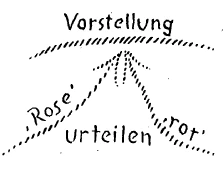
In our incomprehensible God
Per omnia tempora in one point occurred.And though I lack the gift
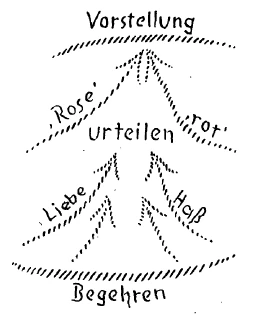
Of well-polished, light rhymes,
I must not fail to do so;
For it is an urge, and thus a duty.In Judea, the Holy Land,
There once was a cobbler, well-known
For his heartfelt piety
In those thoroughly corrupt church times,
He was half Essene, half Methodist,
Herrnhuter, more of a Separatist;
For he placed great stock in the cross and suffering,
Enough said, he was an original,
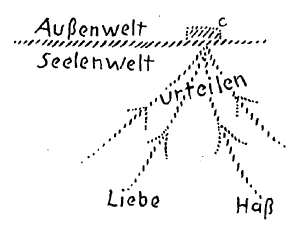
And out of originality
He acted like other fools.The priests so many years ago
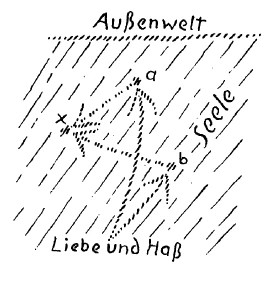
Were, as they always were
And as everyone eventually becomes,
When one has been placed in office.But the cobbler and his ilk
Demanded miracles and signs daily,
That one should preach for money,
As if the Spirit had placed him there.
They nodded their heads very doubtfully
Over the ailing Daughter of Zion,
That, alas! on pulpit and altar
There was no Moses and no Aaron,
That the service went on,
As if it were a thing like any other thing,
Which, once the course of the world
Has run its course, withers away in old age.
“O woe to great Babylon!
Lord, blot her from your earth,
Let her be roasted in the pit,
And, Lord, then give us her throne!”
O sang the little group, huddled together,
Sharing both the flames of the Spirit and of love,
Now gawking and bored,
They could have done the same in the temple.
But the beauty of it was,
It was everyone’s turn in turn,
And just as his brother spoke in French,
He too was allowed to speak in French one after another;
For in the church, first and last,
Speaks the one who has been set up,
And believes in you and acts so grandly
And joins you and breaks away from you
And is a sinner like other people,
Alas! And not even as clever!The greatest person remains always a human child,
The greatest minds are only what others are,
But, mark this, it is the other way around:
They do not wish to walk with other earthlings
On their feet; they walk on their heads,
They despise what everyone honors;
And what outrages common sense,
That is honored by impartial sages.
The priests cried far and wide:
It is so, the end times are coming,
Repent, sinful race!
The Jew said: I am not afraid,
I have heard of Judgment Day for so long.There were those who knew the Father as well.
Where are they then? Ah! They were burned.O friend, man is but a fool,
If he imagines God to be his equal.You do not feel what pierces my very marrow and soul,
When a fearful heart begs me for salvation,
When I see the sinner with burning tears...The Father sat upon his throne,
Then he called his beloved Son,
He had to call out two or three times.
Then the son came, all disheveled
Stumbling over the stars
And asked: What is your command?
The Father asked him where he had been—
“I was in the star that gazes over there,
And there I helped a human
To accomplish such a task,
For which he found himself too weak.”
The father was quite upset
And said: “You have acted foolishly,
Look down upon the Earth.
It is indeed beautiful and all is well,
You have a philanthropic spirit
And gladly help those in distress;
------------------As he now swung himself down
And saw the vast Earth more closely
And seas and lands far and near:
He was seized by the memory,
Which he had not felt for so long,
Of how they had played along with him down there.
He stands still upon the mountain,
Upon which, in his early days,
His friend Satan had placed him
And shown him the whole world
In all its glory.In the midst of his heavenly flight,
He feels the pull of the earthly atmosphere,
Feels how the purest happiness in the world
Already holds a hint of sorrow.
He thinks of that moment,
When he cast his final death-gaze
From the hill of pain,
And began to speak to himself:
Hail, Earth, a thousand times!
Blessed be all of you, my brothers!
For the first time my heart pours out
Once again after three thousand years,
And joyful tears flow
Down from my dimmed eye.
O my kin, how I long for you!
And you, with arms of heart and love
You plead to me from a deep longing!
I am coming; I will have mercy on you!
O world! Full of wondrous confusion,
Full of the spirit of order, sluggish error,
You chain of delight and woe,
You mother who gave birth to me for the grave,
Whom I, though I was present at creation,
Yet do not particularly understand it all.
The dullness of your mind, in which you floated,
From which you yearned for my day,
The serpentine desire in which you trembled,
From which you strove to free yourself
And then, freed, entwined yourself anew:
That called me here from my starry hall,
That does not let me rest at God’s bosom;
I come now to you for the second time,
I sowed then, and now I will reap.He looks around him eagerly,
His eye seems to deceive him:
To him the world still seems all around
To lie there in that same way,
As it lay at that hour,
When, in broad daylight,
The spirit of darkness, the lord of the old world,
Appeared to him shining in the sunshine
And presumptuously claimed, without fear,
That he was lord of the house here.Where, cried the Savior, is the light,
That blazed brightly from my word!
Alas! And I do not see the thread,
That I spun so pure from heaven down.
Where have the witnesses turned,
Who sprang faithfully from my blood!
And, alas, where is the Spirit I sent!
Its breath, I feel, has all faded away.
Does it not creep with an eternal hunger,
With half-curled clawed hands,
Cursed, withered loins
Does the greed for treacherous gain,
Abuse the carefree joy
Of the neighbor in the rich field
And stifle in barren bowels
The dear life of nature?
Does the prince, with his slaves,
Not shut himself away in that marble house
And hatch for his mad flock
The wolves themselves in his bosom?
To satisfy his capricious cravings
The marrow of men is hastily gathered;
He feasts in disgusting excess
On the sustenance of thousands.
In my name, a poor man consecrates to the body
The bread of his children.He was now weary of the lands,
Where there are so many crosses
And where, for the sake of crosses and Christians,
They forget him and his cross.
He entered a neighboring land,
Where he found himself merely a church banner,
But where otherwise no one took much notice,
As if a God were in the land.Then a man spoke: Here is the place,
The sure haven of peace for all desires;
Here is the land’s central throne,
Justice and religion.They drew ever closer,
Yet the Lord saw nothing of value in it.
His inner confidence was low,
Just as when he once went to the fig tree,
But he still wanted to go on
And look right under the branches.
So they came under the gate.
Christ seemed like a stranger to them,
With a noble face and simple garb.
They said: “This man has surely come from afar.”
The scribe asked him his name?
He humbly spoke these words:
“Children, I am the Son of Man,”
And walked away quite calmly.
His words had always held power,
The scribe stood there as if dazed,
The guard was at a loss,
No one asked: “What business do you have here?”
He walked straight through and was gone.
Then they wondered among themselves,
As they were about to report it:
What curious thing did the man say?
Was he mocking us to our faces?
He said: he was the Son of Man!
They thought long and hard, but suddenly
A brandy-drinking corporal spoke:
Why are you racking your brains?
His father was surely named Man!Christ then spoke to his escort:
“So lead me to the man of God,
Whom you know as such
And call the senior pastor.”
The pastor would have been rattled,
Had he not been so high on the board;
Had he had so much skin around his heart,
That he wouldn’t feel with whom he walked,
Not even the size of a pea.They came to the senior pastor’s house,
Still standing intact from ancient times.
The Reformation had its feast
And took the pastor’s estate and house,
Only to plant new priests again,
Who, when it comes to the heart of the matter,
Talk more and make fewer faces.
They knocked, they rang the bell,
I don’t know for sure what they did.
Enough said, the cook came out,
Dropped a cabbage head from her apron
And said: The master is at the convent,
You cannot speak with him today.
“Where, then, is the convent?” said Christ.
“What good will it do you, even if you know!”
The cook retorted sharply,
“Not everyone’s path leads there.”
[ 2 ] Last year—on the occasion of our General Assembly—I referred to a series of lectures on anthroposophy. This year, a series of lectures to be delivered from a similar perspective will be titled “Psychosophy.” And should the opportunity arise, a series of lectures on Pneumatosophy will follow, as it were, as a third chapter to the lectures on Anthroposophy and Psychosophy. In this way, these three lecture series will come together to form a bridge that can lead upward from the world in which we live directly to the worlds viewed from a higher perspective in theosophy.
[ 3 ] Psychosophy is intended to be a contemplation of the human soul that begins with what this soul can experience here in the physical world, and then ascends to higher realms to show that what we encounter here in the physical world as a soul life observable by everyone nevertheless leads to vistas from which the light of theosophy will, as it were, come to meet us. We will be occupied with many things on these evenings. Today we will start from what appears to be quite simple; we will let pass before us all those phenomena of soul life that can be described with the words attention and memory, then phenomena such as those that confront us in the passions and emotions, and then phenomena that we already count among the realms of the true, the beautiful, and the good. We will encounter phenomena that intervene in human life either beneficially in terms of health or harmfully as illnesses. We will encounter the true psychological causes of disease symptoms. In doing so, we will have to touch upon the very boundary where the soul descends into physical life, and we will have to study the interrelationships between the well-being and suffering of the body and the activities, the workings, within the inner life of the soul. Then we will have to rise to the high ideals of humanity and will have to consider what these high ideals of humanity can mean for human soul life. We will have to consider phenomena that play a role in everyday life, such as, let us say, what shortens people’s time, and we will see how the latter in turn affects the life of the soul and manifests itself within it in a curious chain of events. We will have to consider the very peculiar effect of boredom. And much more could be cited, which we will examine both in terms of its manifestation and in terms of what remedies and aids exist to correct what confronts us as a pathological phenomenon of the soul life, such as poor thinking ability, a poor memory, or the like. You can also imagine that, in order to speak of the life of the soul, we must necessarily touch upon areas that border on other subjects. And the theosophist, in a certain sense, has familiar concepts when it comes to relating the life of the human soul to other things.
[ 4 ] You are all familiar with the division of human nature into body, soul, and spirit as outlined by spiritual science. From this alone, you will be able to conclude that the human soul life must, on the one hand, be connected to the physical life, but on the other hand, turn upward toward the spiritual life. Just as we have dealt with the more physical aspects in anthroposophy, so we will have to deal with the life of the soul in psychosophy, and we will ascend to the spiritual life in pneumatosophy.
[ 5 ] What, then, is the life of the soul if we now wish to consider it in isolation within the two boundaries we have just indicated? What we are accustomed to calling the external world—what we are accustomed to regarding, so to speak, as placed before us and around us in the world—we do not count as part of our life of the soul. A mineral, a plant, an animal, the air, the clouds, the mountains and rivers, and so on, that are around us—regardless of what we ourselves might add from our own mind when we imagine them—we do not count all that which is around us and which we call the external world as part of our inner life. We do not count the rose we encounter as part of our spiritual life if we understand ourselves correctly on the physical plane. But when we encounter the rose and it delights us, when at the sight of the rose something glimmers in our soul like pleasure, then we certainly count this fact as part of our spiritual life. When we encounter a person and look at them, forming an impression of them—what kind of hair they have, what their face looks like, what their facial expression is, and so on—we do not count this as part of our spiritual life. But when we take an interest in them, when we find them likable or unlikable, when we must think of them with love, then we count these experiences of sympathy or antipathy, of love, of interest, as part of our spiritual experience.
[ 6 ] You know I don’t like definitions; instead, I try to characterize things. That’s why I don’t want to give you a definition of spiritual life either. That wouldn’t accomplish much. I want to characterize the nature of the things that can be considered part of spiritual life.
[ 7 ] But let’s consider something else. Let’s suppose we see a person acting. We observe their action and find that we must say of this action: This is a good deed; this is an action that can be approved from a certain moral standpoint. —- Then we have a psychological experience that is expressed by our saying: “This action was a good one!”—In such an experience, we have something more than what has already been described. Above all, it is not so much a matter of describing how the act takes place, or how the individual measures of which it consists are to be characterized; nor is it a matter of whether we love or hate what lies in this act, but rather higher interests are at play here. When we call this act good, we know that it should not depend on us at all whether we call this act good or not. Nevertheless, we must make this judgment in our soul if we wish to have an awareness of what this act is like. But nothing in the external world can tell us that the act is good. The judgment: “This act is good”—must arise within us, must shine forth from our own experience. But if the judgment is to be justified, it must be independent of our own experience. In all such soul experiences where something is at play that, in order to enter our consciousness, must be experienced inwardly, yet has a meaning independent of our consciousness—so that it is something in which it does not matter whether we pass judgment or not—in all such processes, the spirit speaks in the human soul life. And so we could already say: In these three cases, where we have considered how we regard something as the external world, how we regard something as a purely inner experience—our interest in a person, the pleasure we take in a rose, and thirdly the inner experience where we make a judgment that must be independent of our soul life if it is to be valid— in these three cases we have characterized what we may call the soul’s relationship to the external world. The external world must make itself known to the soul from without through the physical; the soul’s experience is a purely inner one; but the spirit, in turn, makes itself known within the soul, as we see in the examples we have just cited.
[ 8 ] So, then, the point is that we must firmly hold to the idea that this inner life ebbs and flows within inner realities, and our first task will be to find something that, in a sense, reveals to us the nature of this inner experience. Up to now, we have considered this soul experience as it is, so to speak, bounded from the outside, and have shown where it borders on other things. But now let us see how we can characterize this soul life from within. In other words: What concepts must we employ when we speak of the human soul, so that we clearly express in these concepts that we mean nothing other than the soul? — We must form concepts that characterize the pure nature of the soul as it manifests itself on the physical plane.
[ 9 ] What is the fundamental trait, the fundamental character, of psychological experience? This fundamental character of psychological experience can initially be described in two ways. We can arrive at two concepts that we can apply only to psychological experience—and initially only to human psychological experience and to nothing else—when we speak specifically in relation to the physical conditions of the human being. My task, therefore, will be to characterize the inner phenomena, the inner manifestations of the life of the soul, precisely to the very limit of where this inner life extends, as it surges within, and to describe its characteristics.
[ 10 ] There are two concepts of what inner psychological experience represents, so to speak. Do not be put off by the fact that today we will be dealing with the compilation of dry concepts. In the coming days, you will see that this precise grasping of concepts will be of great help to us in learning to understand phenomena that are close to all of us, and in gaining insights into our inner life that are of great importance in everyday life—for both healthy and unhealthy inner lives—
[ 11 ] One concept through which we can characterize the purely psychological is judgment. Judgment is the one activity of the psychological life. And the sum of the other experiences of the psychological life is exhausted in what might be called the inner experiences of love and hate. When these concepts are understood in the proper sense, they encompass, internally and to its very limits, the entire inner life of the soul. And we shall see how fruitful a closer examination of these two concepts—judgment and the manifestations of love and hate—will be for us. Everything psychological is either a judgment or a life lived in love and hatred: fundamentally, it is only within these two concepts that what is purely psychological exists; everything else denotes something that already introduces something else into the psychological realm, either from the external through the physical, or—for a reason we shall yet come to know—from the so-called inner realm, from the spiritual. Judgment on the one hand, love and hatred on the other, are those—whether we call them this or that—forces or, if you will, activities that belong entirely to the life of the soul.
[ 12 ] If we now wish to understand properly the role played by these two activities, we must first form a clear conception of judgment, and then we must see what significance both judgment and love and hate have within the life of the soul. I am not referring here to anything logical; a logical consideration would be something entirely different. I am not speaking of the nature of judgment, nor of the laws of judgment; I am speaking not from a logical but from a psychosophical standpoint, from the standpoint that takes into account the inner psychological activity of judging, the psychological process of judgment. So everything you can learn about judgment through logic is initially excluded. I am not speaking of judgment, but of judging, of the activity of judging. That is a verb: judging.
[ 13 ] If you are prompted—and let us not concern ourselves too much here with the nature of that prompt—to admit to yourself: “The rose is red,” then you have made a judgment. In that case, the act of judging has taken place. “The rose is red,” “Man is good,” “The Sistine Madonna is beautiful,” “The church tower is tall”: when you carry out these acts in your inner life, that is judgment.
[ 14 ] Now let us consider the experiences of love and hate. Anyone who makes a little effort to turn their gaze inward will find that they do not pass by the outside world in such a way that their soul remains, so to speak, untouched by most phenomena. Imagine you are driving through a landscape. You do not merely see the green of the mountains, their peaks covered in clouds; you do not merely see the rivers flowing through the valleys, but you experience in your soul a sense of delight at the landscape. What underlies this is nothing other than that you love the experience in question. Whatever delight or revulsion is present in these experiences is love and hate. And even if this is sometimes hidden in your inner experiences, it is nonetheless something that accompanies human beings in their conscious waking life from morning to night in relation to almost everything. If you see someone on the street committing a terrible act that repels you, this is, so to speak, merely a concealed, hidden manifestation of the inner soul experience of hatred. When you come across a flower in the field that smells bad and turn away from it, this is merely a slightly altered experience of hatred that does not immediately come to the surface. Love and hatred constantly accompany the life of the soul. Judging is likewise something that constantly accompanies the life of the soul in one particular direction. You judge constantly while you live your inner life; you constantly have experiences of love and hate.
[ 15 ] One can gain an even deeper understanding of the phenomena of inner spiritual life by focusing on an aspect of judgment that is essential to the process of judging. For in the life of the soul, every judgment has an effect; and what matters for understanding the life of the soul is that judgment has an effect. When you form the judgment: “The rose is red,” when you see a person perform a good deed and form the judgment: “The person is good,” then you carry a result forward in your soul. This result can be characterized in both cases in the following way. One can say: When you have formed the judgment “The rose is red,” “The person is good,” then something accompanies you through the rest of your inner life as an image: the red rose, the good person. — The judgment: “The rose is red,” transforms in the further course of inner life into the image of the red rose, and with this image you now continue to live as a spiritual being. Every judgment culminates in the soul’s experience as an image. Judging is thus, as it were, something that is gathered together, converging from two tendencies: “The rose” is one, “red” is the other; then these two become one: “The red rose.” This flows together into an idea, and you carry this one with you through the rest of your soul life. If we want to depict the two experiences “red” and “rose” as two currents, we must say: They ultimately flow together, and what we have as judgment always culminates in the idea.
[ 16 ] One cannot fully understand the inner life of the soul, nor the relationship between the inner life of the soul and the higher worlds—which we will be examining in the coming days—unless one keeps in mind that, in reality, judgment always culminates in imagination.
[ 17 ] We must ask a different question when it comes to the phenomena, the manifestations of love and hate. We cannot ask: Where do they lead? — but we must pose a different question: Where do they come from? What is their origin? — When judging, what matters is the destination: Where is it heading? — With the phenomena of love and hate, what matters is: Where do they come from? — And we will always find something within the life of the soul itself from which love and hate originate, namely, something that bursts into the life of the soul, as it were, from the other side. All loving and hating ultimately leads back, when viewed as soul experiences, to what one can call within this soul life desire, a desire. So let us place desire on the other side of soul life. Desire [the drawing is continued], then we can say: Behind what appears in our soul as love and hate, there is always desire, radiating into our soul life. So that we can say: We have, as it were, one side of our soul life—which we will yet come to know—from which desire flows in. —- And when we now look into our soul, what becomes of desire? Love or hatred! Then let us look further into our soul, find the activity of judgment, and ask ourselves: Where does this activity lead on the other side? And we find: Judgment leads to imagination.
[ 18 ] Desire is something that makes it easy to see that it must always be regarded as if it were arising from the inner life of the soul. You cannot speak of a desire as if it were somehow caused by this or that external occasion; for you may not even be aware of that external occasion. But you know for certain that, regardless of where it comes from, it arises in the life of the soul, and you can observe how, as soon as the desire has arisen, love and hatred set in within the life of the soul as a result. Likewise, you can say to yourself: You must judge in the soul: “The rose is red.” But once you have that judgment, refined into a mental image: “The red rose,” then this image “The red rose,” if it is to have any value for you, must have an external validity, an external meaning. Thus, for reasons known to the spiritual researcher—and, we may say, for reasons as yet unknown to us today—desire arises in the soul and manifests itself in the phenomena of love and hate. Thus the soul feels compelled within itself to let the activity of judgment flow from the spring of its own being and sharpens the judgments into concepts with the awareness that, if the judging is carried out in a certain way, the concept can be a valid one.
[ 19 ] It may seem strange to you that I am explaining these basic concepts of the life of the soul—not just in a few words, but perhaps at great length—and you might easily think that one could gloss over such matters more briefly. What I am saying now is, so to speak, a footnote. One could perhaps gloss over these things more briefly. But because they are not taken into account—simply not taken into account even in the broadest circles of our scientific life today—mistake after mistake is made in relation to them. And as a sort of footnote, I would like to point out one such fundamental error, because those who make it do not form a clear conception of what we have now learned and will yet learn, and because those who make this error draw far-reaching conclusions regarding a certain fact that is completely misunderstood.
[ 20 ] You can read about this in many physiology textbooks: Whenever we move our hand or leg in any way, this is because within our organism we have not only nerves that, for example, run from the sense organs to the brain and, as it were, conduct the messages from the sense organs to the brain or even to the spinal cord, but, everywhere the matter is presented as if these nerves were opposed by others—of course they are opposed to them on the physical plane—which, in contrast to the sensory or perceptual nerves, are called the motor nerves. And it is said: When I see an object, the message from that object is carried by the nerve leading from the sensory organ to the brain—that is, first to this central organ—and then the stimulus exerted there is, as it were, transmitted to another nerve, which in turn goes from the brain to the muscle, and this nerve then prompts the muscle to move. This is how one distinguishes between sensory nerves and motor nerves.
[ 21 ] Now, from the perspective of spiritual science, this is not the case at all. What is called the motor nerve does indeed exist as a physical structure, but not to initiate movement, rather to perceive the movement itself, to control the movement, and to have an awareness of one’s own movement. Just as we have nerves with which we receive an external impression of color, so too do we have nerves that enable us to control what we do in order to convey it to consciousness. This scientific error in thinking is a fundamental mistake that is rampant today in the broadest sense and has corrupted the entire field of physiology as it is practiced today, as well as the entire field of psychology. Please take this as a footnote.
[ 22 ] The point now is for us to clarify the following: What role do the two elements we have identified within the life of the soul—judgment and the phenomena of love and hate—actually play? They play an immensely significant role. For nothing less than the entire life of the soul is composed of various combinations of these two elements. However, one would misjudge this life of the soul if one failed to take into account that, everywhere at its boundaries, something else—which, strictly speaking, does not initially belong to the life of the soul—is constantly coming into play. What first comes to mind is certainly what we encounter, so to speak, everywhere in our everyday inner life, and what we already spoke of last year in the lectures on anthroposophy: that our inner life is built upon what we call sensory perceptions—the various experiences, for example, of the ear in sounds, of the eye in colors, of the sense of taste, of the sense of smell, and so on. What we experience in the external world through our sense organs, we take into our soul in a certain way, and it continues to live on in our soul. When we consider what we take into our soul in this way, we can say that we actually reach a limit with this inner life, namely the limit of the sense organs. We have, as it were, set up sentinels in our sense organs, and what these sentinels report to us from the environment, we then take into our inner life and carry it forward. How, then, does what our sensory experiences provide us actually relate to our inner life? What does it represent within our inner life—what we perceive through the ear as sound, through the eye as color, through the sense of taste as flavor, and so on, and then carry within us? What does this represent for our inner life?
[ 23 ] Now you see, these sensory experiences are usually considered in a rather one-sided way, and people fail to realize that what confronts us at the boundary of our inner life is composed of two factors, two elements. One of these is what we must directly experience from the external world: this is perception. You can only have an impression of color or sound if you expose the corresponding sense organs to the external world, if you face the external world. And you retain the impression of color or sound as long as you are in contact with the external object. The impression from the outside, the interaction between the outside and the inside, ceases immediately when you turn your eyes away from the object, or when you move your ears far enough away that you can no longer hear the object. What does this fact prove to you?
[ 24 ] If you combine this fact of momentary perception with the other fact that you have taken something with you from these experiences of the external world—something you carry forward, something you know afterward—you know what kind of sound you heard, what kind of color you saw, even when you no longer see the color or hear the sound—what is actually given by this? What remains is something that has entered completely into your inner life, something that belongs entirely to your soul life, something that must take place entirely within; for if it belonged to the external world, you could not carry it with you. You can carry the sensation of a color impression—which you received by directing your eye toward the color—into your soul only if it is within the soul, if it is an inner experience of the soul, so that it remains in the soul. So you must distinguish between what has taken place between the soul and the external world as sensory perception, and that which you detach from the interaction with the external world and carry on within the soul. You must strictly distinguish between these two things, and it is good to distinguish strictly in such areas. Do not take what I say as pedantry; a foundation is to be laid for what follows. What you experience as long as you have the object before you, you can distinguish precisely for further use from that which is to be distinguished from it, if you call what you experience in relation to the thing “sensory perception” and what you carry on into the soul “feeling”; so that you thus distinguish between color perception and color feeling. You must let go of the color perception when you turn away; you carry the color sensation with you. In ordinary life, one does not make such strict distinctions, nor is it necessary. But for our four lectures, we must create such concepts that can then help us further.
[ 25 ] So we carry these sensations around within our souls. Are these sensations that we derive from external objects perhaps a completely new element of soul life, distinct from judgment and the phenomena of love and hate? If that were the case, you would have to say: Yes, you have failed to mention something that is also part of inner soul life: the sensations of the senses, the sensations derived through the senses. - But that is not the case. These sensations are not a distinct element of inner life. For you must distinguish within the sensation its content—such as the color in the case of color perception, if you have perceived “red,” for example—from something else. If “red” were an inner experience of the soul, the entire perception of the color red would be of no help to you. The content, the color, is by no means an inner soul experience. What stood before you, the object, is red; this quality, this property of “red,” did not spring from your soul. Something quite different sprang from your soul, namely what you did in order to be able to carry something along—an activity you performed while the red stood before you. And this activity that took place there is an inner soul experience and is in reality nothing other than a combination of those elements of soul life that I have named for you today as the two basic elements. But we must go into this in detail: What happens when we face a color, for example red, and then carry the impression of red further in our inner soul experience?
[ 26 ] If what I have told you is true—that in our inner life there are two elements, love and hate, which stem from a desire, and judgment, which culminates in ideas, then when we confront a sensory experience and wish to identify sensory perceptions, only something that is psychological—something connected to these two elements of the soul’s life—should come into consideration. Imagine you stand before a color impression and have a sensory experience of the color. What kind of activity can arise from the soul’s experience when you face this sensory experience—for example, when you have red before you? Love or hate; and on the other hand, judgment will also arise from the soul here.
[ 27 ] Let us illustrate this graphically [see Figure $. 123]. Suppose this is the boundary between the soul and the external world. The horizontal line separates the realm of the soul—the lower realm—from the realm of the external world—the upper realm. If what I have said is true, then when an object at the boundary between the soul and the external world makes an impression on a sense organ—let us assume that a color impression occurs at c—judgments and the phenomena of love and hate must arise from within the soul. For nothing else can flow out of the soul except these phenomena. Thus, when we stand before the color red, nothing can flow toward this sensory experience other than what is in the soul: judgments and the phenomena of love and hate.
[ 28 ] But now you notice an important distinction that can exist between judgments and judgments, and between desires and desires. Suppose: While you are dreaming or sitting somewhere, perhaps waiting boredly for a train or the like, the memory of an unpleasant experience you have had surfaces in your inner life. And alongside this fact, something else arises in your inner life: all the adversity that has befallen you as a result of this fact over the course of long periods of time. You can, so to speak, sense how these two images that arise now combine into an intense impression of the unpleasant event. A judgment takes place here, and it remains purely within the realm of inner experience. Nothing from the outside world has been added to this. But love and hatred have also played a part, in that the image has risen from the soul and, as it were, love and hatred have attached themselves to it from the inner life of the soul. And again, nothing reaches the outside world. While you sit there so calmly and all this has taken place within your inner life, someone may be standing nearby, and in everything that the other person can see, there is nothing of what is unfolding in the soul. The entire surroundings are irrelevant; the entire external world has no significance for what is being experienced in the soul—love, hatred, and judgment.
[ 29 ] When we experience an inner reality such as the one I have just described, in which love and hate give rise to judgments, we remain, as it were, immersed in the sea of our inner life. We can briefly illustrate this graphically as follows [see drawing]. Within the confines of the soul, let a be the first idea that arises, and b the second; both combine to form a new idea x, the judgment, and in this process love and hate come into play in some way. But this does not extend to the outer limits of the soul; it remains purely within the realm of psychological experience.
[ 30 ] The situation is quite different when it comes to a sensory experience. When a sensory experience arises, we must go to the very edge of the soul; we must approach the external world. It is as if the currents of our inner life were flowing toward it and were immediately held back by the external world. What is held back there? Desire—or love and hate, as we might also say—flows to the very edge, and the faculty of judgment flows there as well. Both are inhibited at the boundary, and the consequence of this is that desire must come to a standstill, and that judgment must come to a standstill. Judgment is already there, and so is desire, but the soul does not perceive them. But as desire and judgment flow to the boundary of the life of the soul and are inhibited there, sensory perception is formed. Sensory perception is nothing other than something that has flowed together from an inner judgment that remains unconscious and from phenomena of love and hate that remain unconscious, which strive outward but are inhibited and held back on the outside. That which is truly carried forward in the soul as a sensory perception arises in this way. Therefore, we can say—and we will examine all these things in the coming days until they become evident and make them even clearer: What surges within the sea of soul life, one might say substantially, in a soul-substantial way, is that which may be designated as love and hate, as judgments. When judging intensifies within the life of the soul itself into a concept, then the life of the soul perceives this intensification, the entire activity of judging, and ultimately sees the concept as the result. But if the soul allows the same stream to flow to the very limit, so that it breaks upon the limit, then it is compelled to bring the stream of desire and the stream of judgment to a standstill, and the whole, this confluence of desire and judgment, emerges in sensation. Sensation is, in the strict sense, the confluence of judgments and desires within the life of the soul.
[ 31 ] When we consider the everyday scope of our inner life, and specifically focus on what gives this inner life its rich content, it is precisely these sensory experiences. For you will easily be able to convince yourself through inner self-observation that what you experience inwardly is, in the vast majority of cases, essentially what you have taken in from sensory experiences. And if you wish to form ideas about something higher—ideas of what cannot be sensed—you will notice that it is also quite beneficial to your inner life when you try to “sensualize” what is not sensory, that is, to imagine it figuratively through certain things that—however faint—are sensations of color or sound. Language itself could teach you to what extent the need arises again and again from the soul to express the higher in this way as well, so that it is made tangible in sensory perceptions. Usually, people are completely unaware that this is the case, because in the sensorializations—which are often those of everyday life—the pictorial nature, the symbolic quality, is very shadowy and nebulous. And people believe they have combined something other than images of sensory perceptions, but that is not the case. Try, for once, to imagine a triangle in a non-sensory way—a triangle that has no colors, that is, one that is in no way connected to any sensory perception whatsoever! You will see how difficult this is and how most people are simply incapable, for example, of forming a non-sensory image of a triangle when they want to imagine one. You can only do this if you conceptualize the thing. If one wants to imagine a triangle, one must always make it sensory; one must link a sensory image to the concept of the triangle. This is already entirely embedded in our language. You can notice how, on every occasion, language necessarily compels us to make things sensory. For example, I have uttered the sentence: A sensory image must be linked to the concept of the triangle. “Link”—what kind of sensory image is that? To link something together! It is already inherent in the words themselves that everything is visualized. Thus we can say: To the greatest extent, the human soul life consists of what is gained as sensory perceptions from the external world.
[ 32 ] Human beings have only a single concept that accompanies them, so to speak, in such a way that it repeatedly emerges among their inner psychological experiences; yet they cannot directly place it among their external sensory experiences, even though they must continually link it to those external sensory experiences. And this single concept is the one that has often been mentioned here: the concept of the “I.” If we consider the pure fact, the psychological fact, we can say: Human beings actually live for the most part in a world of sensory perceptions, and within this world of sensory perceptions the concept of the “I” emerges, now and then, always pushing itself to the fore. Behind this lies a certain consciousness, but, don’t you think, if you examine your mental life, you will easily come to realize that this “I” is not always present as a concept. You do not constantly conceive only of the “I,” but also of other things: red, green, blue, linking and dissolving and so on, but not constantly the “I.” Nevertheless, you know that in the “I” you are imagining something that must, so to speak, be present in every sensory experience; for you know that you set it against the sensory perceptions in your desires and in your judgments. And what we might call a mental experience is, in a certain sense, also an “I” experience. The experience of sound, the experience of color, is in a certain sense also an experience of the self. But the idea of the self can never be kindled by the external world alone. It always arises between the ideas you have gained from sensory experiences. But it cannot enter from the external world like red or green, like this or that sound. It rises from the sea of soul life and joins, as it were, as a concept to all other concepts. From this sea of soul life, however, all the other concepts also emerge, which are brought about by external impressions, but only when external impressions are present. The concept of the self, however, emerges without the necessity of an external impression. In this fact lies, for the time being, the sole difference between the concept of the self—we might also call it the sensation of the self—and the concepts and sensations linked to sensory experiences.
[ 33 ] So now we can say: We are confronted with the significant fact that, in the midst of our inner life, an idea arises that joins the ideas initially triggered from outside. A strange, significant fact. How are we to explain it?
[ 34 ] Well, you see, there are already quite a few among today’s philosophers and psychologists—even outside the humanities movement—who point out the importance of the concept of the self, a point to which our Dr. Unger repeatedly and emphatically draws attention in his epistemological reflections. But the strange thing is that these individuals, even when they mean well, go terribly overboard. I would like to cite as an example the French philosopher Bergson, in whose writings you can read about the concept of the self in countless places, and in whom you will repeatedly find one point emphasized. Such people are struck by what is most significant, the distinctive feature of the concept of the self. And from this they then conclude that the concept of the self, because it emerges as if from unknown depths of the soul, not through an external cause, represents something enduring or points to something enduring, and they justify this, as Bergson does, for example, by saying: The ego differs from all sensory experiences and all other mental experiences in that it is, as it were, embedded within its own experience; that is, it is actually within itself and therefore experiences its true form. But if the ego experiences its true form in its own conception, then something permanent is thereby given, not merely something transient. - This is something you can find today, prompted by the significance of the concept of the “I,” as a result of various philosophies and psychologies, even outside of the spiritual sciences.
[ 35 ] But underlying this, I would say, is something quite fatal. And the fact that must be held against such arguments is truly fatal for a conclusion such as the one Bergson draws. Let us assume that the concept of the self yields something in which the actual human being is to be found, that is, something in which the soul is within this self. Let us assume that the concept of the self yields this. Then the legitimate question could and must be raised: What is the situation now at night, during sleep? There, the person is not within the sense of self; there, this sense of self ceases entirely!—Thus, all concepts one forms regarding being within the self based on the sense of self apply only to waking life, for the sense of self ceases upon falling asleep. There it is gone, and in the morning it reappears anew. It is therefore by no means something enduring! If the sense of self were to prove anything about the permanence of the self, it would have to remain as a sense of self after falling asleep. But it does not. It is therefore impossible to derive any evidence for the permanence or immortality of the self from the mere sense of self. Since it is not present at night, one could quite rightly conclude: Therefore, it will not be present after death either! — It can be absent. It is by no means something imperishable, for it passes away every day. Thus, on the one hand, we must note the profoundly significant nature of the self-concept—which is not caused by anything external, in which the self truly feels itself to be present—but which, at the same time, in a certain other sense, proves nothing regarding the permanence of the self, because this concept is not present at night.
[ 36 ] So today, we have, so to speak, arrived at a conclusion upon which we intend to build further starting tomorrow: that within the surging sea of our inner life there exist judgments and the phenomena of love and hate, of which inner life is fundamentally composed; that at the boundary between the soul and the external world, sensory perceptions arise as a convergence of desires and judgments of which we are not conscious; that sensory experiences are taken into our inner life, and that within these sensory experiences, not caused by external factors, the concept of the self emerges; that this sense of self, however, shares a fate with all sensory experiences insofar as they become inner experiences: for impressions of sound and color and the other sensory experiences sink into the darkness of the unconscious at night just as the sense of self does. We must now ask ourselves: But where does the distinctive character of the sense of self come from? And how does the sense of self relate to what we have called the elements of the soul, to judgment, and to the phenomena of love and hate?
[ 37 ] I would like to conclude today with this question regarding the relationship between the concept of the “I”—the very center of the soul—and the rest of the soul’s life. We will pick up where we left off tomorrow.