

An Occult Physiology
GA 128
23 March 1911, Prague
Translate the original German text into any language:
Versions Available:
An Occult Physiology, tr. SOL
Vierter Vortrag
Fourth Lecture
[ 1 ] Die gestrige Auseinandersetzung über die Bedeutung zunächst eines derjenigen Organe, welche gleichsam ein inneres Weltsystem des Menschen darstellen, soll heute fortgesetzt werden. Dann soll der Übergang gefunden werden zur Beschreibung der Aufgaben anderer Organe und Organsysteme des Menschen.
[ 1 ] Today we will continue yesterday’s discussion of the significance of one of the organs that, so to speak, represent a human’s internal world system. We will then move on to describing the functions of other human organs and organ systems.
[ 2 ] Es ist mir gestern in Anknüpfung an das, was hier über das Organ der Milz vorgetragen wurde, gesagt worden, daß sich doch ein scheinbarer Widerspruch ergeben könnte gegenüber jener wichtigen Aufgabe, die dem Organ der Milz im Gesamtwesen des Menschen gestern zugeschrieben worden ist. Dieser Widerspruch könnte sich ergeben, wenn man bedenkt, daß es ja möglich ist, die Milz aus dem Körper herauszunehmen, sie also aus dem Körper zu entfernen, ohne durch diese Entfernung der Milz den Menschen lebensunfähig zu machen.
[ 2 ] Following what was said here yesterday about the spleen, I was told that an apparent contradiction might arise with regard to the important role attributed yesterday to the spleen within the human organism as a whole. This contradiction could arise when one considers that it is indeed possible to remove the spleen from the body—that is, to excise it—without rendering the person incapable of life as a result of this removal of the spleen.
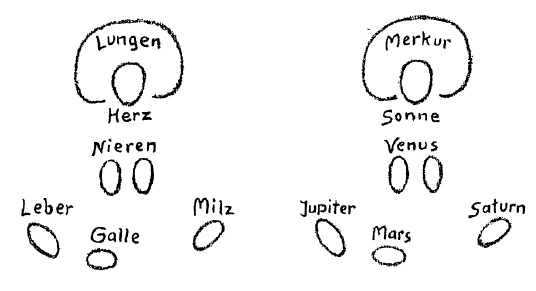
[ 3 ] Ein solcher Einwand ist natürlich einer derjenigen, die von unserem gegenwärtigen zeitgenössischen Standpunkte aus voll berechtigt sind und die gerade denjenigen gewisse Schwierigkeiten bieten, welche in ganz ehrlich suchender Art an die geisteswissenschaftliche Weltanschauung herankommen. Nur im allgemeinen konnte ja in dem ersten öffentlichen Vortrage darauf hingewiesen werden, wie unsere heutigen Zeitgenossen — namentlich dann, wenn sie ein durch die wissenschaftlichen Methoden geschultes Gewissen haben Schwierigkeiten zu überwinden haben, wenn sie sich auf den Weg begeben, dasjenige zu verstehen, was aus den okkulten Untergründen des Weltwesens dargestellt wird. Nun werden wir ja im Laufe der Vorträge im Prinzip von selber sehen, wie sich ein solcher Einwand beheben läßt. Ich will aber doch heute schon vorbemerkend darauf aufmerksam machen, daß die Entfernung der Milz aus dem menschlichen Organismus durchaus vereinbar ist mit dem, was gestern auseinandergesetzt worden ist. Wenn Sie wirklich aufsteigen wollen zu den geisteswissenschaftlichen Wahrheiten, müssen Sie sich ja allmählich dareinfinden, daß dasjenige, was wir den menschlichen Organismus nennen, was wir durch unsere äußeren Sinne wahrnehmen, was wir substantiell, materiell an diesem menschlichen Organismus sehen, daß dies nicht der ganze Mensch ist, sondern daß dem physischen Organismus — das werden wir noch weiter auszuführen haben — zugrundeliegen höhere, übersinnliche Organisationen: der Ätherleib oder Lebensleib, der astralische Leib und das Ich, und daß wir im physischen Organismus nur den äußeren, den physischen Ausdruck haben für die entsprechende Gestaltung, für die entsprechenden Vorgänge des Ätherleibes, des Astralleibes und des Ich. Wenn wir auf ein solches Organ hinweisen wie die Milz, so meinen wir es im geisteswissenschaftlichen Sinne so, daß im Grunde genommen nicht nur in der äußeren physischen Milz etwas vor sich geht, sondern daß das, was in der physischen Milz vorgeht, nur der physische Ausdruck ist für entsprechende Vorgänge im Ätherleibe oder im Astralleibe. Und man könnte sagen: Je mehr ein Organ der unmittelbare physische Ausdruck eines Geistigen ist, desto weniger ist die physische Form des Organs, also das, was wir physisch-substantiell vor uns haben, das eigentlich Maßgebende. Wenn wir ein Pendel ansehen, so ist die Pendelbewegung nur der physische Ausdruck für die Schwerkraft. Ebenso ist ein physisches Organ nur der physische Ausdruck für übersinnliche Kraft- und Formwirkungen. Nun ist allerdings ein Unterschied zwischen den Folgen der Schwerkraft, welche sich in der Pendelbewegung zeigen, und den Folgen, welche entstehen durch die Wirkungen des Äther- und Astralleibes auf die Milz. Nimmt man das Pendel weg, so ist kein Objekt mehr vorhanden, an welchem sich der durch die Schwerkraft bewirkte Rhythmus zeigen kann. So ist es bei der unbelebten, anorganischen Natur, beim belebten Organismus ist es anders. Wenn nicht Gründe vorliegen, von denen wir noch sprechen werden, so hören mit der Wegnahme des physischen Organs nicht notwendigerweise auch die geistigen Wirkungen der höheren Organisationen auf.
[ 3 ] Such an objection is, of course, one of those that are entirely justified from our current contemporary standpoint and that present certain difficulties precisely for those who approach the spiritual-scientific worldview with a truly honest and inquiring spirit. Only in general terms could it be pointed out in the first public lecture how our contemporaries today—especially those with a conscience trained by scientific methods—have difficulties to overcome when they set out to understand what is presented from the occult depths of the world’s being. Now, in the course of the lectures, we will in principle see for ourselves how such an objection can be resolved. But I would like to point out already today, by way of a preliminary remark, that the removal of the spleen from the human organism is entirely compatible with what was discussed yesterday. If you truly wish to ascend to the truths of spiritual science, you must gradually come to terms with the fact that what we call the human organism—what we perceive through our external senses, what we see as substantial and material in this human organism—is not the whole human being, but that underlying the physical organism—as we shall have to elaborate further—are higher, super-sensory organizations: the etheric body or life body, the astral body, and the I; and that in the physical organism we have only the outer, physical expression of the corresponding form and processes of the etheric body, the astral body, and the I. When we refer to an organ such as the spleen, we mean this in the spiritual-scientific sense: that, fundamentally speaking, something is taking place not only in the outer physical spleen, but that what occurs in the physical spleen is merely the physical expression of corresponding processes in the etheric body or the astral body. And one could say: The more an organ is the immediate physical expression of a spiritual reality, the less the physical form of the organ—that is, what we have physically and materially before us—is actually the decisive factor. When we look at a pendulum, the pendulum’s movement is merely the physical expression of gravity. Similarly, a physical organ is merely the physical expression of supersensible forces and formative influences. Now, however, there is a difference between the effects of gravity, which manifest in the pendulum’s motion, and the effects arising from the actions of the etheric and astral bodies on the spleen. If one removes the pendulum, there is no longer an object on which the rhythm caused by gravity can manifest. This is the case with inanimate, inorganic nature; with the living organism, it is different. Unless there are reasons—which we will discuss later—the spiritual effects of the higher organisms do not necessarily cease with the removal of the physical organ.
[ 4 ] Wenn wir also den Menschen in bezug auf seine Milz ansehen, so haben wir es zunächst zu tun mit der physischen Milz, und dann mit einem System von Kraftwirkungen, die in der Milz nur ihren physischen Ausdruck haben. Wenn man die Milz wegnimmt, dann sind diese Kraftwirkungen, die einmal dem menschlichen Organismus eingegliedert wurden, noch da, sie hören nicht auf. Es kann unter Umständen sogar sein, daß durch die Anwesenheit eines erkrankten physischen Organs ein viel größeres Hindernis eintritt für die Fortdauer der geistigen Wirkungen als durch die Herausnahme des betreffenden Organs. Das kann zum Beispiel bei einer schweren Erkrankung der Milz der Fall sein. Wenn es bei einer schweren Erkrankung eines Organs möglich ist, das Organ zu entfernen, so ist unter Umständen das Fehlen dieses Organs ein geringeres Hindernis für die Entfaltung der geistigen Wirkungen als die Anwesenheit des erkrankten Organs, das ein fortwährender Störenfried ist für die Entwickelung der geistigen Kraftwirkungen. Daher gehört ein solcher Einwand, wie der angeführte, zu denjenigen, welche man gewiß macht, wenn man noch nicht tiefer in das eigentliche Wesen des geisteswissenschaftlichen Erkennens eingedrungen ist. Ein ganz begreiflicher Einwand ist es, aber zu gleicher Zeit einer derjenigen, die ganz von selbst verschwinden, wenn man sich Zeit läßt und Geduld hat, um tiefer in die Sache einzudringen. Diese Erfahrung werden Sie überhaupt machen: Wenn man mit einem gewissen Wissen, das aus den Anschauungen der heutigen materialistischen Wissenschaft geschöpft ist, an das Studium der Geisteswissenschaft herantritt, da kann sich Widerspruch auf Widerspruch ergeben, so daß man gar nicht zurechtkommen kann. Und wenn man da schnell fertig ist mit dem Urteilen, so wird man ja allerdings zu keinem anderen Ergebnis kommen können als zu dem, daß Geisteswissenschaft etwas Hirnverbranntes sei, das nicht im geringsten übereinstimme mit den Ergebnissen der äußeren Wissenschaft. - Wenn man aber sich mit Geduld und Zeit auf die Sache einläßt, dann wird man sehen, daß es keinen Widerspruch, auch nicht geringfügigster Art, gibt zwischen dem, was aus der Geisteswissenschaft kommt, und dem, was sich aus der äußeren wissenschaftlichen Forschung ergibt. Die Schwierigkeit, die da vorliegt, ist die, daß das Gesamtgebiet des anthroposophischen oder geisteswissenschaftlichen Erkennens ein so weites ist, daß man immer nur Teile geben kann. Und wenn die Leute an diese Teile herantreten, können sie leicht solche Widersprüche fühlen wie diesen charakterisierten.
[ 4 ] So when we consider the human being in relation to the spleen, we are first dealing with the physical spleen, and then with a system of forces that find their physical expression in the spleen. If the spleen is removed, these forces—which were once integrated into the human organism—are still present; they do not cease. Under certain circumstances, the presence of a diseased physical organ may even pose a far greater obstacle to the continuation of spiritual effects than the removal of the organ in question. This can be the case, for example, with a severe disease of the spleen. If, in the case of a severe disease of an organ, it is possible to remove the organ, then under certain circumstances the absence of this organ may be a lesser obstacle to the unfolding of spiritual effects than the presence of the diseased organ, which is a constant source of disturbance for the development of spiritual forces. Therefore, an objection such as the one cited belongs to those that are certainly raised when one has not yet penetrated more deeply into the very essence of spiritual scientific knowledge. It is a quite understandable objection, but at the same time one of those that disappear of their own accord if one takes the time and has the patience to delve deeper into the matter. You will find this to be the case: When one approaches the study of spiritual science with a certain body of knowledge drawn from the views of today’s materialistic science, contradiction upon contradiction can arise, so that one cannot make head or tail of it. And if one is quick to judge, one will indeed come to no other conclusion than that spiritual science is some kind of nonsense that does not in the least correspond to the findings of external science. - But if one engages with the subject with patience and time, one will see that there is no contradiction, not even the slightest, between what comes from spiritual science and what results from external scientific research. The difficulty here is that the entire field of anthroposophical or spiritual scientific knowledge is so vast that one can only ever present parts of it. And when people approach these parts, they can easily perceive contradictions such as the one described here.
[ 5 ] Aber das darf uns nicht zurückschrecken, man würde ja sonst gar nicht anfangen können mit dem notwendigen Hereinbringen anthroposophischer Weltanschauung in die Gesamtbildung und in das Gesamtwissen unserer Zeit.
[ 5 ] But this must not deter us; otherwise, we would not even be able to begin the necessary task of integrating the anthroposophical worldview into the overall education and body of knowledge of our time.
[ 6 ] Gestern versuchte ich Ihnen darzulegen jene Umrhythmisierung, welche durch die Milz bewirkt wird gegenüber dem äußeren rhythmuslosen Ernähren des Menschen. Ich bin davon ausgegangen, weil es von allen Funktionen, welche die Milz hat, die am leichtesten verständliche ist. Aber obzwar es die am leichtesten verständliche ist, ist sie nicht die allerwichtigste und auch nicht die, welche die Hauptsache bildet. Denn man könnte ja sagen: Nun ja, wenn der Mensch sich bemühen würde, den richtigen Rhythmus für seine Ernährung zu erkennen, so würde in dieser Hinsicht die Tätigkeit der Milz nach und nach eine unnötige werden müssen. — Schon daraus ersieht man, daß diese Funktion, von der wir gestern gesprochen haben, die geringfügigste ist. Weit wichtiger ist die Tatsache, daß wir bei unserer Ernährung den Nahrungsmitteln als äußeren Stoffen, in der Art und Weise ihrer Zusammensetzung, wie sie sich in unserer Umgebung vorfinden, gegenüberstehen. Solange man freilich die Anschauung hat, daß diese Nahrungsmittel tote Stoffe seien oder höchstens von dem Leben erfüllt, das man in den Pflanzen voraussetzt, solange man dies annimmt, könnte es allerdings scheinen, als ob der äußere Stoff, der da als Nahrung aufgenommen wird in den Organismus, durch das verarbeitet wird, was man im weitesten Sinne die Verdauung nennt. Gewiß stellen sich ja auch viele Menschen die Sache so vor, daß man es mit einem bestimmungslosen Stoff zu tun hat, den wir als unsere Nahrung aufnehmen, mit einem Stoff, der ganz gleichgültig ist gegen uns selbst und der nur darauf wartet, wenn wir ihn aufgenommen haben, daß wir ihn auch verarbeiten können. So ist es aber nicht. Die Nahrungsstoffe sind doch nicht wie Ziegelsteine, die es sich gefallen lassen müssen, in jeder Art als Bausteine an einem Bau zu dienen, der eben aufgeführt werden soll. Die Ziegelsteine lassen es sich gefallen, in beliebiger Weise nach dem Plan des Architekten einem Bau eingefügt zu werden, weil sie eine in sich ungefügte, leblose Masse darstellen, wenigstens in bezug auf den Bau. So ist es aber nicht bei den Nahrungsmitteln in bezug auf den Menschen. Denn ein jedes Substantielle, das wir in unserer Umgebung haben, hat gewisse innere Kräfte, hat eine innere Gesetzmäßigkeit. Und das ist das Wesentliche eines Stoffes, daß er innere Gesetzmäßigkeiten, innere Regsamkeiten hat. Wenn wir also die äußeren Nahrungsstoffe in unseren Organismus hineinbringen, sie sozusagen unserer eigenen inneren Regsamkeit einfügen wollen, so lassen sie sich das nicht ohne weiteres gefallen, sondern legen es zunächst darauf an, ihre eigenen Gesetze, ihre eigenen Rhythmen und ihre eigenen inneren Bewegungsformen zu behalten. Und will der menschliche Organismus sie für seine Zwecke gebrauchen, so muß er zunächst die eigene Regsamkeit dieser Stoffe vernichten, er muß sie aufheben. Er muß nicht bloß ein gleichgültiges Material verarbeiten, sondern er muß der eigenen Gesetzmäßigkeit der Stoffe entgegenarbeiten. Daß diese Stoffe eine Eigengesetzmäßigkeit haben, das kann der Mensch zum Beispiel bald spüren, wenn er ein starkes Gift zu sich nimmt. Da wird er bald sehen, daß die Eigengesetzmäßigkeit des Giftes sich geltend macht und Herr über ihn wird. So wie aber ein Gift eine innere GesetzmäRigkeit hat, durch die es eine Attacke auf den Organismus ausführt, so ist es mit jedem Nahrungsstoff, den wir zu uns nehmen. Er ist nicht etwas Gleichgültiges, sondern er macht sich in seiner eigenen Natur, in seiner eigenen Wesenheit geltend; er hat seinen eigenen Rhythmus. Und diesem Rhythmus muß vom Menschen entgegengearbeitet werden, so daß nicht nur gleichgültige Baumaterialien zu verarbeiten sind in der inneren Organisation des Menschen, sondern es muß zuerst die eigene Natur dieser Baumaterialien überwunden werden.
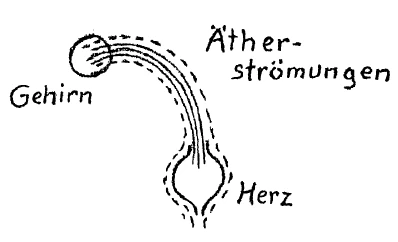
[ 6 ] Yesterday I tried to explain to you the rhythmic restructuring brought about by the spleen in contrast to the external, non-rhythmic nourishment of the human being. I started with this because, of all the functions the spleen performs, it is the easiest to understand. But although it is the easiest to understand, it is not the most important, nor is it the one that constitutes the main point. For one could say: Well, if people made an effort to recognize the proper rhythm for their diet, then in this respect the activity of the spleen would gradually become unnecessary. — From this alone, one can see that this function, which we spoke of yesterday, is the least significant. Far more important is the fact that in our diet we encounter foodstuffs as external substances, in the manner of their composition, as they are found in our environment. As long as one holds the view, of course, that these foods are dead substances or, at most, imbued with the life one assumes exists in plants—as long as one assumes this—it might indeed seem as though the external substance taken into the organism as food is processed by what is called, in the broadest sense, digestion. Certainly, many people also imagine the matter in such a way that we are dealing with an undifferentiated substance that we take in as our food, a substance that is completely indifferent to us and that, once we have taken it in, is merely waiting for us to process it. But that is not the case. Nutrients are not like bricks that must simply accept being used in any way as building blocks for a structure that is to be erected. The bricks allow themselves to be incorporated into a building in any way according to the architect’s plan because they represent an unformed, lifeless mass, at least in relation to the building. But this is not the case with foodstuffs in relation to human beings. For every substantial substance we have in our environment possesses certain inner forces, has an inner lawfulness. And this is the essence of a substance: that it possesses inner laws and inner vitality. So when we introduce external foodstuffs into our organism—when we seek, so to speak, to integrate them into our own inner vitality—they do not simply accept this; rather, they initially strive to retain their own laws, their own rhythms, and their own inner forms of movement. And if the human organism wishes to use them for its own purposes, it must first destroy the substances’ own activity; it must neutralize it. It must not merely process an inert material, but must work against the substances’ own laws. That these substances possess an inherent lawfulness is something a person can soon sense, for example, when they ingest a strong poison. He will soon see that the poison’s inherent laws assert themselves and take control of him. But just as a poison has an inner law through which it attacks the organism, so it is with every food substance we consume. It is not something inert, but asserts itself through its own nature, its own essence; it has its own rhythm. And this rhythm must be counteracted by the human being, so that not only are inert building materials to be processed within the human organism, but the very nature of these building materials must first be overcome.
[ 7 ] So können wir sagen, daß wir in den Organen, denen unsere Nahrungsstoffe im Inneren des Menschen zuerst entgegentreten, die Werkzeuge haben, um demjenigen entgegenzuarbeiten, was Eigenleben der Nahrungsstoffe ist — jetzt «Leben» im weitesten Sinne aufgefaßt. Nicht nur das, was wir durch unregelmäßigen Rhythmus in der Ernährung selber bewirken, sondern auch das, was die Nahrungsstoffe an eigenem Rhythmus in sich haben, welcher dem menschlichen Rhythmus widerspricht, das muß umrhythmisiert werden. Von den Organen, die dies bewirken, ist die Milz das äußerste Organ. Aber an diesem Umrhythmisieren, an diesem Umgestalten und Abwehren arbeiten die anderen genannten Organe wesentlich mit, so daß wir in Milz, Leber und Galle ein zusammenwirkendes Organsystem haben, welches im wesentlichen dazu bestimmt ist, bei der Aufnahme der Nahrungsmittel in den Organismus dasjenige zurückzuschieben, was Eigennatur dieser Nahrungsmittel ist. Alle Tätigkeit, welche im Magen entfaltet wird, oder auch schon, bevor die Speise in den Magen gelangt, ferner das, was dann bewirkt wird durch die Absonderung der Galle, was dann weiter durch die Tätigkeit von Leber und Milz geschieht, das alles gibt eben diese Abwehr der Eigennatur der äußeren Nahrungsstoffe. Daher sind also unsere Nahrungsmittel erst dann dem inneren Rhythmus des menschlichen Organismus angepaßt, wenn ihnen die Wirksamkeiten dieser Organe entgegengetreten sind. Und erst dann, wenn wir die in uns aufgenommenen Nahrungsmittel den Wirksamkeiten dieser Organe ausgesetzt und sie umgewandelt haben, haben wir dasjenige in uns, was fähig ist, in jenes Organsystem aufgenommen zu werden, das der Träger, das Werkzeug unseres Ich ist, in das Blut. Bevor irgendein äußerer Nahrungsstoff in unser Blut aufgenommen werden kann, so daß dieses unser Blut die Fähigkeit erhält, Werkzeug zu sein für unser Ich, müssen all die Eigengesetzlichkeiten der Außenwelt abgestreift sein, und das Blut muß die Nahrungsstoffe in einer solchen Gestalt empfangen, die der eigenen Natur des menschlichen Organismus entspricht. Daher können wir sagen: In Milz, Leber und Galle und in ihrem Zurückwirken auf den Magen haben wir diejenigen Organe, welche die Gesetze der äußeren Welt, aus der wir unsere Nahrung entnehmen, anpassen der inneren Organisation, dem inneren Rhythmus des Menschen.
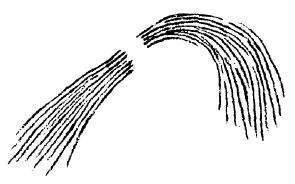
[ 7 ] Thus we can say that in the organs where our foodstuffs first encounter the human body, we have the tools to counteract what constitutes the independent life of the foodstuffs—“life” now understood in the broadest sense. Not only what we ourselves bring about through irregular rhythms in our diet, but also the inherent rhythm of the foodstuffs themselves—which contradicts the human rhythm—must be re-rhythmized. Of the organs that accomplish this, the spleen is the outermost organ. But the other organs mentioned play an essential role in this re-rhythmization, this restructuring and defense, so that in the spleen, liver, and gallbladder we have a cooperating organ system that is essentially designed to push back, during the intake of food into the organism, that which is the inherent nature of these foods. All activity that unfolds in the stomach, or even before the food reaches the stomach, as well as what is then brought about by the secretion of bile, and what subsequently occurs through the activity of the liver and spleen—all of this constitutes precisely this repulsion of the inherent nature of external foodstuffs. Therefore, our food is only adapted to the inner rhythm of the human organism once it has been met by the actions of these organs. And only then, when we have subjected the food we have taken in to the actions of these organs and transformed it, do we have within us that which is capable of being absorbed into that organ system which is the carrier, the instrument of our ego—into the blood. Before any external nutrient can be absorbed into our blood, so that this blood acquires the ability to serve as an instrument for our ego, all the inherent laws of the external world must be shed, and the blood must receive the nutrients in a form that corresponds to the nature of the human organism. Therefore, we can say: In the spleen, liver, and gallbladder—and in their influence on the stomach—we have the organs that adapt the laws of the external world, from which we derive our nourishment, to the inner organization and inner rhythm of the human being.
[ 8 ] Nun steht aber diese menschliche Natur, wie sie als Ganzes wirkt, mit allen ihren Gliedern nicht bloß der inneren Welt gegenüber, sondern diese innere menschliche Natur muß in einer fortwährenden Korrespondenz, in einem fortwährenden lebendigen Wechselwirken mit der Außenwelt sein. Dieses lebendige Wechselwirken mit der Außenwelt wird ja gerade dadurch abgeschnitten, daß den Gesetzen der Außenwelt, insofern wir mit ihr in Beziehung treten durch die Nahrungsstoffe, entgegengestellt werden die drei Organsysteme Leber, Galle, Milz. Durch diese wird die äußere Gesetzmäßigkeit weggenommen von innen her. Und es würde der menschliche Organismus, wenn er nur diesen Organsystemen ausgesetzt wäre, sich von der Außenwelt vollständig abschließen, er würde ein vollkommen in sich isoliertes Wesen sein. Daher ist ein anderes ebenso notwendig. Wie der Mensch auf der einen Seite solche Organsysteme braucht, durch welche die Außenwelt so umgestaltet wird, daß sie seiner Innenwelt gemäß wird, so muß er auf der anderen Seite auch in der Lage sein, unmittelbar mit dem Werkzeug seines Ich der Außenwelt entgegenzutreten, unmittelbar also seinen Organismus, der sonst eine in sich isolierte Wesenheit wäre, mit der Außenwelt in Beziehung zu setzen. Während das Blut auf der einen Seite mit der Außenwelt nur so in Beziehung tritt, daß es von dieser Außenwelt nur das erhält, dem alle Eigengesetzmäßigkeit abgestreift ist, tritt es auf der anderen Seite mit der Außenwelt so in Beziehung, daß es unmittelbar an sie herantreten kann. Das geschieht, wenn das Blut durch die Lungen fließt und mit der äußeren Luft in Berührung kommt. Da wird es durch den Sauerstoff der äußeren Luft aufgefrischt und in einer solchen Weise gestaltet, daß jetzt dieser Gestaltung nichts abschwächend gegenübertritt, so daß in der Tat der Sauerstoff der Luft so herantritt an das Werkzeug des menschlichen Ich, wie es dessen eigenster Natur und Wesenheit entspricht. So sehen wir jene ganz merkwürdige Tatsache vor unser Auge treten, daß das edelste Werkzeug, das der Mensch hat, das Blut, das Werkzeug seines Ich, wie ein Wesen dasteht, welches alle Nahrung sorgfältig filtriert erhält durch die früher charakterisierten Organsysteme. Dadurch ist das Blut in die Fähigkeit versetzt, ganz und gar ein Ausdruck der inneren Organisation des Menschen zu werden, des inneren Rhythmus des Menschen. Dadurch aber, daß das Blut unmittelbar in Berührung tritt mit denjenigen Stoffen der Außenwelt, die in seine innere Gesetzmäßigkeit und Regsamkeit aufgenommen werden dürfen, ohne daß sie unmittelbar bekämpft zu werden brauchen, dadurch ist diese menschliche Organisation nichts in sich Abgeschlossenes, sondern mit der Außenwelt voll in Berührung.
[ 8 ] However, this human nature, as it functions as a whole with all its components, does not merely face the inner world; rather, this inner human nature must be in constant correspondence, in a constant, living interaction with the outer world. This living interaction with the external world is cut off precisely because the three organ systems—the liver, gallbladder, and spleen—are set in opposition to the laws of the external world, insofar as we come into contact with it through foodstuffs. Through these, the external laws are removed from within. And if the human organism were exposed only to these organ systems, it would completely shut itself off from the external world; it would be a being completely isolated within itself. Therefore, another aspect is equally necessary. Just as the human being, on the one hand, needs such organ systems through which the external world is transformed so that it conforms to his inner world, so must he, on the other hand, also be able to confront the external world directly with the instrument of his ego—that is, to bring his organism, which would otherwise be an entity isolated within itself, into direct relation with the external world. While on the one hand the blood relates to the external world only in such a way that it receives from this external world only that which has been stripped of all its own laws, on the other hand it relates to the external world in such a way that it can approach it directly. This happens when the blood flows through the lungs and comes into contact with the external air. There it is refreshed by the oxygen of the external air and shaped in such a way that nothing now stands in the way of this shaping to weaken it, so that in fact the oxygen of the air approaches the instrument of the human ego in a manner that corresponds to its very nature and essence. Thus we see that most remarkable fact come before our eyes: that the noblest instrument man possesses, the blood—the instrument of his ego—stands as a being that carefully filters and receives all nourishment through the organ systems previously described. Through this, the blood is enabled to become a complete expression of the inner organization of the human being, of the human being’s inner rhythm. But because the blood comes into direct contact with those substances from the external world that may be absorbed into its inner laws and vitality without needing to be directly combated, this human organization is not something self-contained, but is in full contact with the external world.
[ 9 ] So haben wir im menschlichen Blutorganismus auch von diesem Gesichtspunkte aus etwas ganz Wunderbares vor uns. Wir haben in ihm ein wirkliches, echtes Ausdrucksmittel des menschlichen Ich, das ja in der Tat auf der einen Seite der Außenwelt zugekehrt ist, auf der anderen Seite dem eigenen Innenleben zugekehrt ist. So wie wir gesehen haben, daß der Mensch durch sein Nervensystem den Impressionen der Außenwelt zugewendet ist, also die Außenwelt sozusagen auf dem Umwege durch die Nerven in sich aufnimmt, so kommt er in eine unmittelbare Berührung mit der Außenwelt durch sein Blut, indem das Blut den Sauerstoff der Luft durch die Lungen aufnimmt. Daher können wir also sagen: In dem, was uns gegeben ist auf der einen Seite in dem Milz-Leber-Gallesystem und auf der anderen Seite in dem Lungensystem, haben wir zwei einander entgegenwirkende Systeme, die sich gleichsam berühren in dem Blut. Außenwelt und Innenwelt berühren sich durch das Blut ganz unmittelbar im menschlichen Organismus, indem das Blut von der einen Seite her mit der äußeren Luft in Berührung kommt und von der anderen Seite her mit den Nahrungsmitteln, denen ihre eigene Natur genommen ist. Es stoßen also, möchte man sagen, wie positive und negative Elektrizität, hier zwei Weltenwirkungen im Menschen zusammen. Und wir können uns sehr leicht vorstellen, wo das Organsystem liegt, welches bestimmt und geeignet ist, das Aufeinanderprallen dieser beiden Weltenkraftsysteme auf sich wirken zu lassen. Bis zum Herzen herauf, insofern das Blut durch das Herz strömt, wirken die umgewandelten Nahrungssäfte. Bis zum Herzen herein, insofern es vom Blute durchflossen wird, wirkt der Sauerstoff der Luft, der unmittelbar aus der Außenwelt in unser Blut tritt, so daß wir im Herzen dasjenige Organ haben, in dem sich diese zwei Systeme begegnen, in die der Mensch hineinverwoben ist, an denen er nach zwei Seiten hängt. Es ist mit diesem menschlichen Herzen so, daß wir sagen könnten: An ihm hängt auf der einen Seite der ganze menschliche innere Organismus, und auf der anderen Seite ist der Mensch durch das Herz unmittelbar angeknüpft an den Rhythmus, an die Regsamkeit der äußeren Welt.
[ 9 ] From this perspective, too, the human blood system presents us with something truly marvelous. In it we have a genuine, authentic means of expression for the human “I,” which is indeed turned toward the external world on the one hand, and toward one’s own inner life on the other. Just as we have seen that the human being is turned toward the impressions of the external world through the nervous system—that is, takes in the external world, so to speak, indirectly through the nerves—so too does the human being come into direct contact with the external world through the blood, as the blood takes in the oxygen from the air via the lungs. We can therefore say: In what is given to us on the one hand in the spleen-liver-gallbladder system and on the other hand in the lung system, we have two opposing systems that, as it were, touch one another in the blood. The external and internal worlds come into direct contact through the blood in the human organism, as the blood comes into contact on one side with the external air and on the other side with the foodstuffs, which have been stripped of their own nature. One might say, then, that like positive and negative electricity, two worldly forces collide here within the human being. And we can very easily imagine where the organ system is located that is designated and suited to allow the collision of these two systems of world forces to act upon it. Up to the heart, insofar as the blood flows through the heart, the transformed food juices are at work. Up to the heart, insofar as it is traversed by the blood, the oxygen of the air—which enters our blood directly from the outside world—exerts its effect, so that in the heart we have the organ in which these two systems meet, into which the human being is woven, and to which he is connected on two sides. It is the case with this human heart that we could say: on the one hand, the entire human internal organism depends on it, and on the other hand, through the heart, the human being is directly connected to the rhythm and activity of the external world.
[ 10 ] Wenn nun zwei solche Systeme zusammenstoßen, so könnte es ja sein, daß ihr Zusammenwirken eine unmittelbare Harmonie ergäbe. Wir könnten uns vorstellen, daß diese zwei Systeme - das System der großen Welt, das durch den aufgenommenen Sauerstoff oder die Luft überhaupt in uns hineinwirkt, und das System der kleinen Welt, unseres eigenen inneren Organismus, das uns die Nahrungsmittel umwandelt -, daß sich diese Systeme im Blute, indem es das Herz durchströmt, einen harmonischen Ausgleich schaffen. Wenn es so wäre, dann wäre der Mensch eingespannt in zwei Welten, die sozusagen sein inneres Gleichgewicht schüfen. Nun werden wir im Laufe dieser Vorträge noch sehen, daß es sich mit der Beziehung der Welt zur menschlichen Wesenheit nicht so verhält. Es ist vielmehr so, daß die Welt sich sozusagen ganz passiv verhält, daß sie nur ihre Kräfte aussendet und es dem Menschen überläßt, durch eigene innere Tätigkeit den Ausgleich zu schaffen zwischen den zweierlei Systemen, in deren Wirkungen wir eingespannt sind. Wir werden es immer mehr und mehr als das Wesentliche erkennen lernen, daß dem Menschen zuletzt immer ein Rest bleibt für seine innere Tätigkeit, daß es ihm — bis in seine Organe hinein — überlassen ist, den Ausgleich, das innere Gleichgewicht selber zu schaffen. So müssen wir auch im menschlichen Organismus selber den Ausgleich, die Harmonisierung dieser beiden Weltsysteme suchen. Wir müssen uns von vornherein sagen: Durch die Gesetzmäßigkeiten der Außenwelt, die direkt in den Menschen hineintreten, und durch die eigenen inneren Gesetzmäßigkeiten des Menschen, in die er die Gesetzmäßigkeiten der Außenwelt umwandelt, welche er aufnimmt durch die Nahrung, ist noch nicht ohne weiteres die Harmonisierung der beiden Systeme gegeben. Die Harmonisierung muß sich erst durch ein besonderes eigenes Organsystem vollziehen. Der Mensch muß in sich selber die Harmonisierung herbeiführen. Das geschieht nicht in bewußten Vorgängen, sondern durch Vorgänge, die sich ganz unbewußt innerhalb des menschlichen Organismus abspielen. Dieser Ausgleich zwischen diesen beiden Systemen wird dadurch herbeigeführt, daß zwischen dem Milz-Leber-Gallesystem auf der einen Seite und dem Lungensystem auf der anderen Seite, die sich in dem das Herz durchströmenden Blute gegenüberstehen, eingeschaltet ist dasjenige, was wir das Nierensystem nennen, das auch in inniger Verbindung steht mit dem Blutkreislauf.
[ 10 ] If two such systems were to come into contact, it is quite possible that their interaction would result in immediate harmony. We could imagine that these two systems—the system of the greater world, which acts upon us through the oxygen we inhale or the air in general, and the system of the smaller world, our own inner organism, which transforms our food—that these systems create a harmonious balance in the blood as it flows through the heart. If this were the case, then human beings would be caught between two worlds that, so to speak, create their inner balance. Now, in the course of these lectures, we will see that this is not how the relationship between the world and the human being works. Rather, the world behaves, so to speak, entirely passively; it merely sends out its forces and leaves it to the human being to create, through their own inner activity, a balance between the two systems whose effects we are caught up in. We will come to recognize more and more as the essential truth that, in the end, a remnant always remains for the human being’s inner activity, that it is left to him—right down to his organs—to create the balance, the inner equilibrium, himself. Thus we must also seek within the human organism itself the balance, the harmonization of these two world systems. We must tell ourselves from the outset: The harmonization of the two systems is not automatically achieved through the laws of the external world, which enter directly into the human being, and through the human being’s own inner laws, into which he transforms the laws of the external world that he absorbs through food. The harmonization must first take place through a special organ system of his own. Human beings must bring about this harmonization within themselves. This does not occur through conscious processes, but through processes that take place entirely unconsciously within the human organism. This balance between these two systems is brought about by the fact that between the spleen-liver-gallbladder system on the one hand and the lung system on the other—which face each other in the blood flowing through the heart—there is interposed what we call the kidney system, which is also intimately connected with the blood circulation.
[ 11 ] Im Nierensystem haben wir dasjenige, was sozusagen harmonisiert jene äußeren Wirkungen, die von dem unmittelbaren Berühren des Blutes mit der Luft herrühren, mit den Wirkungen, die von denjenigen inneren Organen des Menschen ausgehen, durch die die Nahrungsstoffe erst zubereitet werden müssen, damit ihre Eigennatur abgestreift wird. In dem Nierensystem haben wir also ein solches ausgleichendes System, durch das der Organismus in die Lage kommt, den Überschuß abzugeben, der sich ergeben würde durch ein unharmonisches Zusammenwirken der beiden anderen Systeme.
[ 11 ] In the renal system, we have what, so to speak, harmonizes those external effects arising from the direct contact of the blood with the air with the effects emanating from those internal organs of the human body through which the nutrients must first be processed so that their inherent nature is stripped away. In the renal system, therefore, we have such a balancing system through which the organism is enabled to eliminate the excess that would result from a disharmonious interaction of the other two systems.
[ 12 ] Damit haben wir der ganzen inneren Organisation — den Organen des Verdauungsapparates einschließlich derjenigen Organe, die wir dazurechnen müssen, wie Leber, Galle und Milz — dasjenige gegenübergestellt, wofür diese Organe zunächst ihre vorbereitende Tätigkeit entwickelt haben, das Blutsystem. Und wir haben auf der anderen Seite diesem Blutsystem diejenigen Organe gegenübergestellt, durch welche der einseitigen Isolierung entgegengearbeitet und damit der Ausgleich geschaffen wird zwischen dem genannten inneren System und dem, was von außen her kommt. Wenn wir also — und wir werden noch sehen, wie sehr das berechtigt ist — das Blutsystem mit seinem Mittelpunkt, dem Herzen, uns in die Mitte des Organismus hineingestellt denken, so haben wir, sich angliedernd an dieses Blut-Herzsystem, auf der einen Seite das Leber-Galle-Milzsystem, auf der anderen Seite — und auf andere Weise mit dem Herzen in Verbindung stehend — das Lungensystem. Dazwischen ist das Nierensystem angeordnet. Wir werden später noch sehen, wie ungemein interessant der Zusammenhang ist zwischen dem Lungensystem und dem Nierensystem. Jetzt wollen wir darauf zunächst nicht näher eingehen, sondern das Ganze im Zusammenhang betrachten. Wenn wir die Systeme einfach ganz schematisch nebeneinander zeichnen (Zeichnung Seite 78 links), dann erkennen wir schon aus dieser schematischen Darstellung, wie die menschliche innere Organisation in einem gewissen Zusammenhange steht, und wir haben diesen Zusammenhang so dargestellt, daß wir in dem Herzen mit dem dazugehörigen Blutsystem das Allerwichtigste zu sehen haben.
[ 12 ] We have thus contrasted the entire internal system—the organs of the digestive system, including those we must count among them, such as the liver, gallbladder, and spleen—with that for which these organs initially developed their preparatory functions: the circulatory system. And on the other hand, we have contrasted this blood system with those organs through which the one-sided isolation is counteracted, thereby creating a balance between the aforementioned internal system and what comes from the outside. So if we—and we shall yet see how justified this is—imagine the blood system, with its center, the heart, situated in the very center of the organism, then we have, connected to this blood-heart system, on the one hand the liver-gallbladder-spleen system, and on the other hand—and connected to the heart in a different way—the lung system. The kidney system is situated between them. We will see later just how incredibly interesting the connection is between the lung system and the kidney system. For now, however, we will not go into this in detail, but rather consider the whole in its context. If we simply draw the systems side by side in a very schematic way (drawing on page 78, left), we can already see from this schematic representation how the human internal organization is connected in a certain way, and we have depicted this connection in such a way that we see the most important element in the heart with its associated blood system.
[ 13 ] Nun habe ich schon darauf hingewiesen - und wir werden noch im genaueren sehen, inwiefern eine solche Namengebung gerechtfertigt ist — daß im Okkultismus die Milzwirkung als eine saturnische Wirkung bezeichnet wird, die Leberwirkung als eine Jupiter- und die der Galle als eine Marswirkung. Aus demselben Grunde sieht nun die okkulte Erkenntnis in dem Herzen und dem dazugehörigen Blutsystem dasjenige, was den Namen «Sonne» im menschlichen Organismus ebenso verdient wie die Sonne draußen innerhalb des Planetensystems. Das Lungensystem bezeichnet der Okkultist nach demselben Prinzip als «Merkur» und das Nierensystem mit dem Namen «Venus». So haben wir schon in der Benennung dieser Systeme des menschlichen Organismus — wenn wir jetzt auch gar nicht eingehen auf eine Rechtfertigung dieser Namen — etwas angedeutet wie ein inneres Weltsystem, was wir noch dadurch ergänzt haben, daß wir uns in die Lage versetzten, auch den Zusammenhang der beiden Organsysteme zu betrachten, die zum Blutsystem in Beziehung stehen. Erst wenn wir die Zusammenhänge in diesem Sinne betrachten, tritt uns das in einer Vollständigkeit entgegen, was wir die eigentliche menschliche innere Welt nennen können. Ich werde Ihnen nun in den folgenden Vorträgen auch noch zu zeigen haben, daß tatsächlich der Okkultist Gründe hat, das Verhältnis der Sonne zu Merkur und Venus in einer ähnlichen Weise sich vorzustellen, wie im menschlichen Organismus das Verhältnis zwischen Herz, Lungen und Nieren gedacht werden muß.
[ 13 ] I have already pointed out—and we will see in more detail later to what extent such a naming is justified—that in occultism, the action of the spleen is described as a Saturnian influence, that of the liver as a Jovian influence, and that of the gallbladder as a Martian influence. For the same reason, occult knowledge regards the heart and its associated circulatory system as deserving the name “Sun” within the human organism just as much as the Sun outside within the planetary system. Following the same principle, the occultist designates the pulmonary system as “Mercury” and the renal system as “Venus.” Thus, even in the naming of these systems of the human organism—though we are not now going into a justification of these names—we have already hinted at something like an inner world system, which we have further supplemented by placing ourselves in a position to also consider the connection between the two organ systems related to the blood system. Only when we consider these connections in this sense does what we might call the actual inner human world present itself to us in its entirety. In the following lectures, I will also have to show you that the occultist indeed has reasons to conceive of the relationship between the Sun, Mercury, and Venus in a similar way to how the relationship between the heart, lungs, and kidneys must be conceived within the human organism.
[ 14 ] Wir sehen daraus, daß in dem Werkzeug unseres Ich, in unserem Blutsystem, das seinen Rhythmus im Herzen zum Ausdruck bringt, etwas gegeben ist, was gewissermaßen in seiner ganzen Gestaltung, in seiner inneren Natur und Wesenheit durch das innere Weltsystem des Menschen bestimmt wird, und daß es in ein solches [makrokosmisches] Gesamtsystem eingebettet sein muß, damit es so leben kann, wie es eben lebt. In diesem menschlichen Blutsystem — das habe ich schon öfter erwähnt — haben wir zu sehen das physische Werkzeug unseres Ich. Wir wissen ja, daß unser Ich, so wie wir es haben, nur dadurch möglich ist, daß dieses Ich aufgebaut ist auf Grundlage eines physischen Leibes, eines Ätherleibes und eines Astralleibes. Ein frei in der Welt herumfliegendes menschliches Ich ist innerhalb der Welt, die unsere Welt ist, nicht denkbar. Ein menschliches Ich setzt voraus als Grundlage einen Astralleib, einen Ätherleib und einen physischen Leib. Wie nun dieses Ich in geistiger Beziehung die drei genannten Wesensglieder des Menschen voraussetzt, so setzt sein physisches Organ, das Blutsystem, auch physisch solche Abbilder des astralischen und des ätherischen Leibes voraus. Das Blutsystem kann sich also nur auf der Grundlage von etwas anderem entwickeln. Während die Pflanze sich einfach entwickelt auf der Grundlage der sie umgebenden unorganischen Natur, indem sie gleichsam aus derselben herauswächst, müssen wir sagen, daß für den menschlichen Blutorganismus als Grundlage nicht ohne weiteres bloß die äußere Natur als Unterlage nötig ist, sondern es muß diese äußere Natur erst noch eine Umgestaltung erfahren. Wie der physische Leib des Menschen erst einen Ätherleib und einen Astralleib haben muß, so muß das, was an Nahrungsstoffen einströmt, erst umgestaltet werden, damit es dem menschlichen Ich als Werkzeug dienen kann.
[ 14 ] We see from this that in the instrument of our ego—our circulatory system, which expresses its rhythm in the heart—there is something that is, so to speak, determined in its entire structure, in its inner nature and essence, by the inner world system of the human being, and that it must be embedded in such a [macrocosmic] overall system so that it can live as it does. In this human blood system—as I have often mentioned—we must see the physical instrument of our ego. We know, of course, that our ego, as we possess it, is only possible because this ego is built upon the foundation of a physical body, an etheric body, and an astral body. A human ego flying freely about in the world is inconceivable within the world that is our world. A human I presupposes as its foundation an astral body, an etheric body, and a physical body. Just as this I presupposes, in a spiritual sense, the three aforementioned members of the human being, so its physical organ, the blood system, also presupposes, physically, such reflections of the astral and etheric bodies. The blood system can therefore only develop on the basis of something else. While the plant simply develops on the basis of the inorganic nature surrounding it, growing out of it, as it were, we must say that for the human blood organism, external nature alone is not immediately sufficient as a foundation; rather, this external nature must first undergo a transformation. Just as the human physical body must first have an etheric body and an astral body, so too must the nutrients that flow in be transformed first so that they can serve the human ego as an instrument.
[ 15 ] Wenn wir nun auch sagen können, daß dieses physische Werkzeug des menschlichen Ich, das Blut, durch die Lunge von außen bestimmt wird, so ist die Lunge selber doch ein Organ der physischen Leibesorganisation, das heißt, es ist nicht dieses Organ, sondern die durch dasselbe eingeatmete Luft, welche es möglich macht, mit einem äußeren Rhythmus auf das Blut einzuwirken. Wir müssen unterscheiden zwischen dem, was von außen an den Menschen herankommt in Form der Luft, die eingeatmet wird und die es dem Menschen möglich macht, mit einem äußeren Rhythmus unmittelbar sein Blutsystem zu durchdringen, und dem, was nicht unmittelbar an das lebendige Werkzeug des Ich im Organismus, an das Blut, herantritt, sondern was herantritt - in der Art, wie es schon charakterisiert worden ist - auf dem Umwege durch die Seele, was der Mensch also dadurch aufnimmt, daß er die Eindrücke der Außenwelt durch die Sinne empfängt und diese Sinne dann ihre Eindrücke auch vermitteln bis zur Bluttafel hin. Deshalb werden wir sagen können: Der Mensch tritt nicht bloß mit der Außenwelt unmittelbar stofflich in Berührung durch die Atmungsluft, indem diese Berührung hereinwirkt bis auf sein Blut, sondern er tritt durch die Sinnesorgane mit der Außenwelt auch so in Berührung, daß diese Berührung eine nichtstoffliche ist, wie sie in dem Prozeß der Wahrnehmung stattfindet, den die Seele entfaltet, wenn sie zur Umwelt in Beziehung tritt. Da haben wir etwas, was sich als ein höherer Prozeß hinzufügt zum Atmungsprozeß, wir haben etwas wie einen vergeistigten Atmungsprozeß. Während wir durch den Atmungsprozeß die Außenwelt stofflich aufnehmen, nehmen wir im Wahrnehmungsprozeß — und ich meine jetzt mit «Wahrnehmung» alles, was der Mensch an äußeren Impressionen verarbeitet — etwas durch einen vergeistigten Atmungsprozeß in unseren Organismus auf. Und es entsteht jetzt die Frage: Wie wirken diese beiden Prozesse zusammen? Denn im menschlichen Organismus muß alles aufeinander einwirken.
[ 15 ] While we can say that this physical instrument of the human ego—the blood—is influenced from the outside by the lungs, the lungs themselves are an organ of the physical body; that is to say, it is not this organ itself, but rather the air inhaled through it, that makes it possible to influence the blood with an external rhythm. We must distinguish between what approaches the human being from the outside in the form of the air that is inhaled—which enables the human being to directly permeate their blood system with an external rhythm— and that which does not approach the living instrument of the ego in the organism—the blood—directly, but rather approaches—in the manner already described—indirectly through the soul; that which the human being thus takes in by receiving impressions of the external world through the senses, and these senses then convey their impressions all the way to the blood. Therefore, we can say: The human being does not merely come into direct material contact with the external world through the air breathed in, in that this contact affects the blood, but through the sense organs the human being also comes into contact with the external world in such a way that this contact is a non-material one, as it takes place in the process of perception that the soul unfolds when it relates to the environment. Here we have something that adds itself as a higher process to the breathing process; we have something like a spiritualized breathing process. While we take in the external world in a material sense through the breathing process, in the process of perception—and by “perception” I now mean everything that a human being processes in terms of external impressions—we take something into our organism through a spiritualized breathing process. And the question now arises: How do these two processes interact? For in the human organism, everything must interact with one another.
[ 16 ] Legen wir uns einmal diese Frage genauer vor — denn es wird Wesentliches davon abhängen, daß wir sie uns genau vorlegen -, um uns die heute zunächst hypothetisch zu gebende Antwort vor unsere Seele führen zu können. Wir müssen uns darüber klar werden, wie ein Zusammenwirken, ein Wechselwirken stattfinden kann zwischen alle dem, was durch das Blut wirkt und was es geworden ist dadurch, daß alle diese inneren Organprozesse stattgefunden haben, und dem, was das Blut wird, indem wir äußere Wahrnehmungsprozesse vollziehen. Wir müssen sehen, daß da eine Wechselwirkung stattfinden kann. Das Blut ist, trotzdem es so eingehend und so vielseitig filtriert ist, trotzdem so vieles dafür gesorgt hat, daß es ein so wunderbar organisierter Stoff ist, der Werkzeug unseres Ich sein kann, das Blut ist trotzdem eine physische Substanz und gehört als solche zum physischen Leibe. Daher können wir sagen: Zunächst erscheint uns ein weiter, weiter Abstand zwischen dem, was im menschlichen Blute an physischen Prozessen wirkt, und dem, was wir als unsere Wahrnehmungsprozesse kennen, die die Seele vollzieht. Das ist eine nicht abzuleugnende Realität; denn der Mensch müßte ja auf sonderbare Weise nicht zu denken verstehen, der ableugnen wollte, daß Wahrnehmungen, Begriffe, Ideen, Gefühle, Willensimpulse ebenso etwas Reales sind wie Blutsubstanz, Nervensubstanz, Lebersubstanz, Gallensubstanz und so weiter. Wie diese Dinge zusammenhängen, darüber können sich die Weltanschauungen streiten; sie können sich darüber streiten, ob die Gedanken bloß irgendwelche Wirkungen, sagen wir, der Nervensubstanz oder dergleichen seien. Da kann vielleicht ein Streiten der Weltanschauungen beginnen. Aber keinen Streit kann es darüber geben, weil es eine selbstverständliche Sache ist, daß unser Seeleninnenleben, unser Gedankenleben, unser Gefühlsleben, alles was sich aufbaut auf Grund der äußeren Wahrnehmungen und Eindrücke, eine Realität für sich darstellt. Wohlgemerkt, ich sage nicht: eine abgesonderte Realität —, sondern: eine Realität für sich, denn nichts ist in der Welt abgesondert. Mit «Realität für sich» soll nur angedeutet werden, was real beobachtet werden kann, und dazu gehören Gedanken, Gefühle und so weiter ebenso wie Magen, Leber, Galle und Milz.
[ 16 ] Let us examine this question more closely—for much will depend on our examining it precisely—so that we may bring the answer, which for now must remain hypothetical, before our souls. We must become clear about how an interaction, a mutual influence, can take place between all that acts through the blood and what it has become as a result of all these internal organ processes having taken place, and what the blood becomes as we carry out external perceptual processes. We must see that an interaction can take place here. The blood, despite being so thoroughly and so diversely filtered, despite so much having been done to ensure that it is such a wonderfully organized substance capable of serving as the instrument of our ego, the blood is nevertheless a physical substance and, as such, belongs to the physical body. Therefore, we can say: At first glance, there appears to be a vast, vast distance between the physical processes at work in human blood and what we know as our perceptual processes, which the soul carries out. This is an undeniable reality; for one would have to be strangely incapable of thinking to deny that perceptions, concepts, ideas, feelings, and impulses of the will are just as real as blood substance, nerve substance, liver substance, bile substance, and so on. Worldviews may dispute how these things are connected; they may dispute whether thoughts are merely effects, say, of nervous substance or the like. This is where a dispute among worldviews might begin. But there can be no dispute about this, because it is self-evident that our inner spiritual life, our life of thought, our life of feeling—everything that is built upon external perceptions and impressions—constitutes a reality in itself. Mind you, I am not saying: a separate reality—but rather: a reality in itself, for nothing in the world is separate. By “reality in itself” I merely mean to indicate what can be observed as real, and this includes thoughts, feelings, and so on just as much as the stomach, liver, gallbladder, and spleen.
[ 17 ] Aber ein anderes kann uns auffallen, wenn wir diese zwei Realitäten nebeneinanderstellen: Auf der einen Seite alles, was ein selbst noch so stark filtriertes Materielles, Physisches ist wie das Blut, und auf der anderen Seite das, was ja mit einem Physischen gar nichts zu tun zu haben scheint zunächst, nämlich die Inhalte der Seele, die Gefühle, Gedanken und so weiter. In der Tat bietet der Anblick dieser zweierlei Arten von Realitäten für den Menschen solche Schwierigkeiten, daß sich an diesen Anblick angegliedert haben die allermannigfaltigsten Antworten aus den verschiedensten Weltanschauungen heraus. Da gibt es Weltanschauungen, welche eine unmittelbare Einwirkung des Seelischen, des Gedanklichen, des Gefühlsmäßigen auf die physische Substanz annehmen, wie wenn der Gedanke unmittelbar auf die physische Substanz wirken könnte. Denen stehen andere gegenüber, die materialistischen, die annehmen, daß Gedanken, Gefühle und so weiter einfach produziert werden aus den Vorgängen des Physisch-Substantiellen heraus. Der Streit dieser beiden Weltanschauungen hat ja in der äußeren Welt - nicht für den Okkultisten, für den dieser Streit ein Streit mit leeren Worten ist — durch lange Zeiten hindurch eine große Rolle gespielt. Und als man endlich gar nicht mehr zurechtgekommen ist, da ist in der neueren Zeit noch etwas anderes aufgetreten, was den sonderbaren Namen «psychophysischer Parallelismus» führt. Weil man sich gar nicht mehr zu helfen wußte, welcher nun von den beiden Gedanken der richtige ist — entweder wirkt der Geist auf die leiblichen Prozesse, oder es wirken die leiblichen Prozesse auf den Geist —, so sagte man eben einfach, das seien zwei Vorgänge, die parallel ablaufen. Man sagte sich: Während der Mensch denkt, fühlt und so weiter, laufen parallel in seinen physischen Organsystemen ganz bestimmte Vorgänge ab. - Die Wahrnehmung «Ich sehe Rot» würde also entsprechen irgendeinem materiellen Vorgang innerhalb des Nervensystems. Was wirempfinden beieinem roten Eindruck, was wir fühlen an Freude oder Schmerz bei ihm, entspricht einem materiellen Vorgang. Aber weiter geht man nicht, als zu sagen, daß er eben «entspricht». Diese Theorie hebt in der Tat die ganzen Schwierigkeiten auf, indem sie diese einfach wegexpliziert. Nun, alle Streitereien, die sich auf diesem Boden entsponnen haben und auch die Hilflosigkeit des psychophysischen Parallelismus ergeben sich daraus, daß man diese Fragen entscheiden will auf einem Boden, auf dem sie gar nicht ausgetragen werden können. Wir haben es mit nichtmateriellen Vorgängen zu tun, wenn wir die Tätigkeiten unseres inneren Seelenlebens ins Auge fassen, und wir haben es mit materiellen Vorgängen zu tun, wenn wir, selbst über etwas so fein organisiertes wie es das Blut ist, unsere Betrachtungen anstellen. Wenn man diese zwei Dinge einfach gegenüberstellt - physische Betätigung und seelische Betätigung — und jetzt durch Nachdenken herausbekommen will, wie diese beiden aufeinander wirken, so ergibt dieses Nachdenken eben gar nichts. Durch Nachdenken kann man alle willkürlichen Lösungen oder Nichtlösungen finden. Erst dadurch wird über diese Fragen etwas entschieden werden können, daß wir uns wirklich eine höhere Erkenntnis aneignen, die weder stehenbleibt bei dem physischen Anschauen der Außenwelt noch bei dem an die bloße physische Außenwelt gebundenen Denken. Wir müssen eine Form der Erkenntnis finden, die sich erhebt zu dem, was über das Physische hinaus in die überphysische Welt führt. Wir müssen auf der einen Seite von dem Materiellen hinaufsteigen zu dem Übermateriellen, zu dem Überphysischen, wir müssen aber auf der anderen Seite auch von dem Seelenleben, das sich in der physischen Welt abspielt, hinaufsteigen zu dem, was unserem Seelenleben zugrundeliegt in der überphysischen Welt, denn mit unserem Seelenleben, mit allen unseren Gefühlen und so weiter leben wir ja auch in der physischen Welt. Wir müssen also von zwei Seiten her aufsteigen zu einer überphysischen Welt.
[ 17 ] But something else may strike us when we compare these two realities side by side: On the one hand, everything that is material and physical, however heavily filtered, such as blood; and on the other hand, that which at first glance seems to have nothing at all to do with the physical—namely, the contents of the soul: feelings, thoughts, and so on. In fact, the sight of these two kinds of realities presents such difficulties for human beings that the most diverse answers from a wide variety of worldviews have become associated with this sight. There are worldviews that assume a direct influence of the soul, of thought, and of feeling upon physical substance, as if thought could act directly upon physical substance. Opposed to these are the materialistic ones, which assume that thoughts, feelings, and so on are simply produced out of the processes of the physical-substantial. The conflict between these two worldviews has, of course, played a major role in the outer world—not for the occultist, for whom this conflict is a conflict of empty words—throughout long periods of time. And when people finally could no longer make sense of it, something else emerged in more recent times, bearing the peculiar name “psychophysical parallelism.” Because people no longer knew how to resolve which of the two ideas was correct—whether the spirit acts upon the physical processes, or the physical processes act upon the spirit—they simply said that these were two processes occurring in parallel. People said to themselves: While a person thinks, feels, and so on, very specific processes take place in parallel within their physical organ systems. — The perception “I see red” would thus correspond to some material process within the nervous system. What we perceive in a red impression, what we feel in terms of joy or pain in connection with it, corresponds to a material process. But one goes no further than to say that it simply “corresponds.” This theory effectively eliminates all the difficulties by simply explaining them away. Well, all the disputes that have arisen on this ground, as well as the helplessness of psychophysical parallelism, stem from the fact that one seeks to resolve these questions on a ground where they cannot be resolved at all. We are dealing with non-material processes when we consider the activities of our inner mental life, and we are dealing with material processes when we direct our observations even to something as finely organized as blood. If one simply sets these two things against each other—physical activity and mental activity—and now attempts through reflection to determine how these two interact, such reflection yields absolutely nothing. Through reflection, one can arrive at any arbitrary solution or non-solution. Only by truly acquiring a higher form of knowledge—one that does not stop at the physical observation of the external world nor at thinking bound to the mere physical external world—will we be able to reach a decision on these questions. We must find a form of knowledge that rises to that which leads beyond the physical into the supraphysical world. On the one hand, we must ascend from the material to the supramaterial, to the supraphysical; but on the other hand, we must also ascend from the soul life that unfolds in the physical world to that which underlies our soul life in the supraphysical world, for with our soul life, with all our feelings and so on, we also live in the physical world. We must therefore ascend from two sides to a supraphysical world.
[ 18 ] Um von der materiellen Seite her in die überphysische Welt aufzusteigen, dazu sind jene Seelenübungen notwendig, welche es dem Menschen möglich machen, hinter das äußere Sinnliche zu schauen, hinter den Schleier, von dem ich gesprochen habe, in welchen unsere Sinneseindrücke hineinverwoben sind. Solche Sinneseindrücke haben wir ja auch dann vor uns, wenn wir den äußeren menschlichen Organismus betrachten, auch bei dem am feinsten Organisierten des menschlichen Organismus, dem Blute, haben wir es mit einem Physisch-Sinnlichen zu tun. Es sind Seelenübungen notwendig, um den Menschen in die übersinnliche Welt hineinzuführen. Zunächst muß er eine Stufe tiefersteigen als dort, wo er war, als er die Seeleneindrücke in sich aufnehmen konnte, unter den Plan des Physischen. In den Untergründen der physisch-sinnlichen Welt, da tritt ihm als das Übersinnliche der menschlichen Organisation der Ätherleib entgegen. Dieser Ätherleib - wir werden ihn noch genauer besprechen gerade vom okkult-physiologischen Standpunkte aus - ist eine übersinnliche Organisation, die wir uns zunächst einfach denken als die übersinnliche Grundsubstanz, aus der sich der sinnliche Organismus des Menschen herausgliedert und von dem er ein Abbild, ein Abdruck ist. Von diesem Ätherleibe ist selbstverständlich auch das Blut ein Abdruck. Wir haben also jetzt hier, indem wir um eine Stufe hinter den physisch-sinnlichen Organismus getreten sind, ein übersinnliches Glied in dem menschlichen Ätherleibe gefunden. Und es fragt sich nun: Können wir an dieses Übersinnliche, an diesen Ätherleib, nun auch herankommen von der anderen Seite her, von der Seite des Seelischen her, von unseren Empfindungen, Gedanken, Gefühlen her, die wir uns aufbauen aus Eindrücken der Außenwelt?
[ 18 ] In order to ascend from the material realm into the supersensible world, we need those spiritual exercises that enable us to look beyond the outer sensory world, beyond the veil I have spoken of, into which our sensory impressions are woven. We are confronted with such sensory impressions even when we observe the outer human organism; even in the most finely organized part of the human organism, the blood, we are dealing with something physical-sensory. Spiritual exercises are necessary to lead the human being into the supersensible world. First, they must descend one level deeper than where they were when they could take in the soul impressions within themselves, below the plane of the physical. In the depths of the physical-sensory world, the etheric body meets them as the supersensible aspect of the human organism. This etheric body—we will discuss it in greater detail later, particularly from an occult-physiological standpoint—is a supersensible organization that we may initially conceive simply as the supersensible fundamental substance from which the human sensory organism emerges and of which it is an image, an imprint. The blood, of course, is also an imprint of this etheric body. So now, having stepped one level beyond the physical-sensory organism, we have found a supersensible element in the human etheric body. And the question now arises: Can we now also approach this supersensible aspect, this etheric body, from the other side, from the side of the soul, from our sensations, thoughts, and feelings, which we build up from impressions of the external world?
[ 19 ] Da stellt sich nun allerdings heraus: So unmittelbar, wie wir unser Seelenleben haben, kommen wir nicht gleich an den Ätherorganismus heran. Aber - und damit lassen Sie mich die heutige Betrachtung ausklingen — wenn wir in unserer Seele arbeiten, so geschieht das ja so, daß wir zunächst die äußeren Eindrücke bekommen, auf die Sinne wirkt die äußere Welt, dann verarbeiten wir in unserer Seele die äußeren Eindrücke; aber wir tun noch mehr, wir speichern gleichsam diese empfangenen Eindrücke in uns selber auf. Denken Sie nur einmal nach über die einfache Erscheinung des Gedächtnisses, der Erinnerung. Wenn Sie sich an etwas erinnern, woran Sie vor Jahren auf Grundlage äußerer Wahrnehmungen Eindrücke gewonnen haben, sich Vorstellungen gebildet haben, die Sie heute aus den Untergründen Ihrer Seele heraufholen, und es kommt Ihnen die Erinnerung, sagen wir an etwas ganz einfaches, einen Baum oder einen Geruch, da müssen Sie sagen, Sie haben in Ihrer Seele etwas aufgespeichert, was Ihnen hat bleiben können von dem äußeren Eindruck. Nun zeigt uns aber eine wiederum nur durch Übungen der Seele zu gewinnende Betrachtung des Seelenlebens selber, daß in dem Augenblick, wo wir unser Seelenleben soweit haben, daß wir aufgespeicherte Eindrücke als Erinnerungsvorstellungen zurückrufen können, wir mit unseren seelischen Erlebnissen nicht nur in unserem Ich wirken. Zunächst tun wir das ja, indem wir mit unserem Ich der Außenwelt gegenübertreten, Eindrücke aus ihr aufnehmen und sie verarbeiten im Astralleibe. Würden wir aber nur das tun, so würden wir alles gleich wieder vergessen. Wenn wir Schlüsse ziehen, arbeiten wir im Astralleib. Wenn wir aber die Eindrücke in uns so fest machen, daß wir sie nach einiger Zeit — ja, oder auch nur nach Minuten — wieder heraufholen können, dann prägen wir die Eindrücke, die wir durch unser Ich gewonnen und durch unseren Astralleib verarbeitet haben, in unseren Ätherleib ein; so daß wir also in den Gedächtnisvorstellungen vom Ich aus hineingepreßt haben in den Ätherleib dasjenige, was wir als seelische Betätigung in der Berührung mit der Außenwelt gewonnen haben. Wenn wir nun die Fähigkeit haben, von unserer Seele her in den Ätherleib hineinzupressen unsere Erinnerungsvorstellungen, und wenn wir den Ätherleib auf der anderen Seite anerkennen als den nächsten übersinnlichen Ausdruck unseres Organismus, so fragt es sich nun: Wie geschieht dieses Hineinpressen? Wie geht das vor sich, daß der Mensch tatsächlich das, was vom Astralleibe verarbeitet ist, jetzt wirklich in den Ätherleib hineinbringt? Wie kann er es in den Ätherleib überleiten? Diese Überleitung geschieht auf eine sehr merkwürdige Weise. Wenn wir zunächst ganz schematisch den Verlauf des Blutes durch den ganzen menschlichen Körper betrachten und dieses Blut als den äußeren physischen Ausdruck des menschlichen Ich fassen, so sehen wir — wenn wir das jetzt so betrachten, als ob wir im Ätherleibe drinnen stünden -, wie das Ich arbeitet in Korrespondenz mit der Außenwelt, wie es Impressionen empfängt und diese zu Vorstellungen verdichtet, und wir sehen, wie dabei in der Tat unser Blut nicht nur tätig ist, sondern wie unser Blut im ganzen Verlauf, namentlich nach oben zu - nach unten weniger —, überall den Ätherleib erregt, so daß wir überall im Ätherleibe Strömungen sich entwickeln sehen, die einen ganz bestimmten Verlauf nehmen. Sie erscheinen so, als ob sie sich an das Blut anschließen würden, vom Herzen nach dem Kopfe gehen und sich im Kopfe sammeln würden. Sie sammeln sich ungefähr so — wenn ich jetzt einen äußeren Vergleich gebrauchen darf -, wie etwa Ströme von Elektrizität einer Spitze zugehen, der eine andere Spitze entgegengestellt ist, und so zum Ausgleich von positiver und negativer Elektrizität hinstreben.
[ 19 ] It turns out, however, that no matter how immediate our inner life may be, we cannot immediately access the etheric organism. But—and let me conclude today’s reflection with this—when we work within our soul, it happens in such a way that we first receive external impressions; the external world acts upon the senses, and then we process these external impressions in our soul; but we do even more: we store these received impressions within ourselves, as it were. Just think for a moment about the simple phenomenon of memory. When you recall something about which you gained impressions years ago based on external perceptions, formed mental images that you now bring up from the depths of your soul, and the memory comes to you—let’s say of something very simple, a tree or a scent—then you must say that you have stored something in your soul that has remained with you from the external impression. Now, however, a view of the life of the soul itself—which can only be gained through exercises of the soul—shows us that at the moment when our soul life has developed to the point where we can recall stored impressions as memories, our soul experiences do not act solely within our ego. At first, we do this by facing the external world with our ego, taking in impressions from it, and processing them in the astral body. But if we did only that, we would forget everything immediately. When we draw conclusions, we work in the astral body. But when we fix the impressions within us so firmly that we can recall them after some time—or even after just a few minutes—then we imprint the impressions that we have gained through our ego and processed through our astral body into our etheric body; so that we have, through the ego, imprinted into the etheric body in our memory images that which we have gained as soul activity in contact with the external world. If we now have the ability to press our memory images from our soul into the etheric body, and if we recognize the etheric body, on the other hand, as the next supersensible expression of our organism, the question then arises: How does this pressing in take place? How does it happen that the human being actually brings what has been processed by the astral body into the etheric body? How can he transfer it into the etheric body? This transfer takes place in a very remarkable way. If we first consider, quite schematically, the course of the blood through the entire human body and regard this blood as the outer physical expression of the human ego, then we see—if we now view this as though we were standing inside the etheric body—how the ego works in correspondence with the external world, how it receives impressions and condenses them into ideas, and we see how, in the process, our blood is not only active, but how our blood, throughout its entire course—namely upward, less so downward—stimulates the etheric body everywhere, so that we see currents developing throughout the etheric body that take a very specific course. They appear as if they were connecting with the blood, flowing from the heart to the head, and gathering in the head. They gather in much the same way—if I may now use an external comparison—as streams of electricity flow toward one point, which is opposed by another point, and thus strive toward the equalization of positive and negative electricity.
[ 20 ] Wenn wir diesen Vorgang okkult betrachten mit entsprechend geübter Seele, so sehen wir, wie in einem Punkte sich jene Ätherkräfte unter einer gewaltigen Spannung zusammendrängen, welche hervorgerufen sind durch die Eindrücke, die jetzt gewisse Vorstellungen werden wollen, Gedächtnisvorstellungen, die sich in den Ätherleib einprägen wollen. Man sieht es den Ätherkräften an, daß sie Gedächtniskräfte werden wollen. Ich will die letzten Ausläufer dieser Ätherströmungen nach dem Gehirn herauf und das Sichzusammendrängen so zeichnen, wie es sich etwa wirklich darstellen würde. Wir sehen da eine mächtige Spannung, die sich an einer Stelle sammelt und gleichsam sagt: Ich will in den Ätherleib hinein! — Wir sehen nun, wie dieser Ätherströmung des Kopfes andere Strömungen entgegenkommen, die ausgehen namentlich von den Lymphgefäßen und die sich so sammeln, daß sie sich der ersten Strömung entgegenstellen. So haben wir im Gehirn, wenn sich eine Gedächtnisvorstellung bilden will, einander gegenüberstehen zwei Ätherströmungen, die sich mit größtmöglicher Kraft konzentrieren, etwa so wie positive und negative Elektrizität sich an ihren Polen mit größter Spannung konzentrieren und nach Ausgleich streben. Ein Ausgleich zwischen den beiden Ätherströmungen geschieht in der Tat, und wenn er vollzogen ist, dann ist eine Vorstellung Gedächtnisvorstellung geworden und hat sich dem Ätherleibe einverleibt.
[ 20 ] If we observe this process from an occult perspective with a suitably trained soul, we see how, at a single point, those etheric forces—brought about by the impressions that are now seeking to become specific mental images, memories that wish to imprint themselves on the etheric body—converge under immense tension. One can see from the etheric forces that they are striving to become memory forces. I wish to depict the final extensions of these etheric currents as they rise toward the brain and the gathering of forces as it would appear in reality. We see there a powerful tension gathering in one place and, as it were, saying: I want to enter the etheric body! — We now see how other currents meet this etheric current of the head, currents emanating specifically from the lymphatic vessels and gathering in such a way that they oppose the first current. Thus, in the brain, when a memory image is about to form, we have two etheric currents facing each other, concentrating with the greatest possible force, much like positive and negative electricity concentrate at their poles with the greatest tension and strive for equilibrium. An equilibrium between the two etheric currents does indeed occur, and when it is achieved, a mental image has become a memory and has been incorporated into the etheric body.
[ 21 ] Solche übersinnlichen Realitäten, solche übersinnlichen Strömungen im menschlichen Organismus drücken sich dadurch aus, daß sie sich auch ein physisch-sinnliches Organ schaffen, welches wir wie eine Versinnlichung solcher Strömungen anzusehen haben. So haben wir ein Organ, welches sich im mittleren Gehirn befindet, das der physisch-sinnliche Ausdruck ist für das, was als Gedächtnisvorstellung sich bilden will. Dem stellt sich gegenüber ein anderes Organ im Gehirn, das der Ausdruck ist für diejenigen Strömungen im Ätherleib, die von den unteren Organen kommen. Diese beiden Organe im menschlichen Gehirn sind der physisch-sinnliche Ausdruck für diese beiden Strömungen im menschlichen Ätherleibe, sie sind etwas wie letzte Anzeichen dafür, daß solche Strömungen im Ätherleibe stattfinden. Es verdichten sich gleichsam diese Strömungen so stark, daß sie die menschliche Leibessubstanz ergreifen und zu diesen Organen verdichten, so daß wir in der Tat den Eindruck haben, wie wenn von dem einen Organ helle Lichtströmungen ausstrahlen, die zu dem anderen Organ überfließen. Das physische Organ, das die Gedächtnisvorstellung bilden will, ist die Zirbeldrüse, der aufnehmende Teil ist der Gehirnanhang, Hypophysis.
[ 21 ] Such supersensible realities, such supersensible currents within the human organism, express themselves by creating a physical-sensory organ, which we must regard as a materialization of these currents. Thus we have an organ located in the middle brain that is the physical-sensory expression of what seeks to form as a memory image. Opposite this is another organ in the brain, which is the expression of those currents in the etheric body that come from the lower organs. These two organs in the human brain are the physical-sensory expression of these two currents in the human etheric body; they are, as it were, the final signs that such currents are taking place in the etheric body. These currents, as it were, condense so strongly that they take hold of the human bodily substance and condense into these organs, so that we indeed have the impression that bright streams of light radiate from one organ and overflow into the other. The physical organ that seeks to form the memory image is the pineal gland; the receiving part is the pituitary gland.
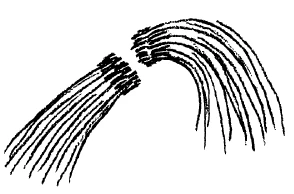
[ 22 ] Hier haben Sie an einer ganz bestimmten Stelle des physischen Organismus den äußeren physischen Ausdruck für das Zusammenwirken des Seelischen mit dem Leiblichen!
[ 22 ] Here, at a very specific point in the physical organism, you have the external physical manifestation of the interaction between the soul and the body!
[ 23 ] Es soll das zunächst nur wie eine prinzipielle Darstellung sein, womit wir unsere heutige Betrachtung ausklingen lassen wollen, die wir morgen weiter ausführen wollen und an die wir Genaueres und Beweisbares anknüpfen wollen. Es ist wichtig, daß wir den Gedanken genau festhalten, daß wir im Übersinnlichen forschen können, und uns dann fragen können, ob der zu erwartende physische Ausdruck für das Übersinnliche auch vorhanden ist. Wir sahen hier, daß das der Fall ist. Da es sich aber hier um die Eingangspforte vom Sinnlichen zum Übersinnlichen handelt, so werden Sie es begreifen, daß diese Organe für die physische Wissenschaft höchst zweifelhafte Organe sind, und daß Sie über diese Organe von der äußeren Wissenschaft nur außerordentlich unzureichende und ungenügende Auskunft erhalten können.
[ 23 ] This is intended, for now, merely as a general overview, with which we wish to conclude today’s discussion; we plan to continue this discussion tomorrow and to follow it up with more specific and verifiable details. It is important that we firmly hold on to the idea that we can investigate the supersensible, and then ask ourselves whether the expected physical expression of the supersensible actually exists. We have seen here that this is the case. However, since this concerns the gateway from the sensory to the supersensory, you will understand that these organs are highly questionable for physical science, and that external science can provide only extremely inadequate and insufficient information about them.