

An Occult Physiology
GA 128
24 March 1911, Prague
Translate the original German text into any language:
Versions Available:
An Occult Physiology, tr. SOL
Fünfter Vortrag
Fifth Lecture
[ 1 ] Es wird heute meine Aufgabe sein, bevor wir in unseren Betrachtungen weiterschreiten, einige Begriffe herbeizutragen, die wir in der weiteren Folge unserer Darstellungen notwendig brauchen werden. Da wird es insbesondere wichtig sein, daß wir uns verständigen über die Bedeutung dessen, was wir im geisteswissenschaftlichen, anthroposophischen Sinne ein physisches Organ nennen oder vielmehr den physischen Ausdruck eines Organs. Denn Sie haben ja schon gesehen, daß wir zum Beispiel über die Milz so reden können, daß die physische Milz sogar materiell entfernt werden kann oder unbrauchbar werden kann, ohne daß dasjenige, was wir im anthroposophischen Sinne die «Milz» nennen, von seiner Tätigkeit ausgeschaltet wird. Es bleibt dennoch, wenn wir ein solches physisches Organ ausgeschaltet, entfernt haben, im Organismus die Tätigkeit, die innere Regsamkeit, die durch das Organ ausgeübt worden war, immer noch übrig. Daraus sehen wir — und ich bitte Sie recht sehr, sich einen solchen Begriff für das folgende anzueignen —, daß wir alles, was physisch anschaubar, was physisch wahrnehmbar ist bei einem solchen Organ, uns wegdenken können - natürlich kann man das nicht von jedem Organ sagen -, und es bleibt doch die bestimmungsgemäße Funktion des Organs; und das, was dann bleibt, was die Funktion weiter fortführt, das müssen wir zu dem Übersinnlichen des menschlichen Organismus rechnen.
[ 1 ] Before we proceed with our reflections, my task today will be to introduce a few concepts that we will need as we continue our discussion. It will be particularly important that we agree on the meaning of what we, in the spiritual-scientific, anthroposophical sense, call a physical organ—or rather, the physical expression of an organ. For you have already seen that we can speak of the spleen, for example, in such a way that the physical spleen can even be physically removed or rendered inoperative without what we call the “spleen” in the anthroposophical sense being deprived of its activity. Nevertheless, when we have rendered such a physical organ inactive or removed it, the activity, the inner vitality that was exercised by the organ, still remains within the organism. From this we see—and I ask you very much to adopt such a concept for what follows—that we can mentally set aside everything that is physically visible, everything that is physically perceptible in such an organ—of course, this cannot be said of every organ—and yet the organ’s intended function remains; and what then remains, what continues the function, we must count among the supersensible aspects of the human organism.
[ 2 ] Nun sprechen wir aber überhaupt, wenn wir im Sinne unserer Geisteswissenschaft von solchen Organen sprechen wie Milz, Leber, Galle, Nieren, Lungen und so weiter, indem wir diese Namen aussprechen, zunächst gar nicht von dem, was man physisch sehen kann, sondern wir bezeichnen damit die in diesen Organen wirkenden Kraftsysteme, die übersinnlicher Natur sind. Daher werden wir, und das ist in besonderem Grade bei der Milz der Fall, wenn wir geisteswissenschaftlich davon sprechen, zunächst ein äußerlich physisch nicht sichtbares Kraftsystem uns denken müssen. Denken wir also in dem, was ich hier zeichne, ein physisch nicht sichtbares Kraftsystem, das nur anschaubar werden könnte für ein übersinnliches Schauen.
[ 2 ] However, when we speak in the context of our spiritual science of organs such as the spleen, liver, gallbladder, kidneys, lungs, and so on—by uttering these names—we are not initially referring to what can be physically seen, but rather we are designating the systems of forces active within these organs, which are of a supersensible nature. Therefore, when we speak of these organs from a spiritual scientific perspective—and this is particularly true of the spleen—we must first conceive of a system of forces that is not physically visible from the outside. So let us imagine, in what I am drawing here, a system of forces that is not physically visible, but which could only become visible to a supersensible gaze.
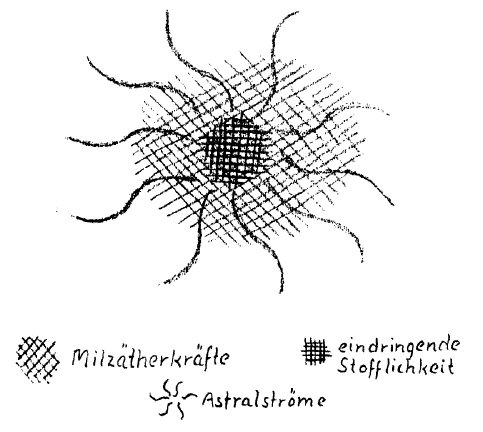
[ 3 ] Ein solches wäre also zum Beispiel in der Gegend unserer Milz nur als übersinnliches Kraftsystem sichtbar. Wenn wir nun ins Auge fassen, daß ja im wirklichen uns vorliegenden menschlichen Organismus dieses übersinnliche Kraftsystem ausgefüllt ist mit sinnlicher Materie, so müssen wir uns fragen: Wie haben wir uns nun das Verhältnis dieses übersinnlichen Kraftsystems zu dem, was sinnliche Materie ist, zu denken?
[ 3 ] Such a system would therefore be visible, for example, in the area of our spleen only as a supersensible force system. If we now consider that, in the actual human organism before us, this supersensible system of forces is filled with sensible matter, we must ask ourselves: How are we to conceive of the relationship between this supersensible system of forces and what constitutes sensible matter?
[ 4 ] Ich glaube, es wird Ihnen nicht schwierig werden, zu denken, daß Kräfte durch den Raum gehen können, welche zunächst nicht sinnlich anschaubar sind. Man braucht sich nur an folgendes zu erinnern: Wer zum Beispiel niemals etwas von der Realität der Luft in einer von Wasser entleerten Flasche gehört hat, der wird der Meinung sein, die Flasche sei ganz leer. Ein solcher physikalisch Unkundiger wird einigermaßen erstaunt sein zu sehen, daß, wenn wir eine leere Wasserflasche auf den Tisch stellen, einen gut anschließenden enghalsigen Trichter aufsetzen und rasch Wasser in den Trichter eingießen, wir das Wasser im Trichter behalten und es nicht in die Flasche hineinfließen kann, weil es durch den Gegendruck der Luft verhindert wird, in die Flasche einzudringen. Ein solcher Mensch wird dann gewahr, daß doch ein für ihn Unsichtbares in der Flasche darinnen ist, welches das Wasser zurückhält. Denken Sie sich diesen Begriff etwas erweitert, so wird es auch nicht schwierig sein, sich vorzustellen, daß der Raum von Kraftsystemen durchdrungen sein kann, welche zunächst übersinnlicher Natur sind, so daß wir sie nicht mit dem Messer durchschneiden können und daß sie auch nicht angegriffen werden können, wenn ein physisches Organ, das ihr materieller Ausdruck ist, zum Beispiel die Milz, erkranken sollte. Wir haben uns zu denken, daß ein übersinnliches Kraftsystem zu dem, was wir als physisch-sinnliches Organ sehen, in einem solchen Verhältnis steht, daß physische Materie sich in dieses Kraftsystem einlagert, angezogen von den Kraftpunkten und Kraftlinien, und dadurch zu einem physischen Organ wird. Wir können sagen: Der Grund, warum zum Beispiel an der Stelle der Milz ein physisch-sinnliches Organ sichtbar ist, ist also der, daß dort in einer ganz bestimmten Weise Kraftsysteme den Raum ausfüllen, welche die Materie so heranziehen, daß sie sich in einer solchen Weise einlagert, wie wir es an dem äußeren Organ der Milz sehen, wenn wir es anatomisch betrachten.
[ 4 ] I believe you will have no difficulty in conceiving that forces can travel through space that are not immediately perceptible to the senses. One need only recall the following: For example, anyone who has never heard of the reality of air in a bottle emptied of water will believe that the bottle is completely empty. Such a person, unfamiliar with physics, will be somewhat astonished to see that when we place an empty water bottle on the table, fit a tight-fitting, narrow-necked funnel onto it, and quickly pour water into the funnel, the water remains in the funnel and cannot flow into the bottle because the counterpressure of the air prevents it from entering the bottle. Such a person will then realize that there is indeed something inside the bottle that is invisible to them, which is holding the water back. If you expand this concept a little, it will not be difficult to imagine that space can be permeated by systems of forces that are initially of a supersensible nature, so that we cannot cut through them with a knife and they cannot be affected even if a physical organ—which is their material expression—such as the spleen, were to become diseased. We must conceive that a supersensible force system stands in such a relationship to what we see as a physical-sensory organ that physical matter becomes embedded in this force system, drawn by the force points and force lines, and thereby becomes a physical organ. We can say: The reason why, for example, a physical-sensory organ is visible at the site of the spleen is that there, in a very specific way, force systems fill the space, drawing matter to itself in such a way that it becomes embedded in the manner we observe in the external organ of the spleen when we examine it anatomically.
[ 5 ] So können Sie sich die verschiedensten Organe im menschlichen Organismus denken. Sie sind zuerst übersinnlich veranlagt und dann ausgefüllt unter dem Einfluß der verschiedensten übersinnlichen Kraftsysteme von physischer Materie. Daher müssen wir in diesen Kraftsystemen zunächst einen übersinnlichen Organismus sehen, der in sich differenziert ist, der in den verschiedensten Weisen die physische Materie sich eingliedert und dessen Kompliziertheit das physische, ihm eingegliederte Organ nur unvollständig zu folgen vermag. Damit haben wir nicht nur den Begriff des Verhältnisses der übersinnlichen Kraftsysteme zu den eingelagerten physisch-materiellen Organen gewonnen, sondern zugleich auch einen anderen Begriff, den der Ernährung des Gesamtorganismus. Worin besteht denn diese Ernährung des Gesamtorganismus? Sie besteht in nichts anderem als darin, daß die aufgenommenen Nahrungsstoffe so vorbereitet werden, daß es möglich ist, sie hinzuleiten nach den verschiedenen Organen, und diese sich dann die Stoffe eingliedern. Wir werden in den folgenden Vorträgen noch sehen, wie dieser allgemeine Begriff der Ernährung, der sich zeigt als eine Anziehungskraft der verschiedenen Organsysteme für die Nahrungsstoffe, sich verhält zur Entstehung des einzelnen Menschen, zur Keimesgeschichte des einzelnen Menschen, die vor der Geburt liegt. Der umfassendste Begriff der Ernährung ist also der, daß durch übersinnliche Kraftsysteme, durch einen übersinnlichen Organismus die einzelnen Nahrungsstoffe eingesogen und in der verschiedensten Weise dem physischen Organismus eingegliedert werden.
[ 5 ] You can think of the various organs in the human organism in this way. They are initially of a supersensible nature and are then filled with physical matter under the influence of the most diverse supersensible force systems. Therefore, we must first see in these systems of forces a supersensible organism that is differentiated within itself, that incorporates physical matter in the most diverse ways, and whose complexity the physical organ incorporated into it can only follow incompletely. In doing so, we have not only gained an understanding of the relationship between the supersensible force systems and the embedded physical-material organs, but also another concept: that of the nourishment of the entire organism. What, then, does this nourishment of the entire organism consist of? It consists of nothing other than the fact that the ingested nutrients are prepared in such a way that it is possible to direct them to the various organs, which then incorporate the substances. In the following lectures we shall see how this general concept of nutrition, which manifests as an attractive force of the various organ systems toward the nutrients, relates to the development of the individual human being, to the embryonic history of the individual human being that lies prior to birth. The most comprehensive concept of nutrition is therefore that through supersensible force systems, through a supersensible organism, the individual nutrients are drawn in and incorporated into the physical organism in the most diverse ways.
[ 6 ] Nun müssen wir uns klar sein, daß der Ätherleib des Menschen, der das nächste übersinnliche Glied in der menschlichen Organisation ist nach dem physischen Leibe, daß dieser Ätherleib, wenn er auch das gröbste der übersinnlichen Glieder ist, wie ein übersinnliches Urbild dem gesamten Organismus zugrundeliegt, daß er in sich gegliedert, differenziert ist und die mannigfaltigsten Kraftsysteme enthält, um sich die durch die Ernährung aufgenommenen Stoffe einzugliedern. Wir haben nun aber nach diesem ätherischen Leib, den wir als das Urbild des menschlichen Organismus betrachten können, als das nächsthöhere Glied der menschlichen Wesenheit den sogenannten Astralleib. Wie sich diese beiden zusammenschließen, werden uns die nächsten Vorträge noch zeigen. Der Astralleib ist das, was sich erst eingliedern kann, wenn sowohl der physische Organismus als auch der ätherische Organismus ihrer Anlage nach schon vorbereitet sind; er setzt die beiden anderen Organismen voraus. Ferner haben wir das, was wir das menschliche Ich nennen, so daß die gesamte menschliche Wesenheit sich zusammenschließt aus diesen vier Gliedern. Wir können uns nun vorstellen, daß schon im Ätherleib selbst gewisse Kraftsysteme sind, die die Nahrungsstoffe an sich ziehen und sie dann im physischen Organismus in einer ganz bestimmten Weise gestalten. Wir können uns aber auch vorstellen, daß ein solches Kraftsystem nicht nur durch den Ätherleib bestimmt ist, sondern auch durch den Astralleib und daß dieser seine Kräfte da hineinsendet, so daß, wenn wir uns das physische Organ wegdenken, wir zunächst das ätherische Kraftsystem haben würden, dann das astralische Kraftsystem, welches das ätherische Kraftsystem in einer ganz bestimmten Weise durchdringt, und wir können uns vorstellen, daß da auch noch Strahlungen vom Ich hineindringen.
[ 6 ] Now we must be clear that the human etheric body, which is the next supersensible member of the human organism after the physical body, that this etheric body—even though it is the coarsest of the supersensible members—lies at the foundation of the entire organism like a supersensible archetype, that it is internally structured, and contains the most diverse systems of forces for assimilating the substances taken in through nutrition. But following this etheric body, which we can regard as the archetype of the human organism, we have, as the next higher member of the human being, the so-called astral body. The next lectures will show us how these two are united. The astral body is that which can only integrate itself once both the physical organism and the etheric organism are already prepared in their structure; it presupposes the other two organisms. Furthermore, we have what we call the human ego, so that the entire human being is composed of these four members. We can now imagine that there are already certain force systems within the etheric body itself that draw in the nutrients and then shape them in the physical organism in a very specific way. But we can also imagine that such a force system is determined not only by the etheric body but also by the astral body, and that the astral body sends its forces into it, so that if we were to mentally remove the physical organ, we would first have the etheric force system, then the astral force system, which permeates the etheric force system in a very specific way, and we can imagine that rays from the ego also penetrate into it.
[ 7 ] Es kann nun Organe geben, welche so in den Organismus eingegliedert sind, daß ihr Wesentlichstes darauf beruht, daß die ätherischen Strömungen in ihrer Eigenart noch sehr wenig bestimmend gewirkt haben, so daß, wenn wir den Raum okkult untersuchen, in dem ein betreffendes Organ sich befindet, wir finden würden, daß der ätherische Teil dieses Organs recht wenig durch sich selber differenziert ist, nur wenig von diesen Kraftsystemen enthält, daß aber dafür dieser Teil des Ätherleibes durch starke astralische Kräfte beeinflußt wird. Dann wird, wenn die physische Materie sich einem solchen Organ eingliedert, der Ätherleib nur eine geringe Anziehungskraft auf die einzugliedernden Stoffe ausüben, die hauptsächlichste Anziehungskraft wird dann vom Astralleib auf das betreffende Organ ausgeübt, und zwar so, als ob die betreffenden Stoffe direkt von dem Astralleibe hereingeholt würden in das betreffende Organ. Daraus sehen Sie, daß die Organe des Menschen von ganz verschiedener Wertigkeit sind. Es gibt solche Organe, von denen man sagen muß, daß sie hauptsächlich bestimmt sind durch Kraftsysteme des Ätherleibes, andere, die mehr bestimmt sind durch Strömungen oder Kräfte des Astralleibes, während noch andere mehr bestimmt sind durch Strömungen des Ich. Aus den Ausführungen, die in den Vorträgen gemacht worden sind, können Sie sich schon sagen, daß insbesondere das Organsystem, das unser Blut führt, im wesentlichen von solchen Strahlungen abhängt, die von unserem Ich ausgehen, daß also das menschliche Blut im wesentlichen mit Strömungen und Strahlungen des menschlichen Ich zusammenhängt. Die anderen Organsysteme und ihre Inhalte sind in den verschiedensten Abstufungen von den übersinnlichen Gliedern der menschlichen Natur bestimmt.
[ 7 ] There may be organs that are integrated into the organism in such a way that their very essence rests on the fact that the etheric currents have had very little defining influence in their own right; so that, if we were to investigate the space in which a particular organ is located through occult means, we would find that the etheric part of this organ is quite undifferentiated in itself, contains only a small amount of these force systems, but that, in contrast, this part of the etheric body is influenced by strong astral forces. Then, when physical matter incorporates itself into such an organ, the etheric body exerts only a slight attractive force on the substances to be incorporated; the main attractive force is then exerted by the astral body on the organ in question, and indeed in such a way as if the substances in question were being drawn directly from the astral body into the organ in question. From this you can see that the organs of the human being are of quite different significance. There are organs of which one must say that they are primarily determined by the force systems of the etheric body, others that are more determined by currents or forces of the astral body, while still others are more determined by currents of the I. From the explanations given in the lectures, you can already see that the organ system that carries our blood, in particular, depends essentially on the radiations emanating from our ego; that is to say, human blood is essentially connected with the currents and radiations of the human ego. The other organ systems and their contents are determined, in varying degrees, by the supersensible members of human nature.
[ 8 ] Aber es kann auch der umgekehrte Fall eintreten, wenn wir nämlich den physischen Leib an sich nehmen, der ja - jetzt abgesehen von seinen höheren Gliedern — auch ein Kraftsystem darstellt. Er stellt zunächst das dar, was man sich zusammengesetzt denken kann aus Stoffen der äußeren Welt, die auch ihre inneren Gesetze haben, die aber umgewandelt dem physischen Leibe eingefügt sind. Der physische Leib ist also auch ein Kraftsystem. So daß Sie sich auch den Fall denken können, daß der physische Organismus wieder zurückwirkt auf das ätherische oder bis auf das astralische Kraftsystem oder sogar bis ins Ich-System hinein. Wir müssen uns denken, daß das ätherische Kraftsystem nicht nur eingefangen wird von dem astralischen oder vom Ich-System, sondern daß es auch Organe gibt, bei denen die ätherischen Kräfte von der Seite des physischen Kraftsystems derart eingespannt werden, daß das physische Kraftsystem überwiegt. Solche Organe, bei denen der physische Leib das Überwiegende ist, die also nur in geringerem Maße beeinflußt werden von den höheren Gliedern der menschlichen Organisation, das sind hauptsächlich diejenigen Organe, welche im weitesten Sinne als Absonderungsorgane zu bezeichnen sind, alle drüsigen Organe, alle Absonderungsorgane überhaupt. Alle Absonderungsorgane, alle Organe, welche direkt Stoffe absondern, werden zu diesen Stoffabsonderungen — also zu einem Vorgang, der innerhalb der rein physischen Welt seine wesentliche Bedeutung hat — hauptsächlich durch die Kräfte des physischen Organismus veranlaßt. Wo immer im menschlichen Organismus solche Organe sind, wenn sie vorzugsweise zum Absondern des Stofflichen bestimmt sind, müssen wir uns klar sein, daß solche Organe, die hauptsächlich Werkzeuge der physischen Kraftsysteme sind, durch Erkrankung, durch Unbrauchbarwerden oder durch ihre Entfernung den Organismus unfehlbar zum Verfall bringen, so daß er dann nicht mehr in entsprechender Weise sich entwikkeln und zuletzt nicht mehr leben kann. Sie sehen an einem solchen Organ, wie es die Milz ist, von der wir gestern gesprochen haben, daß deren Erkranken, deren sonstiges Unbrauchbarwerden oder operative Entfernung den physischen Körper in seinen Funktionen weit weniger stört, als dies bei anderen Organen der Fall ist, weil sie in besonders starker Weise beeinflußt wird von den übersinnlichen Teilen der menschlichen Natur, vom Ätherleibe, namentlich aber vom Astralleibe. Anders ist es bei den Organen, wo das physische Kraftsystem überwiegt. Eine Erkrankung der Schilddrüse zum Beispiel, die sich bei bestimmten Erkrankungen manchmal vergrößert zur sogenannten Kropfbildung, kann auf den ganzen Organismus sehr schädlich wirken. Sie darf aber nicht vollständig unbrauchbar werden oder vollständig entfernt werden, und zwar deshalb nicht, weil sie ihre Wirkungen so zu äußern hat, daß das, was als physischer Vorgang durch sie bewirkt wird, im Gesamthaushalt des menschlichen Organismus ganz wesentlich ist.
[ 8 ] But the opposite can also occur, namely when we consider the physical body in and of itself, which—setting aside its higher components—also constitutes a system of forces. It represents, first of all, what one can conceive of as a composite of substances from the external world, which also have their own inner laws, but which, having been transformed, are incorporated into the physical body. The physical body is thus also a system of forces. So that you can also imagine the case where the physical organism in turn exerts a counter-effect on the etheric or even the astral system of forces, or even into the ego system. We must realize that the etheric force system is not merely captured by the astral or ego system, but that there are also organs in which the etheric forces are so engaged from the side of the physical force system that the physical force system predominates. Such organs, in which the physical body predominates—that is, which are influenced only to a lesser extent by the higher members of the human organism—are mainly those organs that can be described in the broadest sense as secretory organs: all glandular organs, all secretory organs in general. All secretory organs, all organs that directly secrete substances, are prompted to these secretions—that is, to a process that has its essential significance within the purely physical world—mainly by the forces of the physical organism. Wherever such organs are found in the human organism, if they are primarily intended for the secretion of material substances, we must be clear that such organs, which are mainly instruments of the physical systems of force, inevitably lead the organism to decay through disease, through becoming useless, or through their removal, so that it can then no longer develop in the appropriate manner and ultimately can no longer live. You can see in an organ such as the spleen, which we spoke of yesterday, that its disease, its becoming otherwise unusable, or its surgical removal disturbs the physical body’s functions far less than is the case with other organs, because it is influenced in a particularly strong way by the supersensible parts of human nature, by the etheric body, but especially by the astral body. The situation is different with organs where the physical energy system predominates. A disease of the thyroid gland, for example, which in certain conditions sometimes enlarges to form what is known as a goiter, can have a very harmful effect on the entire organism. However, it must not be rendered completely useless or completely removed, and this is because it must express its effects in such a way that what it brings about as a physical process is quite essential to the overall balance of the human organism.
[ 9 ] Nun kann es solche Organe geben, die in hohem Maße abhängen von den übersinnlichen Kraftsystemen der menschlichen Organisation, die aber doch eingespannt sind in den physischen Organismus und durch dessen Kräfte veranlaßt werden, Stoffliches abzusondern. Ein solches Organ ist zum Beispiel die Leber, ebenso sind es die Nieren. Das sind Organe, die, geradeso wie die Milz, abhängig sind von den übersinnlichen Gliedern der menschlichen Organisation, vom Ätherleibe und Astralleibe, die aber sozusagen eingefangen sind von den Kräften des physischen Organismus, heruntergezogen sind in ihren Wirkungen bis zu den Kräften des Physischen. Daher kommt es bei ihnen in einem viel höheren Grade darauf an, daß sie als physische Organe in gesundem Zustande sind, als zum Beispiel bei der Milz, bei welcher die Sache so liegt, daß das Physische sehr wenig in Betracht kommt und weit überwogen wird von dem, was von den übersinnlichen Gliedern der menschlichen Organisation herkommt. Wir können von der Milz sagen, daß sie ein sehr geistiges Organ ist, denn der physische Teil dieses Organs macht den geringsten Teil seiner Bedeutung aus. Aus diesem Grunde wurde die Milz zu allen Zeiten in der okkulten Literatur, die entsprungen ist aus Kreisen, wo man wirklich etwas über diese Sachen gewußt hat, immer als ein besonders geistiges Organ angesehen und geschildert.
[ 9 ] There may be organs that are highly dependent on the supersensible force systems of the human organism, yet are integrated into the physical organism and are prompted by its forces to secrete material substances. One such organ is, for example, the liver, as are the kidneys. These are organs that, just like the spleen, depend on the supersensible members of the human organism—the etheric body and the astral body—but are, so to speak, captured by the forces of the physical organism, their effects drawn down to the level of the physical forces. Therefore, it is far more important for them, as physical organs, to be in a healthy state than, for example, for the spleen, where the physical aspect plays a very minor role and is far outweighed by what comes from the supersensible members of the human organism. We can say of the spleen that it is a very spiritual organ, for the physical part of this organ constitutes the least part of its significance. For this reason, the spleen has always been regarded and described in occult literature—which has sprung from circles where one truly knew something about these matters—as a particularly spiritual organ.
[ 10 ] So also haben wir jetzt gewissermaßen den Begriff des Gesamtorganismus gewonnen, dessen einzelnes Organ angesehen werden kann als ein übersinnliches Kraftsystem, in das gleichsam die stoffliche Materie durch den gesamten Ernährungsprozeß hineingelagert wird. Ein anderer Begriff, den wir uns aneignen müssen, ist der: Was bedeutet überhaupt für den Menschen die Aufnahme - sei es eines Stoffes oder sei es die Aufnahme eines Geistigen, die durch unsere Seelentätigkeit bewirkt wird, zum Beispiel bei der Wahrnehmung? Und was bedeutet die Absonderung, die Abgabe eines Stoffes?
[ 10 ] Thus, we have now, so to speak, arrived at the concept of the total organism, whose individual organs can be regarded as a supersensible system of forces into which, as it were, physical matter is incorporated through the entire process of nutrition. Another concept we must grasp is this: What does the process of taking in—whether of a physical substance or of something spiritual, brought about by our soul activity, for example in perception—actually mean for human beings? And what does the excretion, the release of a substance, mean?
[ 11 ] Gehen wir da zunächst aus von dem Absonderungsprozeß im weitesten Umfange. Wir wissen ja, daß von den aufgenommenen Nahrungsmitteln schon ein großer Teil des Stofflichen vom Verdauungskanal abgesondert wird. Wir wissen ferner, daß durch die Lungen aus dem menschlichen Organismus die Kohlensäure ausgeschieden wird. Dann haben wir einen Absonderungsprozeß durch die Nieren, ein weiterer Absonderungsprozeß geschieht durch die Haut. In diesem letzteren, der zunächst in der Schweißbildung verläuft, aber auch in allem, was im umfänglichen Sinne als Absonderungsprozeß durch die Haut zu gelten hat, haben wir jene Absonderung zu sehen — und ich bitte, darauf zu achten -, die beim Menschen an dem äußersten Umfange, an der äußersten Peripherie seines Leibes erfolgt. Nun fragen wir uns zunächst einmal: Was bedeutet denn überhaupt ein Absonderungsprozeß für den Menschen?
[ 11 ] Let us first consider the excretory process in its broadest sense. We know, of course, that a large portion of the material from the food we consume is already excreted by the digestive tract. We also know that carbon dioxide is excreted from the human organism through the lungs. Then there is a process of excretion through the kidneys, and another process of excretion occurs through the skin. In this latter process, which initially takes the form of perspiration but also encompasses everything that, in the broadest sense, can be considered a process of excretion through the skin, we must recognize—and I ask you to pay close attention to this—that this excretion occurs in humans at the outermost extent, at the very periphery of the body. Now let us first ask ourselves: What does a secretion process actually mean for human beings?
[ 12 ] Wir werden uns die Bedeutung eines Absonderungsprozesses nur klarmachen können auf folgende Weise. Sie werden sehen, daß wir ohne die Begriffe, die wir heute entwickelt haben, überhaupt nicht weiterkommen können in der Betrachtung des menschlichen Organismus. Ich möchte Ihnen, um unsere Gedanken allmählich hinüberzuführen zu der wesentlichen Natur eines Absonderungsprozesses, zunächst einen anderen Begriff vorführen, der allerdings nur eine entfernte Ähnlichkeit mit dem Absonderungsprozesse hat, der uns aber dazu hinüberführen kann, nämlich den Begriff des Gewahrwerdens unseres Selbst. Bedenken Sie einmal, wie Sie im Grunde genommen doch sagen können, daß es eine Art Gewahrwerden Ihres Selbstes ist, wenn Sie in einem Raume gehen und sich unvorsichtigerweise an einem harten Gegenstande stoßen. Dieses Anstoßen ist im Grunde genommen ein Gewahrwerden des eigenen Selbstes. Es ist ein Gewahrwerden des eigenen Selbstes auf die Art, daß Ihnen das Freignis, das sich durch den Stoß vollzogen hat, zu einem inneren Ereignis geworden ist. Denn was ist für Sie der Zusammenstoß mit einem fremden Gegenstande? Er ist die Ursache eines Wehetuns, eines Schmerzes. Der Schmerzvorgang spielt sich rein in Ihrem Inneren ab. Also ein innerer Vorgang wird dadurch hervorgerufen, daß Sie sich in Berührung bringen mit einem fremden Gegenstand, der Ihnen als Hindernis im Weg liegt. Das Gewahrwerden dieses Hindernisses ist das, was den inneren Prozeß hervorruft, der als Schmerz beim Sichstoßen auftritt. Im Grunde genommen können Sie sich leicht vorstellen, daß Sie überhaupt nichts anderes zu wissen brauchen, um das Gewahrwerden Ihres eigenen Selbstes zu erleben, als den inneren Schmerz, der durch das Anstoßen an einen äußeren Gegenstand bewirkt wird. Denken Sie sich, daß Sie im Finstern an einen Gegenstand stoßen, von dem Sie gar nicht wissen, was er ist, und nehmen Sie an, Sie stoßen sich so stark, daß Sie auch gar nicht darauf schließen können, wie der Gegenstand beschaffen sein könnte, sondern Sie spüren nur die Wirkung des Stoßes als Schmerz. Sie haben den Stoß in seiner Wirkung so empfunden, daß Sie den Vorgang in sich selbst erlebten. Sie erleben gar nichts anderes als einen inneren Vorgang, und das ist das Wesentliche. Wenn Sie allerdings auch sagen: Ich habe mich an einem äußeren Gegenstand gestoßen -, so ist das mehr oder weniger ein unbewußter Schluß von einem inneren Erlebnis auf ein äußeres Hindernis.
[ 12 ] We can only grasp the significance of a process of differentiation in the following way. You will see that without the concepts we have developed today, we cannot make any progress at all in our consideration of the human organism. To gradually guide our thoughts toward the essential nature of a process of separation, I would first like to introduce another concept, one that bears only a distant resemblance to the process of separation but can lead us there: the concept of becoming aware of our self. Consider for a moment how you can essentially say that it is a kind of becoming aware of your own self when you walk into a room and carelessly bump into a hard object. This bumping is, in essence, a becoming aware of one’s own self. It is a becoming aware of one’s own self in such a way that the sensation caused by the bump has become an inner event. For what is the collision with a foreign object to you? It is the cause of a sting, of pain. The process of pain takes place entirely within you. Thus, an inner process is triggered by your coming into contact with a foreign object that lies in your path as an obstacle. The awareness of this obstacle is what triggers the inner process that manifests as pain when you bump into it. Basically, you can easily imagine that you need to know nothing else at all to experience the awareness of your own self other than the internal pain caused by bumping into an external object. Imagine that you bump into an object in the dark, of which you have no idea what it is, and suppose you bump into it so hard that you cannot even infer what the object might be like, but you only feel the effect of the bump as pain. You have perceived the bump in its effect in such a way that you experienced the process within yourself. You experience nothing other than an inner process, and that is the essential point. However, if you also say, “I bumped into an external object,” this is more or less an unconscious inference from an inner experience to an external obstacle.
[ 13 ] Daraus können Sie sehen, daß der Mensch seines Inneren gewahr wird durch das Finden eines Widerstandes. Diesen Begriff müssen wir haben: das Gewahrwerden des Selbstes, das Erleben des Inneren, das Ausgefülltsein mit realen Erlebnissen im Inneren durch das Finden eines Widerstandes. Dies ist ein Begriff, den ich, ich möchte sagen, in aller Grobheit entwickelt habe, um von ihm den Übergang machen zu können zu einem anderen Begriffe, dem der Absonderungen im menschlichen Organismus. Denken wir uns einmal, der menschliche Organismus nehme in sich selber in irgendein Organsystem, meinetwegen in den Magen, eine gewisse Stofflichkeit auf und das Organsystem sei so eingerichtet, daß es durch seine Tätigkeit aus diesem Stoffe, der da aufgenommen ist, etwas aussondert, etwas gleichsam separiert, wegnimmt von dem Gesamtstoff, so daß durch diese Tätigkeit des Organs der Gesamtstoff zerfällt in einen feineren, gleichsam filtrierten Teil und in einen gröberen Teil, der ausgesondert wird. Es wird also eine Differenzierung des Stoffes vorgenommen in einen solchen, der in einen weiter brauchbaren, für andere Organe aufzunehmenden Stoff umgewandelt wird und in einen solchen, der erst abgesondert und dann ausgeschieden wird.
[ 13 ] From this you can see that a person becomes aware of their inner self by encountering resistance. We must grasp this concept: the becoming aware of the self, the experience of the inner self, the being filled with real inner experiences through the encounter with resistance. This is a concept that I have, I might say, developed in the crudest terms in order to be able to make the transition from it to another concept, that of secretions in the human organism. Let us imagine for a moment that the human organism takes into itself, into some organ system— the stomach, for example, and that this organ system is arranged in such a way that, through its activity, it separates something from this substance that has been taken in—separates it, as it were, from the total substance—so that through this activity of the organ, the total substance breaks down into a finer, as it were filtered, part and a coarser part that is excreted. Thus, a differentiation of the substance takes place into one that is converted into a substance that can be further utilized and absorbed by other organs, and into one that is first separated and then excreted.
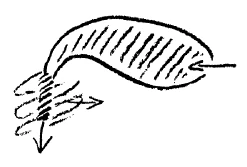
[ 14 ] Hier an dieser Stelle, wo die unbrauchbaren Teile der Stofflichkeit abgestoßen werden gegenüber den brauchbaren Stoffen, hier haben Sie in modifizierter Form etwas wie ein Sichanstoßen an einen äußeren Gegenstand, wie ich es eben dargestellt habe. Es stößt der aufgenommene Stoffstrom, indem er an ein Organ herankommt, sozusagen auf einen Widerstand; er kann nicht so bleiben, wie er ist, er muß sich ändern. Es wird ihm gleichsam durch das Organ gesagt: So kannst du nicht bleiben, wie du bist, du mußt dich ändern. — Es wird also dem Stoff ein Widerstand entgegengestellt, er muß als ein anderer Stoff weiterverbraucht werden, und er muß gewisse Teile abstoßen. In unserem Innern stellt sich das Organ dem Stofflauf so entgegen, wie sich der äußere Gegenstand uns entgegenstellt, an dem wir uns stoßen. Solche Widerstände finden sich innerhalb des Gesamtorganismus in den mannigfachsten Organen. Und erst dadurch, daß überhaupt in unserem Organismus abgesondert wird, erst dadurch, daß wir Absonderungsorgane haben, dadurch ist die Möglichkeit gegeben, daß unser Organismus eine in sich abgeschlossene, sich selbst erlebende Wesenheit ist. Denn Erleben kann sich eine Wesenheit nur dadurch, daß sie auf Widerstand stößt. So haben wir in den Absonderungsprozessen wichtige Prozesse des menschlichen Lebens, nämlich diejenigen Prozesse, wodurch sich der lebendige Organismus in sich selber abschließt. Der Mensch wäre kein in sich abgeschlossenes Wesen, wenn solche Absonderungsprozesse nicht vorhanden wären.
[ 14 ] Here, at this point, where the unusable parts of matter are separated from the usable substances, you have, in a modified form, something like a collision with an external object, as I just described. The stream of absorbed matter, as it approaches an organ, encounters a kind of resistance, so to speak; it cannot remain as it is, it must change. The organ tells it, as it were: You cannot remain as you are, you must change. — Thus, a resistance is set against the substance; it must be further processed as a different substance, and it must shed certain parts. Within us, the organ opposes the flow of substance just as the external object opposes us when we collide with it. Such resistances are found within the entire organism in the most diverse organs. And it is only through the fact that secretion occurs in our organism at all, only through the fact that we have secretory organs, that the possibility arises for our organism to be a self-contained, self-experiencing entity. For an entity can only experience itself by encountering resistance. Thus, in the processes of excretion, we have important processes of human life, namely those processes through which the living organism closes in on itself. Human beings would not be self-contained beings if such excretory processes did not exist.
[ 15 ] Denken Sie sich einmal, der aufgenommene Nahrungsstrom oder der Sauerstoffstrrom würden durch den menschlichen Organismus wie durch einen Schlauch glatt hindurchgehen und es gäbe keinen Widerstand durch die Organe. Die Folge davon wäre,, daß der menschliche Organismus sich nicht in sich selbst erleben könnte, sondern er würde sich nur erleben als angehörig der gesamten großen Welt. Wir könnten uns ja allerdings auch vorstellen, daß innerhalb des menschlichen Organismus die gröbste Art dieses Widerstandbietens eintreten würde, daß der Stoffstrom sich an einer festen Wandung stoßen und reflektieren, zurückkehren würde. Das würde aber das innere Erleben des menschlichen Organismus nicht berühren, denn ob der Nahrungsstrom oder der Sauerstoffstrom durch den menschlichen Organismus wie durch einen Schlauch hindurchginge, auf der einen Seite hinein, auf der anderen wieder hinaus, oder ob er reflektiert würde, das würde für das innere Erleben nichts ausmachen. Daß das so ist, können Sie schon daraus entnehmen, daß — wie wir schon gesagt haben -, wenn wir es in unserem Nervensystem dazu bringen, daß eine Vorstellung in sich selbst zurückkehrt, wir dann geradezu unser Nervensystem herausheben aus dem Erleben des inneren Organismus. Es macht also keinen Unterschied, ob völlige Reflexion oder bloßes Hindurchgleiten der von außen hineingehenden Ströme durch den menschlichen Organismus vorliegt. Was den menschlichen Organismus in sich selbst erlebbar macht, das sind die Absonderungen.
[ 15 ] Imagine for a moment that the flow of food or oxygen passed smoothly through the human organism as if through a tube, and that there was no resistance from the organs. The consequence of this would be that the human organism could not experience itself as a separate entity, but would experience itself only as part of the entire wider world. We could, of course, also imagine that within the human organism the coarsest form of this resistance would occur, that the flow of matter would strike a solid wall, be reflected, and return. But that would not affect the inner experience of the human organism, for whether the flow of nourishment or the flow of oxygen passed through the human organism as through a tube—in on one side, out on the other—or whether it were reflected, it would make no difference to the inner experience. You can already infer that this is the case from the fact that—as we have already said—when we cause an image to return to itself within our nervous system, we thereby effectively lift our nervous system out of the experience of the inner organism. It therefore makes no difference whether there is complete reflection or merely a passing through of the currents entering from the outside through the human organism. What makes the human organism experienceable in itself are the secretions.
[ 16 ] Wenn Sie dasjenige Organ betrachten, welches wir als das Mittelpunktsorgan für den menschlichen Organismus ansehen müssen, das Blutsystem, wenn Sie sehen, wie auf der einen Seite das Blut immerfort durch Aufnehmen von Sauerstoff sich auffrischt, und wenn Sie auf der anderen Seite das Blutsystem als das Werkzeug des menschlichen Ich betrachten, so können wir sagen: Wenn das Blut unverändert durch den menschlichen Organismus hindurchgehen würde, so könnte es nicht das Organ des menschlichen Ich sein, das im eminentesten Sinne das Organ ist, welches den Menschen sich innerlich erlebbar macht. Nur dadurch, daß das Blut in sich selber Veränderungen durchmacht und als ein anderes wieder zurückkehrt, daß also Absonderungen geschehen von verändertem Blut, nur dadurch ist es möglich, daß der Mensch das Ich nicht nur hat, sondern es auch erleben kann mit Hilfe seines sinnlich-physischen Werkzeuges, des Blutes.
[ 16 ] If you consider the organ that we must regard as the central organ of the human organism—the circulatory system—and if you observe how, on the one hand, the blood is constantly renewed by taking in oxygen, and if, on the other hand, you regard the circulatory system as the instrument of the human ego, then we can say: If the blood were to pass through the human organism unchanged, it could not be the organ of the human ego, which is, in the most eminent sense, the organ that makes the human being experienceable inwardly. Only because the blood undergoes changes within itself and returns as something different—that is, because secretions of altered blood occur—only through this is it possible for the human being not only to have an ego but also to experience it with the aid of its sensory-physical instrument, the blood.
[ 17 ] Daraus hat sich uns nun dieser Begriff der Absonderung ergeben. Und jetzt werden wir uns zu fragen haben: Wie steht es nun mit jener Absonderung, welche wir vorhin bezeichnet haben als der äußersten Peripherie des menschlichen Organismus angehörig? — Es wird uns ja unschwer sein, uns vorzustellen, wie der Gesamtorganismus des Menschen wirken muß, damit diese Absonderung an der Peripherie geschehen kann. Dazu ist es notwendig, daß den gesamten Strömungen des menschlichen Organismus entgegengestellt werde ein Organ, welches in Zusammenhang steht gerade mit diesem umfänglichsten Absonderungsprozeß. Und dieses Organ, das ja, wie Sie sich leicht denken können, die Haut ist, mit allem, was zu ihr gehört im umfänglichsten Sinne, das ist zugleich dasjenige, was schon für den unmittelbaren äußeren Anblick als das Wesentliche der menschlichen Gestalt, der menschlichen Form sich darbietet. Wenn wir uns also vorstellen, daß der menschliche Organismus, der sich selbst erleben kann an seinem äußeren Umfange, dies nur dadurch kann, daß er das Organ der Haut seinen gesamten Strömungen entgegenstellt, so müssen wir in der eigenartigen Formung der Haut einen der Ausdrücke sehen für die innersten Kräfte des menschlichen Organismus.
[ 17 ] This has led us to the concept of excretion. And now we must ask ourselves: What about that excretion which we previously described as belonging to the outermost periphery of the human organism? — It will not be difficult for us to imagine how the entire human organism must function in order for this secretion to take place at the periphery. For this, it is necessary that an organ be set in opposition to the entire flow of the human organism, an organ that is connected precisely with this most extensive secretion process. And this organ, which, as you can easily imagine, is the skin, with everything that belongs to it in the most comprehensive sense, is at the same time that which presents itself to the immediate external gaze as the essence of the human figure, the human form. If we therefore imagine that the human organism, which is able to experience itself at its outer periphery, can do so only by setting the organ of the skin in opposition to its entire flow of forces, then we must see in the unique formation of the skin one of the expressions of the innermost forces of the human organism.
[ 18 ] Wir werden uns nun zu fragen haben: Wie haben wir uns denn dieses Hautorgan zu denken? Wie haben wir uns die Haut mit allem, was dazugehört, zu denken? Wir werden schon sehen, was im einzelnen dazugehört, wir wollen es aber heute nur im großen und ganzen charakterisieren. Da müssen wir uns zunächst darüber klar sein, daß in dem, was zu unserem bewußten Erleben gehört, wovon wir eine Erkenntnis haben können durch irgendeine Selbstbeobachtung, jene Gestaltung nicht einbegriffen ist, welche in der Formung unserer Haut zum Ausdruck kommt. Selbst wenn wir in begrenztem Umfange mittätig sind an der Gestaltung unserer äußeren Körperoberfläche, so ist sie doch etwas, das sich der unmittelbaren Willkür in vollkommenster Weise entzieht. Nur in bezug auf die Beweglichkeit unserer Haut, in bezug auf Mienenspiel, Gesten und so weiter, haben wir ja einen Einfluß, der noch an das heranreicht, was wir bewußte Tätigkeit nennen können; aber auf die Gestalt, auf die Form unserer Körperoberfläche haben wir keinen Einfluß mehr. Es muß freilich zugegeben werden, daß der Mensch zwischen Geburt und Tod einen gewissen Einfluß auf seine äußere Leibesform in engeren Grenzen hat. Davon kann sich jeder überzeugen, der einen Menschen kennengelernt hat in einem bestimmten Lebensalter und ihn vielleicht nach zehn oder zwanzig Jahren wiedersieht, insbesondere wenn dieser Mensch in diesen Jahren durchgegangen ist durch tiefere innere Erlebnisse, namentlich durch Erkenntniserlebnisse, die nicht Gegenstand der äußeren Wissenschaft sind, sondern durch solche, die «Blut kosten», die zusammenhängen mit unserem ganzen Lebensschicksal. Dann sehen wir allerdings innerhalb enger Grenzen, wie die Physiognomie sich ändert, wie also der Mensch innerhalb dieser Grenzen einen Finfluß hat auf die Gestaltung seines Leibes. Aber er hat ihn nur in geringem Maße, und das wird jeder zugeben müssen; denn das Hauptsächlichste in der menschlichen Gestalt ist durchaus nicht in unsere Willkür gegeben und nicht durch unser Bewußtsein bestimmt. Dennoch müssen wir sagen: Die ganze menschliche Gestalt ist angepaßt der menschlichen Wesenheit; und wer auf die Dinge eingeht, wird sich niemals vorstellen können, daß dasjenige, was wir den ganzen Umfang der menschlichen Fähigkeiten nennen, sich entwickeln könnte in einem Wesen von einer anderen Gestalt, als es die heutige Menschengestalt ist. Alles, was an Fähigkeiten im Menschen ist, hängt zusammen mit dieser Menschengestalt. Denken Sie sich nur einmal, daß erwa das Stirnbein in einer irgendwie anderen Lage wäre zu dem Gesamtorganismus, als es ist, so würde diese Gestaltänderung ganz andere Fähigkeiten und Kräfte im Menschen voraussetzen. Darüber könnten ja Studien gemacht werden, indem man sich klarmacht, wie andere Fähigkeiten vorhanden wären bei Menschen mit verschiedener äußerer Gestaltung des Kopfes, des Schädelbaus und so weiter. So müssen wir uns einen Begriff verschaffen von dem Angepaßtsein der menschlichen Gestalt an die gesamte innere menschliche Wesenheit, ja, von einem völligen Sichentsprechen der äußeren Gestalt und der inneren Wesenheit des Menschen. Was in den Kräften dieser Anpassung liegt, hat nichts zu tun mit dem, was in die eigene, vom Bewußtsein umspannte Tätigkeit des Menschen hereingehört. Da aber die Gestalt des Menschen zusammenhängt mit seiner geistigen Betätigung und auch mit seinem seelischen Leben, so können Sie es sich leicht vorstellen, daß in den Kräften, welche die physische Gestalt des Menschen zustande bringen, solche Kräfte liegen, die gleichsam von einer anderen Seite entgegenkommen denjenigen Kräften, die der Mensch in sich selbst entwickelt. Kräfte der Intelligenz, Gefühlskräfte, Gemütskräfte und so weiter, die kann der Mensch nur entwickeln in der physischen Welt unter der Voraussetzung seiner besonderen Gestalt. Diese Gestalt muß ihm gegeben sein. Er muß also diese Gestalt für seine Fähigkeiten zubereitet erhalten — wenn ich mich so ausdrücken darf von Kräften entsprechend ähnlicher Art wie die, die von der anderen Seite her diese Gestalt erst aufbauen, damit sie dann zu dem gebraucht werden kann, wozu sie verwendet werden soll. Es ist unschwer, sich diesen Begriff zu verschaffen, denn man braucht nur daran zu denken, daß eine Maschine, die wir zu einer Tätigkeit verwenden wollen, für diese Tätigkeit intelligent und zweckmäßig eingerichtet sein muß. Damit eine solche Maschine zustande komme, ist es notwendig, daß zuerst ähnliche Verrichtungen vollführt werden, wie sie dann von der Maschine ausgeführt werden sollen, und danach die Teile der Maschine herzustellen und zusammenzugliedern, welche der Maschine ihre Form geben. Wenn wir eine fertige Maschine vor uns haben, so ist sie für uns ganz mechanisch erklärbar, wenn wir ihre Wirksamkeit sehen und verstehen. Als denkende Beobachter werden wir uns aber fragen: Wer ist es, der sie gebaut hat? — Denn ihre Zusammensetzung weist auf eine zielbewußte geistige Tätigkeit hin, welche diese Maschine zu einem bestimmten Zwecke hergestellt hat. Diese geistige Tätigkeit braucht nicht mehr da zu sein, wenn wir die Maschine mechanisch erklären wollen, aber sie steht hinter der Maschine, sie hat sie erst zustande gebracht.
[ 18 ] We must now ask ourselves: How are we to conceive of this organ of the skin? How are we to conceive of the skin with all that belongs to it? We will see in detail what belongs to it, but today we want only to characterize it in broad terms. We must first be clear that what belongs to our conscious experience—that which we can come to know through some form of self-observation—does not include the form that is expressed in the shaping of our skin. Even if we are to some limited extent co-active in the shaping of our outer bodily surface, it is nevertheless something that eludes direct volition in the most complete sense. Only with regard to the mobility of our skin—in terms of facial expressions, gestures, and so on—do we have an influence that still comes close to what we might call conscious activity; but we no longer have any influence over the shape, the form of our body’s surface. It must, of course, be admitted that between birth and death, a person has a certain influence on the external form of their body within narrow limits. Anyone who has known a person at a certain age and perhaps sees them again after ten or twenty years can see this for themselves, especially if that person has undergone profound inner experiences during those years—namely, experiences of insight that are not the subject of external science, but rather those that “cost blood,” which are connected to the whole course of our lives. Then, however, we see within narrow limits how physiognomy changes, how, within these limits, the human being has an influence on the shaping of their body. But they have it only to a small degree, and everyone will have to admit this; for the most essential aspect of the human form is by no means subject to our will and is not determined by our consciousness. Nevertheless, we must say: The entire human form is adapted to the human being; and anyone who considers these matters will never be able to imagine that what we call the full scope of human abilities could develop in a being of a form other than the present-day human form. All the abilities present in human beings are connected to this human form. Just imagine for a moment that the frontal bone were in any other position relative to the entire organism than it is; this change in form would require entirely different abilities and powers in human beings. Studies could indeed be conducted on this by clarifying what other abilities would be present in people with different external forms of the head, skull structure, and so on. Thus, we must form a concept of the adaptation of the human form to the entire inner human being, indeed, of a complete correspondence between the outer form and the inner being of the human being. What lies in the forces of this adaptation has nothing to do with what belongs to the human being’s own activity, which is encompassed by consciousness. But since the human form is connected to human spiritual activity and also to human soul life, you can easily imagine that within the forces that bring about the human physical form lie forces that, as it were, meet from another side those forces that the human being develops within themselves. Intellectual powers, emotional powers, powers of the soul, and so on—a human being can only develop these in the physical world on the condition of having a specific form. This form must be given to them. He must therefore receive this form prepared for his capacities—if I may put it this way—by forces of a kind similar to those that build up this form from the other side, so that it can then be used for the purpose for which it is intended. It is not difficult to grasp this concept, for one need only consider that a machine we wish to use for a particular task must be intelligently and appropriately designed for that task. For such a machine to come into being, it is necessary first to perform tasks similar to those the machine is then to carry out, and thereafter to manufacture and assemble the parts of the machine that give it its form. When we have a finished machine before us, it can be explained to us entirely mechanically if we see and understand its operation. As thinking observers, however, we will ask ourselves: Who is it that built it? — For its composition points to a purposeful mental activity that produced this machine for a specific purpose. This mental activity need not be present if we wish to explain the machine mechanically, but it stands behind the machine; it is what brought it into being in the first place.
[ 19 ] Ebenso können wir sagen: Alles, was an Formsystemen in der Gestaltung unseres Organismus liegt, das ist uns in erster Linie gegeben, damit wir unsere Fähigkeiten und Kräfte als Menschen entwickeln. Aber es muß hinter dieser Gestaltung des Menschen gestaltunggebende, formgebende Kräfte geben, die wir ebensowenig in der fertigen Gestalt finden, wie wir in der Maschine den Maschiinenbauer finden.
[ 19 ] Similarly, we can say: All the structural systems inherent in the design of our organism are given to us, first and foremost, so that we may develop our abilities and powers as human beings. But behind this human form there must be formative, shaping forces that we find just as little in the finished form as we find the machine builder in the machine.
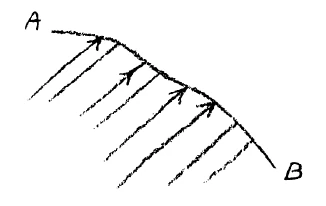
[ 20 ] Mit dieser Idee wird Ihnen zugleich etwas anderes völlig einleuchtend sein. Ein materialistischer Denker könnte sagen: Wozu braucht man intelligente Kräfte und bewußt schaffende Wesenheiten anzunehmen hinter unserer physischen Welt? Wir können ja die physische Welt aus sich selbst, aus ihren eigenen Gesetzen erklären. Eine Uhr, eine Maschine kann aus ihren eigenen Gesetzen heraus erklärt werden. — Hier stehen wir an einem Punkte, wo hüben und drüben die schlimmsten Fehler gemacht werden, sowohl bei solchen, die auf dem Boden einer spirituellen Weltanschauung stehen, wie auch auf der Seite der Materialisten. Wenn zum Beispiel von einer geisteswissenschaftlichen Weltanschauung bestritten würde, daß der menschliche Organismus, wie er seiner Form nach vorliegt, nicht rein mechanisch oder mechanistisch durch seine eigenen Gesetze erklärbar wäre, so würde das selbstverständlich zu weit gehen und ganz unberechtigt sein. Der menschliche Organismus ist ganz und gar aus seinen eigenen Gesetzen heraus erklärbar, wie die Uhr auch. Aber daraus, daß die Uhr aus ihren eigenen Gesetzen erklärbar ist, folgt nicht, daß hinter der Uhr nicht der Erfinder der Uhr stand, der Uhrmacher und seine geistige Tätigkeit. Dieser Einwand, der von materialistischer Seite aus gemacht werden kann, erledigt sich dadurch. Aber der Geistesforscher muß auch zugeben, daß der menschliche Organismus, so wie er vor uns steht, aus seinen eigenen Gesetzen erklärt werden kann. Aber wenn wir wirklich geisteswissenschaftlich denken, haben wir hinter der Gesamtgestaltung des menschlichen Organismus zu suchen die gestaltenden Wesenheiten, dasjenige also, was der gesamten Form der menschlichen Wesenheit zugrundeliegt. Wenn wir uns nun einen Begriff davon bilden wollen, wie überhaupt die menschliche Form zustande kommt, so müssen wir uns denken, daß sie auf der einen Seite dadurch bewirkt wird, daß die formgebenden Kräfte sich entfalten und daß sie den Menschen dadurch aufbauen, daß sie sich an den Grenzen der menschlichen Form selbst abschließen. Wir haben in der Hautbildung das am reinsten gegeben, was das räumliche Sichabschließen der formgebenden Kräfte im Menschen bedeutet. Wenn wir das schematisch zeichnen, können wir uns denken, daß die formgebenden Kräfte zur Peripherie dahinfließen und sich da abschließen in der äußeren Form, die in der Linie A-B nur angedeutet werden soll.
[ 20 ] With this idea, something else will also become perfectly clear to you. A materialist might say: Why do we need to assume the existence of intelligent forces and consciously creative beings behind our physical world? After all, we can explain the physical world from within itself, based on its own laws. A clock, a machine, can be explained by its own laws. — Here we have reached a point where the gravest errors are being made on both sides, both among those who hold a spiritual worldview and among the materialists. If, for example, a spiritual-scientific worldview were to deny that the human organism, as it exists in its present form, could be explained purely mechanically or mechanistically through its own laws, that would of course go too far and be entirely unjustified. The human organism is entirely explainable by its own laws, just as a clock is. But the fact that the clock is explainable by its own laws does not imply that behind the clock there was not the clock’s inventor, the clockmaker, and his spiritual activity. This objection, which can be raised from a materialist perspective, is thereby resolved. But the spiritual researcher must also admit that the human organism, as it stands before us, can be explained by its own laws. But if we truly think in terms of spiritual science, we must look behind the overall structure of the human organism for the formative beings—that is, for what underlies the entire form of the human being. If we now wish to form a concept of how the human form comes into being at all, we must imagine that it is brought about, on the one hand, by the unfolding of the formative forces and that they build up the human being by closing in upon themselves at the boundaries of the human form. In the formation of the skin, we have the purest example of what the spatial self-conclusion of the formative forces in the human being means. If we draw this schematically, we can imagine that the formative forces flow out toward the periphery and conclude themselves there in the outer form, which is to be indicated only by the line A-B.
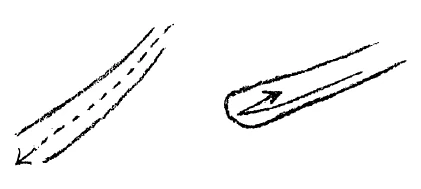
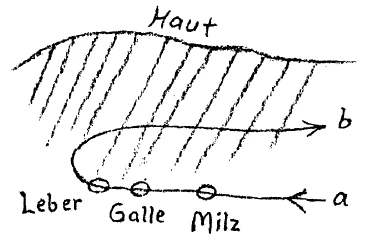
[ 21 ] Wir werden nun sehen, wie wir diesen Begriff wiederum brauchen, um alles das erkennen zu können, was innerhalb der Haut geschieht. Weiter aber werden wir uns darüber klar werden müssen, daß wir nun nicht bloß in der menschlichen Haut solche Abschlüsse vor uns haben, sondern daß wir auch innerhalb des menschlichen Organismus selber solches Abschließen der von außen wirkenden Tätigkeit und Wesenhaftigkeit finden. Sie brauchen sich nur zu überlegen, was bisher gesagt worden ist, dann werden Sie darauf kommen, daß wir auch im Inneren des Menschen solche sich abschließenden Tätigkeiten vor uns haben, an denen wir ebenso unbeteiligt sind wie an unserer Oberflächengestaltung, und das sind gerade diejenigen Betätigungen, die zustande kommen in den Organen Leber, Galle, Milz und so weiter. Da wird das aufgehalten, was durch die Kräfte, die in den Nahrungsmitteln sitzen, in den Organismus einströmt, dem wird etwas entgegengeschoben, wird ein Widerstand entgegengesetzt, das heißt, es wird in diesen Organen die äußere, die eigene Regsamkeit der Stoffe umgeändert. Während also bei den formgebenden Kräften die Sache so ist, daß wir uns diese formenden Kräfte wirksam zu denken haben bis zur Haut hin und außerhalb der Haut nichts mehr von formgebenden Kräften haben, müssen wir uns vorstellen, daß bei denjenigen Kräften, die mit dem Nahrungs- oder Luftstrom nach unserem Inneren gehen, nicht ein vollständiges Abschließen dessen vorhanden ist, was als Strömungen von außen eindringt, sondern es tritt da eine Umgestaltung ein. Diese Organe müssen wir uns so denken, daß sie nicht, wie es bei der Haut ist, sich abschließen, so daß außerhalb nichts mehr ist, sondern so, daß die Regsamkeit der Stoffe umgeändert wird durch sie derart, daß der Nahrungsstrom, der von der Seite dieser Organe her aufgenommen ist (siehe Zeichnung, a), in einer anderen Weise weitergeleitet wird (b), nachdem ihm ein Widerstand entgegengesetzt worden ist. Hier haben wir es also mit einer Umänderung zu tun, und das betrifft vor allem diejenigen Organe, welche wir als ein inneres Weltsystem- des Menschen bezeichnet haben. Die ändern die äußere Regsamkeit der Stoffe um. Es sind Kräfte, die wir im Gegensatz zu den Formkräften, die den gesamten Organismus bilden, Bewegungskräfte nennen können. In unserem inneren Weltsystem werden diese Kräfte, welche die innere Regsamkeit der Nahrungsstoffe umgestalten, dann Bewegung, so daß wir hier von Bewegungskräften in den Organen sprechen können.
[ 21 ] We will now see how we need this concept again in order to understand everything that happens beneath the skin. Furthermore, however, we must realize that such boundaries are not found merely in human skin, but that we also find such boundaries within the human organism itself, where external activity and essence are confined. You need only reflect on what has been said so far, and you will realize that we also have such self-contained activities within the human being, in which we are just as uninvolved as we are in the structure of our outer surface; and these are precisely the activities that take place in the organs of the liver, gallbladder, spleen, and so on. There, what flows into the organism through the forces contained in food is held back; something is pushed against it, resistance is offered—that is, the external, inherent activity of the substances is transformed within these organs. So while with the formative forces the situation is such that we must conceive of these formative forces as active up to the skin and beyond the skin there are no longer any formative forces, we must imagine that with those forces that enter our interior with the flow of food or air, there is not a complete sealing off of what penetrates from the outside as currents, but rather a transformation takes place there. We must conceive of these organs not as closing off, as the skin does, so that there is nothing outside, but rather in such a way that the activity of the substances is transformed by them to such an extent that the stream of nourishment, which is taken in from the side of these organs (see drawing, a), is conveyed onward in a different way (b) after resistance has been opposed to it. Here, then, we are dealing with a transformation, and this concerns above all those organs that we have designated as the human inner world system. They transform the external activity of the substances. These are forces that, in contrast to the formative forces that constitute the entire organism, we can call forces of movement. In our inner world system, these forces, which transform the inner activity of the nutrients, then become movement, so that we can speak here of forces of movement in the organs.
[ 22 ] Wir sind jetzt so weit vorgeschritten in den Betrachtungen des menschlichen Organismus, daß wir sagen können: In den menschlichen Organismus wirken von außen Kräfte herein, deren Tätigkeit wir mit unserem Bewußtsein nicht wahrnehmen. Das alles geht unterhalb unseres Bewußtseinshorizontes vor sich, was wir da als Tätigkeit ausführen; niemand kann im normalen Bewußtsein die Tätigkeit seiner Leber, Galle, Milz und so weiter beobachten. Nun entsteht die Frage: Wodurch werden wir denn verhindert, etwas zu wissen von den Form- und Bewegungskräften, die sich in unseren inneren Organen abspielen, da doch unser Seelenleben dem Organismus eingegliedert ist? Da gehen ja in unserem Innern gewaltige Tätigkeiten vor sich. Woher kommt es, daß wir davon nichts wissen?
[ 22 ] We have now progressed so far in our examination of the human organism that we can say: Forces act upon the human organism from the outside, the activity of which we do not perceive with our consciousness. Everything we do there takes place below the horizon of our consciousness; no one can observe the activity of their liver, gallbladder, spleen, and so on in normal consciousness. Now the question arises: What prevents us from knowing anything about the forces of form and movement at work within our internal organs, since our soul life is integrated into the organism? After all, tremendous activities are taking place within us. Why is it that we know nothing of this?
[ 23 ] Nun, genau ebenso wie unser Gehirn-Rückenmark-Nervensystem dazu bestimmt ist, die äußeren Eindrücke, die wir durch unsere Sinne erhalten, bis zum Blute hinzuleiten, das heißt, die Impressionen von äußeren Vorgängen in unser Blut, in das Werkzeug des Ich, aufzunehmen, ebenso wie also das Gehirn-Rückenmark-Nervensystem dazu bestimmt ist, im normalen Bewußtsein dem Ich zu dienen, gerade so ist das sympathische Nervensystem, das sich mit seinen Knoten und Verzweigungen dem inneren Weltsystem gleichsam vorlagert, dazu ausersehen, die Vorgänge, die sich im Innern des Organismus abspielen, nicht an das Blut, das Werkzeug des Ich, heranzulassen, sondern sie vom Blut zurückzuhalten.
[ 23 ] Now, just as our brain-spinal cord-nervous system is designed to convey the external impressions we receive through our senses all the way to the blood—that is, to take in the impressions of external events into our blood, into the instrument of the ego—just as the brain-spinal cord-nervous system is designed to serve the ego in normal consciousness, in exactly the same way, the sympathetic nervous system—which, with its nodes and branches, is situated, as it were, in front of the inner world system—is designed not to allow the processes taking place within the organism to reach the blood, the instrument of the ego, but rather to keep them from the blood.
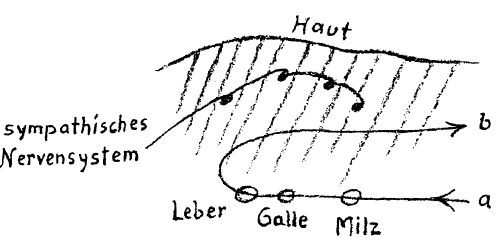
[ 24 ] So sehen Sie, daß das sympathische Nervensystem eine entgegengesetzte Aufgabe hat wie das Gehirn-Rückenmark-Nervensystem, und hier haben wir eine Erklärung für den Unterschied in Bau und Beschaffenheit dieser beiden Systeme. Während das Gehirn-Rückenmark-Nervensystem sich anstrengen muß, um möglichst gut die äußeren Eindrücke zum Blut überzuleiten, muß durch das entgegengesetzt wirkende sympathische Nervensystem vom Blut — als dem Werkzeug des Ich - fortwährend zurückgestaut werden die Eigenregsamkeit der aufgenommenen Stoffe. Wenn wir den Verdauungsprozeß betrachten, so haben wir zuerst das Aufnehmen der äußeren Nahrungsstoffe, dann das Zurückstauen der Eigenregsamkeit der Nahrungsstoffe und dann die Umwandlung dieser Regsamkeiten durch das innere Weltsystem des Menschen. Damit wir nicht fortwährend, wie wir so dastehen in der Welt, alles das wahrnehmen, was in unseren inneren Organen bewirkt wird, muß der ganze Strom der Vorgänge durch das sympathische Nervensystem zurückgestaut werden vom Blut, geradeso wie durch das Gehirn-Rückenmark-Nervensystem das zum Blute hingetragen wird, was von außen aufgenommen wird. Da haben Sie die Aufgabe des sympathischen Nervensystems, unsere inneren Vorgänge in uns zu halten, sie nicht bis zum Blut, dem Werkzeug des Ich, hinaufdringen zu lassen, um das Eintreten dieser inneren Vorgänge in das Ichbewußtsein zu verhindern.
[ 24 ] As you can see, the sympathetic nervous system has a function opposite to that of the central nervous system, and this explains the difference in the structure and nature of these two systems. While the brain-spinal cord nervous system must strive to transmit external impressions to the blood as effectively as possible, the oppositely acting sympathetic nervous system must continually hold back—from the blood, as the instrument of the ego—the intrinsic activity of the absorbed substances. If we consider the digestive process, we first have the intake of external nutrients, then the suppression of the intrinsic activity of the nutrients, and then the transformation of these activities by the human being’s inner world system. So that we do not constantly perceive, as we stand in the world, everything that is taking place within our internal organs, the entire flow of processes must be held back by the sympathetic nervous system from the blood, just as the brain-spinal cord nervous system carries to the blood what is taken in from the outside. Therein lies the task of the sympathetic nervous system: to keep our inner processes within us, not allowing them to rise up to the blood—the instrument of the ego—in order to prevent these inner processes from entering ego-consciousness.
[ 25 ] Ich habe schon gestern darauf hingewiesen, daß das Außenleben und das Innenleben des Menschen, wie es sich im Ätherleibe auslebt, in einem Gegensatz zueinander stehen und daß dieser Gegensatz von Außenleben und Innenleben in Spannungen zum Ausdruck kommt, die, wie wir gesehen haben, am stärksten werden in den Organen des Gehirnes, die wir als Zirbeldrüse und Gehirnanhang bezeichnen.
[ 25 ] I already pointed out yesterday that a person’s outer life and inner life, as it is lived out in the etheric body, stand in opposition to one another, and that this opposition between outer and inner life is expressed in tensions which, as we have seen, become strongest in the organs of the brain that we call the pineal gland and the epiphysis.
[ 26 ] Wenn Sie nun die heutige und die gestrige Ausführung zusammennehmen, so werden Sie sich leicht denken können, daß alles, was von außen hereinströmt, um in möglichst engen Kontakt mit der Blutzirkulation zu treten, darnach strebt, sich zu vereinigen mit seinem Gegensatze, mit dem, was von innen kommt und zurückgehalten wird durch das sympathische Nervensystem. In der Zirbeldrüse haben wir die Stelle, wo das durch das Gehirn-Rückenmark-Nervensystem an das Blut von außen Herangebrachte sich vereinigen will mit dem, was von der anderen Seite kommt, und der Hirnanhang ist gleichsam der letzte Vorposten, um das nicht heranzulassen an das Blut, was menschliches Innenleben ist. Es stehen sich an dieser Stelle im Gehirn zwei wichtige Organe gegenüber. Das gesamte innere Erleben bleibt unter unserem Bewußtsein; es würde uns ja auch in einer furchtbaren Weise stören, wenn wir bewußt mitmachen würden unsere ganzen Ernährungsprozesse; das wird zurückgehalten durch das sympathische Nervensystem. Nur wenn dieses gegenseitige Verhältnis zwischen den beiden Nervensystemen, wie es sich ausdrückt in dem Spannungsverhältnis zwischen Zirbeldrüse und Hirnanhang, nicht in Ordnung ist, stellt sich das heraus, was wir nennen können ein Durchschimmern der einen Seite in die andere hinein, ein Gestörtwerden der einen Seite von der anderen Seite her. Das tritt zum Beispiel schon dann ein, wenn eine unregelmäßige Tätigkeit unserer Verdauungsorgane uns in unbehaglichen Gefühlen zum Bewußtsein kommt. Da haben wir ein — allerdings noch sehr unbestimmtes — Hereinstrahlen des sonst unbewußten menschlichen Innenlebens in das Bewußtsein, das sich aber auf diesem Wege bedeutend umgewandelt hat, also im Bewußtsein nicht so erscheint, wie es sich abgespielt hat. Oder wir haben in besonderen Affekten, Zorn, Wut, Schrecken und dergleichen, die ihren Ursprung im Bewußtsein haben, ein besonders starkes Hereinstrahlen von der Seite des inneren menschlichen Organismus; da haben wir den Fall, daß Affekte, besondere innere Erregungen der Seele, die Verdauung, das Atmungssystem und dadurch auch die Blutzirkulation und alles, was unterhalb des Bewußtseins liegt, in besonders schädigender Weise beeinflussen können. So können diese zwei Seiten der menschlichen Natur dennoch aufeinander wirken.
[ 26 ] If you now consider today’s and yesterday’s explanations together, you will easily be able to see that everything flowing in from the outside, in order to come into the closest possible contact with the blood circulation, strives to unite with its opposite—that which comes from within and is held back by the sympathetic nervous system. In the pineal gland, we have the place where what is brought to the blood from the outside via the brain-spinal cord-nervous system seeks to unite with what comes from the other side, and the pineal gland is, as it were, the final outpost preventing what constitutes human inner life from reaching the blood. At this point in the brain, two important organs face each other. The entire inner experience remains below our consciousness; after all, it would disturb us terribly if we were to consciously participate in all our digestive processes; this is held back by the sympathetic nervous system. Only when this reciprocal relationship between the two nervous systems—as expressed in the tension between the pineal gland and the pituitary gland—is out of balance does what we might call a “shimmering” of one side into the other occur, a disturbance of one side by the other. This occurs, for example, when irregular activity in our digestive organs brings uncomfortable sensations to our consciousness. Here we have a—albeit still very vague—radiation of the otherwise unconscious human inner life into consciousness, which has, however, been significantly transformed in the process, so that it does not appear in consciousness as it actually occurred. Or, in particular emotions—anger, rage, terror, and the like—that have their origin in consciousness, we have a particularly strong influx from the inner human organism; in which case we have the situation where emotions—particular inner stirrings of the soul—can influence digestion, the respiratory system, and thereby also blood circulation and everything that lies below the level of consciousness in a particularly harmful way. Thus, these two aspects of human nature can nevertheless interact with one another.
[ 27 ] So stehen wir als Menschen in der Tat als eine Zweiheit in der Welt, und wir haben heute diese Zweiheit gesehen: Auf der einen Seite bewußtes Erleben der Außenwelt durch das Gehirn-Rückenmark-Nervensystem, welches die äußeren Eindrücke bis zum Blut, dem Werkzeuge des Ich, bringt; auf der anderen Seite unbewußtes Erleben der Innenwelt, unbewußt, weil es durch das sympathische Nervensystem vom Blute zurückgehalten wird. Diese beiden Gegensätze stehen sich auf der ganzen Linie gegenüber. Aber wir finden ihren besonderen Ausdruck in der Spannung zwischen diesen beiden Organen, von denen wir gesprochen haben: der Zirbeldrüse und dem Hirnanhang.
[ 27 ] Thus, as human beings, we truly stand in the world as a duality, and we have seen this duality today: on the one hand, the conscious experience of the external world through the brain-spinal cord-nervous system, which transmits external impressions all the way to the blood, the instrument of the ego; on the other hand, the unconscious experience of the inner world—unconscious because it is held back from the blood by the sympathetic nervous system. These two opposites stand in direct opposition to one another across the board. But we find their particular expression in the tension between these two organs we have spoken of: the pineal gland and the pituitary gland.
[ 28 ] Von diesem Punkte aus wollen wir das nächste Mal unsere Betrachtungen fortsetzen.
[ 28 ] We will continue our discussion from this point next time.